Kanti P Bajpai – författare
Visar alla böcker från författaren . Handla med fri frakt och snabb leverans.
5 produkter
5 produkter
Inbunden, Engelska, 2019
2 412 kr
Skickas inom 10-15 vardagar
In mid-March 1992, a group of forty scholars, journalists, strategists, and government officials met in Kathmandu, Nepal, to assess the post-Cold War world. The meeting marked both a summing up and a beginning. Many of the conference participants had been associated at one time or another with the Program in Arms Control, Disarmament, and International Security (A CD IS) at the University of lllinois at Urbana-Champaign. Founded in 1978, ACDIS had from its very first year recruited scholars from South Asia (and scholars working on South Asia). Much of this work was supported by a continuing grant from the Ford Foundation (which also contributed major support for the Kathmandu meeting), but lllinois was also "home" for a number of Fulbright and Asia Foundation grantees.1 The meeting in Kathmandu provided an opportunity for these individuals to again meet with each other and with faculty and staff associated with ACDIS.
Häftad, Engelska, 2024
580 kr
Skickas inom 10-15 vardagar
South Asia is a region of one billion people, divided into seven states and numerous religious, caste, ethnic, and linguistic groups. It is the site of ethnic and religious violence that is transnational in its implications; the region has been host to four major wars and several war scares, most recently the India-Pakistan crisis over Kashmir in 1
E-bok
PDF, Engelska, 2019688 kr
Läs direkt efter köp
In mid-March 1992, a group of forty scholars, journalists, strategists, and government officials met in Kathmandu, Nepal, to assess the post-Cold War world. The meeting marked both a summing up and a beginning. Many of the conference participants had been associated at one time or another with the Program in Arms Control, Disarmament, and International Security (A CD IS) at the University of lllinois at Urbana-Champaign. Founded in 1978, ACDIS had from its very first year recruited scholars from South Asia (and scholars working on South Asia). Much of this work was supported by a continuing grant from the Ford Foundation (which also contributed major support for the Kathmandu meeting), but lllinois was also "home" for a number of Fulbright and Asia Foundation grantees.1 The meeting in Kathmandu provided an opportunity for these individuals to again meet with each other and with faculty and staff associated with ACDIS.
E-bok
Engelska, 2019690 kr
Läs direkt efter köp
In mid-March 1992, a group of forty scholars, journalists, strategists, and government officials met in Kathmandu, Nepal, to assess the post-Cold War world. The meeting marked both a summing up and a beginning. Many of the conference participants had been associated at one time or another with the Program in Arms Control, Disarmament, and International Security (A CD IS) at the University of lllinois at Urbana-Champaign. Founded in 1978, ACDIS had from its very first year recruited scholars from South Asia (and scholars working on South Asia). Much of this work was supported by a continuing grant from the Ford Foundation (which also contributed major support for the Kathmandu meeting), but lllinois was also "home" for a number of Fulbright and Asia Foundation grantees.1 The meeting in Kathmandu provided an opportunity for these individuals to again meet with each other and with faculty and staff associated with ACDIS.
Inbunden, Engelska, 2026
725 kr
Skickas
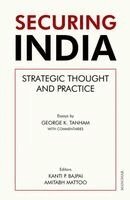
This volume brings together George K. Tanham's much-quoted RAND essay, Indian Strategic Thought', his sequel essay, Indian Strategy in Flux?' and specially commissioned commentaries by five Indian scholars. Most of our understanding about strategy is coloured by information from the West and the former Soviet Union. While this may have been acceptable during the Cold War, it is no longer so. In the coming three decades a range of powers, including India, will come to matter greatly. Hence the need to give a critical look to Indian strategy, a much-neglected subject, as also to undertake a comparative study of strategy. Indian Strategic Thought' argues that various influences have combined to make India more concerned with internal than external security; to prefer defence to offence; to be a land rather than a sea power; to seek outright independence and great power status over any form of dependence and middle power status; to rely principally on hard' (military) not soft' (economic, cultural) power as well as to produce a strategic culture of ad hocism. Tanham's new essay, Indian Strategy in Flux?' charts Indian policies since 1991. A variety of domestic and external developments, Tanham suggests, combined to shock the system in that year into at least two major strategic changes; dramatic economic reforms and a wide-ranging partnership with the United States and the market economies of East and South-East Asia.