Gerald Christianson – författare
Visar alla böcker från författaren Gerald Christianson. Handla med fri frakt och snabb leverans.
6 produkter
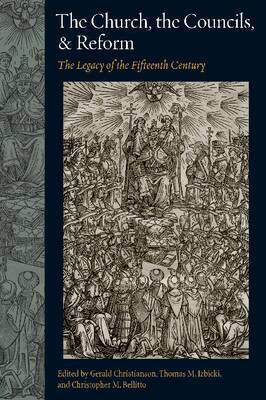
Church, the Councils, and Reform
The Legacy of the Fifteenth Century
Av Gerald Christianson, Thomas M. Izbicki m. fl.
Inbunden, 2008
900 kr
Lägg i varukorg
The Church, the Councils, and Reform brings together leading authorities in the field of church history to reflect on the importance of the late medieval councils. This is the first book in English to consider the lasting significance of the period from Constance to Trent (1414-1563) when several …
Reform, Representation and Theology in Nicholas of Cusa and His Age
Av Gerald Christianson, H. Lawrence Bond
E-bok, 2023
624 kr
Lägg i varukorg
While most works on Nicholas of Cusa concentrate either on his early career as author of the monumental ''Catholic Concordance'' or on his later career as writer of remarkable philosophical/theological works such as ''On Learned Ignorance'' and ''The Vision of God'', the essays included here …
Reform, Representation and Theology in Nicholas of Cusa and His Age
Av Gerald Christianson, H. Lawrence Bond
E-bok, 2023
610 kr
Lägg i varukorg
While most works on Nicholas of Cusa concentrate either on his early career as author of the monumental ''Catholic Concordance'' or on his later career as writer of remarkable philosophical/theological works such as ''On Learned Ignorance'' and ''The Vision of God'', the essays included here …
Reform, Representation and Theology in Nicholas of Cusa and His Age
Av H. Lawrence Bond, Gerald Christianson
Inbunden, 2012
1821 kr
Lägg i varukorg
While most works on Nicholas of Cusa concentrate either on his early career as author of the monumental 'Catholic Concordance' or on his later career as writer of remarkable philosophical/theological works such as 'On Learned Ignorance' and 'The Vision of God', the essays included here attempt to …
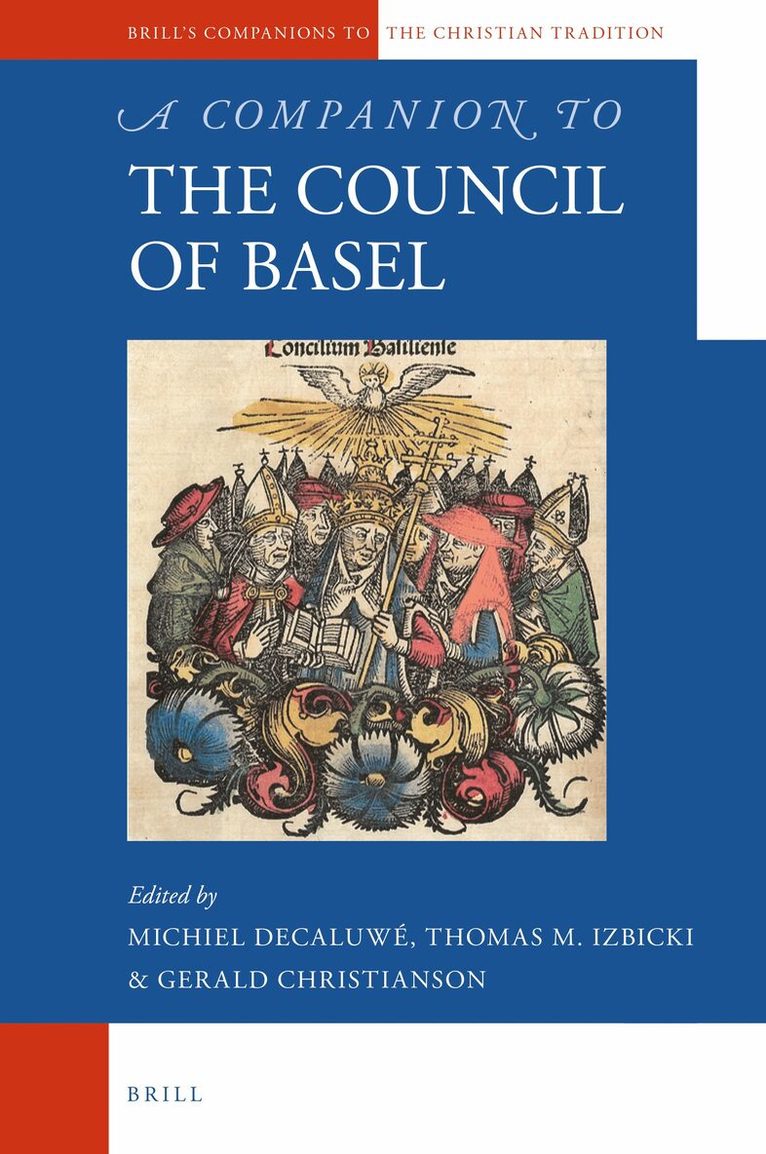
Companion to the Council of Basel
Av Michiel Decaluwe, Thomas M. Izbicki m. fl.
Inbunden, 2016
4058 kr
Lägg i varukorg
The Council of Basel (1431-1449) met to defend the faith and reform the Church. Its efforts to deal with Hussite heresy and reform the Roman Curia led to conflict with Pope Eugenius IV (1431-1447). The council divided over the site of a council of union with the Eastern churches. Some left to …
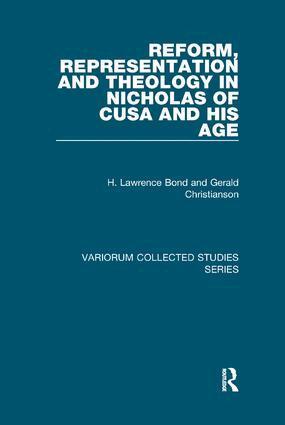
Reform, Representation and Theology in Nicholas of Cusa and His Age
Av H. Lawrence Bond, Gerald Christianson
Häftad, 2019
522 kr
Tillfälligt slut
While most works on Nicholas of Cusa concentrate either on his early career as author of the monumental 'Catholic Concordance' or on his later career as writer of remarkable philosophical/theological works such as 'On Learned Ignorance' and 'The Vision of God', the essays included here attempt to …