Thomas M. Izbicki – författare
Visar alla böcker från författaren Thomas M. Izbicki. Handla med fri frakt och snabb leverans.
18 produkter
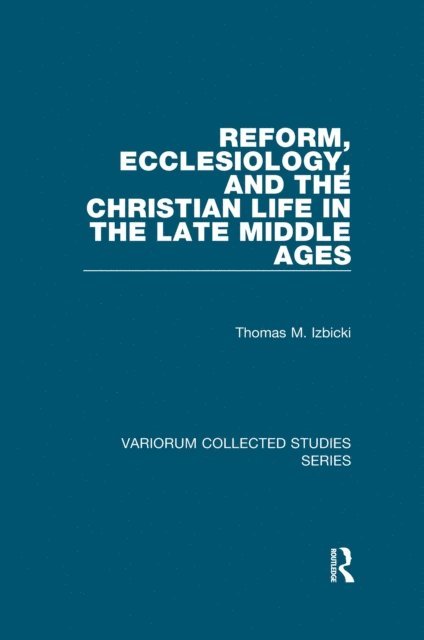
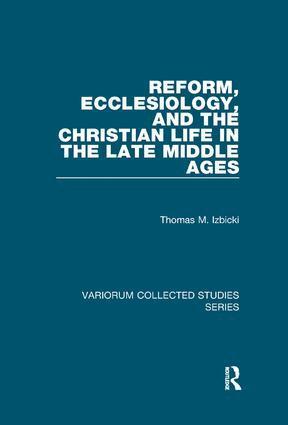
Reform, Ecclesiology, and the Christian Life in the Late Middle Ages
Inbunden, 2008
1495 kr
Lägg i varukorg
Philosophy was not an idle venture in the Renaissance. There were no clear-cut boundaries between theory and the practice. Theologians, jurists and humanists gave opinions on practical matters from within some larger intellectual context, and many held high office. Among the writers represented …
Church, the Councils, and Reform
The Legacy of the Fifteenth Century
Av Gerald Christianson, Thomas M. Izbicki m. fl.
Inbunden, 2008
900 kr
Lägg i varukorg
The Church, the Councils, and Reform brings together leading authorities in the field of church history to reflect on the importance of the late medieval councils. This is the first book in English to consider the lasting significance of the period from Constance to Trent (1414-1563) when several …
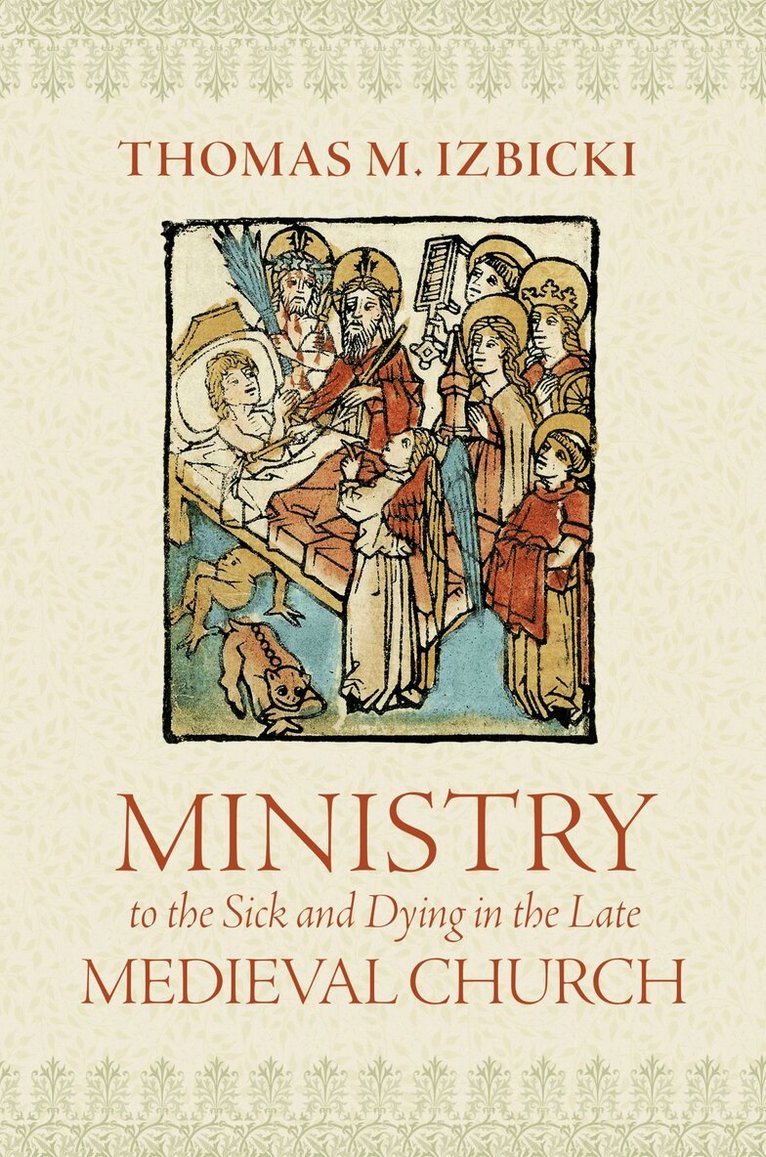
Ministry to the Sick and Dying in the Late Medieval Church
Inbunden, 2023
852 kr
Lägg i varukorg
The focus of this volume is on ministry to the sick and dying in the later Middle Ages, especially providing them with the sacraments. Medieval writers linked illness to sin and its forgiveness. The priest, as physician of souls, was expected to heal the soul, preparing it for the hereafter. His …
Local Production, Administration, and Reception of Medieval Canon Law
Av Steven A. Schoenig, Abner E. Chacon m. fl.
Inbunden, 2026
1067 kr
Kommande
These nine essays, written by leading experts in the field, focus on the production and application of canon law at the local level. This broad themepermits many subjects to be explored: canonical collections produced in a particular locale by key figures in that area; local manuscript copies …
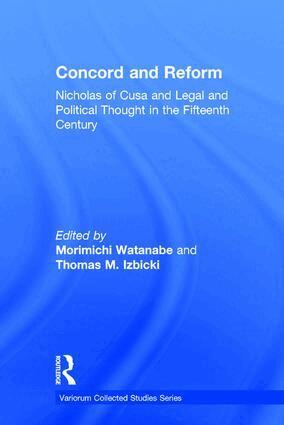
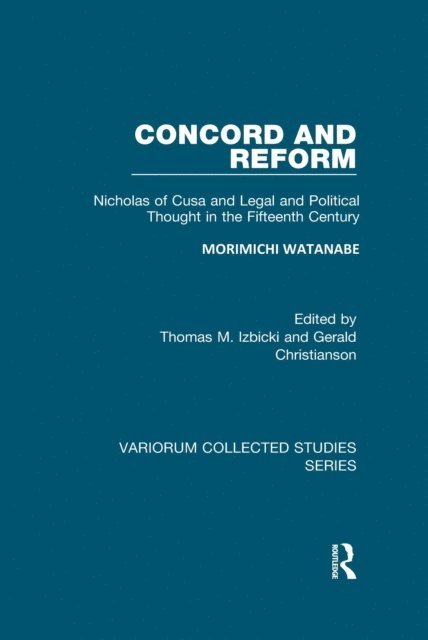
Concord and Reform
Nicholas of Cusa and Legal and Political Thought in the Fifteenth Century
Av Morimichi Watanabe, Thomas M. Izbicki
Inbunden, 2001
2879 kr
Lägg i varukorg
Nicholas of Cusa is known as one of the most original philosophers of the 15th century, but by training he was a canon lawyer who received his degree from the University of Padua in 1423. The essays in this book analyse his legal and political ideas against the background of medieval religious, …
Reform, Ecclesiology, and the Christian Life in the Late Middle Ages
E-bok, 2023
624 kr
Lägg i varukorg
Philosophy was not an idle venture in the Renaissance. There were no clear-cut boundaries between theory and the practice. Theologians, jurists and humanists gave opinions on practical matters from within some larger intellectual context, and many held high office. Among the writers represented …
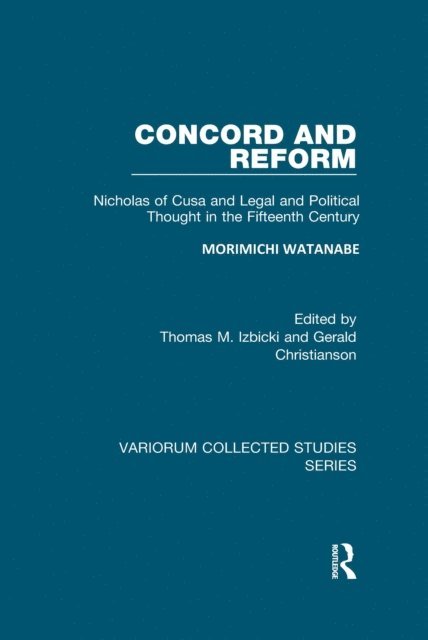
Concord and Reform
Nicholas of Cusa and Legal and Political Thought in the Fifteenth Century
Av Thomas M. Izbicki, Morimichi Watanabe
E-bok, 2023
999 kr
Lägg i varukorg
Nicholas of Cusa is known as one of the most original philosophers of the 15th century, but by training he was a canon lawyer who received his degree from the University of Padua in 1423. The essays in this book analyse his legal and political ideas against the background of medieval religious, …
Reform, Ecclesiology, and the Christian Life in the Late Middle Ages
E-bok, 2023
610 kr
Lägg i varukorg
Philosophy was not an idle venture in the Renaissance. There were no clear-cut boundaries between theory and the practice. Theologians, jurists and humanists gave opinions on practical matters from within some larger intellectual context, and many held high office. Among the writers represented …
Concord and Reform
Nicholas of Cusa and Legal and Political Thought in the Fifteenth Century
Av Thomas M. Izbicki, Morimichi Watanabe
E-bok, 2023
999 kr
Lägg i varukorg
Nicholas of Cusa is known as one of the most original philosophers of the 15th century, but by training he was a canon lawyer who received his degree from the University of Padua in 1423. The essays in this book analyse his legal and political ideas against the background of medieval religious, …
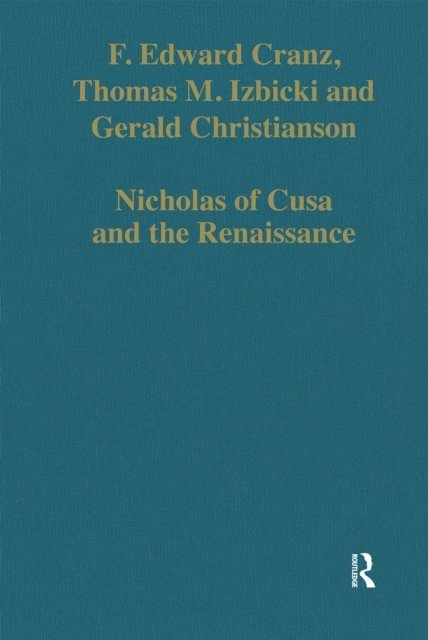
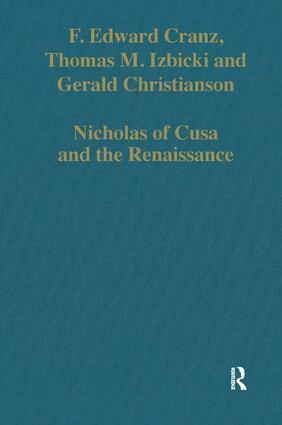
Nicholas of Cusa and the Renaissance
Av Thomas M. Izbicki, F. Edward Cranz
E-bok, 2024
1022 kr
Lägg i varukorg
This volume brings together Professor Cranz’s published studies on Nicholas of Cusa with a set of seven papers left unpublished at the time of his death. Their subjects are the speculative thought of Cusanus and his relationship with the broader themes of the Renaissance. Particular attention is …
Nicholas of Cusa and the Renaissance
Av Thomas M. Izbicki, F. Edward Cranz
E-bok, 2024
1022 kr
Lägg i varukorg
This volume brings together Professor Cranz’s published studies on Nicholas of Cusa with a set of seven papers left unpublished at the time of his death. Their subjects are the speculative thought of Cusanus and his relationship with the broader themes of the Renaissance. Particular attention is …
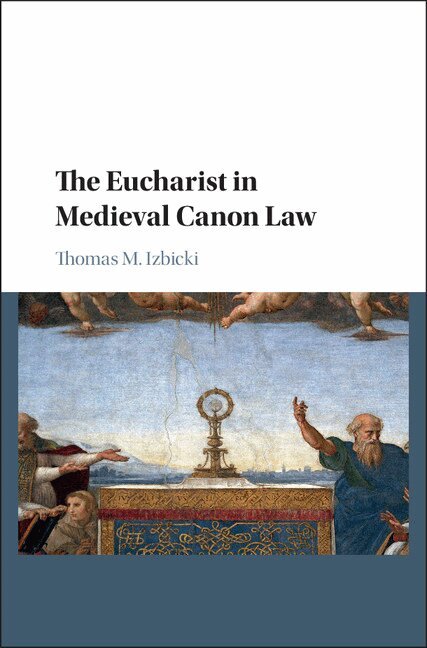
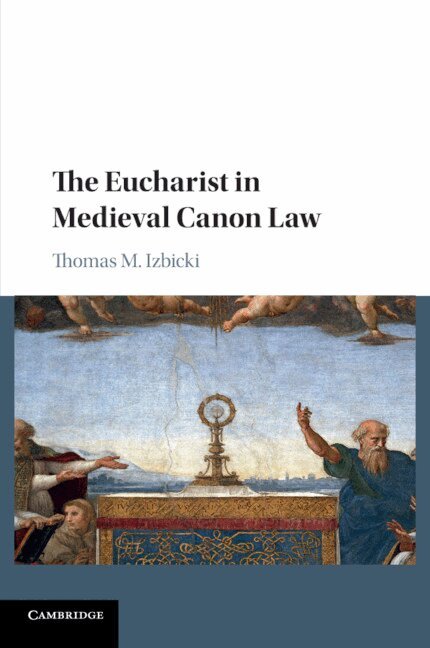
The Eucharist in Medieval Canon Law
Inbunden, 2015
1389 kr
Lägg i varukorg
Thomas Izbicki presents a new examination of the relationship between the adoration of the sacrament and canon law from the twelfth to fifteenth centuries. The medieval Church believed Christ's glorified body was present in the Eucharist, the most central of the seven sacraments, and the Real …
The Eucharist in Medieval Canon Law
Häftad, 2020
586 kr
Lägg i varukorg
Thomas Izbicki presents a new examination of the relationship between the adoration of the sacrament and canon law from the twelfth to fifteenth centuries. The medieval Church believed Christ's glorified body was present in the Eucharist, the most central of the seven sacraments, and the Real …
Concord and Reform
Nicholas of Cusa and Legal and Political Thought in the Fifteenth Century
Av Morimichi Watanabe, Thomas M. Izbicki
Häftad, 2018
844 kr
Lägg i varukorg
Nicholas of Cusa is known as one of the most original philosophers of the 15th century, but by training he was a canon lawyer who received his degree from the University of Padua in 1423. The essays in this book analyse his legal and political ideas against the background of medieval religious, …
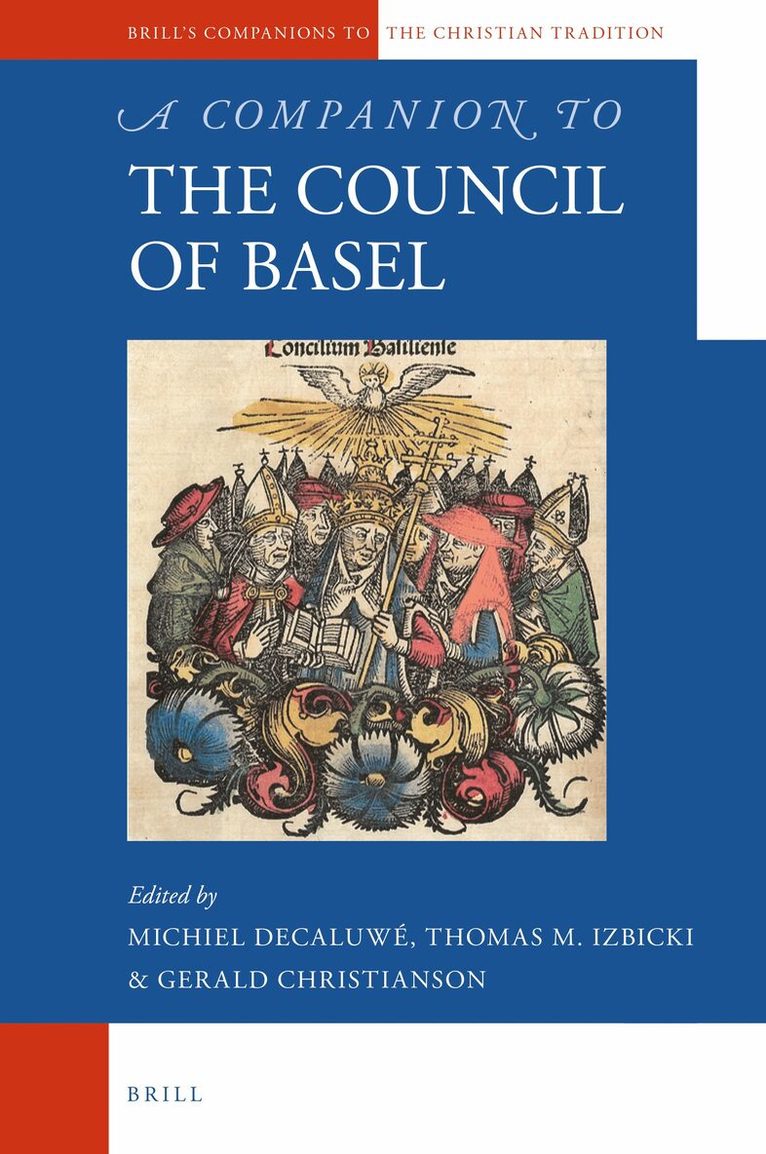
Companion to the Council of Basel
Av Michiel Decaluwe, Thomas M. Izbicki m. fl.
Inbunden, 2016
4058 kr
Lägg i varukorg
The Council of Basel (1431-1449) met to defend the faith and reform the Church. Its efforts to deal with Hussite heresy and reform the Roman Curia led to conflict with Pope Eugenius IV (1431-1447). The council divided over the site of a council of union with the Eastern churches. Some left to …
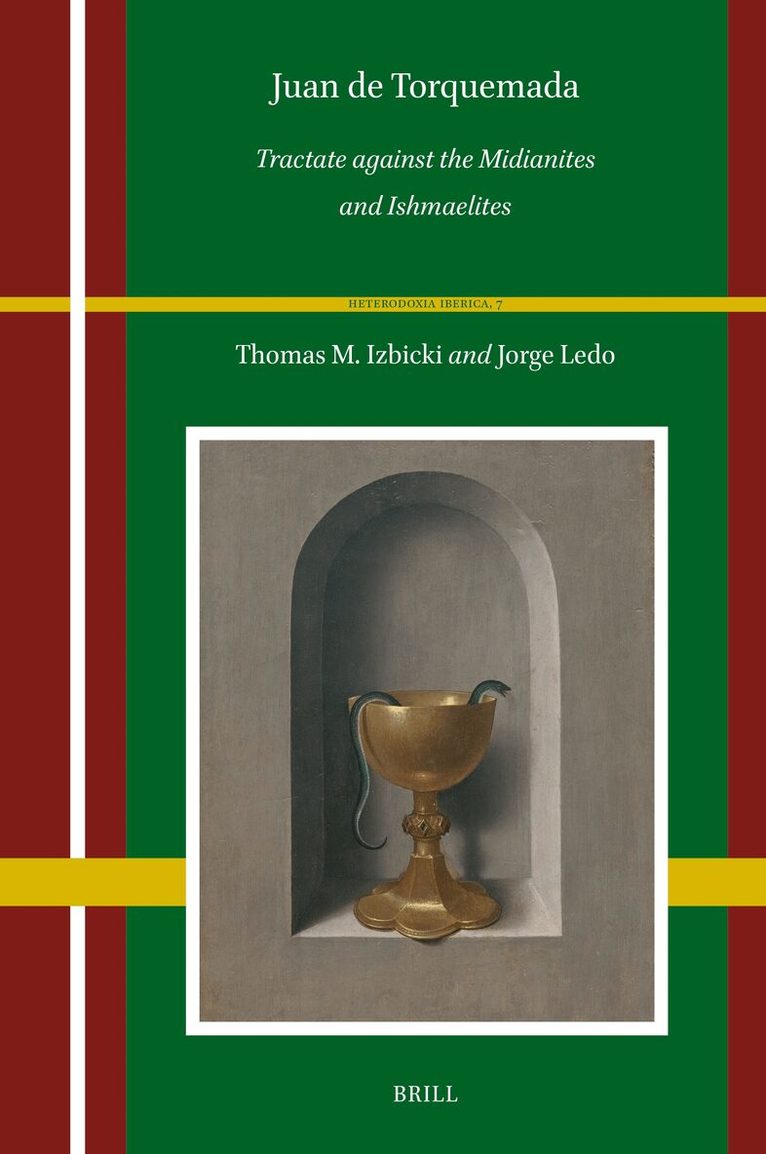
Juan de Torquemada
Tractate against the Midianites and Ishmaelites
Av Thomas M. Izbicki, Jorge Ledo
Inbunden, 2023
1905 kr
Lägg i varukorg
This is the first English translation of one of the most important treatises written during the late-Middle Ages in defense of converts from Judaism, favoring religious tolerance in the face of religious and racially motivated prejudice and violence. The book also includes a fresh Latin edition, …
Nicholas of Cusa and the Renaissance
Av F. Edward Cranz, Thomas M. Izbicki
Inbunden, 2000
2225 kr
Tillfälligt slut
This volume brings together Professor Cranz’s published studies on Nicholas of Cusa with a set of seven papers left unpublished at the time of his death. Their subjects are the speculative thought of Cusanus and his relationship with the broader themes of the Renaissance. Particular attention is …
Reform, Ecclesiology, and the Christian Life in the Late Middle Ages
Häftad, 2019
522 kr
Tillfälligt slut
Philosophy was not an idle venture in the Renaissance. There were no clear-cut boundaries between theory and the practice. Theologians, jurists and humanists gave opinions on practical matters from within some larger intellectual context, and many held high office. Among the writers represented …