Gerald Kozicz – författare
Visar alla böcker från författaren Gerald Kozicz. Handla med fri frakt och snabb leverans.
2 produkter
2 produkter
Inbunden, Engelska, 2024
527 kr
Skickas inom 5-8 vardagar
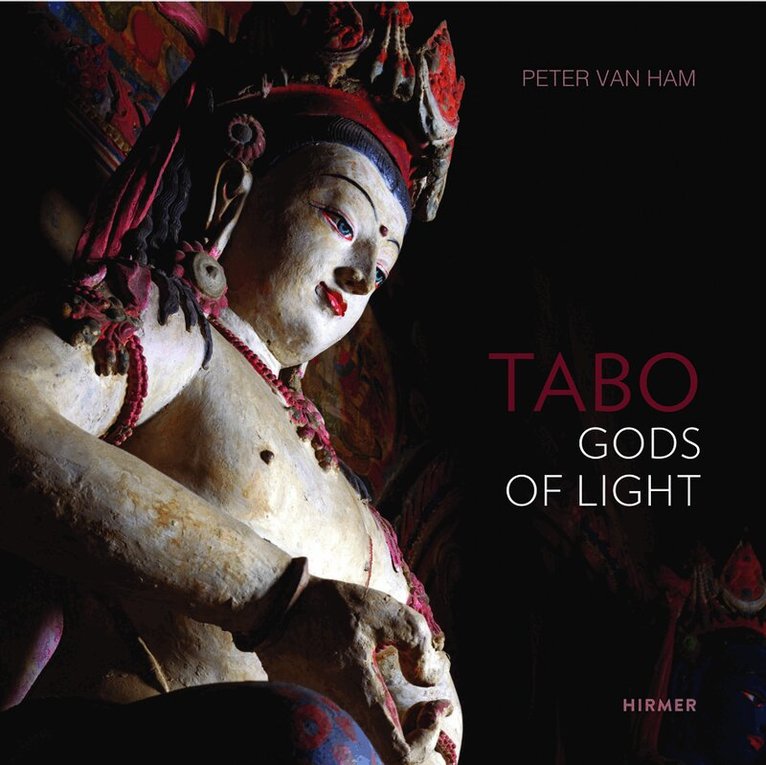
Over one thousand years old, the Buddhist monastery complex of Tabo with its exquisitely preserved works of art ranks among the most fascinating cultural and historical treasures of mankind. The new edition of this richly illustrated volume shows the beauty of these legendary sanctuaries for the first time in the highest digital resolution and describes in detail the entire gamut of Western Tibetan artistic styles.The monastery of Tabo, located in the northern Indian Himalayan region and founded in 996 AD, is the oldest temple complex in the Tibetan cultural area that has been preserved in its original state. Tabo's main temple, the "Temple of the Enlightened Gods", is a unique work of art: 1000-year-old sculptures and paintings, created in an incomparably fine style by Indian and Western Tibetan artists, together form a walk-in, horizontal mandala. Only with special permission was Peter van Ham able to spend decades photographing the temple halls, which are otherwise off-limits to cameras - most recently in the world's highest digital resolution. In the book, he also provides detailed background information and the latest research findings on the spectacular yet endangered sanctuary.
Inbunden, Engelska, 2026
818 kr
Kommande
Dome of Heaven enters the long-standing debate in architectural history on the origins and significance of the dome as both an idea and a building technique. Examining the material evidence and intellectual foundations of Buddhist ceilings in a trans-Eurasian context, Di Luo and Gerald Kozicz reveal the multiple genealogies and meanings of the Buddhist dome to unravel the deep-seated connections between the East and the West and the "in-between" in architectural and astronomical knowledge and practice during the first millennium. On the Indian subcontinent, the arched shape of the dome emerged from Śākyamuni’s "fragrant chamber," the first Buddhist temple and the embodiment of ascetism. As the Mahayana and Vajrayana schools spread across Asia along the Silk Road, this humble design evolved to incorporate increasingly complex cosmological diagrams, pictorial and calligraphic, in ceiling spaces, culminating in a mandalic universe pivoting around Mount Meru, the center of the Buddhist cosmos. Foregrounding areas often described as "peripheries" to the great Silk Road empires, Luo and Kozicz establish a geographical framework for the Buddhist Dome of Heaven. They identify three major channels of transmission: the trans-Hindukush, the trans-Taklamakan, and the trans-Himalayan. Along these routes, builders traded ideas and goods like architectural models and miniatures, facilitating exchanges that shaped Buddhist domes into vessels of the ethical universe, visual and kinesthetic aids to meditation, and roadmaps to enlightenment. Abundantly illustrated with more than eighty drawings, 3D models, maps, and photographs, Dome of Heaven offers a wealth of insights into the creation of a theological world order through spatial choreography, iconography, and pictorial storytelling.