Gerard Caprio Jr. – författare
Visar alla böcker från författaren Gerard Caprio Jr.. Handla med fri frakt och snabb leverans.
10 produkter
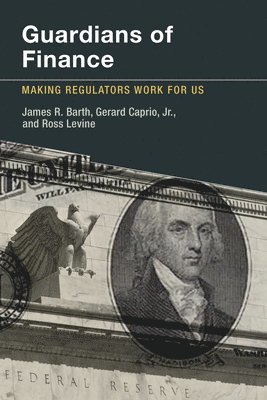
Guardians of Finance
Making Regulators Work for Us
Av James R. Barth, Gerard Caprio Jr. m. fl.
Häftad, 2014
592 kr
Lägg i varukorg
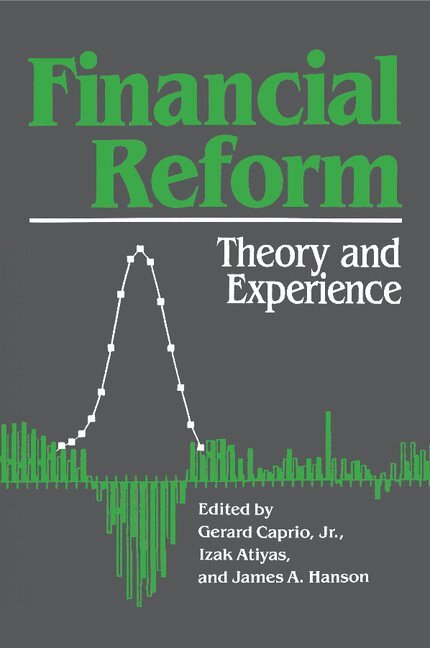
Financial Reform
Theory and Experience
Av Gerard Caprio Jr, Izak Atiyas m. fl.
Häftad, 1996
720 kr
Lägg i varukorg
This book examines the analytical basis and practical experience of financial reforms in a number of primarily developing countries. A key finding is that financial reforms have led to improved resource allocation - an a priori belief not hitherto tested. This finding is consistent with the …
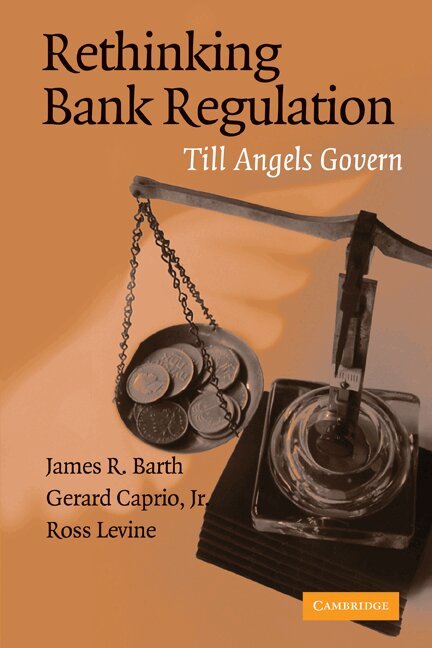
Rethinking Bank Regulation
Till Angels Govern
Av James R. Barth, Gerard Caprio Jr m. fl.
Häftad, 2008
687 kr
Lägg i varukorg
This volume assembles and presents a database on bank regulation in over 150 countries (included also on CD). It offered the first comprehensive cross-country assessment of the impact of bank regulation on the operation of banks, and assesses the validity of the Basel Committee's influential …
Rethinking Bank Regulation
Till Angels Govern
Av James R. Barth, Gerard Caprio Jr m. fl.
Inbunden, 2005
691 kr
Lägg i varukorg
This volume assembles and presents a database on bank regulation in over 150 countries (included also on CD). It offered the first comprehensive cross-country assessment of the impact of bank regulation on the operation of banks, and assesses the validity of the Basel Committee's influential …
Financial Crises
Lessons from the Past, Preparation for the Future
Av Gerard Caprio Jr., James A. Hanson m. fl.
Häftad, 2005
515 kr
Lägg i varukorg
Throughout the 1990s, numerous financial crises rocked the world financial sector. The Asian bubble burst, for example; Argentina and Brazil suffered currency crises; and the post-Soviet economy bottomed out in Russia. In Financial Crises, a distinguished group of economists and policy analysts …
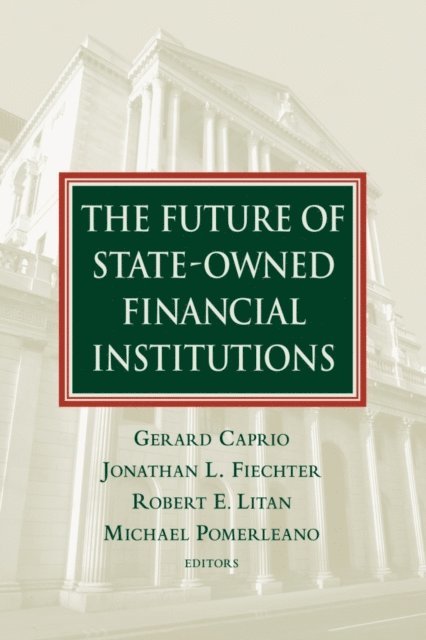
Future of State-Owned Financial Institutions
Av Gerard Caprio Jr., Jonathan L. Fiechter m. fl.
Häftad, 2005
531 kr
Lägg i varukorg
Research suggests that if the majority of a country's financial institutions are owned by the state, that country will experience slower financial development, less efficient financial systems, less private sector credit, and slower GDP growth. Yet more than 40 percent of the world's population …
Future of State-Owned Financial Institutions
Av Gerard Caprio Jr., Jonathan L. Fiechter m. fl.
E-bok, 2010
578 kr
Lägg i varukorg
Research suggests that if the majority of a country's financial institutions are owned by the state, that country will experience slower financial development, less efficient financial systems, less private sector credit, and slower GDP growth. Yet more than 40 percent of the world's population …
Financial Crises
Lessons from the Past, Preparation for the Future
Av Gerard Caprio Jr., James A. Hanson m. fl.
E-bok, 2005
578 kr
Lägg i varukorg
Throughout the 1990s, numerous financial crises rocked the world financial sector. The Asian bubble burst, for example; Argentina and Brazil suffered currency crises; and the post-Soviet economy bottomed out in Russia. In Financial Crises, a distinguished group of economists and policy analysts …
CROSS-BORDER BANKING: REGULATORY CHALLENGES
Av CAPRIO GERARD, Gerard Caprio Jr. m. fl.
Inbunden, 2006
2737 kr
Lägg i varukorg
Cross-border banking, while having the potential for a more efficient financial sector, also creates potential challenges for bank supervisors and regulators. It requires cooperation by regulatory authorities across jurisdictions and a clear delineation of authority and responsibility. That …
Financial Sector Policy for Developing Countries
A Reader
Av Dimitri Vittas, Patrick Honohan m. fl.
Häftad, 2002
295 kr
Tillfälligt slut
This book collects ten complementary essays on different aspects of financial sector policy for developing and transitional economies. The essays, by leading theoreticians and practitioners, draw on the history and experience of financial sector policy reforms to derive lessons for the future. The …