Gerard Toal – författare
Visar alla böcker från författaren Gerard Toal. Handla med fri frakt och snabb leverans.
15 produkter
15 produkter
Häftad, Engelska, 2019
307 kr
Skickas inom 5-8 vardagar
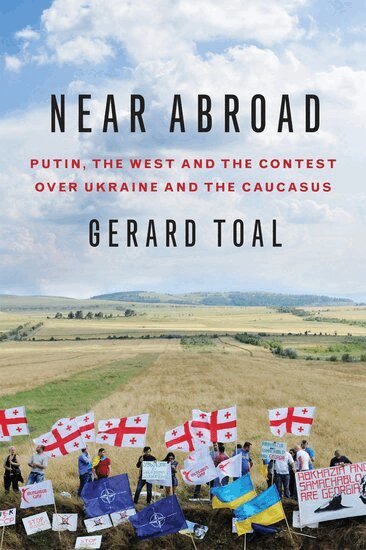
Before Russia invaded Ukraine, it invaded Georgia. Both states are part of Russia's "near abroad"--newly independent states that were once part of the Soviet Union and are now Russia's neighbors. While the Russia-Georgia war of 2008 faded from the headlines in the wake of the global recession, the geopolitical contest that created it did not. In Near Abroad, Gerard Toal moves beyond the polemical rhetoric that surrounds Russia's interventions in Georgia and Ukraine to study the underlying territorial conflicts and geopolitical struggles. Central to understanding are legacies of the Soviet Union collapse: unresolved territorial issues, weak states and a conflicted geopolitical culture in Russia over the new territorial order. Toal explains the road to invasion and war in Georgia and Ukraine, thereafter, and provides an account of real life geopolitics, one that emphasizes changing spatial relationships, geopolitical cultures and the power of media images. Not only a penetrating analysis of Russia's relationships with its regional neighbors, Near Abroad also offers an analysis of how US geopolitical culture frequently fails to fully understand Russia and the geopolitical archipelago of dependencies in its near abroad.
E-bok
Engelska, 2011761 kr
Läs direkt efter köp
Bosnia Remade is an authoritative account of ethnic cleansing and its partial undoing from the onset of the 1990s Bosnian wars up through the present. Gerard Toal and Carl Dahlman combine a bird''s-eye view of the entire war from onset to aftermath with a micro-level account of three towns that underwent ethnic cleansing and--later--the return of refugees. There have been two major attempts to remake the ethnic geography of Bosnia since 1991. In the first instance, ascendant ethno-nationalist forces tried to eradicate the mixed ethnic geographies of Bosnia''s towns, villages and communities. These forces devastated tens of thousands of homes and lives, but they failed to destroy Bosnia-Herzegovina as a polity. In the second attempt, which followed the war, the international community, in league with Bosnian officials, endeavored to reverse the demographic and other consequences of this ethnic cleansing. While progress has been uneven, this latter effort has transformed the ethnic demography of Bosnia and moved the nation beyond its recent segregationist past. By showing how ethnic cleansing was challenged, Bosnia Remade offers more than just a comprehensive narrative of Europe''s worst political crisis of the past two decades. It also offers lessons for addressing an enduring global problem.
Inbunden, Engelska, 2017
404 kr
Skickas inom 5-8 vardagar
Vladimir Putin's intervention into the Georgia/South Ossetia conflict in summer 2008 was quickly recognized by Western critics as an attempt by Russia to increase its presence and power in the "near abroad", or the independent states of the former Soviet Union that Russia still regards as its wards. Though the global economic recession that began in 2008 moved the incident to the back of the world's mind, Russia surged to the forefront again six years later when they invaded the heavily Russian Crimea in Ukraine and annexed it. In contrast to the earlier Georgia episode, this new conflict has generated a crisis of global proportions, forcing European countries to rethink their relationship with Russia and their reliance on it for energy supplies, as Russia was now squeezing natural gas from what is technically Ukraine.In Near Abroad, the eminent political geographer Gerard Toal analyzes Russia's recent offensive actions in the near abroad, focusing in particular on the ways in which both the West and Russia have relied on Cold War-era rhetorical and emotional tropes that distort as much as they clarify. In response to Russian aggression, US critics quickly turned to tried-and-true concepts like "spheres of influence" to condemn the Kremlin. Russia in turn has brought back its long tradition of criticizing western liberalism and degeneracy to grandly rationalize its behavior in what are essentially local border skirmishes. It is this tendency to resort to the frames of earlier eras that has led the conflicts to "jump scales," moving from the regional to the global level in short order. The ambiguities and contradictions that result when nations marshal traditional geopolitical arguments-rooted in geography, territory, and old understandings of distance-further contributes to the escalation of these conflicts. Indeed, Russia's belligerence toward Georgia stemmed from concern about its possible entry into NATO, an organization of states thousands of miles away. American hawks also strained credulity by portraying Georgia as a nearby ally in need of assistance. Similarly, the threat of NATO to the Ukraine looms large in the Kremlin's thinking, and many Ukrainians themselves self-identify with the West despite their location in Eastern Europe.
E-bok
PDF, Engelska, 2016214 kr
Läs direkt efter köp
Before Russia invaded Ukraine, it invaded Georgia. Both states are part of Russia''s "near abroad" - newly independent states that were once part of the Soviet Union and are now Russia''s neighbors. While the Russia-Georgia war of 2008 faded from the headlines in the wake of the global recession, the geopolitical contest that created it did not. Six years later, the spectre of a revanchist Russia returned when Putin''s forces invaded and annexed the Crimean peninsula, once part of Russia but an internationally recognized part of Ukraine since the Soviet collapse. Crimea''s annexation and follow on conflict in eastern Ukraine have generated the greatest geopolitical crisis on the European continent since the end of the Cold War. In Near Abroad, the eminent political geographer Gerard Toal moves beyond the polemical rhetoric that surrounds Russia''s interventions in Georgia and Ukraine to study the underlying territorial conflicts and geopolitical struggles. Central to understanding are legacies of the Soviet Union collapse: unresolved territorial issues, weak states and a conflicted geopolitical culture in Russia over the new territorial order. The West''s desire to expand NATO contributed to a growing geopolitical contest in Russia''s near abroad. This found expression in a 2008 NATO proclamation that Georgia and Ukraine will become members of NATO, a "red line" issue for Russia. The road to invasion and war in Georgia and Ukraine, thereafter, is explained in Near Abroad. Geopolitics is often thought of as a game of chess. Near Abroad provides an account of real life geopolitics, one that emphasizes changing spatial relationships, geopolitical cultures and the power of media images. Rather than being a cold game of deliberation, geopolitics is often driven by emotions and ambitions, by desires for freedom and greatness, by clashing personalities and reckless acts. Not only a penetrating analysis of Russia''s relationships with its regional neighbors, Near Abroad also offers an analysis of how US geopolitical culture frequently fails to fully understand Russia and the geopolitical archipelago of dependencies in its near abroad.
E-bok
Engelska, 2016214 kr
Läs direkt efter köp
Before Russia invaded Ukraine, it invaded Georgia. Both states are part of Russia''s "near abroad" - newly independent states that were once part of the Soviet Union and are now Russia''s neighbors. While the Russia-Georgia war of 2008 faded from the headlines in the wake of the global recession, the geopolitical contest that created it did not. Six years later, the spectre of a revanchist Russia returned when Putin''s forces invaded and annexed the Crimean peninsula, once part of Russia but an internationally recognized part of Ukraine since the Soviet collapse. Crimea''s annexation and follow on conflict in eastern Ukraine have generated the greatest geopolitical crisis on the European continent since the end of the Cold War. In Near Abroad, the eminent political geographer Gerard Toal moves beyond the polemical rhetoric that surrounds Russia''s interventions in Georgia and Ukraine to study the underlying territorial conflicts and geopolitical struggles. Central to understanding are legacies of the Soviet Union collapse: unresolved territorial issues, weak states and a conflicted geopolitical culture in Russia over the new territorial order. The West''s desire to expand NATO contributed to a growing geopolitical contest in Russia''s near abroad. This found expression in a 2008 NATO proclamation that Georgia and Ukraine will become members of NATO, a "red line" issue for Russia. The road to invasion and war in Georgia and Ukraine, thereafter, is explained in Near Abroad. Geopolitics is often thought of as a game of chess. Near Abroad provides an account of real life geopolitics, one that emphasizes changing spatial relationships, geopolitical cultures and the power of media images. Rather than being a cold game of deliberation, geopolitics is often driven by emotions and ambitions, by desires for freedom and greatness, by clashing personalities and reckless acts. Not only a penetrating analysis of Russia''s relationships with its regional neighbors, Near Abroad also offers an analysis of how US geopolitical culture frequently fails to fully understand Russia and the geopolitical archipelago of dependencies in its near abroad.
Inbunden, Engelska, 2024
316 kr
Skickas inom 5-8 vardagar
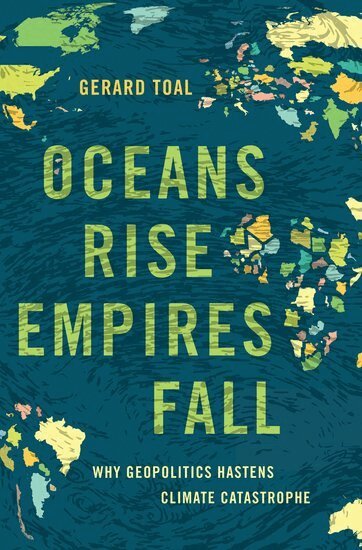
A powerful explanation of why geopolitical competition drives climate breakdown and inhibits action to prevent it.It is the decisive decade for climate change action, yet great power competition is surging. Geo-economic rivalries and territorial conflicts over Ukraine and Taiwan appear more important than collective action against catastrophic climate change. Why do great powers favor competition and rivalry over transnational policies to address the greatest threat humanity has ever faced?In Oceans Rise Empires Fall,Gerard Toal identifies geopolitics as the culprit. Examining its meaning, history, and leading thinkers, he exposes the geo-ecological foundations of geopolitics and the struggles for living space that it expresses. The book isolates three Earth-controlling practices that characterize geopolitics. The territorial control imperatives of great powers preclude collaborative behavior to address common challenges. Competing world historical missions drive rivalries and wars, like Russia's fossil-fuel-funded aggression against Ukraine. Military-industrial competition over leading edge technologies and critical minerals takes priority over collaborative decarbonization policies. In the contest between geopolitics and sustainable climate policies, the former takes precedence—especially when competition shifts to outright conflict. In this book, Toal interrogates that relationship and its stakes for the ongoing acceleration of climate change."
E-bok
Engelska, 2024293 kr
Läs direkt efter köp
A powerful explanation of why geopolitical competition makes implementing effective climate change policies so difficult. As the Russia-Ukraine war has shown, great-power competition drives states to prioritize fossil fuel acquisition over working toward a zero-carbon future.In the last few years, it has become abundantly clear that the effects of accelerating climate change will be catastrophic, from rising seas to more violent storms to desertification. Yet why do nation-states find it so difficult to implement transnational policies that can reduce carbon output and slow global warming? In Oceans Rise, Empires Fall, Gerard Toal identifies geopolitics as the culprit. States would prefer to reduce emissions in the abstract, but in the great global competition for geopolitical power, states always prioritize access to carbon-based fuels necessary for generating the sort of economic growth that helps them compete with rival states. Despite what we now know about the long-term impacts of climate change, geopolitical contests continue to sideline attempts to halt or slow down the process. The Ukraine conflict in particular exposes our priorities. To escape reliance on Russia's vast oil and gas reserves, states have expanded fossil fuel production that necessarily increases the amount of carbon in the atmosphere. The territorial control imperatives of great powers preclude collaborative behavior to address common challenges. Competitive territorial, resource, and technological dramas across the geopolitical chessboard currently obscure the deterioration of the planet's life support systems. In the contest between geopolitics and sustainable climate policies, the former takes precedence-especially when competition shifts to outright conflict. In this book, Toal interrogates that relationship and its stakes for the ongoing acceleration of climate change.
E-bok
PDF, Engelska, 2024293 kr
Läs direkt efter köp
A powerful explanation of why geopolitical competition makes implementing effective climate change policies so difficult. As the Russia-Ukraine war has shown, great-power competition drives states to prioritize fossil fuel acquisition over working toward a zero-carbon future.In the last few years, it has become abundantly clear that the effects of accelerating climate change will be catastrophic, from rising seas to more violent storms to desertification. Yet why do nation-states find it so difficult to implement transnational policies that can reduce carbon output and slow global warming? In Oceans Rise, Empires Fall, Gerard Toal identifies geopolitics as the culprit. States would prefer to reduce emissions in the abstract, but in the great global competition for geopolitical power, states always prioritize access to carbon-based fuels necessary for generating the sort of economic growth that helps them compete with rival states. Despite what we now know about the long-term impacts of climate change, geopolitical contests continue to sideline attempts to halt or slow down the process. The Ukraine conflict in particular exposes our priorities. To escape reliance on Russia's vast oil and gas reserves, states have expanded fossil fuel production that necessarily increases the amount of carbon in the atmosphere. The territorial control imperatives of great powers preclude collaborative behavior to address common challenges. Competitive territorial, resource, and technological dramas across the geopolitical chessboard currently obscure the deterioration of the planet's life support systems. In the contest between geopolitics and sustainable climate policies, the former takes precedence-especially when competition shifts to outright conflict. In this book, Toal interrogates that relationship and its stakes for the ongoing acceleration of climate change.
Inbunden, Engelska, 2011
776 kr
Skickas inom 5-8 vardagar
Bosnia Remade is an authoritative account of ethnic cleansing and its partial undoing in the Bosnian wars from 1990 to the present. The two authors, both political geographers, combine a bird's-eye view of the entire war from onset to aftermath with a micro-level account of three towns that underwent ethnic cleansing and--later--the return of refugees. Through the lens of critical geopolitics, which highlights the power of both geopolitical discourse and spatial strategies, Toal and Dahlman focus on the two attempts to remake the ethnic structure of Bosnia since 1991. The first attempt was by ascendant ethnonationalist forces that tried to eradicate the mixed ethnic structures of Bosnia's towns, villages and communities. While these forces destroyed tens of thousands of homes and lives, they failed to destroy Bosnia-Herzegovina as a polity. The second attempt followed the war. The international community, in league with Bosnian officials, tried to undo the demographic consequences of ethnic cleansing. This latter effort has moved in fits and starts, but as the authors show, it has re-made Bosnia, producing a country that has moved beyond the stark segregationist geography created by ethnic cleansing. By showing how ethnic cleansing can be reversed, Toal and Dahlman offer more than just a comprehensive narrative of Europe's worst political crisis in the past two decades. They also offer lessons for addressing an enduring global problem.
E-bok
PDF, Engelska, 2011761 kr
Läs direkt efter köp
Bosnia Remade is an authoritative account of ethnic cleansing and its partial undoing from the onset of the 1990s Bosnian wars up through the present. Gerard Toal and Carl Dahlman combine a bird''s-eye view of the entire war from onset to aftermath with a micro-level account of three towns that underwent ethnic cleansing and--later--the return of refugees. There have been two major attempts to remake the ethnic geography of Bosnia since 1991. In the first instance, ascendant ethno-nationalist forces tried to eradicate the mixed ethnic geographies of Bosnia''s towns, villages and communities. These forces devastated tens of thousands of homes and lives, but they failed to destroy Bosnia-Herzegovina as a polity. In the second attempt, which followed the war, the international community, in league with Bosnian officials, endeavored to reverse the demographic and other consequences of this ethnic cleansing. While progress has been uneven, this latter effort has transformed the ethnic demography of Bosnia and moved the nation beyond its recent segregationist past. By showing how ethnic cleansing was challenged, Bosnia Remade offers more than just a comprehensive narrative of Europe''s worst political crisis of the past two decades. It also offers lessons for addressing an enduring global problem.
Inbunden, Engelska, 2006
3 673 kr
Skickas inom 10-15 vardagar
This extensively revised second edition of The Geopolitics Reader draws together the most influential and significant geopolitical readings from the last hundred years. A compendium of divergent viewpoints of global conflict and change, it includes readings from Halford Mackinder, Theodore Roosevelt, Adolf Hitler, George Kennan, Samuel Huntington, Edward Said, Osama Bin Laden and American neoconservatives. It draws on the most illuminating examples of imperial, Cold War and contemporary geopolitics, as well as new environmental themes, global dangers and multiple resistances to the practices of geopolitics. Whilst retaining a coherent five part structure, the selection of readings has been updated to account for recent developments in the critical study of geopolitics and the post 9/11 geopolitical landscape (including issues in technoscience, biowarfare, oil politics, and terrorism), and key questions address issues of the transformed nature of threats in the new millennium, the debate over the hegemonic position of the US, and non-American perspectives on contemporary geopolitics.Skilfully guiding the reader through the divergent viewpoints of global conflict and change, the editors, all leading geopolitical authorities, provide comprehensive introductions and critical commentaries at the start of each section. Illustrated with provocative cartoons, this second edition of The Geopolitics Reader is the ideal textbook for introductory classes on international relations, world politics, political geography and, of course, geopolitics, provoking lively discussion of how questions of discourse and power are at the centre of the critical study of geopolitics.
Häftad, Engelska, 2006
1 100 kr
Skickas inom 10-15 vardagar
This extensively revised second edition of The Geopolitics Reader draws together the most influential and significant geopolitical readings from the last hundred years. A compendium of divergent viewpoints of global conflict and change, it includes readings from Halford Mackinder, Theodore Roosevelt, Adolf Hitler, George Kennan, Samuel Huntington, Edward Said, Osama Bin Laden and American neoconservatives. It draws on the most illuminating examples of imperial, Cold War and contemporary geopolitics, as well as new environmental themes, global dangers and multiple resistances to the practices of geopolitics. Whilst retaining a coherent five part structure, the selection of readings has been updated to account for recent developments in the critical study of geopolitics and the post 9/11 geopolitical landscape (including issues in technoscience, biowarfare, oil politics, and terrorism), and key questions address issues of the transformed nature of threats in the new millennium, the debate over the hegemonic position of the US, and non-American perspectives on contemporary geopolitics.Skilfully guiding the reader through the divergent viewpoints of global conflict and change, the editors, all leading geopolitical authorities, provide comprehensive introductions and critical commentaries at the start of each section. Illustrated with provocative cartoons, this second edition of The Geopolitics Reader is the ideal textbook for introductory classes on international relations, world politics, political geography and, of course, geopolitics, provoking lively discussion of how questions of discourse and power are at the centre of the critical study of geopolitics.
E-bok
PDF, Engelska, 20082 519 kr
Läs direkt efter köp
A Companion to Political Geography presents students and researchers with a substantial survey of this active and vibrant field.
Introduces the best thinking in contemporary political geography. Contributions written by scholars whose work has helped to shape the discipline. Includes work at the cutting edge of the field. Covers the latest theoretical developments.Del 7 - Wiley Blackwell Companions to Geography
Companion to Political Geography
Inbunden, Engelska, 2002
2 151 kr
Skickas inom 5-8 vardagar
A Companion to Political Geography presents students and researchers with a substantial survey of this active and vibrant field. Introduces the best thinking in contemporary political geography.Contributions written by scholars whose work has helped to shape the discipline.Includes work at the cutting edge of the field.Covers the latest theoretical developments.
Del 10 - Wiley Blackwell Companions to Geography
Companion to Political Geography
Häftad, Engelska, 2007
629 kr
Skickas inom 5-8 vardagar
A Companion to Political Geography presents students and researchers with a substantial survey of this active and vibrant field. Introduces the best thinking in contemporary political geography.Contributions written by scholars whose work has helped to shape the discipline.Includes work at the cutting edge of the field.Covers the latest theoretical developments.