Gershon David Hundert - Böcker
Visar alla böcker från författaren Gershon David Hundert. Handla med fri frakt och snabb leverans.
5 produkter
5 produkter
281 kr
Skickas inom 7-10 vardagar
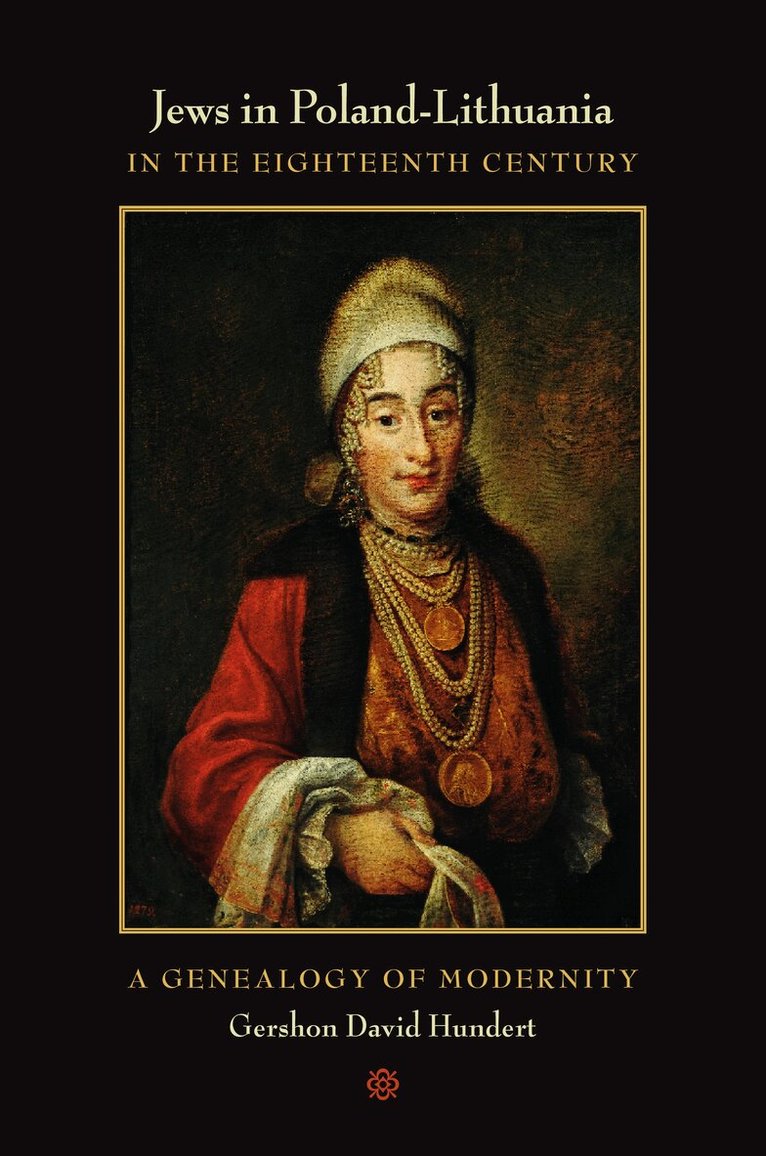
Missing from most accounts of the modern history of Jews in Europe is the experience of what was once the largest Jewish community in the world - an oversight that Gershon David Hundert corrects in this history of Eastern European Jews in the eighteenth century. The experience of eighteenth-century Jews in the Polish-Lithuanian Commonwealth did not fit the pattern of integration and universalization - in short, of westernization - that historians tend to place at the origins of Jewish modernity. Hundert puts this experience, that of the majority of the Jewish people, at the center of his history. He focuses on the relations of Jews with the state and their role in the economy, and on more "internal" developments such as the popularization of the Kabbalah and the rise of Hasidism. Thus he describes the elements of Jewish experience that became the basis for a "core Jewish identity" - an identity that accompanied the majority of Jews into modernity.
909 kr
Skickas inom 10-15 vardagar
A comprehensive view of the history, beliefs and practices, and sociology of the Hasidic movement founded by Israel Baal Sheen Tov, this simultaneously provides a reflection of the development of the scholarly understanding of Hasidism from the 18th century to the present.
360 kr
Skickas inom 7-10 vardagar
A comprehensive view of the history, beliefs and practices, and sociology of the Hasidic movement founded by Israel Baal Sheen Tov, this simultaneously provides a reflection of the development of the scholarly understanding of Hasidism from the 18th century to the present.
525 kr
Skickas inom 5-8 vardagar
Winner of the Montreal Jewish Public Library's J. I. Segal PrizeOriginally published in 1991. In the eighteenth century, more than half of the world's Jewish population lived in Polish private villages and towns owned by magnate-aristocrats. Furthermore, roughly half of Poland's entire urban population was Jewish. Thus, the study of Jews in private Polish towns is central to both Jewish history and to the history of Poland-Lithuania. The Jews in a Polish Private Town seeks to investigate the social, economic, and political history of Jews in Opatów, a private Polish town, in the context of an increasing power and influence of private towns at the expense of the Polish crown and gentry in the eighteenth century. Hundert recovers an important community from historical obscurity by providing a balanced perspective on the Jewish experience in the Polish Commonwealth and by describing the special dimensions of Jewish life in a private town.
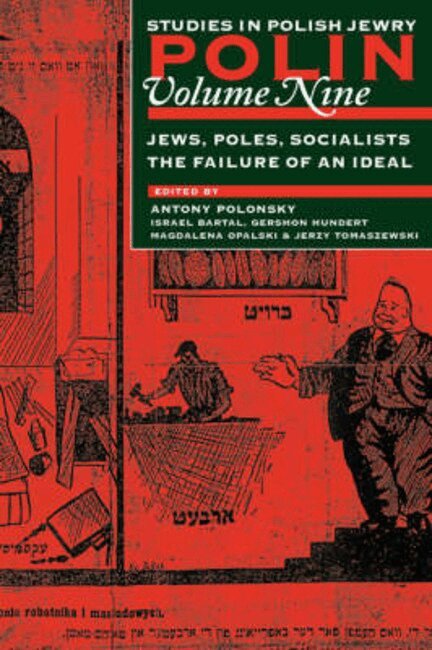
Del 9 - Polin: Studies in Polish Jewry
Polin: Studies in Polish Jewry Volume 9
Jews, Poles, Socialists: The Failure of an Ideal
Häftad, Engelska, 2008
318 kr
Skickas inom 5-8 vardagar
‘The less antisemitism exists among Christians, the easier it will be to unite the social forces . . . and the sooner workers’ solidarity will emerge: solidarity of all who are exploited and wronged . . . Jew, Pole, Lithuanian.’ Józef Pilsudski, 1903The Socialist ideals of brotherhood, equality, and justice have exercised a strong attraction for many Jews. On the Polish lands, Jews were drawn to Socialism when the liberal promise of integration into the emergent national entities of east and central Europe as Poles or Lithuanians or Russians of the Hebrew faith seemed to be failing. For those Jews seeking emancipation from discrimination and the constraints of a religious community, Socialism offered a tantalizing new route to integration in the wider society. Some Jews saw in Socialism a secularized version of the age-old Jewish messianic longing, while others were driven to the Socialist movement by poverty and the hope that it would supply their material needs.But in Poland as elsewhere in Europe, Socialism failed to transcend national divisions. The articles in this volume of Polin investigate the failure of this ideal and its consequences for Jews on the Polish lands, examining Socialist attitudes to the ‘Jewish question’, the issue of antisemitism, how the growth of Socialism affected relationships between Poles and Jews, and the character of Jewish Socialist groups in Poland.The result is a significant contribution to the history of Jews in Poland. It also sheds light on the history of Socialism in east-central Europe and the complexity of national problems there. Editors and contributors: Israel Bartal, Daniel Blatman, Alina Cala, Stephen D. Corrsin, David Engel, Sylvia Barack Fishman, Gershon Hundert, Ross Kessel, Shmuel Krakowski, Dov Levin, Pawel Machcewicz, Stanislaw Meducki, Erica Nadelhaft, Magdalena Opalska, Richard Pipes, Antony Polonsky, Dina Porat, Teresa Prekerowa, Michal Sliwa, Janusz Sujecki, Jerzy Tomaszewski, Barbara Wachowska.