Gherardo Ugolini – författare
Visar alla böcker från författaren Gherardo Ugolini. Handla med fri frakt och snabb leverans.
6 produkter
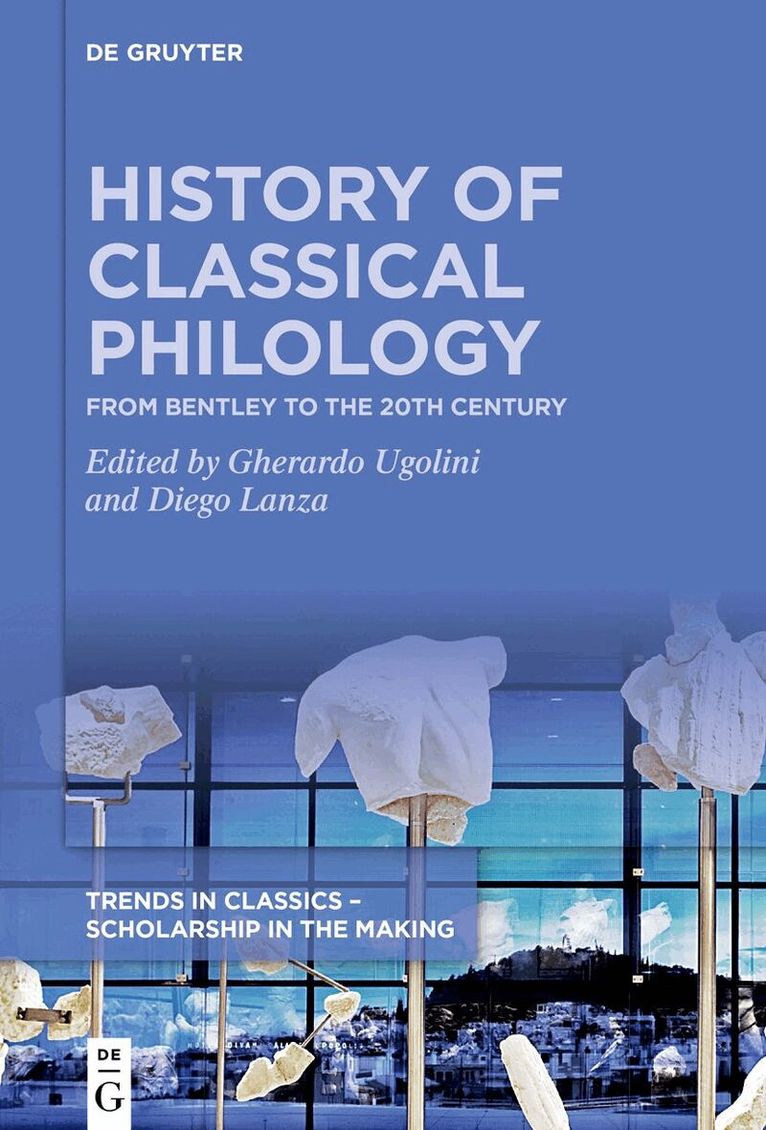
History of Classical Philology
From Bentley to the 20th century
Av Diego Lanza, Gherardo Ugolini
Inbunden, 2022
1826 kr
Lägg i varukorg
An updated history of classical philology had long been a desideratum of scholars of the ancient world. The volume edited by Diego Lanza and Gherardo Ugolini is structured in three parts. In the first one (“Towards a science of antiquity”) the approach of Anglo-Saxon philology (R. Bentley) and the …
History of Classical Philology
From Bentley to the 20th century
Av Gherardo Ugolini, Diego Lanza
E-bok, 2022
1566 kr
Lägg i varukorg
An updated history of classical philology had long been a desideratum of scholars of the ancient world. The volume edited by Diego Lanza and Gherardo Ugolini is structured in three parts. In the first one (“Towards a science of antiquity”) the approach of Anglo-Saxon philology (R. Bentley) and the …
History of Classical Philology
From Bentley to the 20th century
Av Gherardo Ugolini, Diego Lanza
E-bok, 2022
1703 kr
Lägg i varukorg
An updated history of classical philology had long been a desideratum of scholars of the ancient world. The volume edited by Diego Lanza and Gherardo Ugolini is structured in three parts. In the first one (“Towards a science of antiquity”) the approach of Anglo-Saxon philology (R. Bentley) and the …
Italia Regione d'Europa- Lingua - Cultura - Identità
Atti del Convegno Internazionale Di Studi Tenutosi Nell'ambito Della Settimana Della Lingua Italiana Nel Mondo. Organizzato Dall'ufficio Culturale Dell'ambasciata d'Italia (Berlino 20-22 Ottobre 2003)
Av Maria Giovanna Tassinari, Gherardo Ugolini
Häftad, 2005
500 kr
Tillfälligt slut
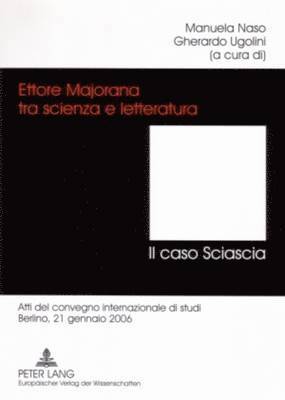
Ettore Majorana Tra Scienza E Letteratura. - Il Caso Sciascia
Atti del Convegno Internazionale Di Studi- Berlino, 21 Gennaio 2006
Av Manuela Naso, Gherardo Ugolini
Häftad, 2006
407 kr
Tillfälligt slut
Ettore Majorana, considerato uno dei maggiori scienziati italiani del Novecento, è divenuto figura leggendaria soprattutto in seguito alla sua misteriosa «scomparsa» avvenuta nel 1938, alla quale lo scrittore siciliano Leonardo Sciascia ha dedicato uno dei suoi libri più belli ( La scomparsa di …
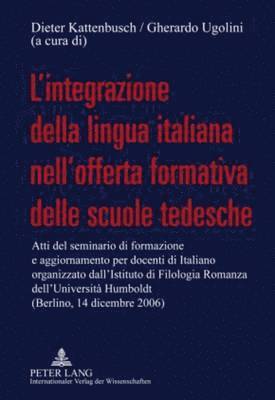
L'Integrazione Della Lingua Italiana Nell'offerta Formativa Delle Scuole Tedesche
Atti del Seminario Di Formazione E Aggiornamento Per Docenti Di Italiano Organizzato Dall'istituto Di Filologia Romanza Dell'università Humboldt (Berlino, 14 Dicembre 2006)
Av Dieter Kattenbusch, Gherardo Ugolini
Inbunden, 2010
315 kr
Tillfälligt slut
Nel dicembre 2006 l’Istituto di Filologia Romanza dell’Università Humboldt ha organizzato in collaborazione con l’Ambasciata d’Italia a Berlino una giornata di studio dedicata al tema dell’integrazione dell’Italiano nell’offerta didattica delle scuole tedesche. Al seminario di formazione e …