Ghislaine Kenyon – författare
Visar alla böcker från författaren Ghislaine Kenyon. Handla med fri frakt och snabb leverans.
5 produkter
5 produkter
E-bok
PDF, Engelska, 2016266 kr
Läs direkt efter köp
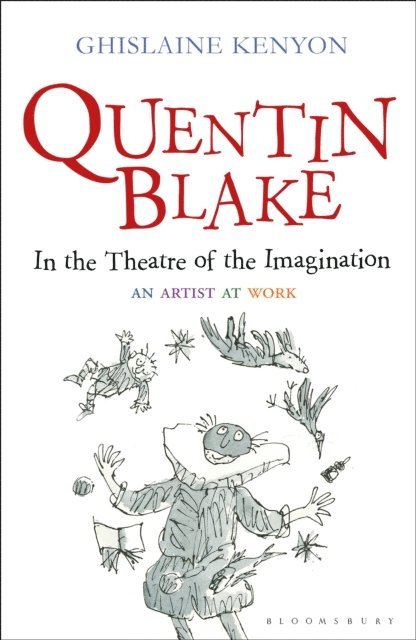
Quentin Blake is one of the foremost illustrators of the twentieth century. Perhaps best known for his collaboration with Roald Dahl on books such as The Giraffe and the Pelly and Me, The Twits and Matilda, he is cherished by young and old alike, throughout the world.Yet his work has not attained 'fine art' status. Should it be considered so? How does Blake's background in education inform his work? And what is the interrelation between the work he makes and the life that he leads? Distinguished curator Ghislaine Kenyon has spent a great deal of time with Blake during the last decade and a half and in Quentin Blake In the Theatre of the Imagination she provides a profound insight into an extraordinary man and a truly remarkable body of work.Kenyon has known Quentin Blake since 1998, and worked with him on staging a jointly curated exhibition 'Tell Me A Picture' in the year of Blake's tenure as Children's Laureate (1999-2000). She followed Blake during the years in which he continued to work 'off the page' producing work for hospitals in Angers and Paris and staging major exhibitions around the world, collaborating with him both in an administrative and curatorial capacity. But what Kenyon has observed, during a number of years of working alongside him, and sharing a friendship, is that Blake's work is necessarily intertwined with his life. His life informs his wonderful illustrations and his artwork in turn informs his life - a life which is extremely private, mysterious and full of complexities and ambiguities.Kenyon and Blake share a background in teaching, and this interest informs Blake's connection to what educationists call 'learning and teaching' but which could also be termed simply education. A shared enthusiasm for education brought Kenyon and Blake together and informs the projects both the artist and curator now work on, aiming to reach children and adults in new ways and provide new experiences.With exceptional insight into Blake's oeuvre and his life, Ghislaine Kenyon has produced not merely a biography, but a critical view of the artist's work. Quentin Blake: In the Theatre of the Imagination is a fitting tribute to Quentin Blake's journey and his great legacy - the delightful illustrations to over 300 books, several written by him, paintings, prints and sculptures - and the contribution he has made to art education and the lives of so many different people.
E-bok
Engelska, 2016266 kr
Läs direkt efter köp
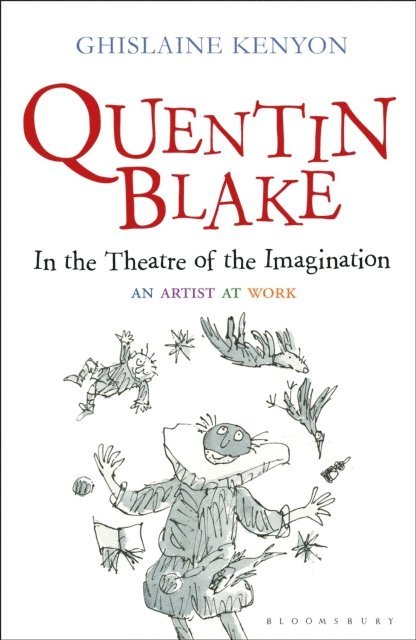
Based on interviews with the subject, this visual biography is an intimate portrait of Quentin Blake, the much-loved illustrator and artistic genius of our age.Quentin Blake is one of the foremost illustrators of the twentieth century. Perhaps best known for his collaboration with Roald Dahl on books such as The Giraffe and the Pelly and Me, The Twits and Matilda, he is cherished by young and old alike, throughout the world.Yet his work has not attained 'fine art' status. Should it be considered so? How does Blake's background in education inform his work? And what is the interrelation between the work he makes and the life that he leads? Distinguished curator Ghislaine Kenyon has spent a great deal of time with Blake during the last decade and a half and in Quentin Blake In the Theatre of the Imagination she provides a profound insight into an extraordinary man and a truly remarkable body of work.Kenyon has known Quentin Blake since 1998, and worked with him on staging a jointly curated exhibition 'Tell Me A Picture' in the year of Blake's tenure as Children's Laureate (1999-2000). She followed Blake during the years in which he continued to work 'off the page' producing work for hospitals in Angers and Paris and staging major exhibitions around the world, collaborating with him both in an administrative and curatorial capacity.But what Kenyon has observed, during a number of years of working alongside him, and sharing a friendship, is that Blake's work is necessarily intertwined with his life. His life informs his wonderful illustrations and his artwork in turn informs his life - a life which is extremely private, mysterious and full of complexities and ambiguities.Kenyon and Blake share a background in teaching, and this interest informs Blake's connection to what educationists call 'learning and teaching' but which could also be termed simply education. A shared enthusiasm for education brought Kenyon and Blake together and informs the projects both the artist and curator now work on, aiming to reach children and adults in new ways and provide new experiences.With exceptional insight into Blake's oeuvre and his life, Ghislaine Kenyon has produced not merely a biography, but a critical view of the artist's work. Quentin Blake: In the Theatre of the Imagination is a fitting tribute to Quentin Blake's journey and his great legacy - the delightful illustrations to over 300 books, several written by him, paintings, prints and sculptures - and the contribution he has made to art education and the lives of so many different people.
284 kr
Läs direkt efter köp
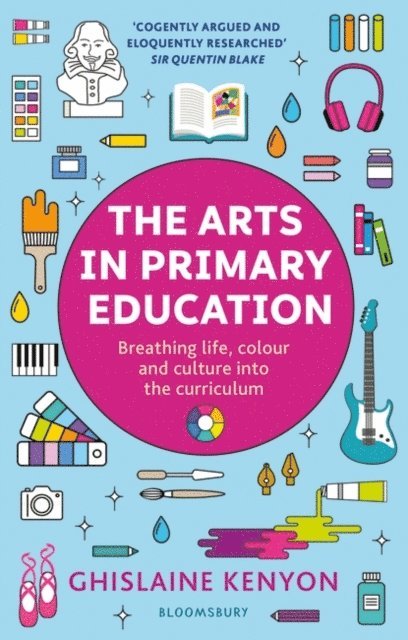
'A beautifully reasoned argument, in the age of cuts, as to why the arts absolutely must be at the very heart of primary education' – Jon SnowStudying the arts, including visual arts, music, dance, drama and literature, has numerous benefits across the primary curriculum. A truly creative curriculum has the power to motivate and energise pupils; it develops creative and critical thinking, problem solving, language, and fine motor skills. But what is the best way to invest in and improve arts education across a school? Drawing on interviews with successful school leaders, case studies and her own extensive experience working in the education departments of the Courtauld Gallery, the National Gallery and Somerset House, Ghislaine Kenyon presents simple, inexpensive and practical ways to integrate the arts across the primary curriculum. The Arts in Primary Education shows how resources already present in schools, such as picture books or the outdoor environment, can be used to develop a creative culture. With a focus on long-term initiatives including partnerships with art institutions and the training and personal development of teachers, the book also presents clear and accessible explanations of the benefits of integrating the arts across a school. Backed by research and evidence and complete with images and descriptions of artworks, this guide is ideal for helping develop a whole-school arts curriculum to enrich learning and raise attainment in all subject areas.
E-bok
PDF, Engelska, 2019284 kr
Läs direkt efter köp
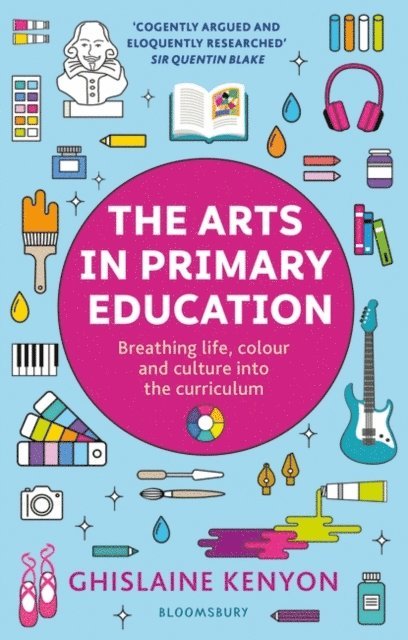
'A beautifully reasoned argument, in the age of cuts, as to why the arts absolutely must be at the very heart of primary education' – Jon SnowStudying the arts, including visual arts, music, dance, drama and literature, has numerous benefits across the primary curriculum. A truly creative curriculum has the power to motivate and energise pupils; it develops creative and critical thinking, problem solving, language, and fine motor skills. But what is the best way to invest in and improve arts education across a school? Drawing on interviews with successful school leaders, case studies and her own extensive experience working in the education departments of the Courtauld Gallery, the National Gallery and Somerset House, Ghislaine Kenyon presents simple, inexpensive and practical ways to integrate the arts across the primary curriculum. The Arts in Primary Education shows how resources already present in schools, such as picture books or the outdoor environment, can be used to develop a creative culture. With a focus on long-term initiatives including partnerships with art institutions and the training and personal development of teachers, the book also presents clear and accessible explanations of the benefits of integrating the arts across a school. Backed by research and evidence and complete with images and descriptions of artworks, this guide is ideal for helping develop a whole-school arts curriculum to enrich learning and raise attainment in all subject areas.
Del 9 - Aldeburgh Studies in Music
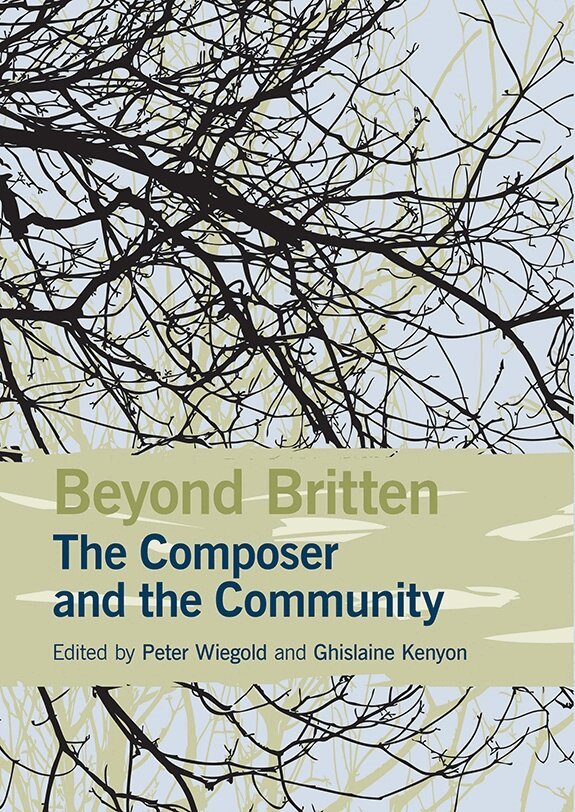
Beyond Britten: The Composer and the Community
Inbunden, Engelska, 2015
592 kr
Skickas inom 5-8 vardagar
Leading composers, producers and writers consider the role of the composer in the community in Britain today and over the last fifty years.With his Aspen award lecture (1964), Benjamin Britten expressed a unique commitment to community and place. This book revisits this seminal lecture, but then uses it as a starting point of reflection, inviting leading composers, producers and writers to consider the role of the composer in the community in Britain in the last fifty years.Colin Matthews, Jonathan Reekie and John Barber reflect on Britten's aspirations as a composer and the impact of his legacy, and Gillian Moore surveys the ideals of composers since the 1960s. Eugene Skeef and Tommy Pearson discuss the influence of the London Sinfonietta, while Katie Tearle reviews the tradition of community opera at Glyndebourne. Nigel Osborne and Judith Webster explore the role of music as therapy, and James Redwood, Amoret Abis, Sean Gregory and Douglas Mitchell look at music in the classroom and creative workshops. John Sloboda, Detta Danford and Natasha Zielazinski discuss collaboration in music-making and ways of facilitating exchanges between the composer and the audience, while Christopher Fox and Howard Skempton examine the role of modernism and the use of 'other', radical techniques to stimulate new dialogues between composer and community. Peter Wiegold and Amoret Abis interview Sir Harrison Birtwistle, John Woolrich and Phillip Cashian, and Wiegold discusses his formative experiences in encountering music-making in other cultures.All of these approaches to the role and identity of the composer throw a different light on how we address 'the composer and the community': the varied, sometimes contradictory, motivations of composers; the role of music in 'enhancing lives'; the concept of 'outreach' and the different ways this is pursued; and, finally, the meaning of 'community'. Underpinning each are genuine questions about the relationship of arts to society. This book will appeal not only to composers, performers and practitioners of contemporary music but to anyone interested in the changes in twentieth-century music practice, music in education, and the role of music and the arts in the wider community and society.