Giacomo Negro – författare
Visar alla böcker från författaren . Handla med fri frakt och snabb leverans.
4 produkter
4 produkter
Inbunden, Engelska, 2022
1 185 kr
Skickas inom 5-8 vardagar
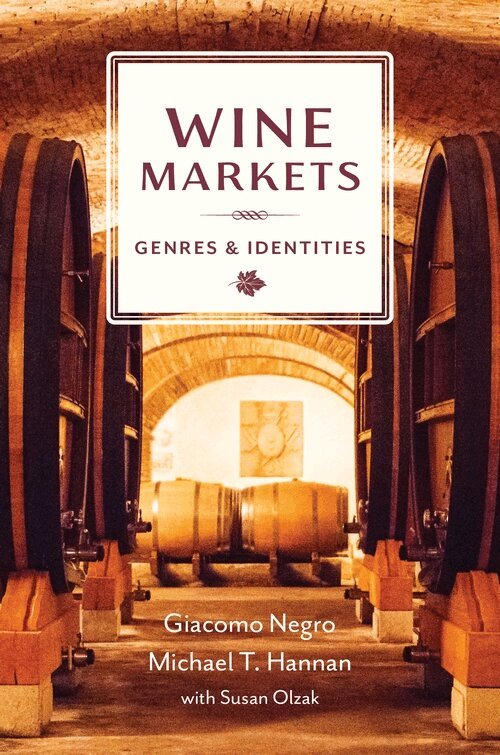
The world of wine encompasses endless variety. Consumers want to understand what makes one bottle of wine different from another; vintners need to know how to communicate what makes their product distinctive. Drawing on a decade of fieldwork in Italy and France as well as interviews with critics and analysis of market data, Giacomo Negro, Michael T. Hannan, and Susan Olzak provide an unprecedented sociological account of the dynamics of wine markets. They demonstrate how the concepts of genre and collective identity illuminate producers’ choices, whether they are selling traditional or nonconventional wines.Winemakers face a fundamental choice: produce an existing style and develop an identity as a proponent of tradition or embrace foreign, new, or emerging categories and be seen as an innovator. To explain this dilemma, Negro, Hannan, and Olzak develop the notion of wine genres, or shared understandings among producers and the public. Genres emerge through the social structure of production, including factors such as group solidarity, social cohesion, and collective action, and become key reference points for critics and consumers. Wine Markets features case studies of the creation of a modern wine genre and a countermovement against modernism in Piedmont, the failure of producers of Brunello di Montalcino in Tuscany to define a clear collective identity, and the emergence of the biodynamic wine movement in Alsace. This book not only offers keen sociological insight into the wine world but also sheds new light on the logic of markets and organizations more broadly.
Häftad, Engelska, 2022
302 kr
Skickas inom 5-8 vardagar
The world of wine encompasses endless variety. Consumers want to understand what makes one bottle of wine different from another; vintners need to know how to communicate what makes their product distinctive. Drawing on a decade of fieldwork in Italy and France as well as interviews with critics and analysis of market data, Giacomo Negro, Michael T. Hannan, and Susan Olzak provide an unprecedented sociological account of the dynamics of wine markets. They demonstrate how the concepts of genre and collective identity illuminate producers’ choices, whether they are selling traditional or nonconventional wines.Winemakers face a fundamental choice: produce an existing style and develop an identity as a proponent of tradition or embrace foreign, new, or emerging categories and be seen as an innovator. To explain this dilemma, Negro, Hannan, and Olzak develop the notion of wine genres, or shared understandings among producers and the public. Genres emerge through the social structure of production, including factors such as group solidarity, social cohesion, and collective action, and become key reference points for critics and consumers. Wine Markets features case studies of the creation of a modern wine genre and a countermovement against modernism in Piedmont, the failure of producers of Brunello di Montalcino in Tuscany to define a clear collective identity, and the emergence of the biodynamic wine movement in Alsace. This book not only offers keen sociological insight into the wine world but also sheds new light on the logic of markets and organizations more broadly.
Del 31 - Research in the Sociology of Organizations
Categories in Markets
Origins and Evolution
Inbunden, Engelska, 2010
1 587 kr
Skickas inom 5-8 vardagar
Consumers, producers, critics, and other market agents rely on socially constructed categories like 'craft' beers, houseware 'collectibles', and 'thriller' films for their understanding of products and producers in markets. Although organizational and sociological accounts often take such categories as given, researchers increasingly acknowledge that category emergence, development, and functioning represent key aspects of how markets work. Take, for example, the U.S. brewing industry, which has become segmented into mass versus specialty producers. Many beer lovers who appreciate the characteristics of a beer made by small, specialty breweries are not willing to buy an equivalent beer made by an integrated, major producer. Knowledge of what specialty beer has come to mean and represent to consumers as the product of an authentic, artisanal production process and delivery is crucial for our understanding of how this market and competitive dynamics within it have evolved. This volume focuses on how market categories shape processes of production and consumption and how these activities in turn shape category systems. This volume consists of original contributions to theory and empirical research by a diverse group of esteemed authors. Topics explored include how new categories emerge, become enacted and gain consensus, how categories are used by market agents (including as tools for interpretation, as mobilization frames, and as cognitive infrastructures for learning), and how category systems change over time. These topics are explored from a variety of perspectives: new institutional theory, organizational ecology, social movement theory, and socio-cognitive theories of markets. The breadth of perspectives in this volume attests to the importance of this topic to sociological studies of market processes.
E-bok
PDF, Engelska, 20101 665 kr
Läs direkt efter köp
Consumers, producers, critics, and other market agents rely on socially constructed categories like ''craft'' beers, houseware ''collectibles'', and ''thriller'' films for their understanding of products and producers in markets. Although organizational and sociological accounts often take such categories as given, researchers increasingly acknowledge that category emergence, development, and functioning represent key aspects of how markets work. Take, for example, the U.S. brewing industry, which has become segmented into mass versus specialty producers. Many beer lovers who appreciate the characteristics of a beer made by small, specialty breweries are not willing to buy an equivalent beer made by an integrated, major producer. Knowledge of what specialty beer has come to mean and represent to consumers as the product of an authentic, artisanal production process and delivery is crucial for our understanding of how this market and competitive dynamics within it have evolved. This volume focuses on how market categories shape processes of production and consumption and how these activities in turn shape category systems. This volume consists of original contributions to theory and empirical research by a diverse group of esteemed authors. Topics explored include how new categories emerge, become enacted and gain consensus, how categories are used by market agents (including as tools for interpretation, as mobilization frames, and as cognitive infrastructures for learning), and how category systems change over time. These topics are explored from a variety of perspectives: new institutional theory, organizational ecology, social movement theory, and socio-cognitive theories of markets. The breadth of perspectives in this volume attests to the importance of this topic to sociological studies of market processes.