Gigliola Fragnito - Böcker
Visar alla böcker från författaren Gigliola Fragnito. Handla med fri frakt och snabb leverans.
12 produkter
12 produkter
705 kr
Skickas inom 7-10 vardagar
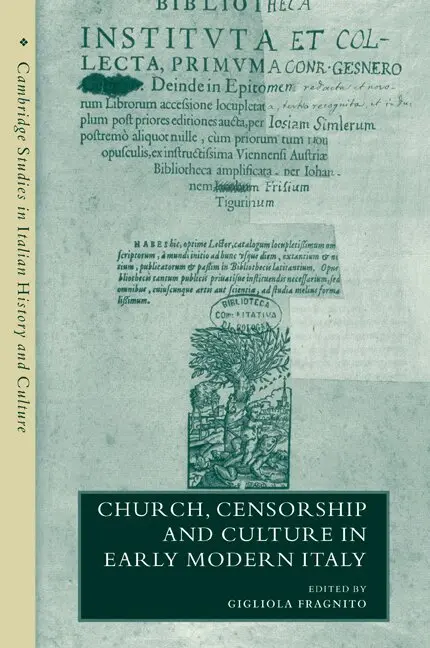
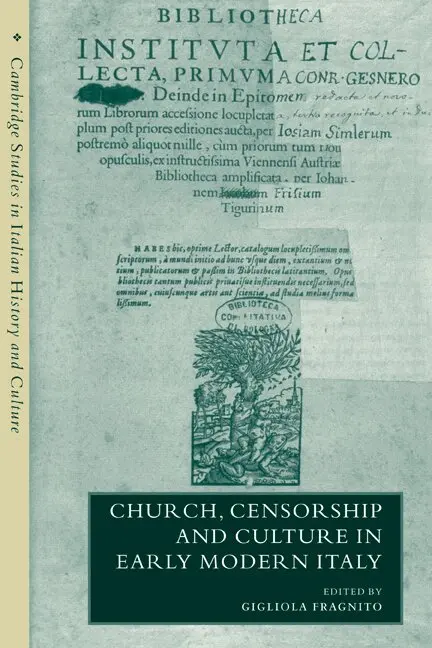
The opening of the archive of the former Congregation of the Holy Office in Rome (the office of the 'Inquisition') yielded an extraordinary wealth of documentation, altering dramatically many long-standing views on the repressive activity of the Roman Church during the counter-Reformation. Drawing extensively upon this archival source, this 2001 book highlights the wide gap between the Church's aim to exert control over all knowledge and actual implementation. The plurality of the central offices, their contradictory decisions, and the inadequacy of the peripheral offices combined to hamper truly effective censorship. But despite this failure in developing a unified expurgatory policy, such prohibition as there was had a disastrous effect upon Italian culture, and for centuries Italians - jurists, scientists, Jews and common readers, as well as scholars - were deprived of their most cherished books.
726 kr
Skickas inom 7-10 vardagar
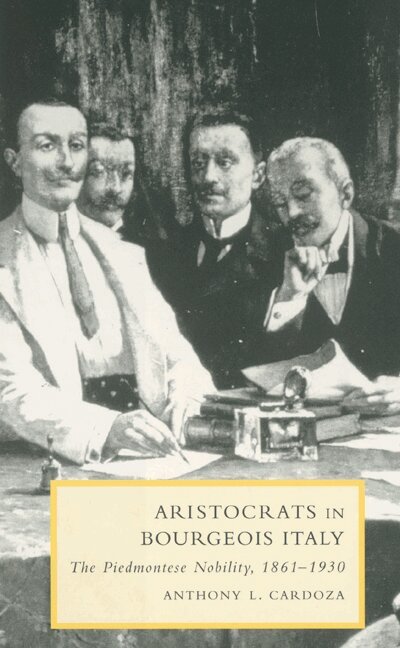
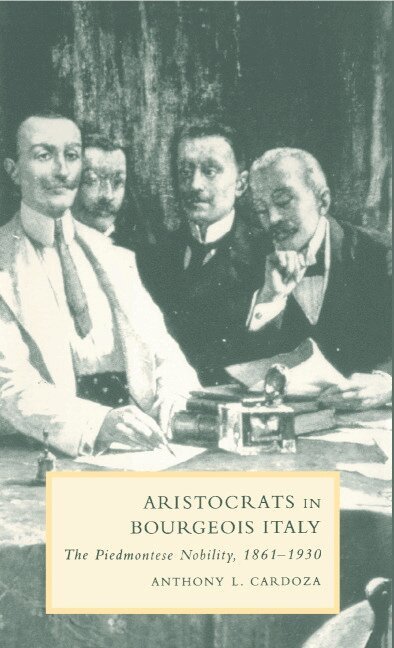
This book provides a full account of the Italian nobility in the post-unification era. It challenges interpretations which have stressed the rapid fusion of old and new elites in Italy and the marginality of the nobility after 1861, and instead highlights the continuing economic strength, social power and political influence of Italy's most prominent regional aristocracy. In Piedmont, the nobles were able to develop more indirect forms of influence to satisfy their hunger for leadership based on something older than constitutions or electoral politics. They remained a largely separate group within local society, distinguished by their attachment to the values of lineage, military service, landownership, and social exclusivity. This aristocratic exclusivity and influence survived the agricultural depression of the nineteenth century, before succumbing finally to the devastating effects of World War I.
523 kr
Skickas inom 7-10 vardagar
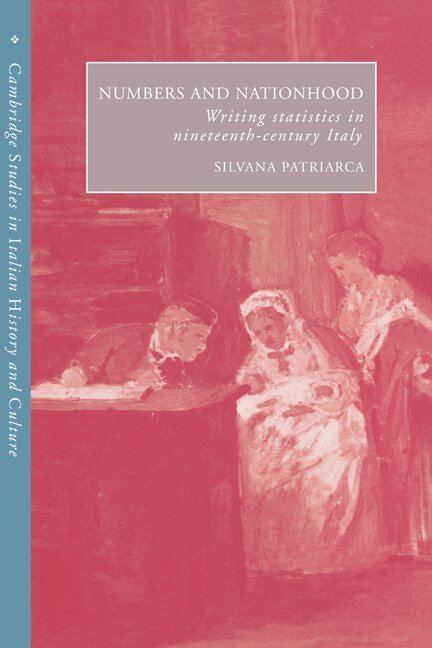
Numbers and Nationhood, first published in 1996, explores the Italian inflection of a Europe-wide phenomenon in the nineteenth century: the rise of statistics as a mode of representation in society. Silvana Patriarca examines the ideologies which informed the copious statistical literature produced between the 1820s, when statistical publications began to proliferate in the Italian states, and the 1870s, when a unified Italy entered a fully positivistic era. Her innovative study illuminates the relationship between the needs of an emerging nation and the uses to which statistics were put, generating a long-lasting image of Italy which nevertheless accentuated its internal territorial divisions. By examining the power of numerical representations, Numbers and Nationhood provides a fresh reading of the historiography of Risorgimento Italy and of positivism, bringing to the fore issues of science, ideology, and representation.
573 kr
Skickas inom 7-10 vardagar
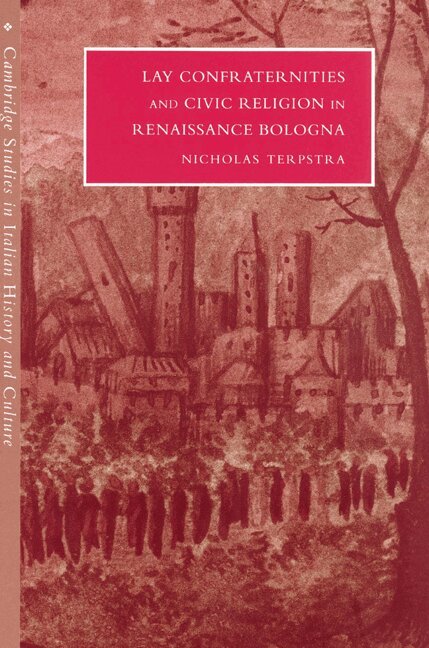
This 1995 book analyses the social, political and religious roles of the confraternities - the lay groups through which Italians of the Renaissance expressed their individual and collective religious beliefs - in Bologna in the fifteenth and sixteenth centuries. These confraternities shaped the civic religious cult through charitable activities, public shrines and processions. This civic religious role expanded as the confraternities became politicised: patricians used the confraternities increasingly in order to control the civic religious cult, civic charity, and the city itself. The book examines in detail how confraternities initially provided laypeople of the artisanal and merchant classes with a means of expressing a religious life separate from, but not in opposition to, the local parish or mendicant house. By the mid-sixteenth century, artisans and merchants had few options beyond parochial confraternities which were controlled by parish priests.
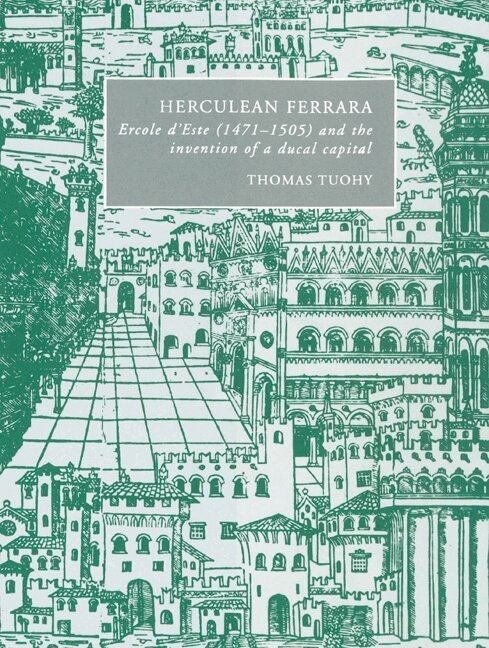
Herculean Ferrara
Ercole d'Este (1471-1505) and the Invention of a Ducal Capital
Häftad, Engelska, 2002
550 kr
Skickas inom 7-10 vardagar
Ercole d'Este (1471-1505) is perhaps best known as the father of Isabella d'Este, marchioness of Mantua, but his court in Ferrara was one of the most glittering in Renaissance Italy. He was an extremely prolific builder and laid out plans which doubled the size of the city. He was also the leader in the revival of classical theatre, an enthusiastic patron of musicians, and a creator of magnificent court spectacles. Very little survives to testify to Ercole's achievements, largely on account of a devastating earthquake in 1570, but considerable archival evidence has been used to re-establish the duke's achievements and the extent to which he was personally involved in his patronage. This evidence runs contrary to many currently held assumptions, and although Herculean Ferrara deals with one court and one ruler it also challenges some of the basic notions about the relationship between artist and patron during the Renaissance.
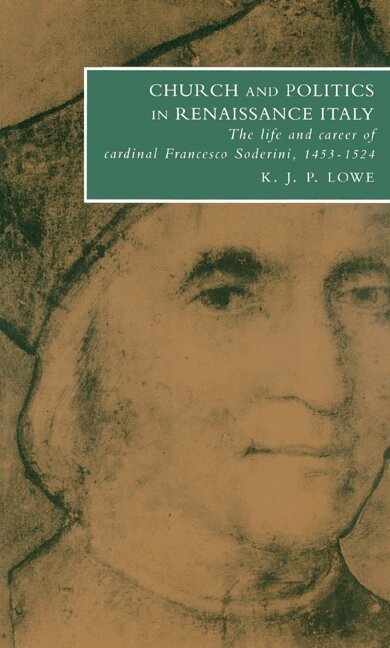
Church and Politics in Renaissance Italy
The Life and Career of Cardinal Francesco Soderini, 1453-1524
Häftad, Engelska, 2002
679 kr
Skickas inom 7-10 vardagar
This book examines the life of Cardinal Francesco Soderini (1453-1524) from a variety of perspectives and using a range of techniques. It analyses the relationship between Machiavelli, Piero and Francesco Soderini, and reinstates the crucial role played by Rome and contacts with Rome in late fifteenth-century and early sixteenth-century Florentine politics. Soderini's position as one of the chief powerbrokers of papal Rome, in opposition to the Medici, enables a reappraisal of political and ecclesiastical patronage and clientele systems. The cardinal also encouraged cultural, intellectual and building activities. Overall, through the book's collation of archival sources in and outside Italy, a new vision emerges of the lifestyle and activities of a learned and politically astute Italian cardinal.
Family and Public Life in Brescia, 1580-1650
The Foundations of Power in the Venetian State
Häftad, Engelska, 2003
563 kr
Skickas inom 7-10 vardagar
This book focuses on the behavior of the ruling families of Brescia, a rich and strategically vital city under Venetian rule, during the late sixteenth and early seventeenth century. The first part of the book conceptualizes the civic leadership of Brescia, with a profile of its origins and a brief history of the process of aristocratization. Further, it examines the relationship between family structure and the local socio-political structures. Size, wealth, education, and marriage ties were all pivotal factors which helped determine the family's position in public life. Its strength rested ultimately on its continuity over time. Women and women's property are given careful attention. The second part places the Brescian elite within the Venetian state. Besides controlling urban political institutions, the Brescians held strong economic links with the surrounding countryside, the basis of their power, and they enjoyed ample authority in the rural communities subject to the city.
1 322 kr
Skickas inom 7-10 vardagar
This book relates the history of Italian railways with special regard to their relation with the Italian state from the 1840s, when the first lines were constructed, until nationalization in 1905. It shows that while the Italian state interfered continuously in railway matters, it was nevertheless incapable of creating viable conditions for railway companies. Throughout the nineteenth century 'the railway question' continued to have a pernicious and divisive influence on Italian political life; and because of the low quality of railway regulation, and other factors, the railways' contribution to the creation of a national market and the economic unification of the country was limited. The book also examines Italian regional social and economic statistics before and after political unification in order to obtain a deeper insight into the continuing disparity between northern and southern Italy. Finally, the book places the development of the Italian railways in a European context, and compares their construction with those in Germany.
1 499 kr
Skickas inom 7-10 vardagar
This book provides a full account of the Italian nobility in the post-unification era. It challenges interpretations which have stressed the rapid fusion of old and new elites in Italy and the marginality of the nobility after 1861, and instead highlights the continuing economic strength, social power and political influence of Italy's most prominent regional aristocracy. In Piedmont, the nobles were able to develop more indirect forms of influence to satisfy their hunger for leadership based on something older than constitutions or electoral politics. They remained a largely separate group within local society, distinguished by their attachment to the values of lineage, military service, landownership, and social exclusivity. This aristocratic exclusivity and influence survived the agricultural depression of the nineteenth century, before succumbing finally to the devastating effects of World War I.
1 192 kr
Skickas inom 7-10 vardagar
The opening of the archive of the former Congregation of the Holy Office in Rome (the office of the 'Inquisition') yielded an extraordinary wealth of documentation, altering dramatically many long-standing views on the repressive activity of the Roman Church during the counter-Reformation. Drawing extensively upon this archival source, this 2001 book highlights the wide gap between the Church's aim to exert control over all knowledge and actual implementation. The plurality of the central offices, their contradictory decisions, and the inadequacy of the peripheral offices combined to hamper truly effective censorship. But despite this failure in developing a unified expurgatory policy, such prohibition as there was had a disastrous effect upon Italian culture, and for centuries Italians - jurists, scientists, Jews and common readers, as well as scholars - were deprived of their most cherished books.
Liturgy, Sanctity and History in Tridentine Italy
Pietro Maria Campi and the Preservation of the Particular
Häftad, Engelska, 2002
705 kr
Skickas inom 7-10 vardagar
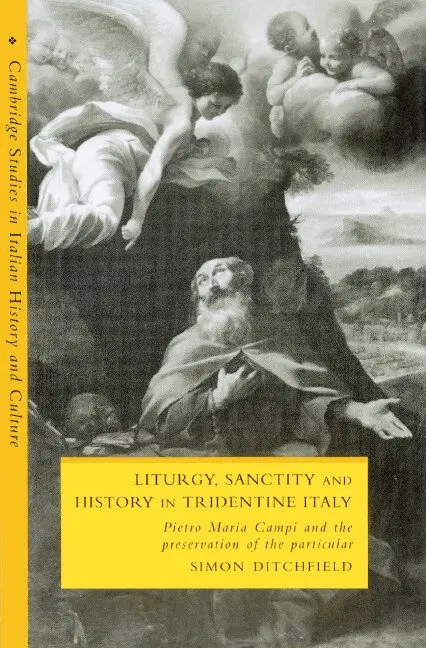
This book brings together for the first time detailed analyses of Tridentine liturgical reform, Counter-Reformation sanctity and the late Renaissance 'revolution' in historical method. It redraws traditional historical boundaries, and offers an original and challenging reappraisal of the relations between Rome and its local Italian churches during the 150 years after the closure of the Council of Trent in 1564. A fundamentally new context is also provided for the work of Cesare Baronio, 'father' of Counter-Reformation historical scholarship, and of his regional counterparts. The examination of the writings of one such local Baronio, Pietro Maria Campi of Piacenza (1569-1649), acts as a focus for this study, which also includes the fullest account yet published of Counter-Reformation canonisation procedure, as well as the first extended scholarly treatment of the collaborative achievement of Ferdinando Ughelli's Italia sacra, and that work's long-term implications for Italian national history writing. The book also includes a comprehensive survey of Italian local hagiography and ecclesiastical history writing of the period.
468 kr
Skickas inom 7-10 vardagar
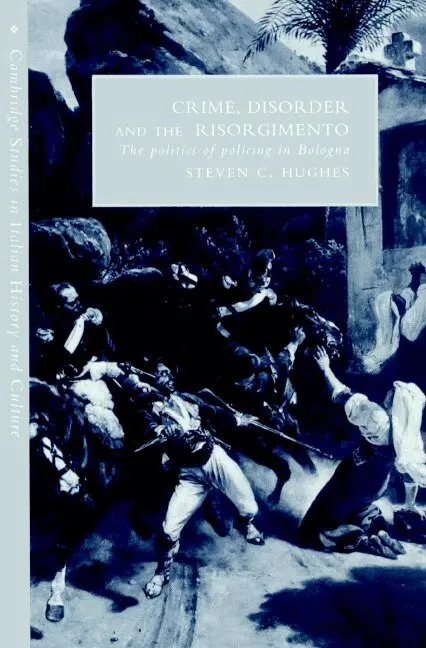
This 1994 book provides a meticulous examination of the ideology, structure, and functions of papal police as they operated in the city and province of Bologna in the period before Italian unity. In doing so, it also offers an important new perspective on the Risorgimento in the region. The author argues that after the Restoration the papal government maintained much of Napoleon's police apparatus in order to enhance its absolute power as an administrative monarchy; but the new police soon found themselves incapable of dealing effectively with the prevailing problems of the day, including political conspiracy, rampant unemployment, widespread poverty, and endemic crime in city and countryside alike. In 1828 and 1847 the papal government was forced to allow Bologna's elites to arm themselves in posse-style 'citizen patrols'. On each occasion the patrols became a rallying point of reform and, eventually, revolution.