Gijs Mom – författare
Visar alla böcker från författaren Gijs Mom. Handla med fri frakt och snabb leverans.
15 produkter
Sound and Safe
A History of Listening Behind the Wheel
Av Gijs Mom, Stefan Krebs m. fl.
E-bok, 2013
472 kr
Lägg i varukorg
Do you enjoy listening to music while driving? Do you find radio traffic information indispensable? Do you like to sing along with whatever you like as you drive? This book tells the fascinating story of how, over the course of the twentieth century, we turned automobiles from intentionally noisy …
Sound and Safe
A History of Listening Behind the Wheel
Av Karin Bijsterveld, Eefje Cleophas m. fl.
Inbunden, 2014
940 kr
Lägg i varukorg
Do you enjoy listening to music while driving? Do you find radio traffic information indispensable? Do you appreciate the moments of your drive in which you can listen to or sing along with whatever you like?This book shows how we created auditory privacy in cars, making them feel sound and safe, …
Sound and Safe
A History of Listening Behind the Wheel
Av Gijs Mom, Stefan Krebs m. fl.
E-bok, 2013
472 kr
Lägg i varukorg
Do you enjoy listening to music while driving? Do you find radio traffic information indispensable? Do you like to sing along with whatever you like as you drive? This book tells the fascinating story of how, over the course of the twentieth century, we turned automobiles from intentionally noisy …
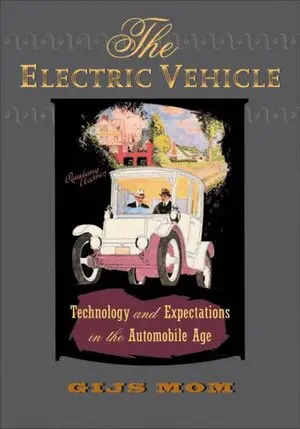
Electric Vehicle
Technology and Expectations in the Automobile Age
Av Gijs Mom
Häftad, 2013
456 kr
Lägg i varukorg
Recent attention to hybrid cars that run on both gasoline and electric batteries has made the electric car an apparent alternative to the internal combustion engine and its attendant environmental costs and geopolitical implications. Few people realize that the electric car - neither a recent …
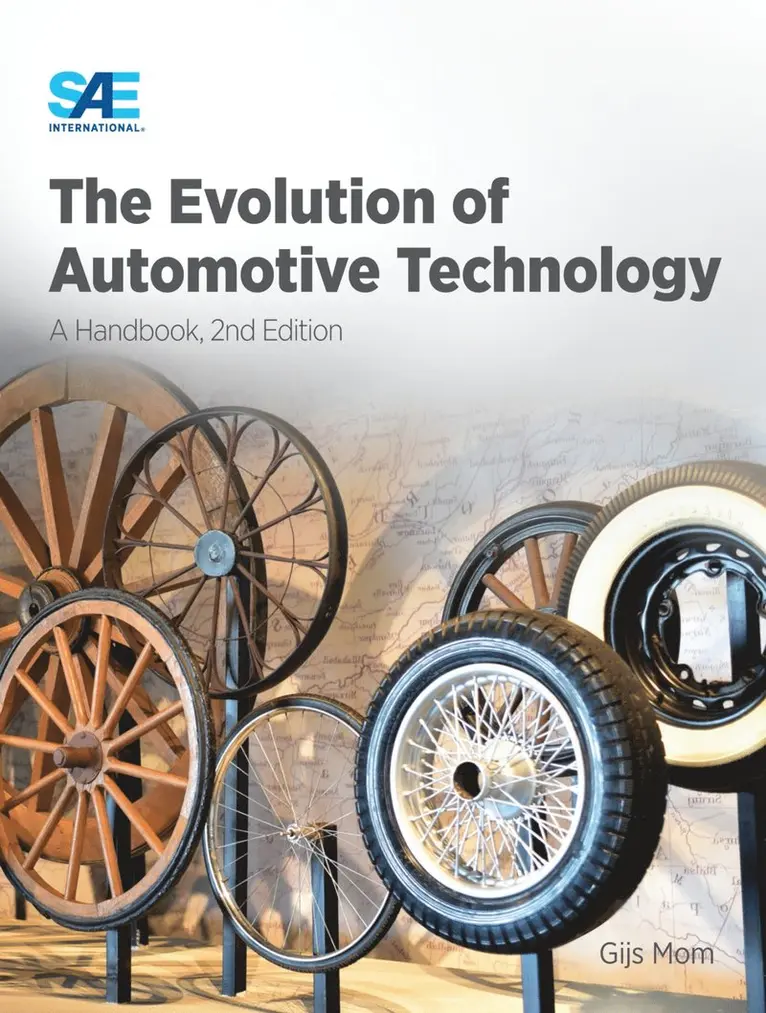
Evolution of Automotive Technology
A Handbook
Av Gijs Mom
Inbunden, 2023
1140 kr
Lägg i varukorg
The idea of "understanding the present through its history" is based on two insights. First, it helps to know where a technology comes from: what were its predecessors, how did they evolve as a result of the continuous efforts to solve theoretical and practical problems, who were crucial in their …
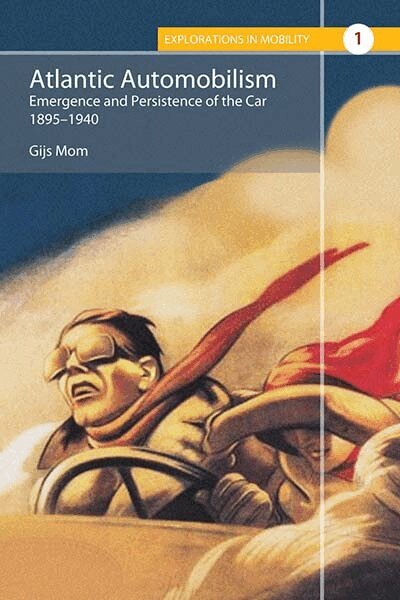
Atlantic Automobilism
Emergence and Persistence of the Car, 1895-1940
Av Gijs Mom
Inbunden, 2014
2749 kr
Lägg i varukorg
Our continued use of the combustion engine car in the 21st century, despite many rational arguments against it, makes it more and more difficult to imagine that transport has a sustainable future. Offering a sweeping transatlantic perspective, this book explains the current obsession with …
Atlantic Automobilism
Emergence and Persistence of the Car, 1895-1940
Av Gijs Mom
E-bok, 2014
672 kr
Lägg i varukorg
Our continued use of the combustion engine car in the 21st century, despite many rational arguments against it, makes it more and more difficult to imagine that transport has a sustainable future. Offering a sweeping transatlantic perspective, this book explains the current obsession with …
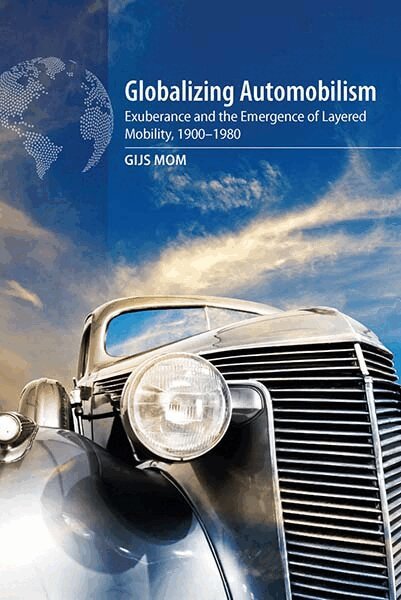
Globalizing Automobilism
Exuberance and the Emergence of Layered Mobility, 1900-1980
Av Gijs Mom
Inbunden, 2020
2621 kr
Lägg i varukorg
Why has "car society" proven so durable, even in the face of mounting environmental and economic crises? In this follow-up to his magisterial Atlantic Automobilism, Gijs Mom traces the global spread of the automobile in the postwar era and investigates why adopting more sustainable forms of …
Globalizing Automobilism
Exuberance and the Emergence of Layered Mobility, 1900–1980
Av Gijs Mom
E-bok, 2020
402 kr
Lägg i varukorg
Why has “car society” proven so durable, even in the face of mounting environmental and economic crises? In this follow-up to his magisterial Atlantic Automobilism , Gijs Mom traces the global spread of the automobile in the postwar era and investigates why adopting more sustainable forms of …
Pacific Automobilism
Adventure, Status and the Carnival of Mobility, 1970–2015
Av Gijs Mom
Inbunden, 2022
3406 kr
Lägg i varukorg
The beginning of the 21st century has seen important shifts in mobility cultures around the world, as the West’s media-driven car culture has contrasted with existing local mobilities, from rickshaws in India and minibuses in Africa to cycling in China. In this expansive volume, historian Gijs Mom …
World History of Mobility
An Essay on Road Cultures and Beyond
Av Gijs Mom
Inbunden, 2025
1916 kr
Lägg i varukorg
As a tool of globalized mobility, the car provides a useful barometer for charting the global development of socio-cultural, economic, technical, and political modernization. Shaped by prevailing gender and racial norms and popularized by a Western-driven car culture, it is a commodity whose access …
Globalizing Automobilism
Exuberance and the Emergence of Layered Mobility, 1900–1980
Av Gijs Mom
Häftad, 2026
695 kr
Lägg i varukorg
Why has “car society” proven so durable, even in the face of mounting environmental and economic crises? In this follow-up to his magisterial Atlantic Automobilism, Gijs Mom traces the global spread of the automobile in the postwar era and investigates why adopting more sustainable forms of …