Gildas Salmon – författare
Visar alla böcker från författaren Gildas Salmon. Handla med fri frakt och snabb leverans.
4 produkter
4 produkter
E-bok
Engelska, 2023415 kr
Läs direkt efter köp
Inbunden, Engelska, 2016
1 963 kr
Skickas inom 10-15 vardagar
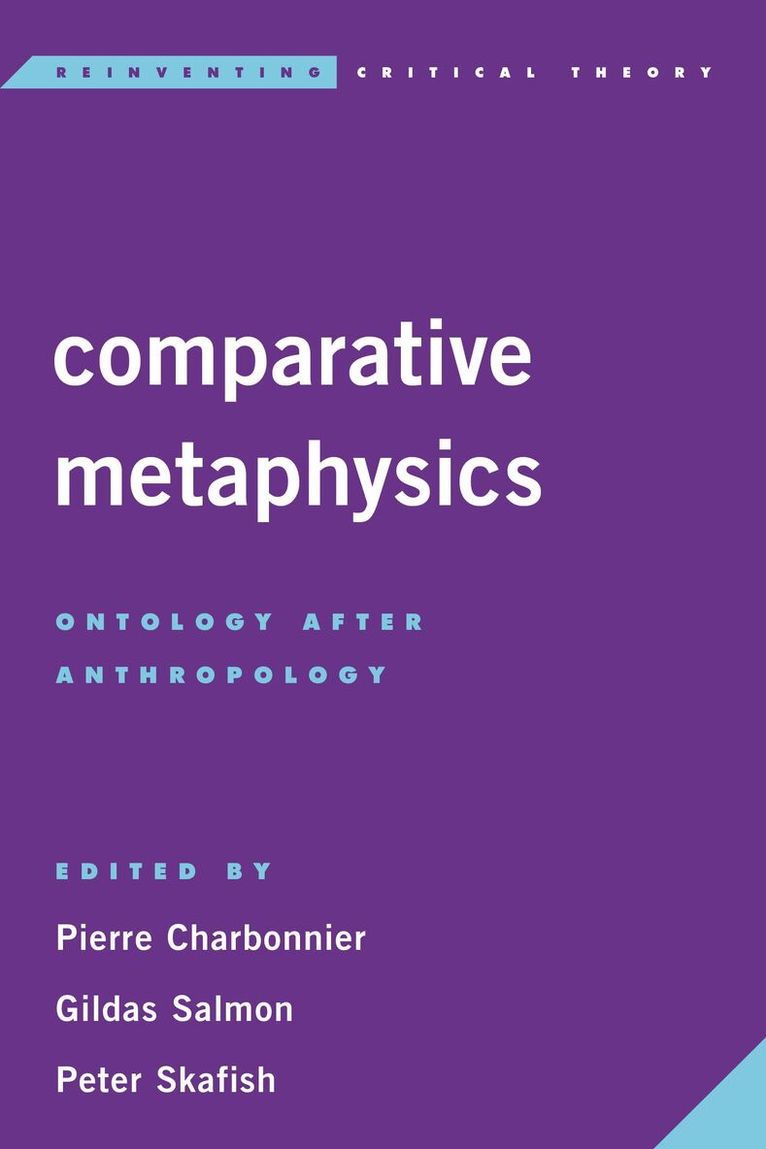
How does the ontological turn in anthropology redefine what modern, Western ontology is in practice, and offer the beginnings of a new ontological pluralism? On a planet that is increasingly becoming a single, metaphysically homogeneous world, anthropology remains one of the few disciplines that recognizes that being has been thought with very different concepts and can still be rendered in terms quite different than those placed on it today. Yet despite its critical acuity, even the most philosophically oriented anthropology often remains segregated from philosophical discussions aimed at rethinking such terms. What would come of an anthropology more fully committed to being a source of (post-) philosophical concepts? What would happen to philosophy if it began to think with and through these concepts? How, finally, does comparison condition these two projects ? This book addresses these questions from a variety of perspectives, all of which nonetheless hold in common the view that “philosophy” has been displaced and altered by the modes of thought of other collectives. An international group of authors, including Eduardo Viveiros de Castro, Marilyn Strathern, Philippe Descola, and Bruno Latour, explore how the new anthropology/philosophy conjuncture opens new horizons of critique.
Häftad, Engelska, 2016
695 kr
Skickas inom 10-15 vardagar
How does the ontological turn in anthropology redefine what modern, Western ontology is in practice, and offer the beginnings of a new ontological pluralism? On a planet that is increasingly becoming a single, metaphysically homogeneous world, anthropology remains one of the few disciplines that recognizes that being has been thought with very different concepts and can still be rendered in terms quite different than those placed on it today. Yet despite its critical acuity, even the most philosophically oriented anthropology often remains segregated from philosophical discussions aimed at rethinking such terms. What would come of an anthropology more fully committed to being a source of (post-) philosophical concepts? What would happen to philosophy if it began to think with and through these concepts? How, finally, does comparison condition these two projects ? This book addresses these questions from a variety of perspectives, all of which nonetheless hold in common the view that “philosophy” has been displaced and altered by the modes of thought of other collectives. An international group of authors, including Eduardo Viveiros de Castro, Marilyn Strathern, Philippe Descola, and Bruno Latour, explore how the new anthropology/philosophy conjuncture opens new horizons of critique.
E-bok
Engelska, 2016730 kr
Läs direkt efter köp
How does the ontological turn in anthropology redefine what modern, Western ontology is in practice, and offer the beginnings of a new ontological pluralism? On a planet that is increasingly becoming a single, metaphysically homogeneous world, anthropology remains one of the few disciplines that recognizes that being has been thought with very different concepts and can still be rendered in terms quite different than those placed on it today. Yet despite its critical acuity, even the most philosophically oriented anthropology often remains segregated from philosophical discussions aimed at rethinking such terms. What would come of an anthropology more fully committed to being a source of (post-) philosophical concepts? What would happen to philosophy if it began to think with and through these concepts? How, finally, does comparison condition these two projects ? This book addresses these questions from a variety of perspectives, all of which nonetheless hold in common the view that “philosophy” has been displaced and altered by the modes of thought of other collectives. An international group of authors, including Eduardo Viveiros de Castro, Marilyn Strathern, Philippe Descola, and Bruno Latour, explore how the new anthropology/philosophy conjuncture opens new horizons of critique.