Giorgio Blundo – författare
Visar alla böcker från författaren Giorgio Blundo. Handla med fri frakt och snabb leverans.
5 produkter
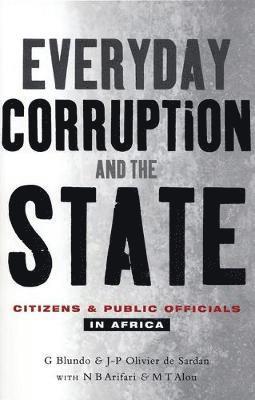
Everyday Corruption and the State
Citizens and Public Officials in Africa
Av Giorgio Blundo, Jean-Pierre Olivier de-Sardan m. fl.
Häftad, 2006
516 kr
Lägg i varukorg
Daily life in Africa is governed by the 'petty' corruption of public officials in services such as health, transport, or the judicial system. This remarkable study of everyday corruption in three African countries investigates the reasons for its extraordinary prevalence.The authors construct an …
Everyday Corruption and the State
Citizens and Public Officials in Africa
Av Giorgio Blundo, Jean-Pierre Olivier de-Sardan m. fl.
E-bok, 2008
561 kr
Lägg i varukorg
Daily life in Africa is governed by the 'petty' corruption of public officials in services such as health, transport, or the judicial system. This remarkable study of everyday corruption in three African countries investigates the reasons for its extraordinary prevalence.The authors construct an …
Everyday Corruption and the State
Citizens and Public Officials in Africa
Av Giorgio Blundo, Jean-Pierre Olivier de-Sardan m. fl.
E-bok, 2013
561 kr
Lägg i varukorg
Daily life in Africa is governed by the 'petty' corruption of public officials in services such as health, transport, or the judicial system. This remarkable study of everyday corruption in three African countries investigates the reasons for its extraordinary prevalence.The authors construct an …
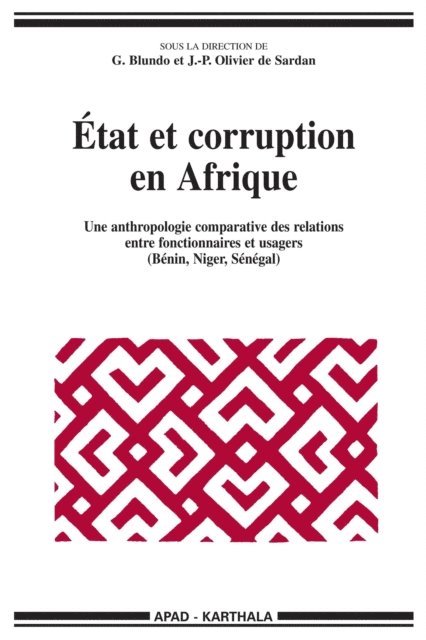
État et corruption en Afrique
Une anthropologie comparative des relations entre fonctionnaires et usagers
Av Giorgio Blundo, Jean-Pierre Olivier de Sardan
E-bok, 2007
373 kr
Lägg i varukorg
Comment sont délivrés les services publics en Afrique ? Il s''agit là d''un chantier neuf pour la socio-anthropologie, qui, dans cet ouvrage, aborde le problème par le biais de la corruption quotidienne. En effet, les relations entre fonctionnaires et usagers des services publics sont aujourd''hui …
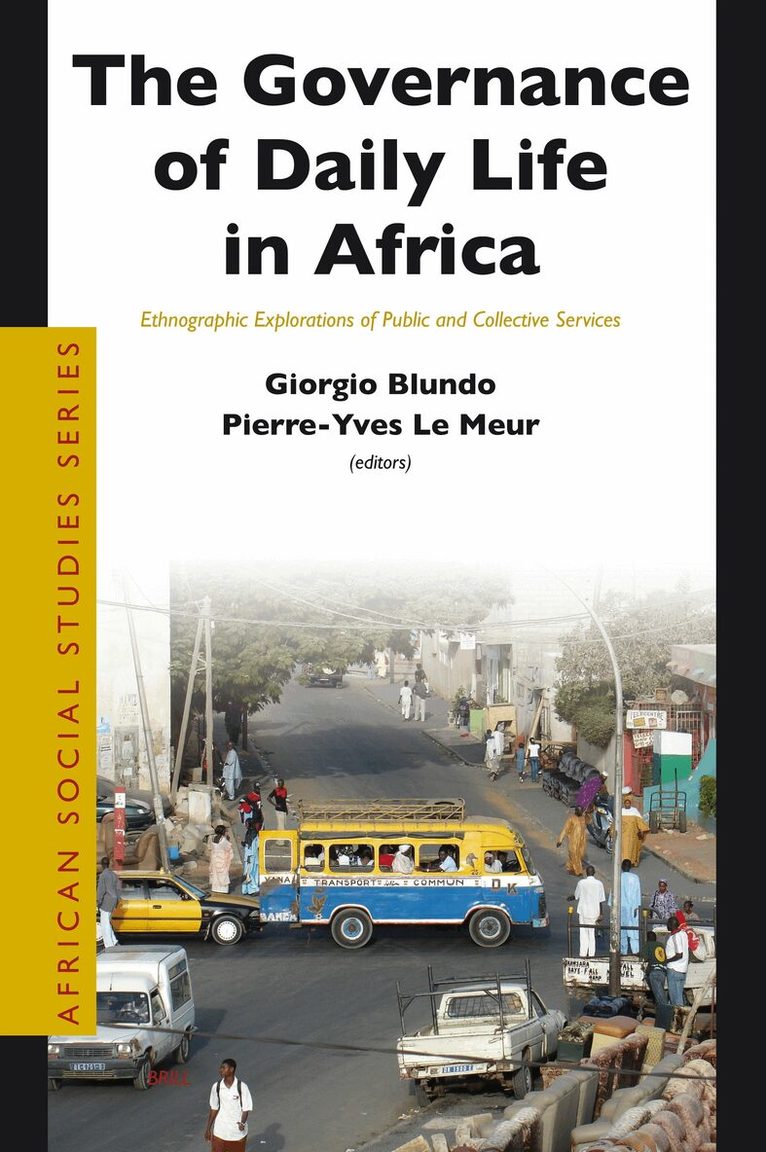
Governance of Daily Life in Africa
Ethnographic Explorations of Public and Collective Services
Av Giorgio Blundo, Pierre-Yves Le Meur
Häftad, 2008
1279 kr
Lägg i varukorg
Anchored in an empirically-grounded anthropology, this book explores the notion of governance in a non-normative way. It describes and analyses the institutional and political processes through which social actors and groups - be they state, private or 'third-sector' - contribute to the provision …