

Häftad, Engelska, 2021
224 kr
Skickas inom 5-8 vardagar
224 kr
Skickas inom 5-8 vardagar
701 kr
Skickas inom 11-20 vardagar
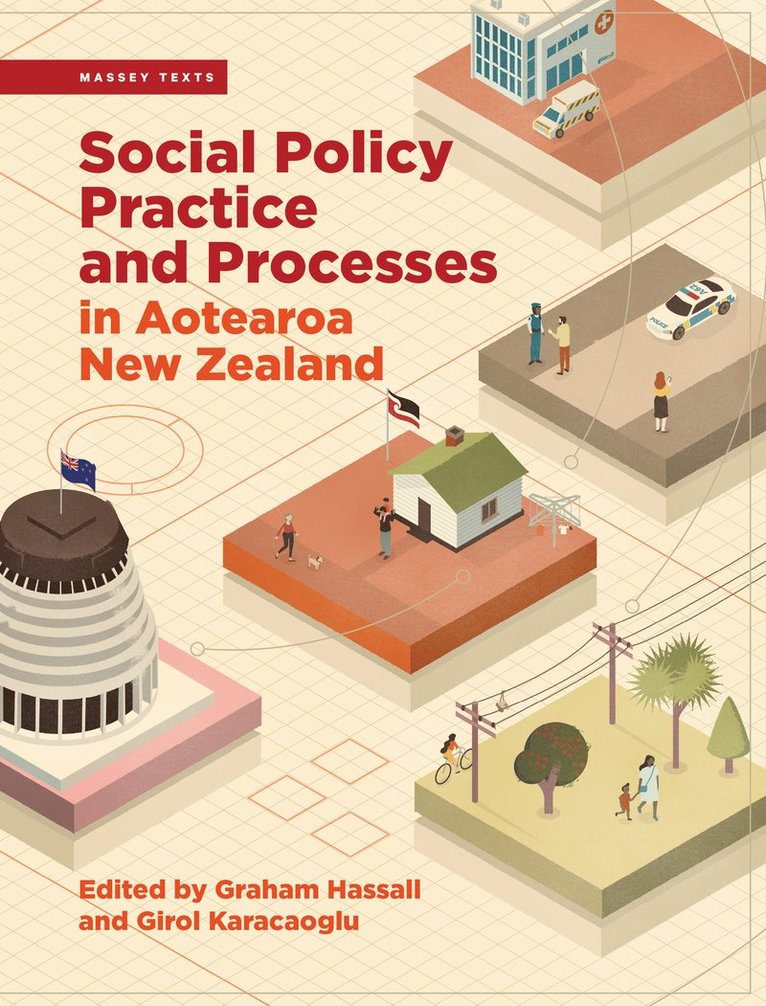
The focus of this book is the practice of social policy in Aotearoa New Zealand. It is intended to complement and update the fourth and final edition of Cheyne et al.’s Social Policy in New Zealand (2008), which pre-dated the three-term tenure of the conservative Key/English governments and their concomitant approaches to social policy.
In the first two decades of the 21st century, both conservative and social democratic governments have had opportunity to conceive and deliver programmes aligned with their fundamental values and concepts. These include the Fifth Labour Government (1999–2008) headed by Helen Clark, the Fifth National Government (2008–17) under John Key and Bill English, and the Sixth Labour Government (2017–) led by Jacinda Ardern.
Appraisals of the policy impacts achieved by alternating approaches to government are offered through each of the chapters on specific policy areas. Each chapter also introduces the reader to the background and context to its central topic, as well as key concepts, ideas and influences, and the main alternate views that have been put forward. In addition to assessing recent experiences, each chapter considers possible future issues that policy-makers may have to contend with.
673 kr
Läs direkt efter köp
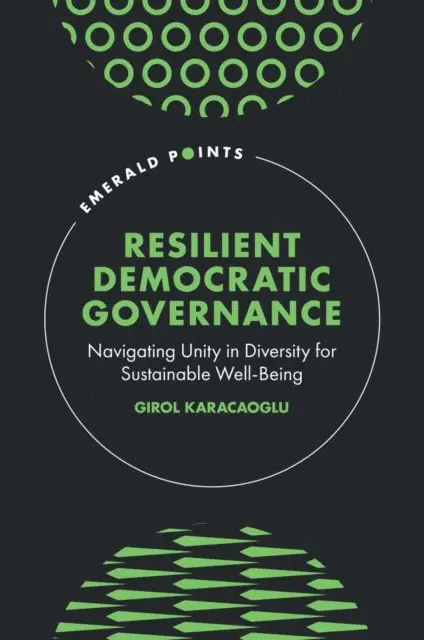
Though diversity and interconnectedness are inherent and integral to the natural order, they often clash in the social world. To address this, Resilient Democratic Governance: Navigating Unity in Diversity for Sustainable Well-Being proposes a comprehensive framework advocating for the harmonious integration of diversity and interconnectedness in social structures, emphasizing their pivotal role in building resilience and achieving sustainable wellbeing.
Girol Karacaoglu''s innovative study explores the convergence of various political philosophies and social elements while still maintaining a sense of unity and cohesion in society. Through the perspectives of thinkers like Abd al-Karim al-Jili, Spinoza, Confucius, Alfred North Whitehead, Abraham Maslow, Sir Isaiah Berlin, Ronald Dworkin, Satish Kumar, and Amartya Sen, each chapter delves into how these scholars have conceptualized unity in different domains, spanning nature, creative processes, freedom, value, ecology, and economy. Karacaoglu argues that embracing this diversity-in-unity framework can serve as a guide to governance for sustainable wellbeing. His argument culminates in a reflection on the paths laid out by the Buddha and Lao Tzu, underscoring their profound insights into achieving balance and harmony in our interconnected world.
Emerging as a hopeful voice amid increasing ideological polarisation, this thoughtful work reimagines democratic governance to offer a practical guide for deliberate and transformative social and political change.
420 kr
Skickas
673 kr
Läs direkt efter köp
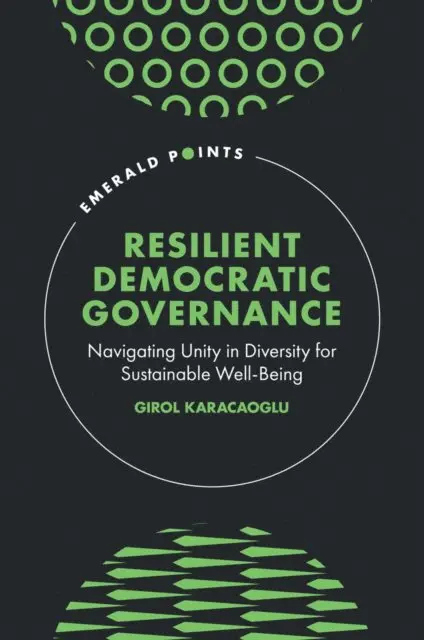
Though diversity and interconnectedness are inherent and integral to the natural order, they often clash in the social world. To address this, Resilient Democratic Governance: Navigating Unity in Diversity for Sustainable Well-Being proposes a comprehensive framework advocating for the harmonious integration of diversity and interconnectedness in social structures, emphasizing their pivotal role in building resilience and achieving sustainable wellbeing.
Girol Karacaoglu''s innovative study explores the convergence of various political philosophies and social elements while still maintaining a sense of unity and cohesion in society. Through the perspectives of thinkers like Abd al-Karim al-Jili, Spinoza, Confucius, Alfred North Whitehead, Abraham Maslow, Sir Isaiah Berlin, Ronald Dworkin, Satish Kumar, and Amartya Sen, each chapter delves into how these scholars have conceptualized unity in different domains, spanning nature, creative processes, freedom, value, ecology, and economy. Karacaoglu argues that embracing this diversity-in-unity framework can serve as a guide to governance for sustainable wellbeing. His argument culminates in a reflection on the paths laid out by the Buddha and Lao Tzu, underscoring their profound insights into achieving balance and harmony in our interconnected world.
Emerging as a hopeful voice amid increasing ideological polarisation, this thoughtful work reimagines democratic governance to offer a practical guide for deliberate and transformative social and political change.
1 452 kr
Läs direkt efter köp
1 341 kr
Skickas inom 5-8 vardagar
1 406 kr
Läs direkt efter köp
264 kr
Skickas
1 332 kr
Skickas inom 10-15 vardagar
1 746 kr
Läs direkt efter köp
The distinctive contribution of this book is the formulation of an integrated social, environmental, and economic framework for public policy. This contribution is realised through investigations and conclusions in the following four domains: a formal stylised model that provides a platform for an integrated approach to public policy; a policy-informing simulation model that can be used to operationalise the public policy insights proposed in the stylised model; the implications of introducing fundamental (or radical) uncertainty and complexity into the policy framework; and the use of viability theory to demonstrate how one can think of and implement public policy in an uncertain and complex world, when the focus of policy needs to shift to building resilience to systemic risks.
The book’s stylised model is constructed by weaving together threads from the wellbeing, human needs, complex systems, sustainable development, endogenous economic growth, directed technical change, and credit-based-money literatures. Throughout, the perspective is that of a policy adviser to a "wellbeing state", as distinct from a "welfare state". The key linkages or relationships in the model are supported by empirical evidence that draws on the wider literature in related fields.