Gordon Luikart – författare
Visar alla böcker från författaren Gordon Luikart. Handla med fri frakt och snabb leverans.
4 produkter
4 produkter
E-bok
PDF, Engelska, 2022626 kr
Läs direkt efter köp
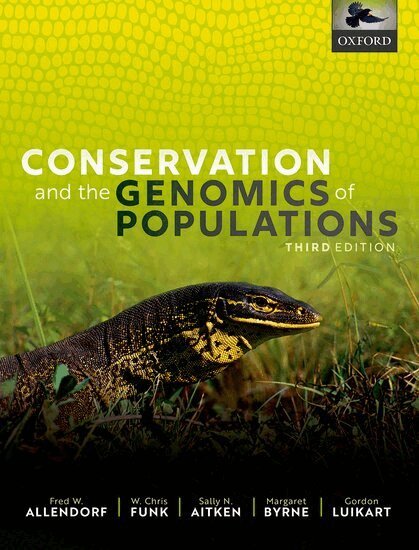
The relentless loss of biodiversity is among the greatest problems facing the world today. The third edition of this established textbook provides an updated and comprehensive overview of the essential background, concepts, and tools required to understand how genetics can be used to conserve species, reduce threat of extinction, and manage species of ecological or commercial importance. This edition is thoroughly revised to reflect the major contribution of genomics to conservation of populations and species. It includes two new chapters: "Genetic Monitoring" and a final "Conservation Genetics in Practice" chapter that addresses the role of science and policy in conservation genetics. New genomic techniques and statistical analyses are crucial tools for the conservation geneticist. This accessible and authoritative textbook provides an essential toolkit grounded in population genetics theory, coupled with basic and applied research examples from plants, animals, and microbes. The book examines genetic and phenotypic variation in natural populations, the principles and mechanisms of evolutionary change, evolutionary response to anthropogenic change, and applications in conservation and management.Conservation and the Genomics of Populations helps demystify genetics and genomics for conservation practitioners and early career scientists, so that population genetic theory and new genomic data can help raise the bar in conserving biodiversity in the most critical 20 year period in the history of life on Earth. It is aimed at a global market of applied population geneticists, conservation practitioners, and natural resource managers working for wildlife and habitat management agencies. It will be of particular relevance and use to upper undergraduate and graduate students taking courses in conservation biology, conservation genetics, and wildlife management.
Inbunden, Engelska, 2022
2 092 kr
Skickas
The relentless loss of biodiversity is among the greatest problems facing the world today. The third edition of this established textbook provides an updated and comprehensive overview of the essential background, concepts, and tools required to understand how genetics can be used to conserve species, reduce threat of extinction, and manage species of ecological or commercial importance. This edition is thoroughly revised to reflect the major contribution of genomics to conservation of populations and species. It includes two new chapters: "Genetic Monitoring" and a final "Conservation Genetics in Practice" chapter that addresses the role of science and policy in conservation genetics. New genomic techniques and statistical analyses are crucial tools for the conservation geneticist. This accessible and authoritative textbook provides an essential toolkit grounded in population genetics theory, coupled with basic and applied research examples from plants, animals, and microbes. The book examines genetic and phenotypic variation in natural populations, the principles and mechanisms of evolutionary change, evolutionary response to anthropogenic change, and applications in conservation and management.Conservation and the Genomics of Populations helps demystify genetics and genomics for conservation practitioners and early career scientists, so that population genetic theory and new genomic data can help raise the bar in conserving biodiversity in the most critical 20 year period in the history of life on Earth. It is aimed at a global market of applied population geneticists, conservation practitioners, and natural resource managers working for wildlife and habitat management agencies. It will be of particular relevance and use to upper undergraduate and graduate students taking courses in conservation biology, conservation genetics, and wildlife management.
Häftad, Engelska, 2022
763 kr
Skickas inom 5-8 vardagar
The relentless loss of biodiversity is among the greatest problems facing the world today. The third edition of this established textbook provides an updated and comprehensive overview of the essential background, concepts, and tools required to understand how genetics can be used to conserve species, reduce threat of extinction, and manage species of ecological or commercial importance. This edition is thoroughly revised to reflect the major contribution of genomics to conservation of populations and species. It includes two new chapters: "Genetic Monitoring" and a final "Conservation Genetics in Practice" chapter that addresses the role of science and policy in conservation genetics. New genomic techniques and statistical analyses are crucial tools for the conservation geneticist. This accessible and authoritative textbook provides an essential toolkit grounded in population genetics theory, coupled with basic and applied research examples from plants, animals, and microbes. The book examines genetic and phenotypic variation in natural populations, the principles and mechanisms of evolutionary change, evolutionary response to anthropogenic change, and applications in conservation and management.Conservation and the Genomics of Populations helps demystify genetics and genomics for conservation practitioners and early career scientists, so that population genetic theory and new genomic data can help raise the bar in conserving biodiversity in the most critical 20 year period in the history of life on Earth. It is aimed at a global market of applied population geneticists, conservation practitioners, and natural resource managers working for wildlife and habitat management agencies. It will be of particular relevance and use to upper undergraduate and graduate students taking courses in conservation biology, conservation genetics, and wildlife management.
E-bok
PDF, Engelska, 2009794 kr
Läs direkt efter köp
Conservation and the Genetics of Populations gives a comprehensive overview of the essential background, concepts, and tools needed to understand how genetic information can be used to develop conservation plans for species threatened with extinction. Provides a thorough understanding of the genetic basis of biological problems in conservation. Uses a balance of data and theory, and basic and applied research, with examples taken from both the animal and plant kingdoms. An associated website contains example data sets and software programs to illustrate population genetic processes and methods of data analysis. Discussion questions and problems are included at the end of each chapter to aid understanding. Features Guest Boxes written by leading people in the field including James F. Crow, Nancy FitzSimmons, Robert C. Lacy, Michael W. Nachman, Michael E. Soule, Andrea Taylor, Loren H. Rieseberg, R.C. Vrijenhoek, Lisette Waits, Robin S. Waples and Andrew Young.
Supplementary information designed to support Conservation and the Genetics of Populations including:
Downloadable sample chapter Answers to questions and problems Data sets illustrating problems from the book Data analysis software programs Website linksAn Instructor manual CD-ROM for this title is available. Please contact our Higher Education team at HigherEducation@wiley.com for more information.