Graeme A. Hodge - Böcker
Visar alla böcker från författaren Graeme A. Hodge. Handla med fri frakt och snabb leverans.
12 produkter
12 produkter
793 kr
Skickas inom 7-10 vardagar
As scientists and technologists discover how to engineer matter at the nanoscale in increasingly sophisticated ways, conventional approaches to ensuring safe use are being brought into question. Nanotechnologies are challenging traditional regulatory regimes; but they are also prompting new thinking on developing and using emerging technologies safely. In this Handbook, leading international authors from industry, government, non-governmental organisations and academia examine the complex and often controversial regulatory challenges presented by nanotechnologies. Across several disciplinary boundaries, they explore how the future regulatory landscape may evolve. From the Europe Union to the United States, workplaces to personal products, and statutory instruments through to softer approaches, it is clear that considerable vigilance will be needed in governing these powerful and novel technologies. To succeed, society will need new thinking, new partnerships and new mechanisms to balance the benefits of these technologies against their possible downsides. Anything less will prompt cries of illegitimacy and potentially compromise a promising new realm of technology innovation.This Handbook draws on contributions from leading nanotechnology regulation scholars around the globe. It goes beyond articulating how certain nanotechnologies are currently regulated and the significance of existing regulatory gaps, to assessing how the future regulatory landscape may evolve. As well as considering potential legislative responses that could be employed by governments, the Handbook examines a range of other options available to stakeholders. The Handbook employs new and innovative lenses through which to view these regulatory challenges and by adopting an in-depth, systematic and whole-of-life-approach, synergistically combines contributions from many countries, many fields and many disciplines. Informative and insightful, it presents thought-provoking and stimulating perspectives on the coming nano-age and on how we as citizens will govern its future.
862 kr
Skickas inom 7-10 vardagar
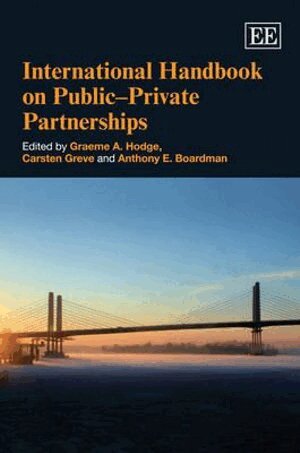
Public-Private Partnerships (PPPs) promise much and present an exciting policy option. Yet as this Handbook reveals there is still much debate about the meaning of partnership, and the degree to which potential advantages are in fact being delivered. In this timely Handbook, leading scholars from around the world explore the challenges presented by infrastructure PPPs, and contemplate what lies ahead as governments balance the need to provide innovative new infrastructure against the requirement for good public governance. This Handbook builds on a range of exciting theoretical lenses that span several disciplinary boundaries. It presents innovative insights and informed perspectives from an international base of empirical evidence. This essential Handbook will prove an invaluable reference work for academics, advanced post-graduate students and commentators of PPPs, as well as professionals, infrastructure regulators and government policy advisors.
3 548 kr
Skickas inom 7-10 vardagar
Graeme A. Hodge, Carsten Greve and Eoin Reeves bring together expert authors to explore 50 years of research and analysis in the complex field of privatisation. The Research Handbook highlights current issues and challenges in privatisation through relevant contemporary examples, to further our understanding of this economic concept and how it is shaping global policies.Acknowledging the ongoing discussions surrounding the performance of both the public and private sectors, this Research Handbook explores the evidence and controversy within ‘traditional privatisation’ research and addresses emerging conversations within the privatisation debate. The Research Handbook tackles fundamental conceptual and definitional issues, frames privatisation within a broader set of ideas about the control of activities in the public realm by private actors and explores new privatisation battles. Contemporary areas covered range from entire health care systems, housing, urban planning and finance to areas such as the governance of the internet, the role of global private foundations and space exploration. Overall, this Research Handbook concludes that the topic of privatisation, and what it means for citizens in a democracy, is now more important and relevant than ever.Providing a balanced overview of privatisation policy debates, this Research Handbook is essential reading for students and scholars of economic regulation and governance, public and private sector economics and public administration and management. Public and private policy makers will also find the insights presented here beneficial.
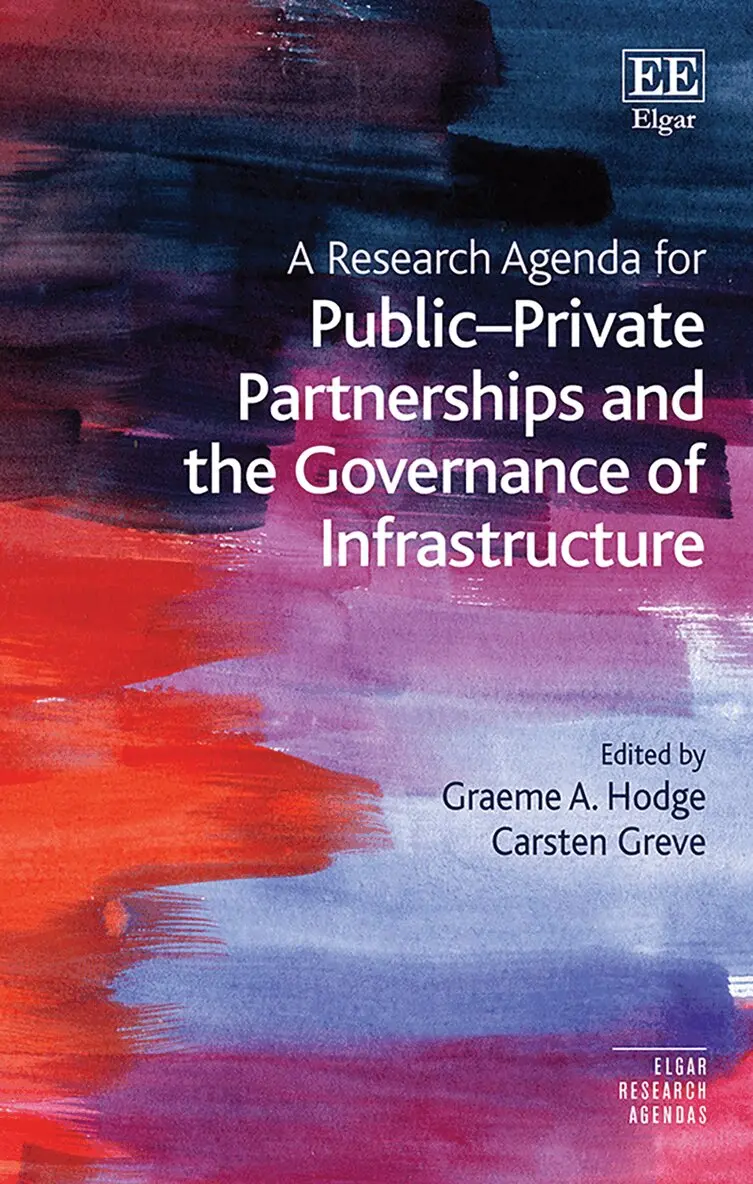
Research Agenda for Public–Private Partnerships and the Governance of Infrastructure
Häftad, Engelska, 2023
634 kr
Skickas inom 7-10 vardagar
This timely Research Agenda examines the ways in which public–private partnerships (PPPs) in infrastructure continue to excite policy makers, governments, research scholars and critics around the world. It analyzes the PPP research journey to date and articulates the lessons learned as a result of the increasing interest in improving infrastructure governance. Expert international contributors explore how PPP ideas have spread, transferred and transformed, causing supporting markets to develop and mature.Providing a multidisciplinary perspective on the topic, this thought-provoking Research Agenda proposes a range of future research directions, pointing towards the potential of fresh research approaches to PPP, the adoption of new theories and intellectual lenses, better balancing of public–private interests, and stronger public governance across what has now become a global phenomenon. It lights the way to diverse research frontiers ranging from financialization to psychology and behavioural science, as well as the continuing prominence of public administration, politics, economics, planning and law.A Research Agenda for Public–Private Partnerships and the Governance of Infrastructure will be an enticing read for students and scholars of regulation and governance, public management and administration, politics and economics as well as industry professionals across the domains of public policy, infrastructure and city planning.
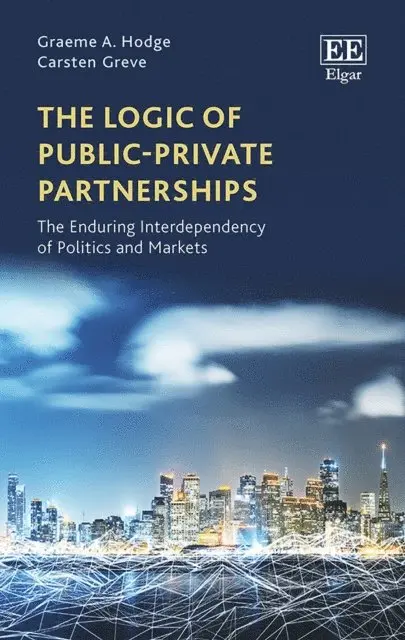
Logic of Public–Private Partnerships
The Enduring Interdependency of Politics and Markets
Inbunden, Engelska, 2019
1 848 kr
Skickas inom 7-10 vardagar
Public-private partnerships (PPPs) have excited the political world over the past few decades. Few books, however, have viewed them as both a phenomenon of politics as well as a technical matter aiming to better deliver public infrastructure. Through fiercely independent scholarship, this book investigates the various logics of PPPs. In doing so, it challenges those involved in delivering public infrastructure to think more about power, language and politics in decision-making. The Logic of Public-Private Partnerships takes a cross-disciplinary perspective on PPPs. It notes their global popularity, and considers the varying definitions used and policy positions taken by different governments. It discusses the contemporary, international evidence supporting and opposing the formation of these partnerships, with reference to efficiency, value-for-money and governance. The simultaneous growth of PPPs in some countries is observed along with their demise in others. The book also articulates the solid reasons for which governments might adopt PPPs, before pointing to continuing research priorities. This book will be useful for academics interested in PPPs and infrastructure governance, as well as professionals in the infrastructure sector and practitioners seeking to understand the PPP phenomenon. It will also be an invaluable tool for undergraduate students with an interest in infrastructure projects, and postgraduate students studying PPPs and the issues surrounding them.
Research Agenda for Public–Private Partnerships and the Governance of Infrastructure
Inbunden, Engelska, 2022
2 251 kr
Skickas inom 7-10 vardagar
This timely Research Agenda examines the ways in which public–private partnerships (PPPs) in infrastructure continue to excite policy makers, governments, research scholars and critics around the world. It analyzes the PPP research journey to date and articulates the lessons learned as a result of the increasing interest in improving infrastructure governance. Expert international contributors explore how PPP ideas have spread, transferred and transformed, causing supporting markets to develop and mature.Providing a multidisciplinary perspective on the topic, this thought-provoking Research Agenda proposes a range of future research directions, pointing towards the potential of fresh research approaches to PPP, the adoption of new theories and intellectual lenses, better balancing of public–private interests, and stronger public governance across what has now become a global phenomenon. It lights the way to diverse research frontiers ranging from financialization to psychology and behavioural science, as well as the continuing prominence of public administration, politics, economics, planning and law.A Research Agenda for Public–Private Partnerships and the Governance of Infrastructure will be an enticing read for students and scholars of regulation and governance, public management and administration, politics and economics as well as industry professionals across the domains of public policy, infrastructure and city planning.
Challenge of Public–Private Partnerships
Learning from International Experience
Inbunden, Engelska, 2005
2 252 kr
Skickas inom 7-10 vardagar
Public-Private Partnerships (PPPs) - cooperative institutional arrangements between public and private sector actors - are now an increasingly relevant and globally popular public policy option. The authors argue that even though PPPs are still evolving, there is now sufficient research to bring these joint ventures to account and to provide lessons for the future. The aim of the book is to investigate how PPP reforms function in comparison to the more traditional methods of providing public sector services and infrastructure and who typically experiences the successes and failures of these reforms.The Challenge of Public-Private Partnerships advances recent thought on PPPs in the areas of risk transfer, financial implications, contractual matters, politics, management and accountability. International case studies are presented from the United Kingdom, Europe, the US and Australasia, and the authors delineate the experience of PPPs in areas such as infrastructure and human services. A strong thread of accountability is woven throughout the book, synthesizing common issues, separating the rhetoric from the performance reality and providing strategies for better meeting the various international challenges for future PPPs.Re-examining the myriad meanings and definitions given to PPPs, and presenting a range of theories and frameworks to improve understanding of PPP events and outcomes, this book will be of great interest to those involved in public administration and public policy-making.
1 770 kr
Skickas inom 7-10 vardagar
This accessible book aims to inform readers interested in assessing privatization and market development concepts on a global scale, and outlines a range of thinking on how these policy ideas have moved around the globe. Bringing together an international team of contributors, the book traces how privatization concepts have grown in application, and how they have spread to become a central policy idea for governments. And whilst interest in the initial policy of selling-off state owned enterprises has peaked, the contracting and partnership modes of privatization have risen to global prominence. This book also reflects on the importance of the privatization family of ideas on both developed and developing countries. Privatization and Market Development will be of great interest to those involved in public administration and public policy making from a global perspective.
2 461 kr
Skickas inom 7-10 vardagar
Our growing ability to manufacture materials at the atomic scale will change our lives for the better, and tomorrow's nano-economy will outperform today's information age. Or so its proponents claim. Others maintain that a future dominated by commercial incentives risks a toxicological nightmare to rival the sorry global story of asbestos.This important volume is a timely contribution to increasing international calls to regulate nanotechnologies. By investigating the ways in which we could regulate these advances, and what we are learning from regulating existing technologies, such as biotechnologies and information technologies, the book debates the roles of government, business actors and the professions in protecting and enhancing the lives of citizens. In placing particular emphasis on the lessons of earlier technology advances, this book is unique in its broad consideration of the ethical, legal and social issues entwined within the development of the nanotechnology family.The multi-jurisdictional and interdisciplinary nature of the book will appeal to governments, academics, and civil societies across many parts of the world, while also remaining accessible to informed readers with an interest in nanotechnology and the policy and governance issues associated with technology development and regulation.
4 036 kr
Skickas inom 7-10 vardagar
Public-Private Partnerships (PPPs) promise much and present an exciting policy option. Yet as this Handbook reveals there is still much debate about the meaning of partnership, and the degree to which potential advantages are in fact being delivered. In this timely Handbook, leading scholars from around the world explore the challenges presented by infrastructure PPPs, and contemplate what lies ahead as governments balance the need to provide innovative new infrastructure against the requirement for good public governance. This Handbook builds on a range of exciting theoretical lenses that span several disciplinary boundaries. It presents innovative insights and informed perspectives from an international base of empirical evidence. This essential Handbook will prove an invaluable reference work for academics, advanced post-graduate students and commentators of PPPs, as well as professionals, infrastructure regulators and government policy advisors.
3 714 kr
Skickas inom 7-10 vardagar
As scientists and technologists discover how to engineer matter at the nanoscale in increasingly sophisticated ways, conventional approaches to ensuring safe use are being brought into question. Nanotechnologies are challenging traditional regulatory regimes; but they are also prompting new thinking on developing and using emerging technologies safely. In this Handbook, leading international authors from industry, government, non-governmental organisations and academia examine the complex and often controversial regulatory challenges presented by nanotechnologies. Across several disciplinary boundaries, they explore how the future regulatory landscape may evolve. From the Europe Union to the United States, workplaces to personal products, and statutory instruments through to softer approaches, it is clear that considerable vigilance will be needed in governing these powerful and novel technologies. To succeed, society will need new thinking, new partnerships and new mechanisms to balance the benefits of these technologies against their possible downsides. Anything less will prompt cries of illegitimacy and potentially compromise a promising new realm of technology innovation.This Handbook draws on contributions from leading nanotechnology regulation scholars around the globe. It goes beyond articulating how certain nanotechnologies are currently regulated and the significance of existing regulatory gaps, to assessing how the future regulatory landscape may evolve. As well as considering potential legislative responses that could be employed by governments, the Handbook examines a range of other options available to stakeholders. The Handbook employs new and innovative lenses through which to view these regulatory challenges and by adopting an in-depth, systematic and whole-of-life-approach, synergistically combines contributions from many countries, many fields and many disciplines. Informative and insightful, it presents thought-provoking and stimulating perspectives on the coming nano-age and on how we as citizens will govern its future.
862 kr
Skickas inom 7-10 vardagar
Our growing ability to manufacture materials at the atomic scale will change our lives for the better, and tomorrow's nano-economy will outperform today's information age. Or so its proponents claim. Others maintain that a future dominated by commercial incentives risks a toxicological nightmare to rival the sorry global story of asbestos.This important volume is a timely contribution to increasing international calls to regulate nanotechnologies. By investigating the ways in which we could regulate these advances, and what we are learning from regulating existing technologies, such as biotechnologies and information technologies, the book debates the roles of government, business actors and the professions in protecting and enhancing the lives of citizens. In placing particular emphasis on the lessons of earlier technology advances, this book is unique in its broad consideration of the ethical, legal and social issues entwined within the development of the nanotechnology family.The multi-jurisdictional and interdisciplinary nature of the book will appeal to governments, academics, and civil societies across many parts of the world, while also remaining accessible to informed readers with an interest in nanotechnology and the policy and governance issues associated with technology development and regulation.