Graziano Salvalai – författare
Visar alla böcker från författaren Graziano Salvalai. Handla med fri frakt och snabb leverans.
5 produkter
5 produkter
Häftad, Engelska, 2024
565 kr
Skickas inom 10-15 vardagar
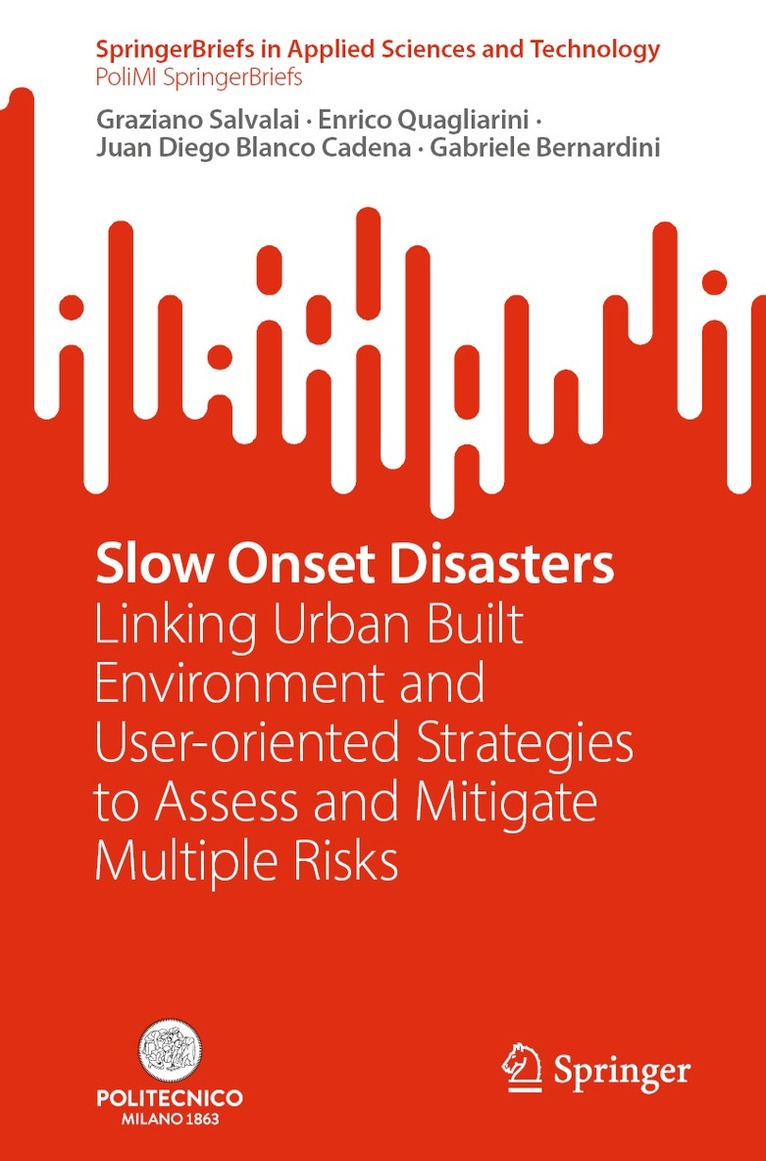
The book provides an overview of the Slow Onset Disasters (SLOD) in the urban built environment discussing potential strategies to assess and mitigate multiple climate change related risks. Climate change evidence has been reported in the last decades, suggesting that the anthropogenic activities are accelerating these changes towards a warmer and more polluted environment. In this context, SLODs have been linked to climate change related disasters and have been stated to have a higher impact risk within dense built environment (BE). Therefore, the book presents a description of the most relevant SLODs, their significance, and confluence, the way in which scientists and entities are monitoring their progression at different scales, a structured risk assessment strategy and the deconstruction of the BE characteristics that make it more prone to SLODs risk. In addition, it highlights the necessity of adapting the traditional risk assessment methods, to account for different vulnerabilitytypes, including the morphology and materiality of the BE, and the BE users’ characteristics. In fact, individual features influence users’ responses and tolerance to environmental stressors, because of age, health, gender, habits, and behaviour, thus impacting the users’ vulnerability. Exposure can then amplify these issues, since it defines the number of users that can be effectively affected by the SLOD. Starting from this perspective, the book first traces literature-based correlations between individual features, use behaviour, and individual response to the SLOD-altered open spaces. Then, a novel methodology, to quantify the variations of users’ vulnerability and exposure, is offered, to support designers in quickly defining input scenarios for risk assessment and mitigation. Lastly, it demonstrates, through a case study, the SLOD risk assessment framework proposed and the evaluation of the efficacy of risk mitigation strategies.
E-bok
Engelska, 2024708 kr
Läs direkt efter köp
The book provides an overview of the Slow Onset Disasters (SLOD) in the urban built environment discussing potential strategies to assess and mitigate multiple climate change related risks. Climate change evidence has been reported in the last decades, suggesting that the anthropogenic activities are accelerating these changes towards a warmer and more polluted environment. In this context, SLODs have been linked to climate change related disasters and have been stated to have a higher impact risk within dense built environment (BE). Therefore, the book presents a description of the most relevant SLODs, their significance, and confluence, the way in which scientists and entities are monitoring their progression at different scales, a structured risk assessment strategy and the deconstruction of the BE characteristics that make it more prone to SLODs risk. In addition, it highlights the necessity of adapting the traditional risk assessment methods, to account for different vulnerabilitytypes, including the morphology and materiality of the BE, and the BE users’ characteristics. In fact, individual features influence users’ responses and tolerance to environmental stressors, because of age, health, gender, habits, and behaviour, thus impacting the users’ vulnerability. Exposure can then amplify these issues, since it defines the number of users that can be effectively affected by the SLOD. Starting from this perspective, the book first traces literature-based correlations between individual features, use behaviour, and individual response to the SLOD-altered open spaces. Then, a novel methodology, to quantify the variations of users’ vulnerability and exposure, is offered, to support designers in quickly defining input scenarios for risk assessment and mitigation. Lastly, it demonstrates, through a case study, the SLOD risk assessment framework proposed and the evaluation of the efficacy of risk mitigation strategies.
Inbunden, Engelska, 2026
1 797 kr
Skickas inom 11-20 vardagar
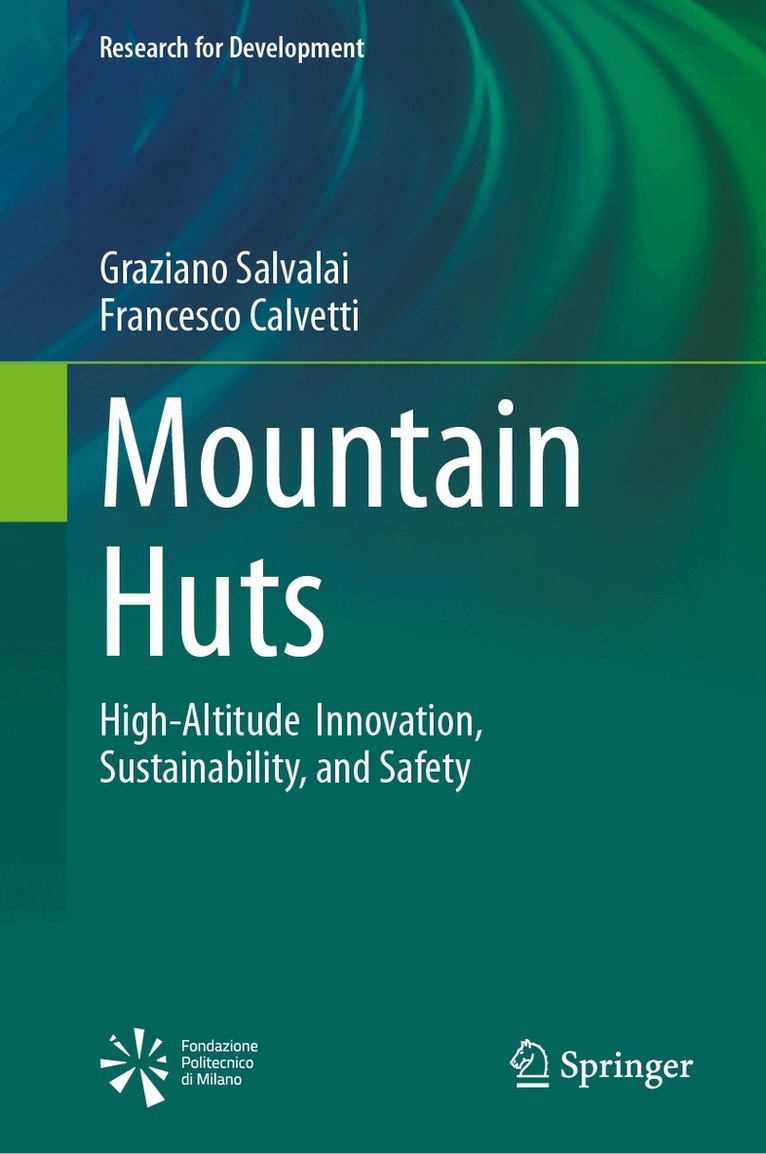
This volume provides an integrated examination of Alpine mountain huts, combining historical analysis with contemporary research and design innovation. It traces the evolution of these structures within the European Alpine context and addresses the challenges posed by climate change and shifting environmental conditions.Drawing on investigations at the Regina Margherita Observatory Hut, the highest in the Alps, and a series of case studies across the region, the book explores materials, construction techniques, and energy-efficient technologies. It introduces a dedicated sustainability certification protocol and considers strategies for climate-adaptive architecture.Organized into five sections, History and Typology, Design and Technology, Research Case Study, Contemporary Practices, and Future Perspectives, the work offers a multidisciplinary framework for understanding and shaping the next generation of resilient, sustainable mountain huts.
Häftad, Engelska, 2018
732 kr
Skickas inom 10-15 vardagar
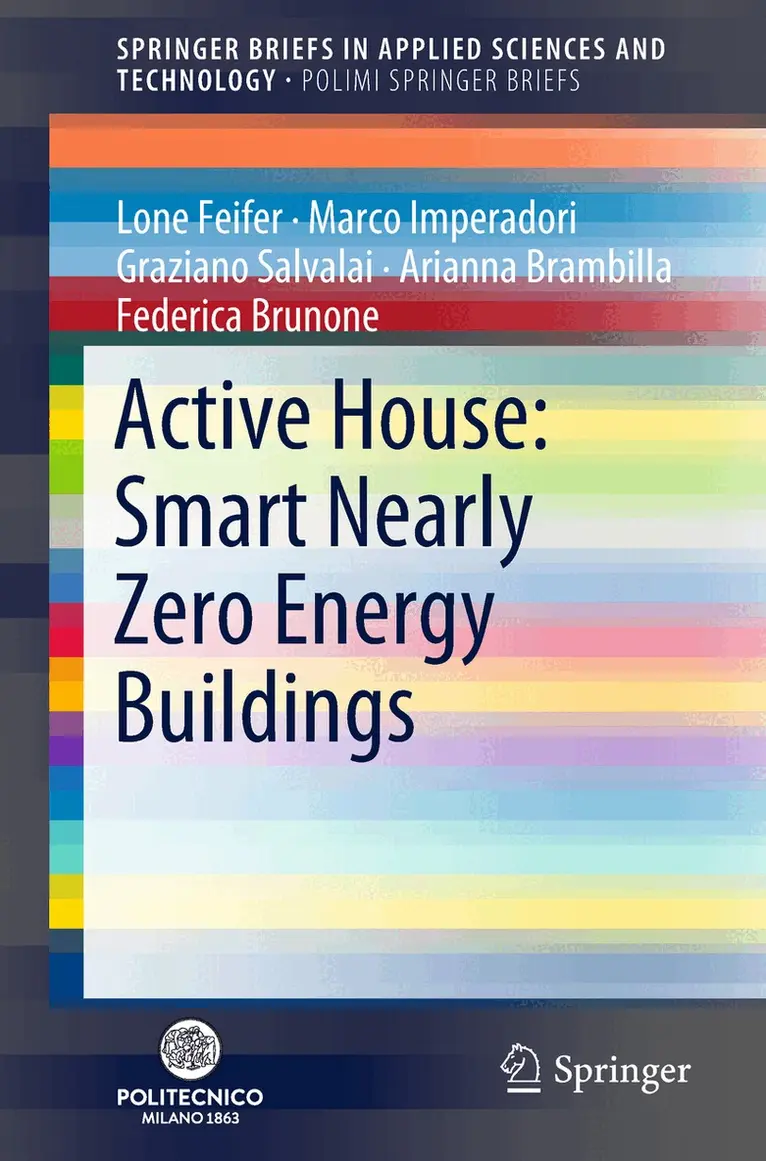
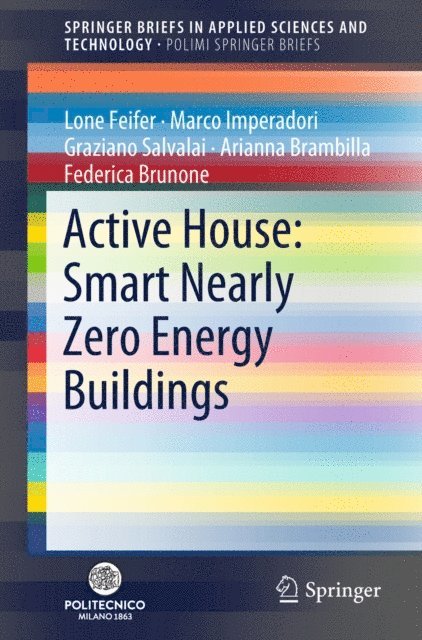
The book provides an overview of the Active House (AH) vision, intended as a building design method “beyond” the passive approach for buildings of the future that will be more and more connected, smart and innovative. It offers a novel philosophical design approach in which buildings, new or renovated, are in balance with natural, renewable energies and become “concentrators-distributors” of energies instead of being consumers of resources. The book is composed of five chapters, providing information on fundamental aspects of innovations toward resource-efficient buildings, as well as case studies presenting the concept in practice. It demonstrates that a completely new design approach is possible, and that a turning point has been reached. Lastly, it shows how the AH Alliance, along with designers, institutions, industries and academies, is bringing a breath of fresh air to the world of construction.
E-bok
Engelska, 2018865 kr
Läs direkt efter köp
The book provides an overview of the Active House (AH) vision, intended as a building design method “beyond” the passive approach for buildings of the future that will be more and more connected, smart and innovative. It offers a novel philosophical design approach in which buildings, new or renovated, are in balance with natural, renewable energies and become “concentrators-distributors” of energies instead of being consumers of resources. The book is composed of five chapters, providing information on fundamental aspects of innovations toward resource-efficient buildings, as well as case studies presenting the concept in practice. It demonstrates that a completely new design approach is possible, and that a turning point has been reached. Lastly, it shows how the AH Alliance, along with designers, institutions, industries and academies, is bringing a breath of fresh air to the world of construction.