Gregory D. Alles - Böcker
Visar alla böcker från författaren Gregory D. Alles. Handla med fri frakt och snabb leverans.
9 produkter
9 produkter
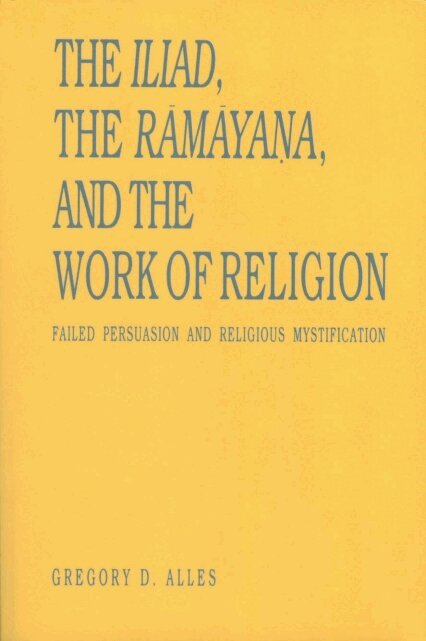
Iliad, the Rāmāyaṇa, and the Work of Religion
Failed Persuasion and Religious Mystification
Häftad, Engelska, 1994
577 kr
Skickas inom 5-8 vardagar
One often reads that literature works to construct worlds of meaning. This book argues that the Iliad and the Rāmāyana did not construct worlds so much as address them. It argues further that the worlds the Iliad and the Rāmāyana addressed were worlds in which words did not mean so much as persuade. In both ancient Greece and India, persuasion was central to harmonious social interaction. The failure of persuasion marked the limits of the patterns that configured human society; it also threatened social chaos. The work of the Iliad and the Rāmāyana was to transcend the limits and mystify the threat. In performing this work, the two poems made the configurations of social order fundamentally tenable. They also enabled them to endure up to the present day. Gregory Alles seeks to bring an awareness of some of the limits of significant ideological practices in the academic study of religions, especially the pursuit known as the history of religions. In the twentieth century, the history of religions has been formulated as a hermeneutical discipline. Its task has been to understand religious meanings, in whatever way the process of understanding meanings has been conceived. This investigation suggests, however, that a hermeneutical history of religions is too narrow. Among other things, it overlooks the religious work that these two poems perform. This study proposes that historians of religions conceive of their task not as hermeneutics but as history, that is, as a principled investigation of events in which religion occurs.
2 103 kr
Skickas inom 10-15 vardagar
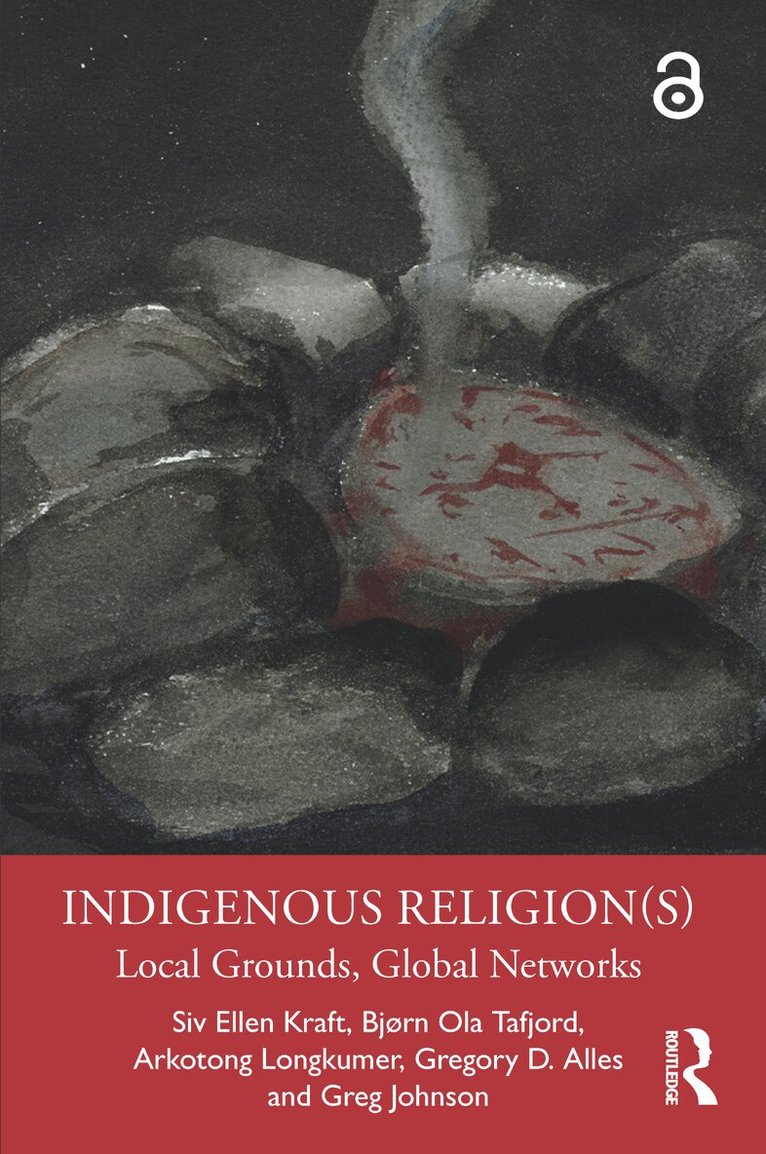
What counts as 'indigenous religion' in today´s world? Who claims this category? What are the processes through which local entities become recognisable as 'religious' and 'indigenous'? How is all of this connected to struggles for power, rights and sovereignty?This book sheds light on the contemporary lives of indigenous religion(s), through case studies from Sápmi, Nagaland, Talamanca, Hawai`i, and Gujarat, and through a shared focus on translations, performances, mediation and sovereignty. It builds on long term case-studies and on the collaborative comparison of a long-term project, including shared fieldwork. At the center of its concerns are translations between a globalising discourse (indigenous religion in the singular) and distinct local traditions (indigenous religions in the plural).With contributions from leading scholars in the field, this book is a must read for students and researchers in indigenous religions, including those in related fields such as religious studies and social anthropology.
580 kr
Skickas inom 10-15 vardagar
What counts as 'indigenous religion' in today´s world? Who claims this category? What are the processes through which local entities become recognisable as 'religious' and 'indigenous'? How is all of this connected to struggles for power, rights and sovereignty?This book sheds light on the contemporary lives of indigenous religion(s), through case studies from Sápmi, Nagaland, Talamanca, Hawai`i, and Gujarat, and through a shared focus on translations, performances, mediation and sovereignty. It builds on long term case-studies and on the collaborative comparison of a long-term project, including shared fieldwork. At the center of its concerns are translations between a globalising discourse (indigenous religion in the singular) and distinct local traditions (indigenous religions in the plural).With contributions from leading scholars in the field, this book is a must read for students and researchers in indigenous religions, including those in related fields such as religious studies and social anthropology.
3 935 kr
Skickas inom 5-8 vardagar
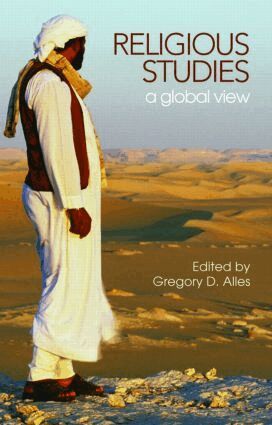
Drawing on recent developments in the comparative study of religion, this book explores the trends of the past sixty years from a global perspective. Each of the ten chapters covers the study of religion in a different region of the world, from Europe and the Americas to Asia and the Far East. Topics covered include:local background to the study of religionsformation of religious studies in the regionimportant thinkers and writingsinstitutionsinterregional diversity and interregional connectionsemerging issues.This book is a major contribution to the field of religious studies and a valuable reference for scholars, researchers and graduate students.
689 kr
Skickas inom 10-15 vardagar
Drawing on recent developments in the comparative study of religion, this book explores the trends of the past sixty years from a global perspective. Each of the ten chapters covers the study of religion in a different region of the world, from Europe and the Americas to Asia and the Far East. Topics covered include:local background to the study of religionsformation of religious studies in the regionimportant thinkers and writingsinstitutionsinterregional diversity and interregional connectionsemerging issues.This book is a major contribution to the field of religious studies and a valuable reference for scholars, researchers and graduate students.
1 254 kr
Skickas inom 5-8 vardagar
Rudolf Otto (1869-1937) is widely recognized as one of the most important contributors to the study of religions at the beginning of the 20th century. His book, The Idea of the Holy, became something of a sensation in its time, and his account of numinous experience as a mysterium tremendum et fascinans had an effect that few other ideas in the study of religions have had. His vocabulary broke through narrow disciplinary bounds and was taken up by people in a variety of disciplines in the humanities and the social sciences. However, since the 1960s, Otto has been increasingly overlooked and neglected. As thinkers and scholars have turned in many other intellectual directions, they have tended to see Otto as representative of a past to be rejected. This volume gathers together essays by scholars from a variety of perspectives - theology, religious studies, intellectual history, and various cultural studies - to address the question of what Otto's legacy for the 21st century might be. The first section of the volume addresses Otto's ideas and their contexts. Part Two turns to the area that Otto, more than any other German theologian or philosopher of religion, opened up: an engagement with the world of religions. Otto's influence, however, has never been confined to systematic religious thought and the study of religions. His ideas have resonated much more widely. Although it is impossible to treat this range of application completely, the essays in Part Three aim to provide a hint of this wider impact, in architecture (Britton), poetry (Furey), politics (Jerryson), and the contemporary world more generally (Lauster). This volume is not an attempt to revivify Otto, nor is it intended as a magisterial statement about Otto's significance today. Rather, it issues an invitation to those with an interest not just in religions but also in cultural phenomena more broadly to take another look at Rudolf Otto and his ideas. Perhaps they will find more than they expect, and something that they can use.
1 115 kr
Tillfälligt slut
Rudolf Otto exerted a major formative influence on the study of religions in the first half of the 20th century. His landmark book, Das Heilige (1917), translated into English as The Idea of the Holy (1923), identified as central to religion the experience of the numinous, a word he coined. That numinous was, in his terms, a mysterium tremendum et fascinans-a fascinating yet terrifying mystery. This influential view set the agenda for most professional scholars of religion until well into the 1960s. It also introduced a set of concepts that has enjoyed wide cultural currency. Still today creative writers and artists occasionally refer to the numinous. This book introduces general readers to Otto's thought in The Idea of the Holy and helps them develop a fuller understanding of it. It presents the problems with which Otto wrestled, among them questions about evolution and religion, the historical development of Christianity, and religion's role in making a better society. It sets Otto's ideas about the numinous in the broader currents of thought to which they belong. It also examines criticisms of Otto's ideas and concludes with an examination of how scholars today approach the topics Otto addressed.
363 kr
Tillfälligt slut
Rudolf Otto exerted a major formative influence on the study of religions in the first half of the 20th century. His landmark book, Das Heilige (1917), translated into English as The Idea of the Holy (1923), identified as central to religion the experience of the numinous, a word he coined. That numinous was, in his terms, a mysterium tremendum et fascinans-a fascinating yet terrifying mystery. This influential view set the agenda for most professional scholars of religion until well into the 1960s. It also introduced a set of concepts that has enjoyed wide cultural currency. Still today creative writers and artists occasionally refer to the numinous. This book introduces general readers to Otto's thought in The Idea of the Holy and helps them develop a fuller understanding of it. It presents the problems with which Otto wrestled, among them questions about evolution and religion, the historical development of Christianity, and religion's role in making a better society. It sets Otto's ideas about the numinous in the broader currents of thought to which they belong. It also examines criticisms of Otto's ideas and concludes with an examination of how scholars today approach the topics Otto addressed.
1 614 kr
Skickas inom 7-10 vardagar
Rudolf Otto was one of the most influential thinkers about religion in the 20th century. He is best known for his epoch-making book. The idea of the Holy, a path-breaking analysis of religion as a unique encounter with a numinous 'mysterium tremendum et fascinans. Until now critical studies have concentrated on Otto the theologian, philosopher, and historian of religions. But Otto was more; he was also an actor on the political, social, cultural, and ecclesiastical stages. His scholarly work should be seen as one facet of his broader, public activity. This collection of essays, introduced, selected and translated by Gregory D. Alles, aims to broaden the image of Otto available to English readers. It presents previously untranslated writings of Otto the politician, social commentator, and churchman. Also included are Otto's autobiographical reflections and a sampling from his late essays on ethics. In an informative introduction Alles outlines the discussions that Otto's ideas have evoked and traces the impact of Otto's thought on theology and the academic study of religion. He also examines criticisms of Otto's ideas and makes suggestions for future research.