Gregory J. Walters – författare
Visar alla böcker från författaren Gregory J. Walters. Handla med fri frakt och snabb leverans.
7 produkter
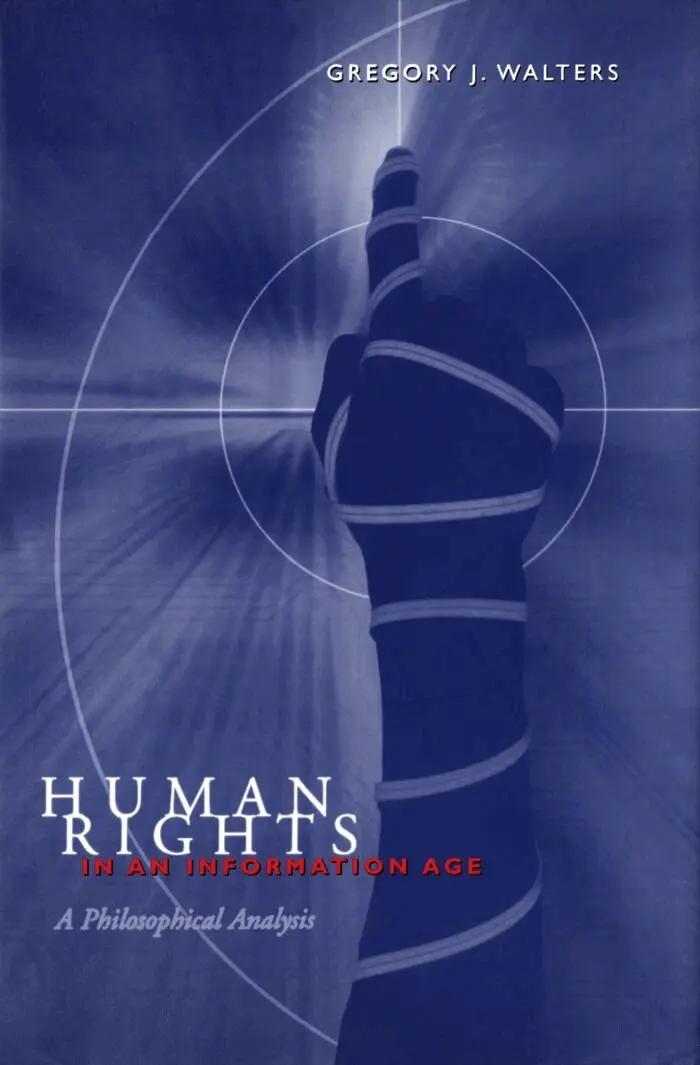
Human Rights in an Information Age
A Philosophical Analysis
Häftad, 2002
456 kr
Lägg i varukorg
How can we balance new information technology practices with human rights? In Human Rights in an Information Age, Gregory Walters analyses Canadian and global information highway policy and practices regarding the Internet, e-commerce, public health and safety, privacy and security, and information …
Human Rights in an Information Age
A Philosophical Analysis
E-bok, 2001
1255 kr
Lägg i varukorg
How can we balance new information technology practices with human rights? In Human Rights in an Information Age, Gregory Walters analyses Canadian and global information highway policy and practices regarding the Internet, e-commerce, public health and safety, privacy and security, and information …
Philosophical Faith and the Future of Humanity
Av Helmut Wautischer, Alan M. Olson m. fl.
Inbunden, 2012
1093 kr
Lägg i varukorg
Karl Jaspers, who died in 1969, had a profound impact on 20th-century theology and philosophy. His central thesis called for, among other things, a de-centering of philosophy from its Eurocentric roots and a renewal of its dialogue with other traditions, especially Asian ones. This collection of …
Philosophical Faith and the Future of Humanity
Av Gregory J. Walters, Alan M. Olson m. fl.
E-bok, 2012
1459 kr
Lägg i varukorg
Karl Jaspers, who died in 1969, had a profound impact on 20th-century theology and philosophy. His central thesis called for, among other things, a de-centering of philosophy from its Eurocentric roots and a renewal of its dialogue with other traditions, especially Asian ones. This collection of …
Philosophical Faith and the Future of Humanity
Av Helmut Wautischer, Alan M. Olson m. fl.
Häftad, 2014
1093 kr
Lägg i varukorg
Karl Jaspers, who died in 1969, had a profound impact on 20th-century theology and philosophy. His central thesis called for, among other things, a de-centering of philosophy from its Eurocentric roots and a renewal of its dialogue with other traditions, especially Asian ones. This collection of …
Karl Jaspers and the Role of Conversion in the Nuclear Age
Inbunden, 1988
861 kr
Tillfälligt slut
Analyzes and critiques Karl Jaspers' philosophy on the atom bomb and its relation to the future of humanity. This work studies the human transformations called for by Jaspers in science, politics, and religion, and develops the limits and possibilities of Jaspers' ideas from the perspective of …
Karl Jaspers and the Role of Conversion in the Nuclear Age
Häftad, 1988
409 kr
Tillfälligt slut
Analyzes and critiques Karl Jaspers' philosophy on the atom bomb and its relation to the future of humanity. This work studies the human transformations called for by Jaspers in science, politics, and religion, and develops the limits and possibilities of Jaspers' ideas from the perspective of …