Greta Gaard - Böcker
Visar alla böcker från författaren Greta Gaard. Handla med fri frakt och snabb leverans.
9 produkter
9 produkter
389 kr
Skickas inom 7-10 vardagar
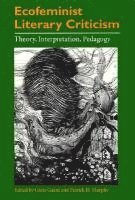
Ecofeminist Literary Criticism is the first collection of its kind: a diverse anthology that explores both how ecofeminism can enrich literary criticism and how literary criticism can contribute to ecofeminist theory and activism. Ecofeminism is a practical movement for social change that discerns interconnections among all forms of oppression: the exploitation of nature, the oppression of women, class exploitation, racism, colonialism. Against binary divisions such as self/other, culture/nature, man/woman, humans/animals, and white/non-white, ecofeminist theory asserts that human identity is shaped by more fluid relationships and by an acknowledgment of both connection and difference. Once considered the province of philosophy and women's studies, ecofeminism in recent years has been incorporated into a broader spectrum of academic discourse. Ecofeminist Literary Criticism assembles some of the most insightful advocates of this perspective to illuminate ecofeminism as a valuable component of literary criticism.
2 306 kr
Skickas inom 10-15 vardagar
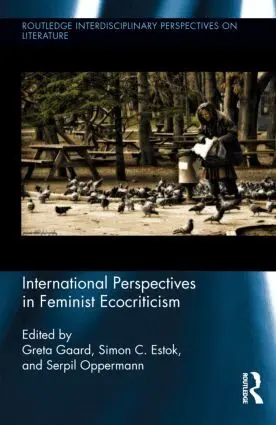
Exploring environmental literature from a feminist perspective, this volume presents a diversity of feminist ecocritical approaches to affirm the continuing contributions, relevance, and necessity of a feminist perspective in environmental literature, culture, and science. Feminist ecocriticism has a substantial history, with roots in second- and third-wave feminist literary criticism, women’s environmental writing and social change activisms, and eco-cultural critique, and yet both feminist and ecofeminist literary perspectives have been marginalized. The essays in this collection build on the belief that the repertoire of violence (conceptual and literal) toward nature and women comprising our daily lives must become central to our ecocritical discussions, and that basic literacy in theories about ethics are fundamental to these discussions. The book offers an international collection of scholarship that includes ecocritical theory, literary criticism, and ecocultural analyses, bringing a diversity of perspectives in terms of gender, sexuality, and race. Reconnecting with the histories of feminist and ecofeminist literary criticism, and utilizing new developments in postcolonial ecocriticism, animal studies, queer theory, feminist and gender studies, cross-cultural and international ecocriticism, this timely volume develops a continuing and international feminist ecocritical perspective on literature, language, and culture.
246 kr
Skickas inom 11-20 vardagar
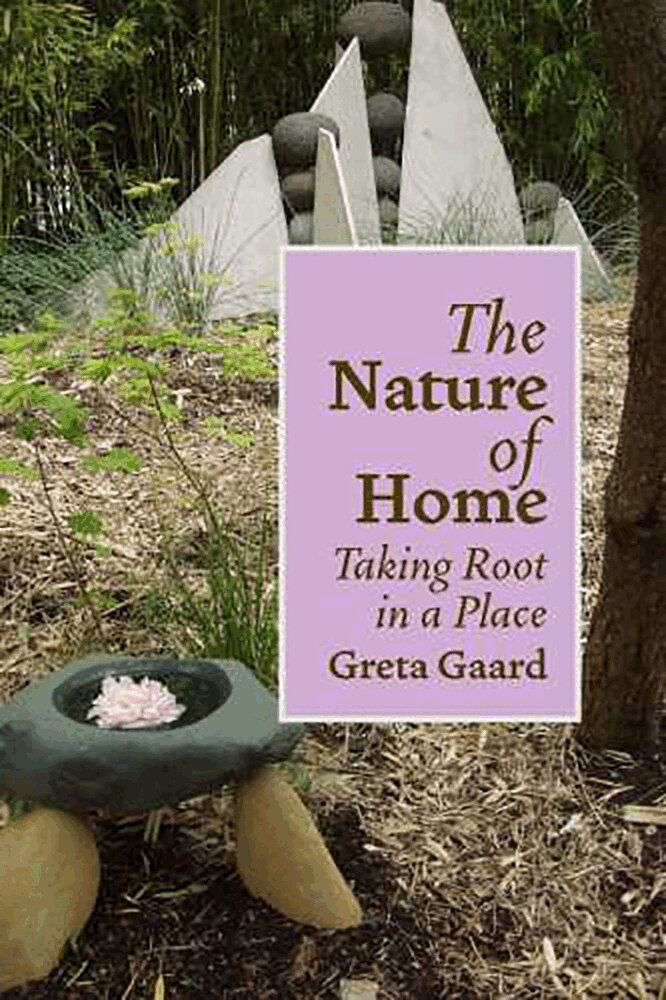
“As long as humans have been around, we’ve had to move in order to survive.” So arises that most universal and elemental human longing for home, and so begins Greta Gaard’s exploration of just precisely what it means to be at home in the world.Gaard journeys through the deserts of southern California, through the High Sierras, the Wind River Mountains, and the Northern Cascades, through the wildlands and waterways of Washington and Minnesota, through snow season, rain season, mud season, and lilac season, yet her essays transcend mere description of natural beauty to investigate the interplay between place and identity. Gaard examines the earliest environments of childhood and the relocations of adulthood, expanding the feminist insight that identity is formed through relationships to include relationships to place. “Home” becomes not a static noun, but an active verb: the process of cultivating the connections with place and people that shape who we become.Striving to create a sense of home, Gaard involves herself socially, culturally, and ecologically within her communities, discovering that as she works to change her environment, her environment changes her. As Gaard investigates environmental concerns such as water quality, oil spills, or logging, she touches on their parallels to community issues such as racism, classism, and sexism, uncovering the dynamic interaction by which “humans, like other life on earth, both shape and are shaped by our environments.”While maintaining an understanding of the complex systems and structures that govern communities and environments, Gaard’s writing delves deeper to reveal the experiences and realities we displace through euphemisms or stereotypes, presenting issues such as homelessness or hunger with compelling honesty and sensitivity. Gaard’s essays form a quest narrative, expressing the process of letting go that is an inherent part of an impermanent life. And when a person is broken, in the aftermath of that letting go, it is a place that holds the pieces together.As long as we are forced to move—by economics, by war, by colonialism—the strategies we possess to make and redefine home are imperative to our survival, and vital in the shaping of our very identities.
347 kr
Tillfälligt slut
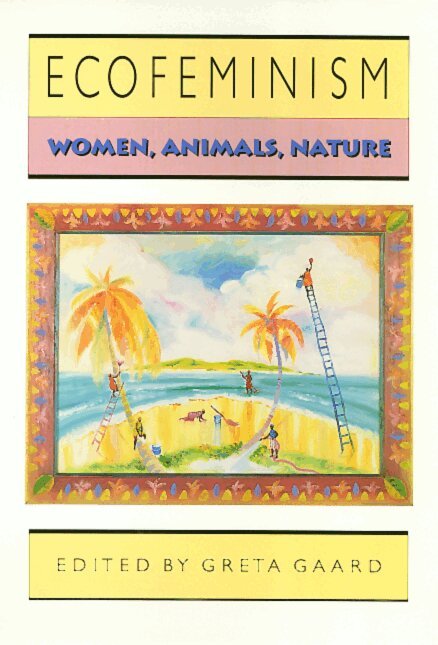
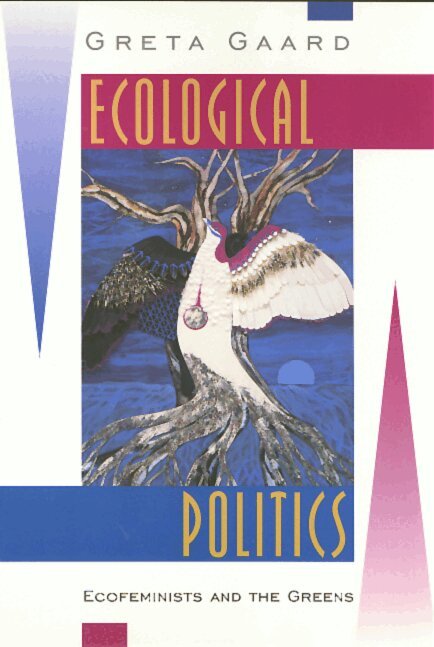
Drawing on the insights of ecology, feminism, and socialism, ecofeminism's basic premise is that the ideology that authorizes oppression based on race, class, gender, sexuality, physical abilities, and species is the same ideology that sanctions the oppression of nature. In this collection of essays, feminist scholars and activists discuss the relationships among human begins, the natural environment, and nonhuman animals. They reject the nature/culture dualism of patriarchal thought and locate animals and humans within nature. The goal of these twelve articles is to contribute to the evolving dialogue among feminists, ecofeminists, animal liberationists, deep ecologists, and social ecologists in an effort to create a sustainable lifestyle for all inhabitants of the earth. Among the issues addressed are the conflicts between Green politics and ecofeminism, various applications of ecofeminist theory, the relationship of animal liberation to ecofeminism, harmful implications of the romanticized woman-nature association in Western culture, and cultural limitations of ecofeminism. In the series Ethics and Action, edited by Tom Regan.
Contemplative Practices and Anti-Oppressive Pedagogies for Higher Education
Bridging the Disciplines
Häftad, Engelska, 2022
511 kr
Skickas inom 10-15 vardagar
This volume explores mindfulness and other contemplative approaches as strategic tools for cultivating anti-oppressive pedagogies in higher education.Research confirms that simply providing students with evidence and narratives of economic, social, and environmental injustices proves insufficient in developing awareness and eliciting responses of empathy, solidarity, and a desire to act for change. From the environmental humanities to the environmental sciences, legal studies, psychology, and counseling, educators from a range of geographical and disciplinary standpoints describe their research-based mindfulness pedagogies. Chapters explore how to interrupt and interrogate oppression through contemplative teaching tools, assignments, and strategies that create greater awareness and facilitate deeper engagement with learning contents, contexts, and communities. Providing a framework that facilitates awareness of the links between historic and current oppression, self-identity, and trauma, and creating a transformative learning experience through mindfulness, this book is a must-read for faculty and educators interested in intersections of mindfulness, contemplative pedagogies, and anti-oppression.
Contemplative Practices and Anti-Oppressive Pedagogies for Higher Education
Bridging the Disciplines
Inbunden, Engelska, 2022
2 044 kr
Skickas inom 10-15 vardagar
This volume explores mindfulness and other contemplative approaches as strategic tools for cultivating anti-oppressive pedagogies in higher education.Research confirms that simply providing students with evidence and narratives of economic, social, and environmental injustices proves insufficient in developing awareness and eliciting responses of empathy, solidarity, and a desire to act for change. From the environmental humanities to the environmental sciences, legal studies, psychology, and counseling, educators from a range of geographical and disciplinary standpoints describe their research-based mindfulness pedagogies. Chapters explore how to interrupt and interrogate oppression through contemplative teaching tools, assignments, and strategies that create greater awareness and facilitate deeper engagement with learning contents, contexts, and communities. Providing a framework that facilitates awareness of the links between historic and current oppression, self-identity, and trauma, and creating a transformative learning experience through mindfulness, this book is a must-read for faculty and educators interested in intersections of mindfulness, contemplative pedagogies, and anti-oppression.
717 kr
Skickas inom 10-15 vardagar
Exploring environmental literature from a feminist perspective, this volume presents a diversity of feminist ecocritical approaches to affirm the continuing contributions, relevance, and necessity of a feminist perspective in environmental literature, culture, and science. Feminist ecocriticism has a substantial history, with roots in second- and third-wave feminist literary criticism, women’s environmental writing and social change activisms, and eco-cultural critique, and yet both feminist and ecofeminist literary perspectives have been marginalized. The essays in this collection build on the belief that the repertoire of violence (conceptual and literal) toward nature and women comprising our daily lives must become central to our ecocritical discussions, and that basic literacy in theories about ethics are fundamental to these discussions. The book offers an international collection of scholarship that includes ecocritical theory, literary criticism, and ecocultural analyses, bringing a diversity of perspectives in terms of gender, sexuality, and race. Reconnecting with the histories of feminist and ecofeminist literary criticism, and utilizing new developments in postcolonial ecocriticism, animal studies, queer theory, feminist and gender studies, cross-cultural and international ecocriticism, this timely volume develops a continuing and international feminist ecocritical perspective on literature, language, and culture.
1 343 kr
Skickas inom 10-15 vardagar
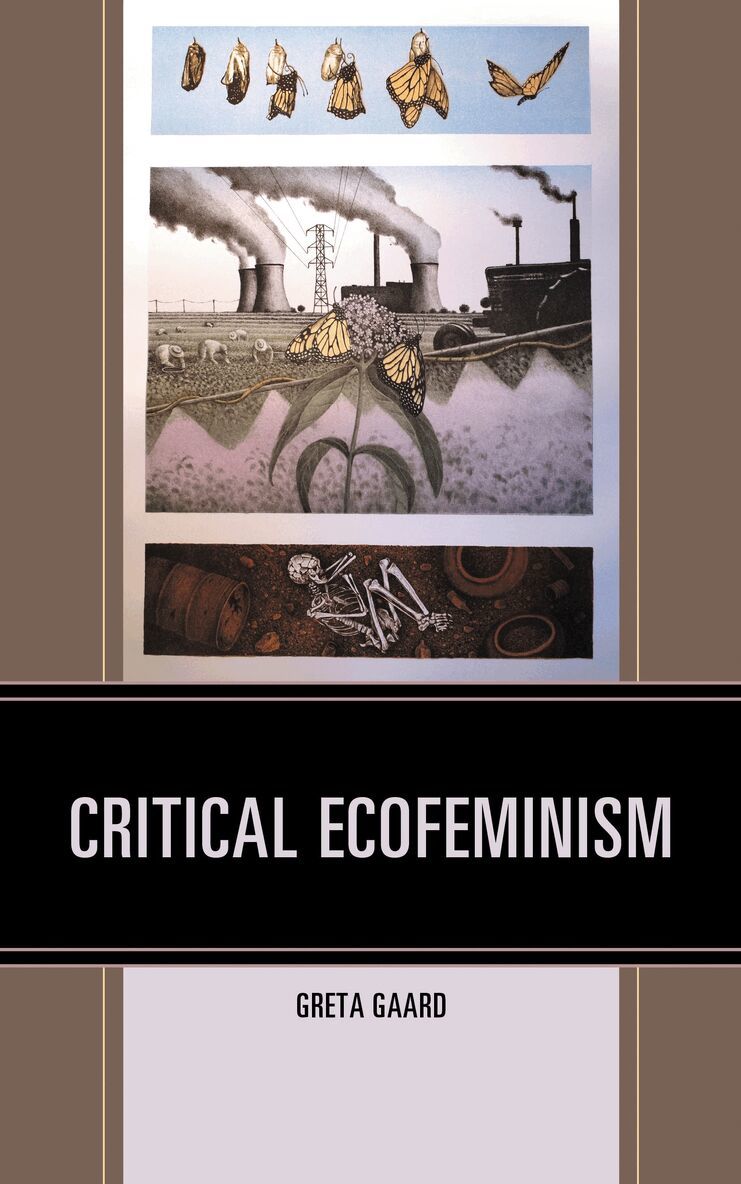
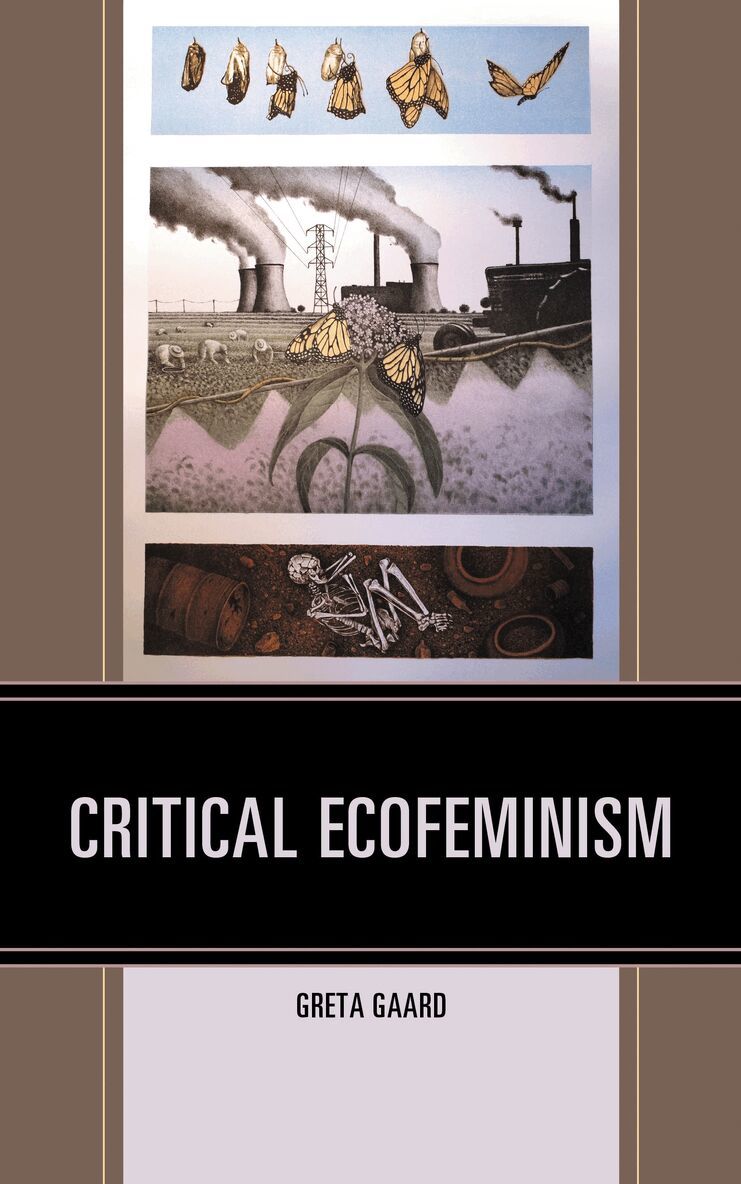
Australian feminist philosopher Val Plumwood coined the term “critical ecofeminism” to “situate humans in ecological terms and non-humans in ethical terms,” for “the two tasks are interconnected, and cannot be addressed properly in isolation from each other.” Variously using the terms “critical ecological feminism,” “critical anti-dualist ecological feminism,” and “critical ecofeminism,” Plumwood’s work developed amid a range of perspectives describing feminist intersections with ecopolitical issues—i.e., toxic production and toxic wastes, indigenous sovereignty, global economic justice, species justice, colonialism and dominant masculinity. Well over a decade before the emergence of posthumanist theory and the new materialisms, Plumwood’s critical ecofeminist framework articulates an implicit posthumanism and respect for the animacy of all earthothers, exposing the linkages among diverse forms of oppression, and providing a theoretical basis for further activist coalitions and interdisciplinary scholarship.Had Plumwood lived another ten years, she might have described her work as “Anthropocene Ecofeminism,” “Critical Material Ecofeminism,” “Posthumanist Anticolonial Ecofeminism”—all of these inflections are present in her work. Here, Critical Ecofeminism advances upon Plumwood’s intellectual, activist, and scholarly work by exploring its implications for a range of contemporary perspectives and issues--critical animal studies, plant studies, sustainability studies, environmental justice, climate change and climate justice, masculinities and sexualities. With the insights available through a critical ecofeminism, these diverse eco-justice perspectives become more robust.
622 kr
Skickas inom 10-15 vardagar
Australian feminist philosopher Val Plumwood coined the term “critical ecofeminism” to “situate humans in ecological terms and non-humans in ethical terms,” for “the two tasks are interconnected, and cannot be addressed properly in isolation from each other.” Variously using the terms “critical ecological feminism,” “critical anti-dualist ecological feminism,” and “critical ecofeminism,” Plumwood’s work developed amid a range of perspectives describing feminist intersections with ecopolitical issues—i.e., toxic production and toxic wastes, indigenous sovereignty, global economic justice, species justice, colonialism and dominant masculinity. Well over a decade before the emergence of posthumanist theory and the new materialisms, Plumwood’s critical ecofeminist framework articulates an implicit posthumanism and respect for the animacy of all earthothers, exposing the linkages among diverse forms of oppression, and providing a theoretical basis for further activist coalitions and interdisciplinary scholarship.Had Plumwood lived another ten years, she might have described her work as “Anthropocene Ecofeminism,” “Critical Material Ecofeminism,” “Posthumanist Anticolonial Ecofeminism”—all of these inflections are present in her work. Here, Critical Ecofeminism advances upon Plumwood’s intellectual, activist, and scholarly work by exploring its implications for a range of contemporary perspectives and issues--critical animal studies, plant studies, sustainability studies, environmental justice, climate change and climate justice, masculinities and sexualities. With the insights available through a critical ecofeminism, these diverse eco-justice perspectives become more robust.