Simon Estok - Böcker
Visar alla böcker från författaren Simon Estok. Handla med fri frakt och snabb leverans.
7 produkter
7 produkter
730 kr
Skickas inom 10-15 vardagar
The Ecophobia Hypothesis grows out of the sense that while the theory of biophilia has productively addressed ideal human affinities with nature, the capacity of “the biophilia hypothesis” as an explanatory model of human/ environment relations is limited. The biophilia hypothesis cannot adequately account for the kinds of things that are going on in the world, things so extraordinary that we are increasingly coming to understand the current age as “the Anthropocene.” Building on the usefulness of the biophilia hypothesis, this book argues that biophilia exists on a broader spectrum that has not been adequately theorized. The Ecophobia Hypothesis claims that in order to contextualize biophilia (literally, the “love of life”) and the spectrum on which it sits, it is necessary to theorize how very un-philic human uses of the natural world are. This volume offers a rich tapestry of connected, comparative discussions about the new material turn and the urgent need to address the agency of genes, about the complexities of 21st century representations of ecophobia, and about how imagining terror interpenetrates the imagining of an increasingly oppositional natural environment. Furthermore, this book proposes that ecophobia is one root cause that explains why ecomedia—a veritably thriving industry—is having so little measurable impact in transforming our adaptive capacities. The ecophobia hypothesis offers an equation that determines the variable spectrums of the Anthropocene by measuring the ecophobic implications and inequalities of speciesism and the entanglement of environmental ethics with the writing of literary madness and pain. This work also investigates how current ecophobic perspectives systemically institutionalize the infrastructures of industrial agriculture and waste management. This is a book about revealing ecophobia and prompting transformational change.
730 kr
Skickas inom 10-15 vardagar
Written from within the best traditions of ecocritical thought, this book provides a wide-ranging account of the spatial imagination of landscape and seascape in literary and cultural contexts from many regions of the world. It brings together essays by authors writing from within diverse cultural traditions, across historical periods from ancient Egypt to the postcolonial and postmodern present, and touches on an array of divergent theoretical interventions. The volume investigates how our spatial imaginations become "wired," looking at questions about mediation and exploring how various traditions compete for prominence in our spatial imagination. In what ways is personal experience inflected by prevailing cultural traditions of representation and interpretation? Can an individual maintain a unique and distinctive spatial imagination in the face of dominant trends in perception and interpretation? What are the environmental implications of how we see landscape? The book reviews how landscape is at once conceptual and perceptual, illuminating several important themes including the temporality of space, the mediations of place that form the response of an observer of a landscape, and the development of response in any single life from early, partial thoughts to more considered ideas in maturity. Chapters provide suggestive and culturally nuanced propositions from varying points of view on ancient and modern landscapes and seascapes and on how individuals or societies have arranged, conceptualized, or imagined circumambient space. Opening up issues of landscape, seascape, and spatiality, this volume commences a wide-ranging critical discussion that includes various approaches to literature, history and cultural studies. Bringing together research from diverse areas such as ecocriticism, landscape theory, colonial and postcolonial theory, hybridization theory, and East Asian Studies to provide a historicized and global account of our ecospatial imaginations, this b
2 306 kr
Skickas inom 10-15 vardagar
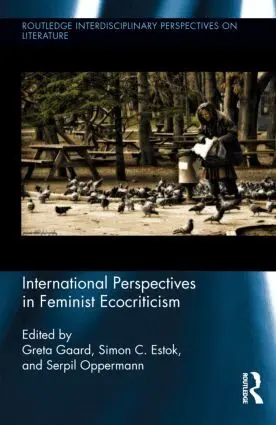
Exploring environmental literature from a feminist perspective, this volume presents a diversity of feminist ecocritical approaches to affirm the continuing contributions, relevance, and necessity of a feminist perspective in environmental literature, culture, and science. Feminist ecocriticism has a substantial history, with roots in second- and third-wave feminist literary criticism, women’s environmental writing and social change activisms, and eco-cultural critique, and yet both feminist and ecofeminist literary perspectives have been marginalized. The essays in this collection build on the belief that the repertoire of violence (conceptual and literal) toward nature and women comprising our daily lives must become central to our ecocritical discussions, and that basic literacy in theories about ethics are fundamental to these discussions. The book offers an international collection of scholarship that includes ecocritical theory, literary criticism, and ecocultural analyses, bringing a diversity of perspectives in terms of gender, sexuality, and race. Reconnecting with the histories of feminist and ecofeminist literary criticism, and utilizing new developments in postcolonial ecocriticism, animal studies, queer theory, feminist and gender studies, cross-cultural and international ecocriticism, this timely volume develops a continuing and international feminist ecocritical perspective on literature, language, and culture.
2 574 kr
Skickas inom 10-15 vardagar
Written from within the best traditions of ecocritical thought, this book provides a wide-ranging account of the spatial imagination of landscape and seascape in literary and cultural contexts from many regions of the world. It brings together essays by authors writing from within diverse cultural traditions, across historical periods from ancient Egypt to the postcolonial and postmodern present, and touches on an array of divergent theoretical interventions. The volume investigates how our spatial imaginations become "wired," looking at questions about mediation and exploring how various traditions compete for prominence in our spatial imagination. In what ways is personal experience inflected by prevailing cultural traditions of representation and interpretation? Can an individual maintain a unique and distinctive spatial imagination in the face of dominant trends in perception and interpretation? What are the environmental implications of how we see landscape? The book reviews how landscape is at once conceptual and perceptual, illuminating several important themes including the temporality of space, the mediations of place that form the response of an observer of a landscape, and the development of response in any single life from early, partial thoughts to more considered ideas in maturity. Chapters provide suggestive and culturally nuanced propositions from varying points of view on ancient and modern landscapes and seascapes and on how individuals or societies have arranged, conceptualized, or imagined circumambient space. Opening up issues of landscape, seascape, and spatiality, this volume commences a wide-ranging critical discussion that includes various approaches to literature, history and cultural studies. Bringing together research from diverse areas such as ecocriticism, landscape theory, colonial and postcolonial theory, hybridization theory, and East Asian Studies to provide a historicized and global account of our ecospatial imaginations, this book will be useful for scholars of landscape ecology, ecocriticism, physical and social geography, postcolonialism and postcolonial ecologies, comparative literary studies, and East Asian Studies.
2 418 kr
Skickas inom 10-15 vardagar
The Ecophobia Hypothesis grows out of the sense that while the theory of biophilia has productively addressed ideal human affinities with nature, the capacity of “the biophilia hypothesis” as an explanatory model of human/ environment relations is limited. The biophilia hypothesis cannot adequately account for the kinds of things that are going on in the world, things so extraordinary that we are increasingly coming to understand the current age as “the Anthropocene.” Building on the usefulness of the biophilia hypothesis, this book argues that biophilia exists on a broader spectrum that has not been adequately theorized. The Ecophobia Hypothesis claims that in order to contextualize biophilia (literally, the “love of life”) and the spectrum on which it sits, it is necessary to theorize how very un-philic human uses of the natural world are. This volume offers a rich tapestry of connected, comparative discussions about the new material turn and the urgent need to address the agency of genes, about the complexities of 21st century representations of ecophobia, and about how imagining terror interpenetrates the imagining of an increasingly oppositional natural environment. Furthermore, this book proposes that ecophobia is one root cause that explains why ecomedia—a veritably thriving industry—is having so little measurable impact in transforming our adaptive capacities. The ecophobia hypothesis offers an equation that determines the variable spectrums of the Anthropocene by measuring the ecophobic implications and inequalities of speciesism and the entanglement of environmental ethics with the writing of literary madness and pain. This work also investigates how current ecophobic perspectives systemically institutionalize the infrastructures of industrial agriculture and waste management. This is a book about revealing ecophobia and prompting transformational change.
717 kr
Skickas inom 10-15 vardagar
Exploring environmental literature from a feminist perspective, this volume presents a diversity of feminist ecocritical approaches to affirm the continuing contributions, relevance, and necessity of a feminist perspective in environmental literature, culture, and science. Feminist ecocriticism has a substantial history, with roots in second- and third-wave feminist literary criticism, women’s environmental writing and social change activisms, and eco-cultural critique, and yet both feminist and ecofeminist literary perspectives have been marginalized. The essays in this collection build on the belief that the repertoire of violence (conceptual and literal) toward nature and women comprising our daily lives must become central to our ecocritical discussions, and that basic literacy in theories about ethics are fundamental to these discussions. The book offers an international collection of scholarship that includes ecocritical theory, literary criticism, and ecocultural analyses, bringing a diversity of perspectives in terms of gender, sexuality, and race. Reconnecting with the histories of feminist and ecofeminist literary criticism, and utilizing new developments in postcolonial ecocriticism, animal studies, queer theory, feminist and gender studies, cross-cultural and international ecocriticism, this timely volume develops a continuing and international feminist ecocritical perspective on literature, language, and culture.
Agony of Water in an Age of Climate Change
Eco-Dimensions in the Blue Humanities
Inbunden, Engelska, 2026
1 617 kr
Kommande
Examining how water appears to humanity (its forms) and how humanity apprehends it (our perceptual horizons), this book proposes a methodology for better understanding and conceptualizing our relationship to water in an age characterized by climate change. Water—the very basis of life—is under threat all over this planet, and this book offers critical understandings of how our thinking prevents us from addressing this very real danger. Structured around important 'watery' concepts such as flood, drought, circulation, melt, plastic, and resilience, it examines literary and filmic texts from a variety of writers and directors such as Amitav Ghosh, J.G. Ballard, Zora Neale Hurston, and Carolina Caycedo.Offering a rigorous treatment of water at its most unruly - that is, when, water fails to behave as humans need or expect it to - this book enriches both our understanding of climate change and the challenge of perceiving it, with respect to one of life’s most crucial elements.