Griffiths David Griffiths – författare
Visar alla böcker från författaren . Handla med fri frakt och snabb leverans.
3 produkter
3 produkter
E-bok
Engelska, 2019413 kr
Läs direkt efter köp
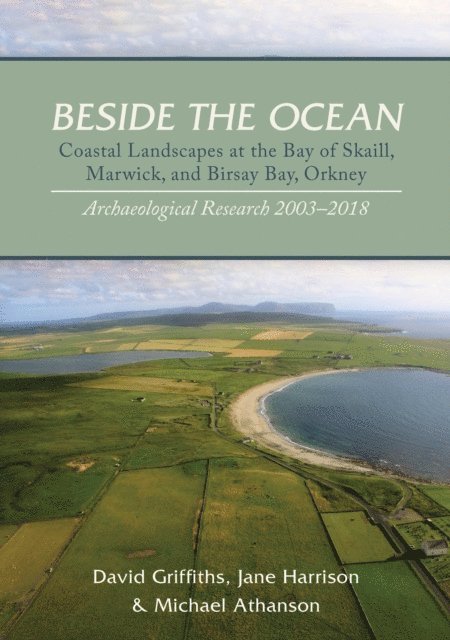
The Bay of Skaill, Marwick Bay, and Birsay Bay form openings in the high sandstone cliffs of Orkney’s Atlantic coast. These west-facing bays have long been favored locations for settlement, with access to the ocean, to fresh water, to land and to resources for cultivation. The coastline of Orkney’s North-West Mainland is recognized worldwide as a location of exceptional archaeological importance, dominated by the Neolithic world heritage site of Skara Brae, and the Viking-Norse remains on the tidal Brough of Birsay. Many of its archaeological sites have been exposed by coastal erosion, a serious problem which continues its destructive progress with every oceanic storm. Rescue excavation has contributed essential data, but its resources have concentrated on the zone of immediate threat, and until recently less has been understood about the archaeology of the landscape that lies behind the eroding shore. From 2003, a new archaeological research project began to investigate the hinterlands of the three bays. Using the rapidly-developing applications of archaeological geophysics, coupled with topographical survey, it has sought to create a broader and better-informed landscape context. Much of the land is dominated by windblown sand, at the Bay of Skaill and Birsay Bay in particular, reflecting centuries of environmental change, and requiring adaptive methodologies and approaches. Several new areas of archaeological interest have been identified, and many previously-known sites are now better-understood. Excavation was used selectively to test the survey results. In one area in particular, a cluster of large settlement mounds on the northern side of the Bay of Skaill, two major Viking-Norse settlement clusters were identified and investigated. These held exceptionally well-preserved deposits, which have required detailed dating and analysis. The artifact assemblages include evidence for ferrous metalworking along with iron and copper alloy objects, combs, glass and amber beads, worked stone, ceramics, and a range of archaeobotanical and archaeozoological remains. A Viking silver hoard discovered in 1858 and a Viking grave uncovered in 1888 are revisited. This monograph brings together the survey and excavation results, and tells a new story of an ancient landscape.
E-bok
PDF, Engelska, 2019398 kr
Läs direkt efter köp
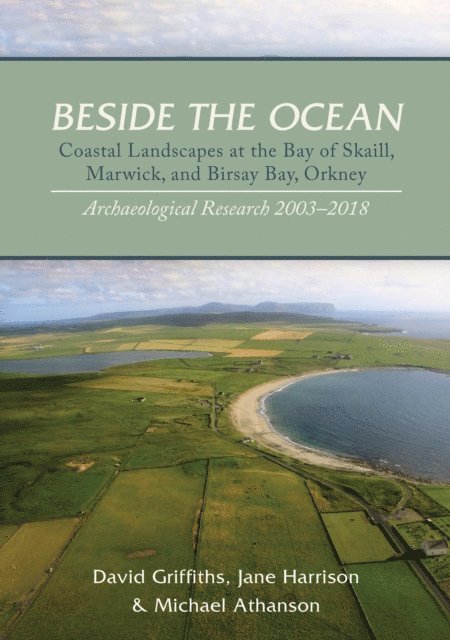
The Bay of Skaill, Marwick Bay, and Birsay Bay form openings in the high sandstone cliffs of Orkney’s Atlantic coast. These west-facing bays have long been favored locations for settlement, with access to the ocean, to fresh water, to land and to resources for cultivation. The coastline of Orkney’s North-West Mainland is recognized worldwide as a location of exceptional archaeological importance, dominated by the Neolithic world heritage site of Skara Brae, and the Viking-Norse remains on the tidal Brough of Birsay. Many of its archaeological sites have been exposed by coastal erosion, a serious problem which continues its destructive progress with every oceanic storm. Rescue excavation has contributed essential data, but its resources have concentrated on the zone of immediate threat, and until recently less has been understood about the archaeology of the landscape that lies behind the eroding shore. From 2003, a new archaeological research project began to investigate the hinterlands of the three bays. Using the rapidly-developing applications of archaeological geophysics, coupled with topographical survey, it has sought to create a broader and better-informed landscape context. Much of the land is dominated by windblown sand, at the Bay of Skaill and Birsay Bay in particular, reflecting centuries of environmental change, and requiring adaptive methodologies and approaches. Several new areas of archaeological interest have been identified, and many previously-known sites are now better-understood. Excavation was used selectively to test the survey results. In one area in particular, a cluster of large settlement mounds on the northern side of the Bay of Skaill, two major Viking-Norse settlement clusters were identified and investigated. These held exceptionally well-preserved deposits, which have required detailed dating and analysis. The artifact assemblages include evidence for ferrous metalworking along with iron and copper alloy objects, combs, glass and amber beads, worked stone, ceramics, and a range of archaeobotanical and archaeozoological remains. A Viking silver hoard discovered in 1858 and a Viking grave uncovered in 1888 are revisited. This monograph brings together the survey and excavation results, and tells a new story of an ancient landscape.
E-bok
Engelska, 2018890 kr
Läs direkt efter köp
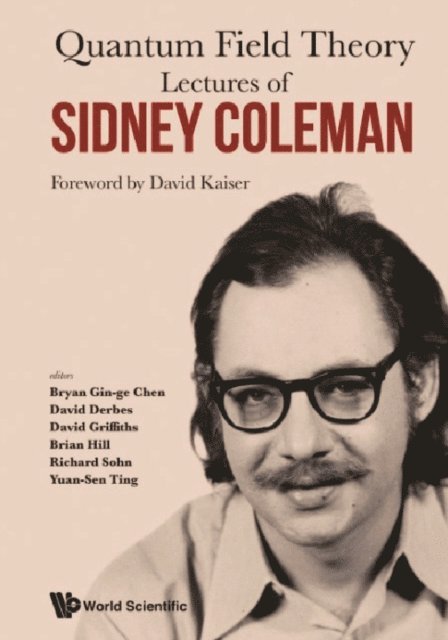
'Sidney Coleman was the master teacher of quantum field theory. All of us who knew him became his students and disciples. Sidneys legendary course remains fresh and bracing, because he chose his topics with a sure feel for the essential, and treated them with elegant economy.'Frank WilczekNobel Laureate in Physics 2004Sidney Coleman was a physicist's physicist. He is largely unknown outside of the theoretical physics community, and known only by reputation to the younger generation. He was an unusually effective teacher, famed for his wit, his insight and his encyclopedic knowledge of the field to which he made many important contributions. There are many first-rate quantum field theory books (the venerable Bjorken and Drell, the more modern Itzykson and Zuber, the now-standard Peskin and Schroeder, and the recent Zee), but the immediacy of Prof. Coleman's approach and his ability to present an argument simply without sacrificing rigor makes his book easy to read and ideal for the student. Part of the motivation in producing this book is to pass on the work of this outstanding physicist to later generations, a record of his teaching that he was too busy to leave himself.