Guido Montani - Böcker
Visar alla böcker från författaren Guido Montani. Handla med fri frakt och snabb leverans.
7 produkter
7 produkter
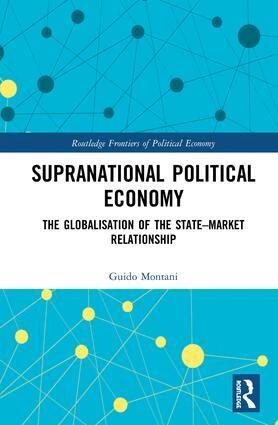
Supranational Political Economy
The Globalisation of the State–Market Relationship
Häftad, Engelska, 2020
617 kr
Skickas inom 10-15 vardagar
With the ending of the Cold War and the rise of a nationalistic ‘America First’ strategy, the post-war liberal international order, based upon the hegemonic power of the USA, is fading away. In its place, a multipolar world is emerging which, while offering some the hope of a better future, is also open to disorder and instability. This book offers an insight into the relationship between politics and economics in this new era. As an alternative, this volume argues for a form of global governance that will offer a better balance between politics and economics, based on a supranational approach. A supranational approach in which world powers and UN member states can work in agreement would follow the principle on which European political and economic integration was built. The system put forward here is based on a Keynesian world clearing union and a reform of the World Trade Organization and a United Nations budget, which would accelerate the convergence of rich and poor countries in the aim of a more sustainable global system. This book demonstrates that globalisations and today’s ecological challenges are both a cause of social discontent and an opportunity. Supranational institutions can greatly increase our ability to address global risks, and this book shows how a 'supranational' world order could reduce the uncertainty of the transition from the post-war order to the future multipolar order.The supranational principle enables us to view globalisation, world capitalism and the ecological crisis not only as causes of inequality, poverty and social instability, but also as processes that can be governed. Wise politicians and political parties cannot let the future of humanity be decided by the precarious equilibrium of the Westphalia system. In post-war Europe a group of nation states, once fierce enemies, embarked on a process of integration which led to the abolition of inter-European national borders. With supranational global governance, the same could be achieved in the global system.
1 740 kr
Skickas inom 7-10 vardagar
The 2008 financial crisis is arguably the most dramatic outcome of globalization. International economic integration, if unregulated, can bring about huge inequalities and the destruction of the environment. This thought-provoking book illustrates why the 'old' international order is unable to provide crucial global public goods such as monetary and financial stability in the fight against mass poverty and climate change. The expert authors provide an in-depth analysis of the causes of the financial crisis and the political economy measures required to build a safer and more stable international order. They show how the financial crisis is deeply rooted in the flaws of the dollar standard and explain why the dollar and globalization should be considered together to understand the present challenges. By way of conclusion, the authors propose the creation of a 'World Eco-Monetary Union' with the power to regulate the global economy and to promote sustainable development. The new macroeconomic approach presented contributes to the development of a more comprehensive supranational political economy. As such, this challenging book will prove a stimulating read for academics, researchers and students with an interest in economics, heterodox economics, and international economics.
Anthropocene and Cosmopolitan Citizenship
Europe and the New International Order
Inbunden, Engelska, 2024
2 088 kr
Skickas inom 10-15 vardagar
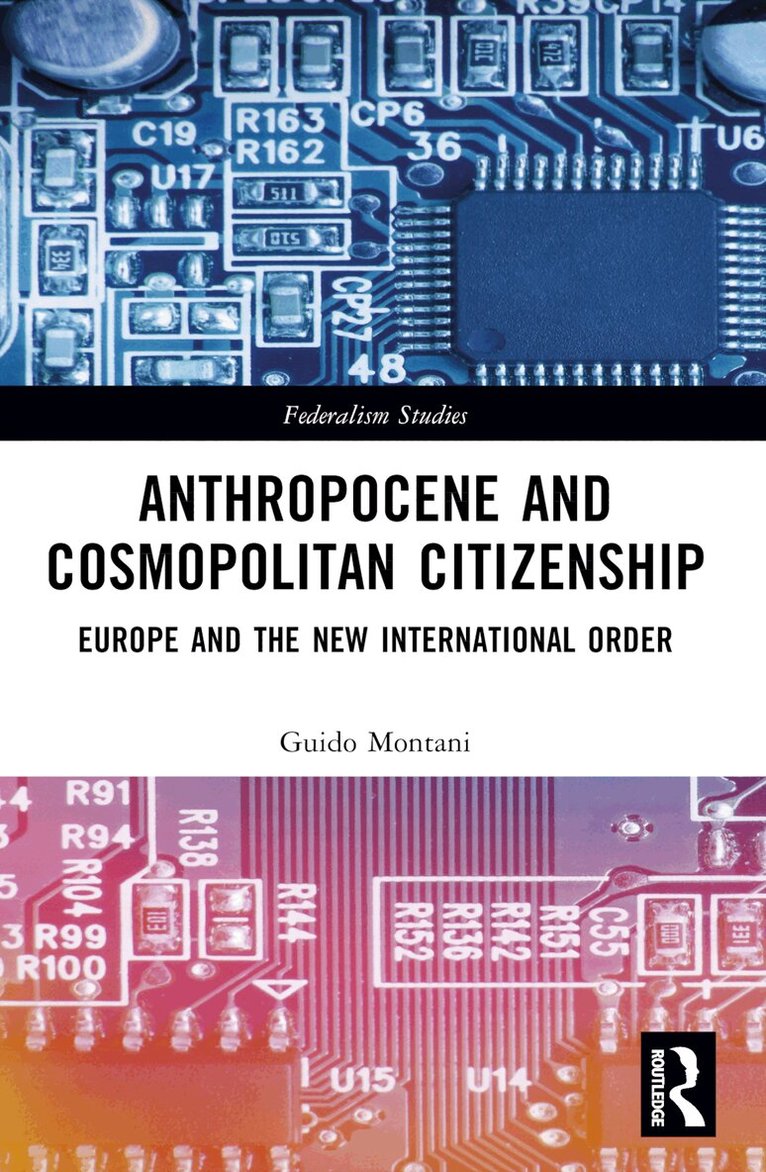
Anthropocene and Cosmopolitan Citizenship criticizes the Westphalia system of international relations and, as an alternative, proposes cosmopolitan citizenship. The book offers a critique of the theory of international relations based on the Westphalian system and the principle of national sovereignty.At the end of the Second World War, the two superpowers agreed on a new international order that, to this day, has prevented a new world war. This era is over. The collapse of the Soviet Union and the economic and political affirmation of new international powers – such as China, India and Brazil – have generated a multipolar world, in which growing tensions between great and small powers are manifested, up to the threat of nuclear war. To this threat, a second one has been added: the possible collapse of the biosphere, an epoch called the Anthropocene, because the pollution of nature is suffocating the life of every living species on the Planet, including Homo sapiens. The United Nations can be viewed as the first step towards a post-Westphalian system, and the European Union represents an alternative model for peaceful relationships among national peoples. The book’s methodology draws on an interdisciplinary relationship between social sciences and nature sciences to provide a European foreign policy strategy that shows how the European Union can play a crucial role in current international politics, helping build a just world in harmony with nature, including by calling for a Global Green Deal and an Earth Constitution. The integration of the national peoples of the European Union shows that supranational citizenship is possible and that national independence is compatible with peaceful international interdependence. The author explores how this can be achieved and how alternatives have failed, with reference to federalism, ecologism, liberalism, democracy, socialism, nationalism, security and patriotism.This book will be of interest to scholars of international relations and European studies and activists, including ecologists, young people, federalists and members of political parties.
Anthropocene and Cosmopolitan Citizenship
Europe and the New International Order
Häftad, Engelska, 2025
630 kr
Skickas inom 10-15 vardagar
Anthropocene and Cosmopolitan Citizenship criticizes the Westphalia system of international relations and, as an alternative, proposes cosmopolitan citizenship. The book offers a critique of the theory of international relations based on the Westphalian system and the principle of national sovereignty.At the end of the Second World War, the two superpowers agreed on a new international order that, to this day, has prevented a new world war. This era is over. The collapse of the Soviet Union and the economic and political affirmation of new international powers – such as China, India and Brazil – have generated a multipolar world, in which growing tensions between great and small powers are manifested, up to the threat of nuclear war. To this threat, a second one has been added: the possible collapse of the biosphere, an epoch called the Anthropocene, because the pollution of nature is suffocating the life of every living species on the Planet, including Homo sapiens. The United Nations can be viewed as the first step towards a post-Westphalian system, and the European Union represents an alternative model for peaceful relationships among national peoples. The book’s methodology draws on an interdisciplinary relationship between social sciences and nature sciences to provide a European foreign policy strategy that shows how the European Union can play a crucial role in current international politics, helping build a just world in harmony with nature, including by calling for a Global Green Deal and an Earth Constitution. The integration of the national peoples of the European Union shows that supranational citizenship is possible and that national independence is compatible with peaceful international interdependence. The author explores how this can be achieved and how alternatives have failed, with reference to federalism, ecologism, liberalism, democracy, socialism, nationalism, security and patriotism.This book will be of interest to scholars of international relations and European studies and activists, including ecologists, young people, federalists and members of political parties.
481 kr
Skickas inom 10-15 vardagar
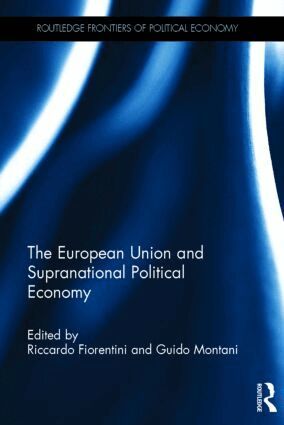
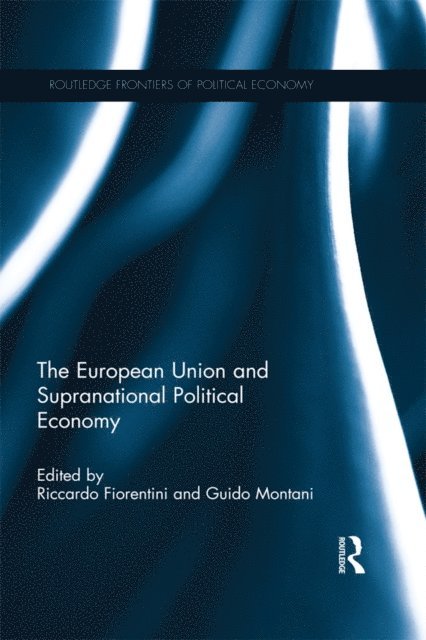
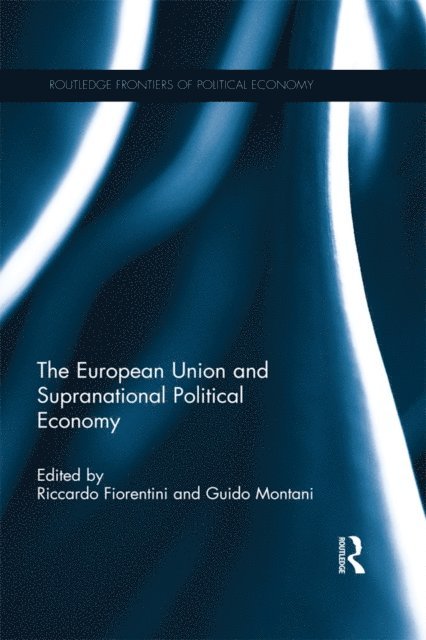
The financial crisis – originated in 2008 in the United States – had a dramatic impact on the world economy. The European Union was immediately involved, but its reaction to the crisis was clearly inadequate. The misgovernment of the European economy not only put at risk the European Monetary Union, but it also caused further hindrances to the recovery of the global economy. The global financial turmoil shook deep-rooted beliefs. The doctrine of international neo-liberalism is more and more criticized. Nevertheless, the critics of neo-liberalism focus their attention on the relationship between the state and the market, as if the nation states, with their international organisations, have enough power for an effective global governance of the world economy. The model of European supranational integration, though seriously imperfect, can suggest some new way out from the crisis – even at the world level – based on a new relationship between the supranational government of the Union and the market.In this book, several academic disciplines are involved: international economics, international political economy, international law, international relations, political theory and democratic theory. Adopting such a multidisciplinary theoretical perspective, the volume tries to answer the following question: Is a more supranational Europe able to provide a better government of the EMU? Does this reform involve more European democracy?
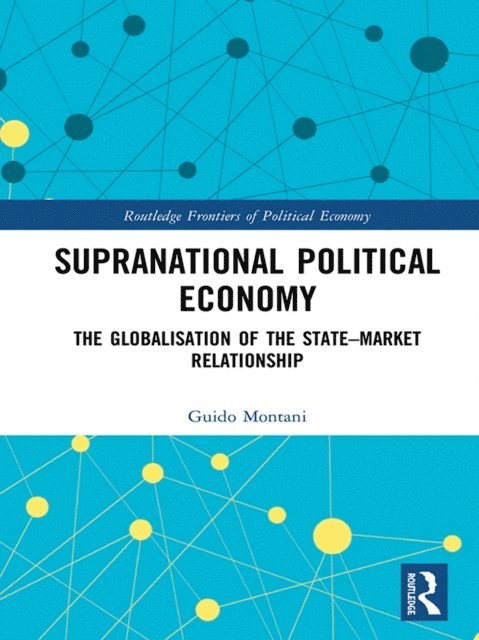
Supranational Political Economy
The Globalisation of the State–Market Relationship
Inbunden, Engelska, 2018
2 088 kr
Skickas inom 10-15 vardagar
With the ending of the Cold War and the rise of a nationalistic ‘America First’ strategy, the post-war liberal international order, based upon the hegemonic power of the USA, is fading away. In its place, a multipolar world is emerging which, while offering some the hope of a better future, is also open to disorder and instability. This book offers an insight into the relationship between politics and economics in this new era. As an alternative, this volume argues for a form of global governance that will offer a better balance between politics and economics, based on a supranational approach. A supranational approach in which world powers and UN member states can work in agreement would follow the principle on which European political and economic integration was built. The system put forward here is based on a Keynesian world clearing union and a reform of the World Trade Organization and a United Nations budget, which would accelerate the convergence of rich and poor countries in the aim of a more sustainable global system. This book demonstrates that globalisations and today’s ecological challenges are both a cause of social discontent and an opportunity. Supranational institutions can greatly increase our ability to address global risks, and this book shows how a 'supranational' world order could reduce the uncertainty of the transition from the post-war order to the future multipolar order.The supranational principle enables us to view globalisation, world capitalism and the ecological crisis not only as causes of inequality, poverty and social instability, but also as processes that can be governed. Wise politicians and political parties cannot let the future of humanity be decided by the precarious equilibrium of the Westphalia system. In post-war Europe a group of nation states, once fierce enemies, embarked on a process of integration which led to the abolition of inter-European national borders. With supranational global governance, the same could be achieved in the global system.
1 362 kr
Skickas inom 10-15 vardagar
The financial crisis – originated in 2008 in the United States – had a dramatic impact on the world economy. The European Union was immediately involved, but its reaction to the crisis was clearly inadequate. The misgovernment of the European economy not only put at risk the European Monetary Union, but it also caused further hindrances to the recovery of the global economy. The global financial turmoil shook deep-rooted beliefs. The doctrine of international neo-liberalism is more and more criticized. Nevertheless, the critics of neo-liberalism focus their attention on the relationship between the state and the market, as if the nation states, with their international organisations, have enough power for an effective global governance of the world economy. The model of European supranational integration, though seriously imperfect, can suggest some new way out from the crisis – even at the world level – based on a new relationship between the supranational government of the Union and the market.In this book, several academic disciplines are involved: international economics, international political economy, international law, international relations, political theory and democratic theory. Adopting such a multidisciplinary theoretical perspective, the volume tries to answer the following question: Is a more supranational Europe able to provide a better government of the EMU? Does this reform involve more European democracy?