Guobin Yang - Böcker
Visar alla böcker från författaren Guobin Yang. Handla med fri frakt och snabb leverans.
12 produkter
12 produkter
1 030 kr
Skickas inom 7-10 vardagar
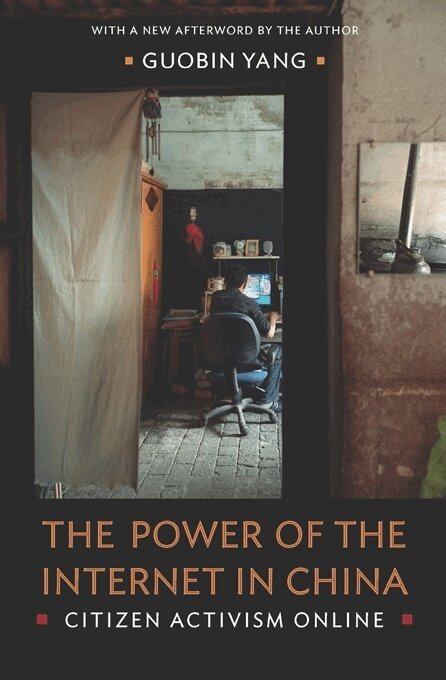
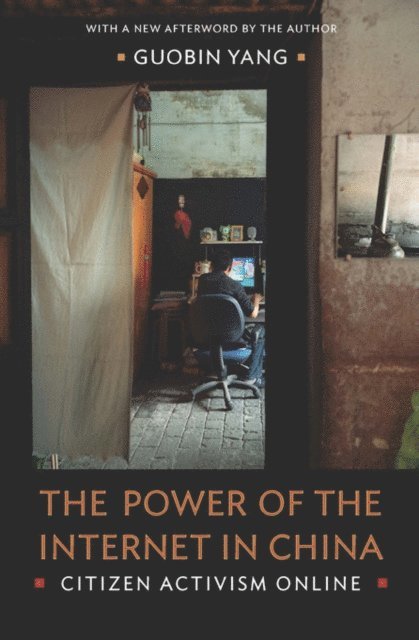
Since the mid-1990s, the Internet has revolutionized popular expression in China, enabling users to organize, protest, and influence public opinion in unprecedented ways. Guobin Yang's pioneering study maps an innovative range of contentious forms and practices linked to Chinese cyberspace, delineating a nuanced and dynamic image of the Chinese Internet as an arena for creativity, community, conflict, and control. Like many other contemporary protest forms in China and the world, Yang argues, Chinese online activism derives its methods and vitality from multiple and intersecting forces, and state efforts to constrain it have only led to more creative acts of subversion. Transnationalism and the tradition of protest in China's incipient civil society provide cultural and social resources to online activism. Even Internet businesses have encouraged contentious activities, generating an unusual synergy between commerce and activism. Yang's book weaves these strands together to create a vivid story of immense social change, indicating a new era of informational politics.
548 kr
Skickas inom 3-6 vardagar
Since the mid-1990s, the Internet has revolutionized popular expression in China, enabling users to organize, protest, and influence public opinion in unprecedented ways. Guobin Yang's pioneering study maps an innovative range of contentious forms and practices linked to Chinese cyberspace, delineating a nuanced and dynamic image of the Chinese Internet as an arena for creativity, community, conflict, and control. Like many other contemporary protest forms in China and the world, Yang argues, Chinese online activism derives its methods and vitality from multiple and intersecting forces, and state efforts to constrain it have only led to more creative acts of subversion. Transnationalism and the tradition of protest in China's incipient civil society provide cultural and social resources to online activism. Even Internet businesses have encouraged contentious activities, generating an unusual synergy between commerce and activism. Yang's book weaves these strands together to create a vivid story of immense social change, indicating a new era of informational politics.
980 kr
Skickas inom 7-10 vardagar
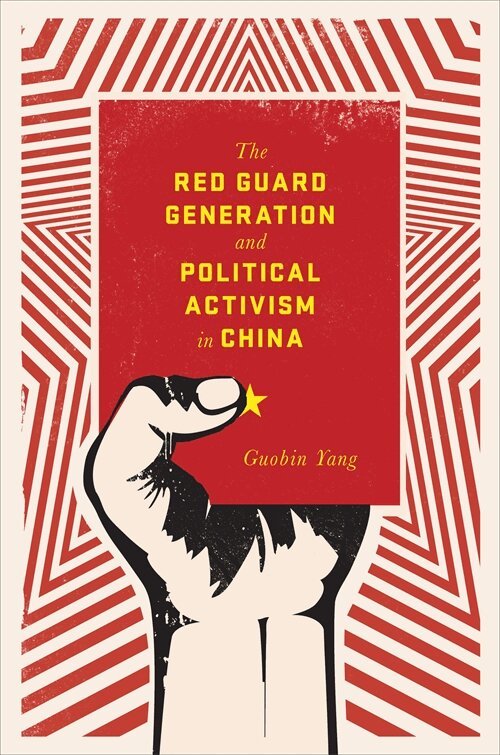
Raised to be "flowers of the nation," the first generation born after the founding of the People's Republic of China was united in its political outlook and at first embraced the Cultural Revolution of 1966, but then split into warring factions. Investigating the causes of this fracture, Guobin Yang argues that Chinese youth engaged in an imaginary revolution from 1966 to 1968, enacting a political mythology that encouraged violence as a way to prove one's revolutionary credentials. This same competitive dynamic would later turn the Red Guard against the communist government. Throughout the 1970s, the majority of Red Guard youth were sent to work in rural villages, where they developed an appreciation for the values of ordinary life. From this experience, an underground cultural movement was born. Rejecting idolatry, these relocated revolutionaries developed a new form of resistance that signaled a new era of enlightenment, culminating in the Democracy Wall movement of the late 1970s and the Tiananmen protest of 1989.Yang's final chapter on the politics of history and memory argues that contemporary memories of the Cultural Revolution are factionalized along these lines of political division, formed fifty years before.
250 kr
Skickas inom 7-10 vardagar
Raised to be "flowers of the nation," the first generation born after the founding of the People's Republic of China was united in its political outlook and at first embraced the Cultural Revolution of 1966, but then split into warring factions. Investigating the causes of this fracture, Guobin Yang argues that Chinese youth engaged in an imaginary revolution from 1966 to 1968, enacting a political mythology that encouraged violence as a way to prove one's revolutionary credentials. This same competitive dynamic would later turn the Red Guard against the communist government. Throughout the 1970s, the majority of Red Guard youth were sent to work in rural villages, where they developed an appreciation for the values of ordinary life. From this experience, an underground cultural movement was born. Rejecting idolatry, these relocated revolutionaries developed a new form of resistance that signaled a new era of enlightenment, culminating in the Democracy Wall movement of the late 1970s and the Tiananmen protest of 1989.Yang's final chapter on the politics of history and memory argues that contemporary memories of the Cultural Revolution are factionalized along these lines of political division, formed fifty years before.
932 kr
Skickas
A metropolis with a population of about 11 million, Wuhan sits at the crossroads of China. It was here that in the last days of 2019, the first reports of a mysterious new form of pneumonia emerged. Before long, an abrupt and unprecedented lockdown was declared—the first of many such responses to the spread of the COVID-19 pandemic around the world.This book tells the dramatic story of the Wuhan lockdown in the voices of the city’s own people. Using a vast archive of more than 6,000 diaries, the sociologist Guobin Yang vividly depicts how the city coped during the crisis. He analyzes how the state managed—or mismanaged—the lockdown and explores how Wuhan’s residents responded by taking on increasingly active roles. Yang demonstrates that citizen engagement—whether public action or the civic inaction of staying at home—was essential in the effort to fight the pandemic. The book features compelling stories of citizens and civic groups in their struggle against COVID-19: physicians, patients, volunteers, government officials, feminist organizers, social media commentators, and even aunties loudly swearing at party officials. These snapshots from the lockdown capture China at a critical moment, revealing the intricacies of politics, citizenship, morality, community, and digital technology. Presenting the extraordinary experiences of ordinary people, The Wuhan Lockdown is an unparalleled account of the first moments of the crisis that would define the age.
243 kr
Skickas inom 7-10 vardagar
A metropolis with a population of about 11 million, Wuhan sits at the crossroads of China. It was here that in the last days of 2019, the first reports of a mysterious new form of pneumonia emerged. Before long, an abrupt and unprecedented lockdown was declared—the first of many such responses to the spread of the COVID-19 pandemic around the world.This book tells the dramatic story of the Wuhan lockdown in the voices of the city’s own people. Using a vast archive of more than 6,000 diaries, the sociologist Guobin Yang vividly depicts how the city coped during the crisis. He analyzes how the state managed—or mismanaged—the lockdown and explores how Wuhan’s residents responded by taking on increasingly active roles. Yang demonstrates that citizen engagement—whether public action or the civic inaction of staying at home—was essential in the effort to fight the pandemic. The book features compelling stories of citizens and civic groups in their struggle against COVID-19: physicians, patients, volunteers, government officials, feminist organizers, social media commentators, and even aunties loudly swearing at party officials. These snapshots from the lockdown capture China at a critical moment, revealing the intricacies of politics, citizenship, morality, community, and digital technology. Presenting the extraordinary experiences of ordinary people, The Wuhan Lockdown is an unparalleled account of the first moments of the crisis that would define the age.
674 kr
Skickas inom 10-15 vardagar
The Internet and social media are pervasive and transformative forces in contemporary China. Nearly half of China's 1.3 billion citizens use the Internet, and tens of millions use Sina Weibo, a platform similar to Twitter or Facebook. Recently, Weixin/Wechat has become another major form of social media. While these services have allowed regular people to share information and opinions as never before, they also have changed the ways in which the Chinese authorities communicate with the people they rule. China's party-state now invests heavily in speaking to Chinese citizens through the Internet and social media, as well as controlling the speech that occurs in that space. At the same time, those authorities are wary of the Internet's ability to undermine the ruling party's power, organize dissent, or foment disorder. Nevertheless, policy debates and public discourse in China now regularly occur online, to an extent unimaginable a decade or two ago, profoundly altering the fabric of China's civil society, legal affairs, internal politics, and foreign relations.The Internet, Social Media, and a Changing China explores the changing relationship between China's cyberspace and its society, politics, legal system, and foreign relations. The chapters focus on three major policy areas-civil society, the roles of law, and the nationalist turn in Chinese foreign policy-and cover topics such as the Internet and authoritarianism, "uncivil society" online, empowerment through new media, civic engagement and digital activism, regulating speech in the age of the Internet, how the Internet affects public opinion, legal cases, and foreign policy, and how new media affects the relationship between Beijing and Chinese people abroad.Contributors: Anne S. Y. Cheung, Rogier Creemers, Jacques deLisle, Avery Goldstein, Peter Gries, Min Jiang, Dalei Jie, Ya-Wen Lei, James Reilly, Zengzhi Shi, Derek Steiger, Marina Svensson, Wang Tao, Guobin Yang, Chuanjie Zhang, Daniel Xiaodan Zhou.
568 kr
Skickas inom 10-15 vardagar
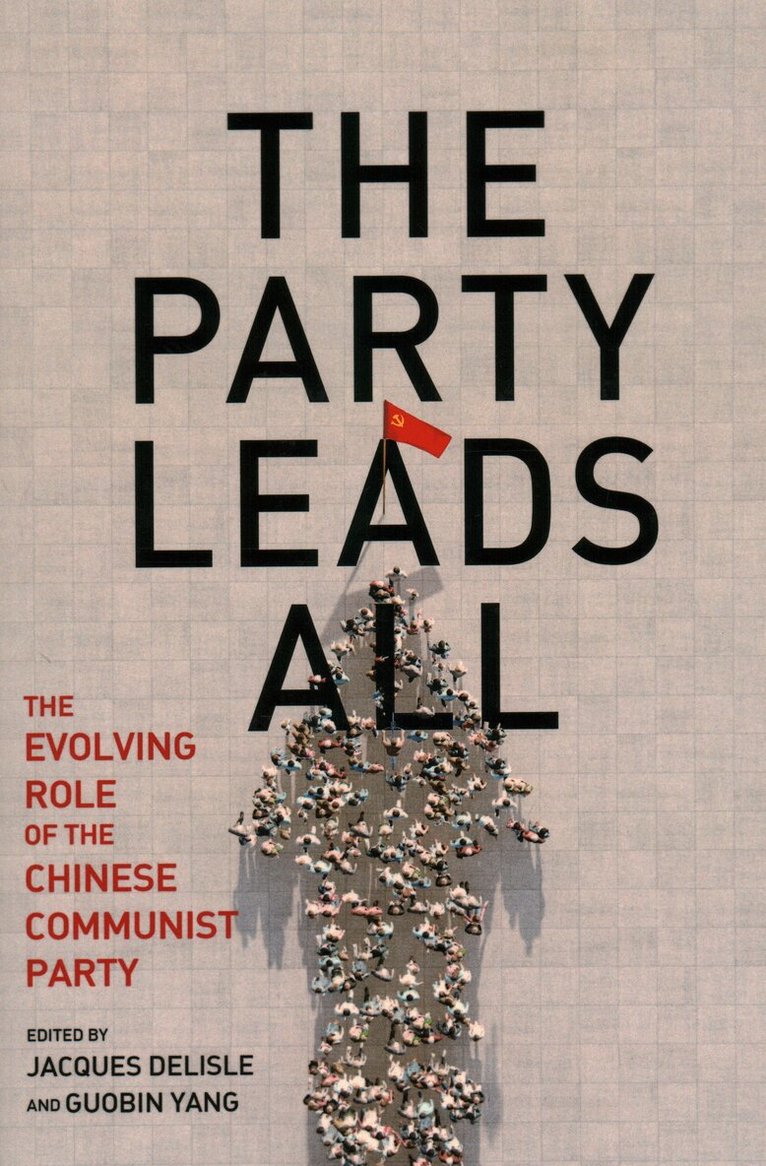
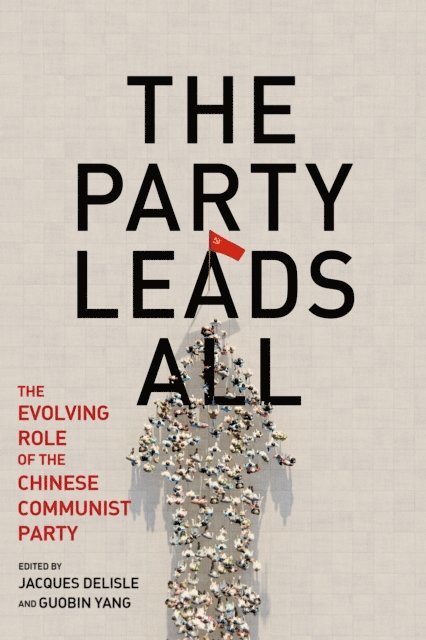
Examining the past, current, and potential future roles of the Communist Party in governing ChinaThe Chinese Communist Party and its polices touch nearly every aspect of life in China and dominate some. An often-quoted current phraseone with roots in the era of Mao Zedongsays the Party leads all. Under the leadership of Xi Jinping, the Party determines much of what is permitted and prohibited in the country's social, economic, and political activity, as well as China's increasingly consequential foreign relations. Even so, the Communist Party always has faced limits on what it can control, and it may encounter new obstacles ahead.This book addresses important questions about the current and future roles of the party: Has Xi's tenure brought a qualitative increase in the pursuit, or achievement, of party control? How is party rule shaped and exercised by internal party dynamics, the party's control over the state, society, economy, foreign affairs, government institutions and rules, and ideology? How serious are the threats to party strength and success posed by Xi's approach to power, corruption in the party's ranks, a rapidly changing society, a fraught international environment, or a possibly overly ambitious agenda for party control?Leading scholars examine these questions from several disciplinary perspectives, each focusing on a key area of the party and its efforts to lead, control, or influence the world around it.This book offers the most comprehensive and up-to-date assessment of the party's roles in China's economy, government, civil society, legal system, military affairs, and foreign policy. It does so at a critical moment, with the full contours of the Xi Jinping era in China becoming more evident and as the CCP reaches its 100th anniversary and nears three-quarters of a century in power. It will be essential reading for all scholars, students, and policy-makers interested in contemporary China.
2 088 kr
Skickas inom 10-15 vardagar
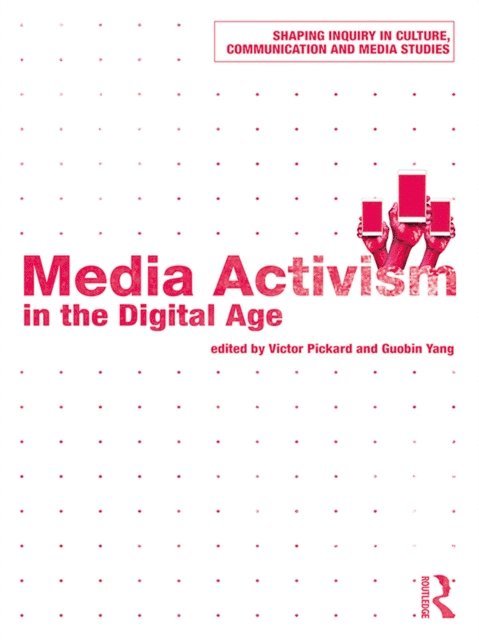
Media Activism in the Digital Age captures an exciting moment in the evolution of media activism studies and offers an invaluable guide to this vibrant and evolving field of research.Victor Pickard and Guobin Yang have assembled essays by leading scholars and activists to provide case studies of feminist, technological, and political interventions during different historical periods and at local, national, and global levels. Looking at the underlying theories, histories, politics, ideologies, tactics, strategies, and aesthetics, the book takes an expansive view of media activism. It explores how varieties of activism are mediated through communication technologies, how activists deploy strategies for changing the structures of media systems, and how governments and corporations seek to police media activism. From memes to zines, hacktivism to artivism, this volume considers activist practices involving both older kinds of media and newer digital, social, and network-based forms.Media Activism in the Digital Age provides a useful cross-section of this growing field for both students and researchers.
563 kr
Skickas inom 10-15 vardagar
Media Activism in the Digital Age captures an exciting moment in the evolution of media activism studies and offers an invaluable guide to this vibrant and evolving field of research.Victor Pickard and Guobin Yang have assembled essays by leading scholars and activists to provide case studies of feminist, technological, and political interventions during different historical periods and at local, national, and global levels. Looking at the underlying theories, histories, politics, ideologies, tactics, strategies, and aesthetics, the book takes an expansive view of media activism. It explores how varieties of activism are mediated through communication technologies, how activists deploy strategies for changing the structures of media systems, and how governments and corporations seek to police media activism. From memes to zines, hacktivism to artivism, this volume considers activist practices involving both older kinds of media and newer digital, social, and network-based forms.Media Activism in the Digital Age provides a useful cross-section of this growing field for both students and researchers.
809 kr
Skickas inom 7-10 vardagar
Introducing the concept of state-sponsored platformization, this volume shows the complexity behind the central role the party-state plays in shaping social media platforms. The party-state increasingly penetrates commercial social media while aspiring to turn its own media agencies into platforms. Yet state-sponsored platformization does not necessarily produce the Chinese Communist Party’s desired outcomes. Citizens continue to appropriate social media for creative public engagement at the same time that more people are managing their online settings to reduce or refuse connection, inducing new forms of crafted resistance to hyper-social media connectivity. The wide-ranging essays presented here explore the mobile radio service Ximalaya.FM, Alibaba’s evolution into a multi-platform ecosystem, livestreaming platforms in the United States and China, the role of Twitter in Trump’s North Korea diplomacy, user-generated content in the news media, the emergence of new social agents mediating between state and society, social media art projects, Chinese and US scientists’ use of social media, and reluctance to engage with WeChat. Ultimately, readers will find that the ten chapters in this volume contribute significant new research and insights to the fast-growing scholarship on social media in China at a time when online communication is increasingly constrained by international struggles over political control and privacy issues.
Pandemic Crossings
Digital Technology, Everyday Experience, and Governance in the COVID-19 Crisis
Häftad, Engelska, 2024
785 kr
Skickas inom 7-10 vardagar
Throughout the COVID-19 crisis, nation states found new ways to assert power under the guise of public health, from closing or tightening borders to expanding the boundaries of acceptable citizen surveillance. As these controls increased in intensity, citizens’ passions to cross borders seemed to grow in proportion. Pandemic Crossings explores how these processes of boundary making and crossing, often mediated by digital technology despite inequity of access, had profound and often contradictory consequences on individual lives, national politics, and U.S.–China relations. This rich and geographically diverse collection of studies informed by everyday, individual experiences contribute new insights to the interplay between digital technologies and state governance during the covid-19 pandemic. It opens up new avenues of research not only on the covid-19 pandemic but also on global health crises more broadly.