Jacques deLisle – författare
Visar alla böcker från författaren Jacques deLisle. Handla med fri frakt och snabb leverans.
21 produkter
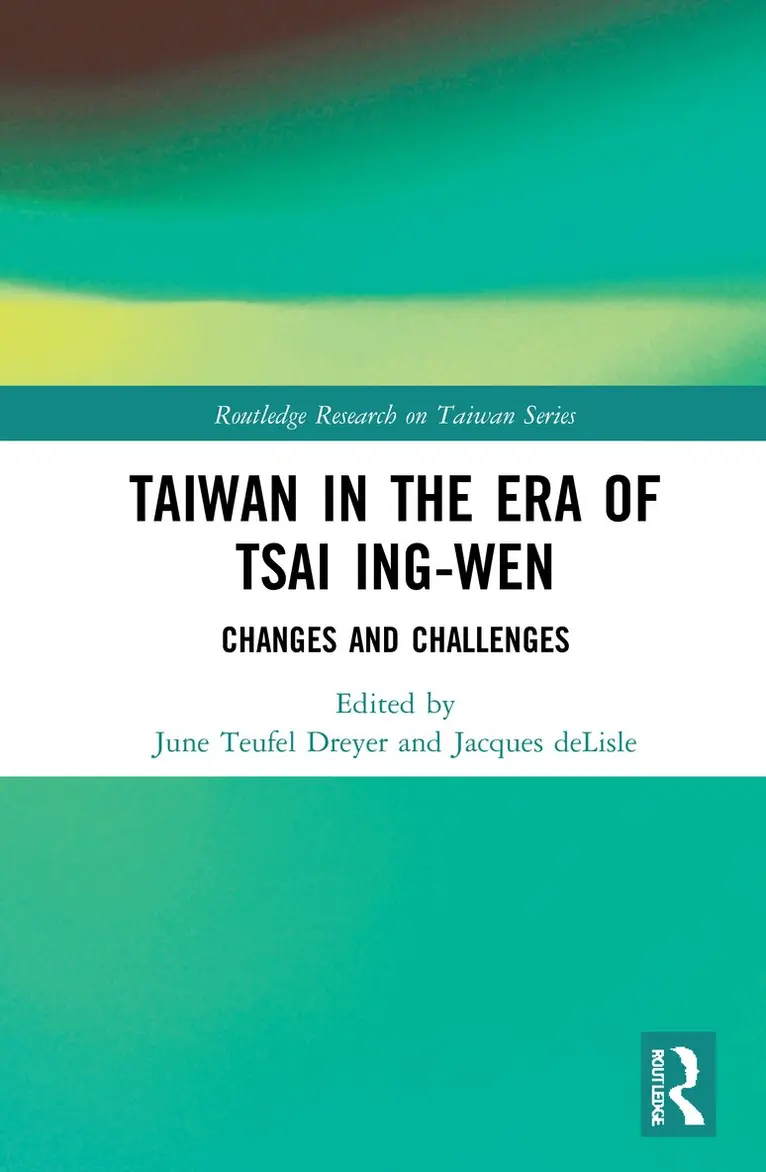
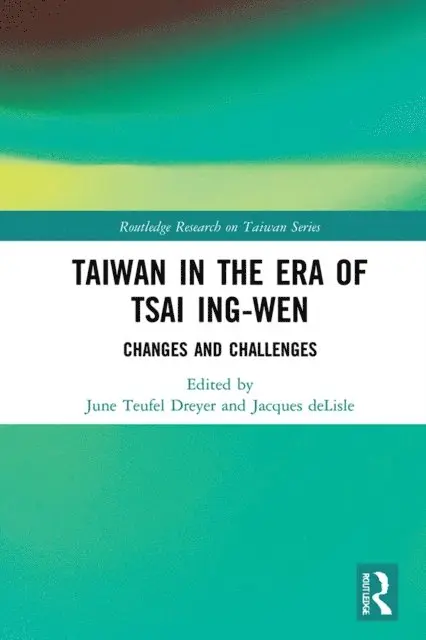
Taiwan in the Era of Tsai Ing-wen
Changes and Challenges
Av June Teufel Dreyer, Jacques deLisle
Inbunden, 2021
2590 kr
Lägg i varukorg
This book assesses the forces that led to the election of Tsai Ing-wen and the Democratic Progressive Party (DPP) in 2016 and re-election in 2020, and provides the first comprehensive treatment of this pivotal period in Taiwan’s politics, policy, and international relations. The Democratic …
Taiwan in the Era of Tsai Ing-wen
Changes and Challenges
Av June Teufel Dreyer, Jacques deLisle
Häftad, 2023
667 kr
Lägg i varukorg
This book assesses the forces that led to the election of Tsai Ing-wen and the Democratic Progressive Party (DPP) in 2016 and re-election in 2020, and provides the first comprehensive treatment of this pivotal period in Taiwan’s politics, policy, and international relations. The Democratic …
Political Changes in Taiwan Under Ma Ying-jeou
Partisan Conflict, Policy Choices, External Constraints and Security Challenges
Av Jean-Pierre Cabestan, Jacques deLisle
Inbunden, 2014
2515 kr
Lägg i varukorg
In 2008 Ma Ying-jeou was elected President of Taiwan, and the Kuomintang (KMT) returned to power after eight years of rule by the Democratic Progressive Party (DPP). Since taking power, the KMT has faced serious difficulties, as economic growth has been sluggish, society has been polarised over …
China's Challenges
Av Jacques deLisle, Avery Goldstein
Häftad, 2014
502 kr
Lägg i varukorg
When the "fifth generation" of Communist Party leaders in China assumed top political positions in 2012-2013, they took the helm of a country that has achieved remarkable economic growth, political stability, and international influence. Yet China today confronts challenges at least as daunting as …
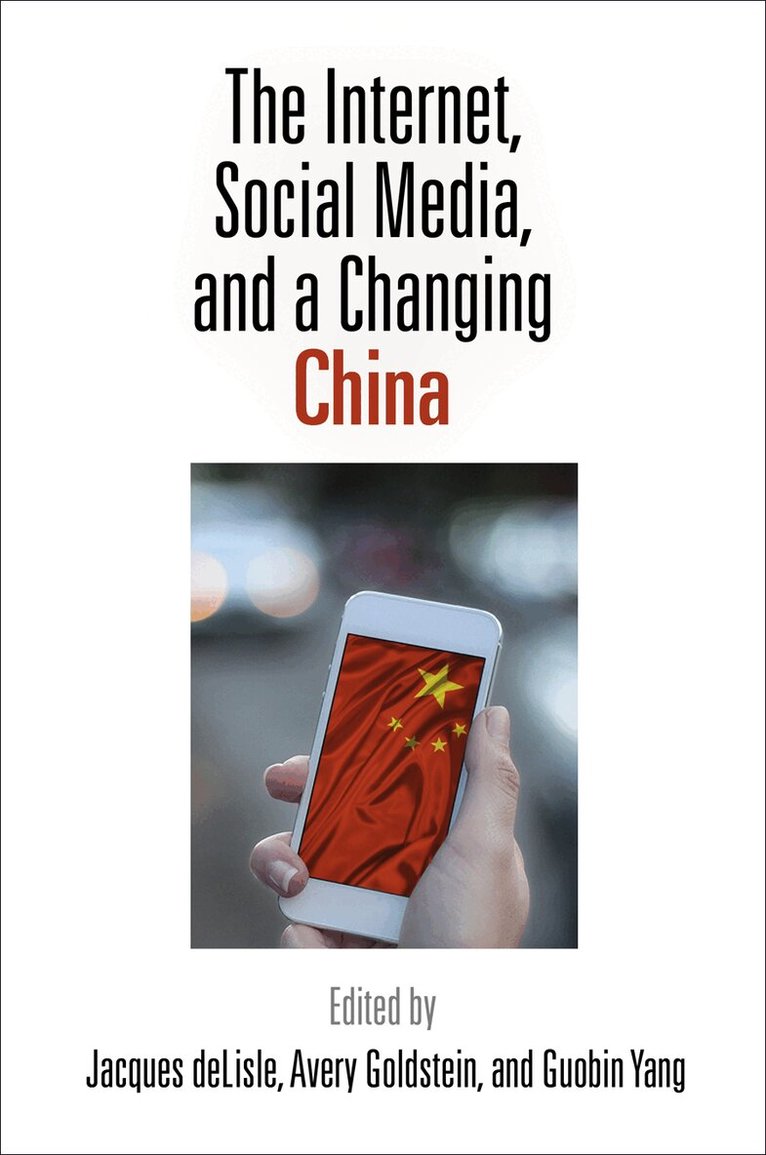
Internet, Social Media, and a Changing China
Av Jacques deLisle, Avery Goldstein m. fl.
Häftad, 2016
715 kr
Lägg i varukorg
The Internet and social media are pervasive and transformative forces in contemporary China. Nearly half of China's 1.3 billion citizens use the Internet, and tens of millions use Sina Weibo, a platform similar to Twitter or Facebook. Recently, Weixin/Wechat has become another major form of social …
China's Challenges
Av Jacques deLisle, Avery Goldstein
E-bok, 2014
603 kr
Lägg i varukorg
When the "fifth generation" of Communist Party leaders in China assumed top political positions in 2012-2013, they took the helm of a country that has achieved remarkable economic growth, political stability, and international influence. Yet China today confronts challenges at least as daunting as …
Internet, Social Media, and a Changing China
Av Jacques deLisle, Avery Goldstein m. fl.
E-bok, 2016
913 kr
Lägg i varukorg
The Internet and social media are pervasive and transformative forces in contemporary China. Nearly half of China's 1.3 billion citizens use the Internet, and tens of millions use Sina Weibo, a platform similar to Twitter or Facebook. Recently, Weixin/Wechat has become another major form of social …
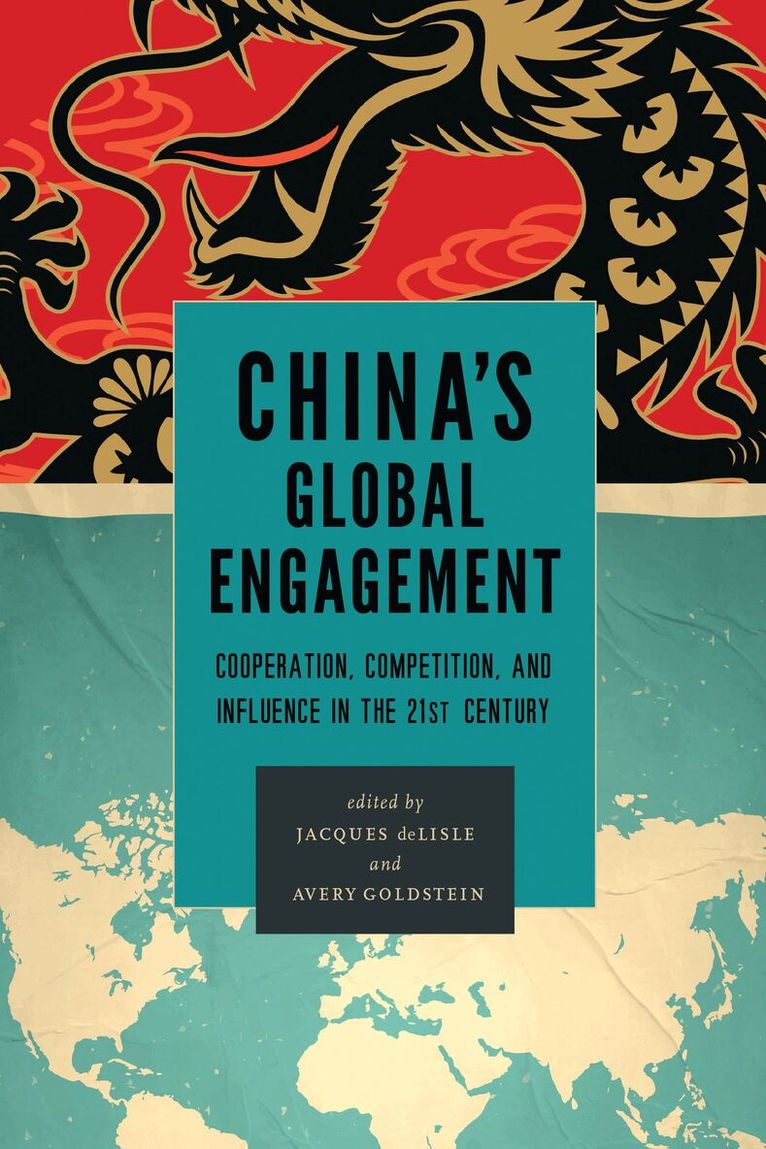
China's Global Engagement
Cooperation, Competition, and Influence in the 21st Century
Av Jacques deLisle, Avery Goldstein
Häftad, 2017
460 kr
Lägg i varukorg
Assessing China's rapidly changing role on the international stageChina is again undergoing a period of significant transition. Internally, China's leaders are addressing challenges to the economy and other domestic issues after three decades of dramatic growth and reforms. President Xi Jinping and …
China's Global Engagement
Cooperation, Competition, and Influence in the 21st Century
Av Jacques deLisle, Avery Goldstein
E-bok, 2017
499 kr
Lägg i varukorg
Assessing China's rapidly changing role on the international stage China is again undergoing a period of significant transition. Internally, China's leaders are addressing challenges to the economy and other domestic issues after three decades of dramatic growth and reforms. President Xi Jinping …
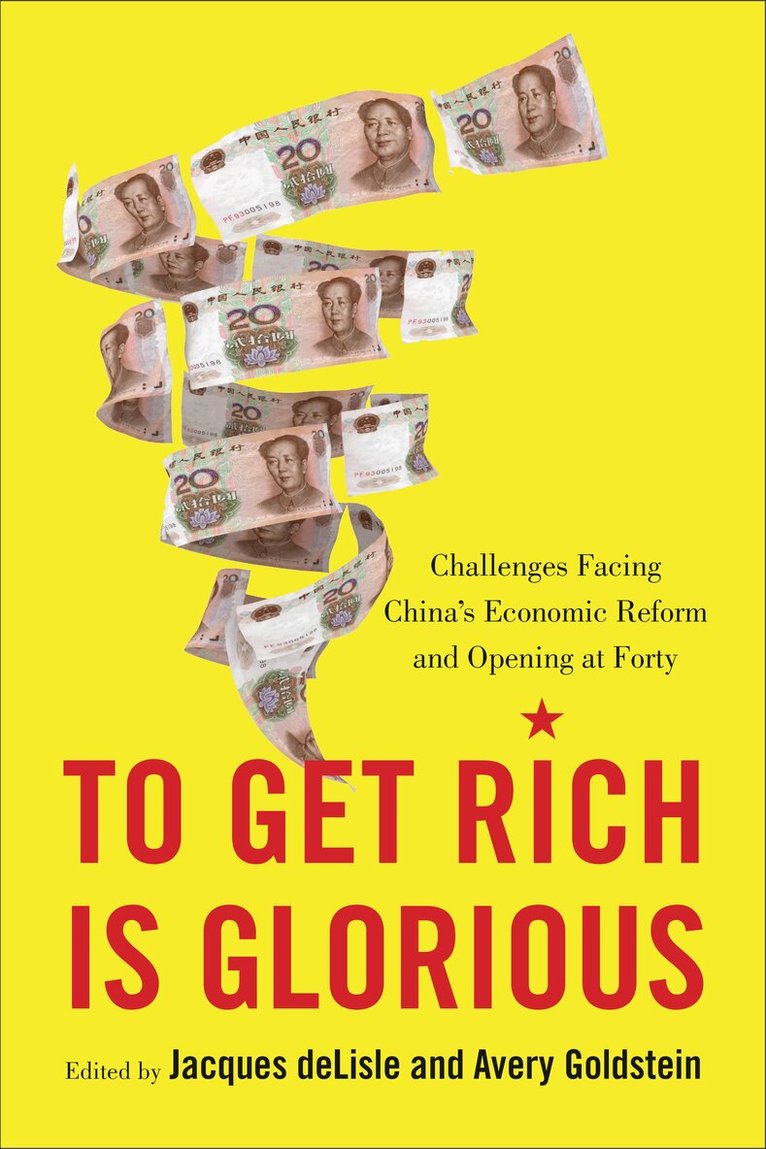
To Get Rich Is Glorious
Challenges Facing China’s Economic Reform and Opening at Forty
Av Jacques deLisle, Avery Goldstein
Häftad, 2019
516 kr
Lägg i varukorg
In 1978, China launched economic reforms that have resulted in one of history's most dramatic national transformations. The reforms removed bureaucratic obstacles to economic growth and tapped China's immense reserves of labor and entrepreneurial talent to unleash unparalleled economic growth in …
To Get Rich Is Glorious
Challenges Facing China’s Economic Reform and Opening at Forty
Av Jacques deLisle, Avery Goldstein
E-bok, 2019
561 kr
Lägg i varukorg
In 1978, China launched economic reforms that have resulted in one of history''s most dramatic national transformations. The reforms removed bureaucratic obstacles to economic growth and tapped China''s immense reserves of labor and entrepreneurial talent to unleash unparalleled economic growth in …
After Engagement
Dilemmas in U.S.-China Security Relations
Av Jacques deLisle, Avery Goldstein
Häftad, 2021
516 kr
Lägg i varukorg
From cooperation to a new cold war: is this the future for today's two great powers?U.S. policy toward China is at an inflection point. For more than a generation, since the 1970s, a near-consensus view in the United States supported engagement with China, with the aim of integrating China into the …
After Engagement
Dilemmas in U.S.-China Security Relations
Av Jacques deLisle, Avery Goldstein
E-bok, 2021
561 kr
Lägg i varukorg
From cooperation to a new cold war: is this the future for today''s two great powers? U.S. policy toward China is at an inflection point. For more than a generation, since the 1970s, a near-consensus view in the United States supported engagement with China, with the aim of integrating China into …
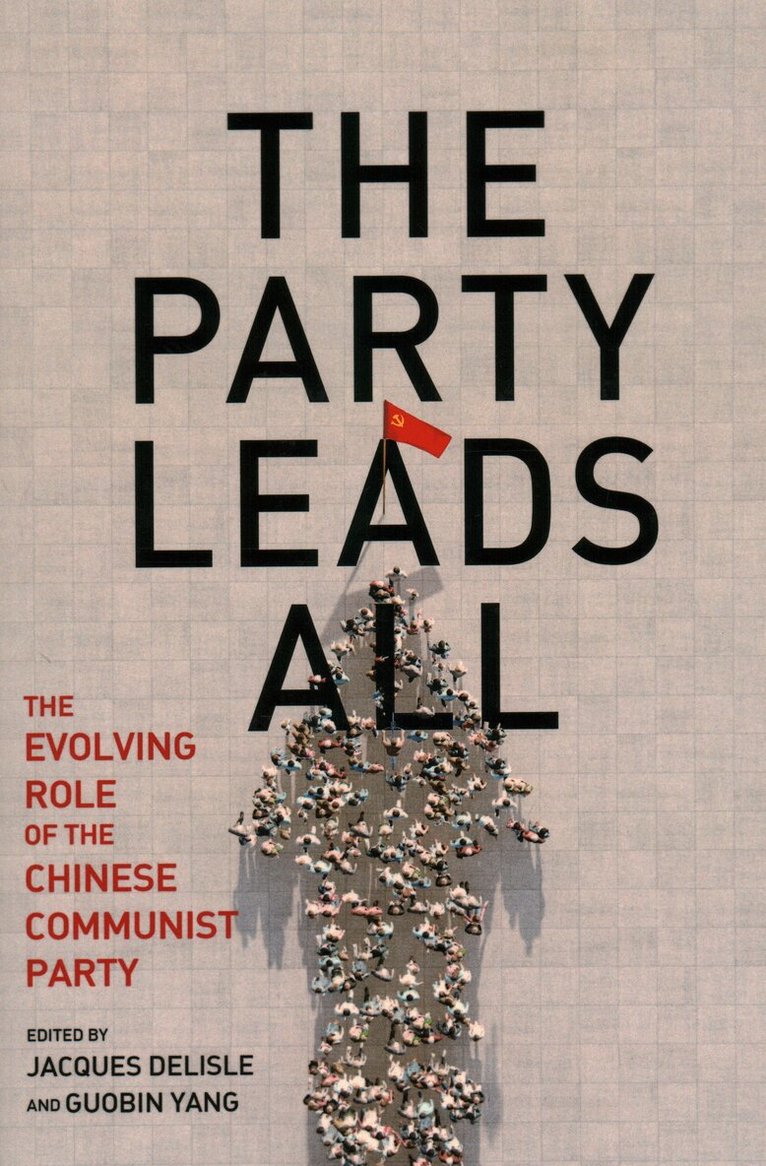
Party Leads All
The Evolving Role of the Chinese Communist Party
Av Jacques deLisle, Guobin Yang
Häftad, 2022
601 kr
Lägg i varukorg
Examining the past, current, and potential future roles of the Communist Party in governing ChinaThe Chinese Communist Party and its polices touch nearly every aspect of life in China and dominate some. An often-quoted current phraseone with roots in the era of Mao Zedongsays the Party leads …
Party Leads All
The Evolving Role of the Chinese Communist Party
Av Jacques deLisle, Guobin Yang
E-bok, 2022
641 kr
Lägg i varukorg
Examining the past, current, and potential future roles of the Communist Party in governing China The Chinese Communist Party and its polices touch nearly every aspect of life in China and dominate some. An often-quoted current phraseone with roots in the era of Mao Zedongsays the Party leads …
Taiwan in the Era of Tsai Ing-wen
Changes and Challenges
Av Jacques deLisle, June Teufel Dreyer
E-bok, 2021
746 kr
Lägg i varukorg
This book assesses the forces that led to the election of Tsai Ing-wen and the Democratic Progressive Party (DPP) in 2016 and re-election in 2020, and provides the first comprehensive treatment of this pivotal period in Taiwan’s politics, policy, and international relations. The Democratic …
Taiwan in the Era of Tsai Ing-wen
Changes and Challenges
Av Jacques deLisle, June Teufel Dreyer
E-bok, 2021
762 kr
Lägg i varukorg
This book assesses the forces that led to the election of Tsai Ing-wen and the Democratic Progressive Party (DPP) in 2016 and re-election in 2020, and provides the first comprehensive treatment of this pivotal period in Taiwan’s politics, policy, and international relations. The Democratic …
Political Changes in Taiwan Under Ma Ying-jeou
Partisan Conflict, Policy Choices, External Constraints and Security Challenges
Av Jean-Pierre Cabestan, Jacques deLisle
Häftad, 2016
911 kr
Lägg i varukorg
In 2008 Ma Ying-jeou was elected President of Taiwan, and the Kuomintang (KMT) returned to power after eight years of rule by the Democratic Progressive Party (DPP). Since taking power, the KMT has faced serious difficulties, as economic growth has been sluggish, society has been polarised over …
Political Changes in Taiwan Under Ma Ying-jeou
Partisan Conflict, Policy Choices, External Constraints and Security Challenges
Av Jacques deLisle, Jean-Pierre Cabestan
E-bok, 2014
953 kr
Lägg i varukorg
In 2008 Ma Ying-jeou was elected President of Taiwan, and the Kuomintang (KMT) returned to power after eight years of rule by the Democratic Progressive Party (DPP). Since taking power, the KMT has faced serious difficulties, as economic growth has been sluggish, society has been polarised over …
Political Changes in Taiwan Under Ma Ying-jeou
Partisan Conflict, Policy Choices, External Constraints and Security Challenges
Av Jacques deLisle, Jean-Pierre Cabestan
E-bok, 2014
953 kr
Lägg i varukorg
In 2008 Ma Ying-jeou was elected President of Taiwan, and the Kuomintang (KMT) returned to power after eight years of rule by the Democratic Progressive Party (DPP). Since taking power, the KMT has faced serious difficulties, as economic growth has been sluggish, society has been polarised over …
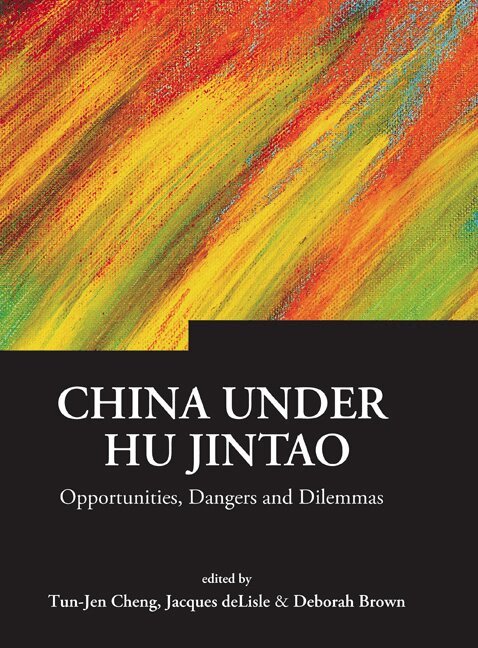
CHINA UNDER HU JINTAO: OPPORTUNITIES, DANGERS, AND DILEMMAS
Av CHENG TUN-JEN, Tun-jen Cheng m. fl.
Inbunden, 2005
2409 kr
Lägg i varukorg
The fourth generation of leaders of the People's Republic of China, while benefiting from the prestige of China's entry into the World Trade Organization and the honor of hosting the 2008 Olympic Games, also needs to contemplate the sobering side-effects of a rapid and …