Guy Bloch-Champfort – författare
Visar alla böcker från författaren Guy Bloch-Champfort. Handla med fri frakt och snabb leverans.
4 produkter
4 produkter
Inbunden, Engelska, 2022
841 kr
Skickas inom 5-8 vardagar
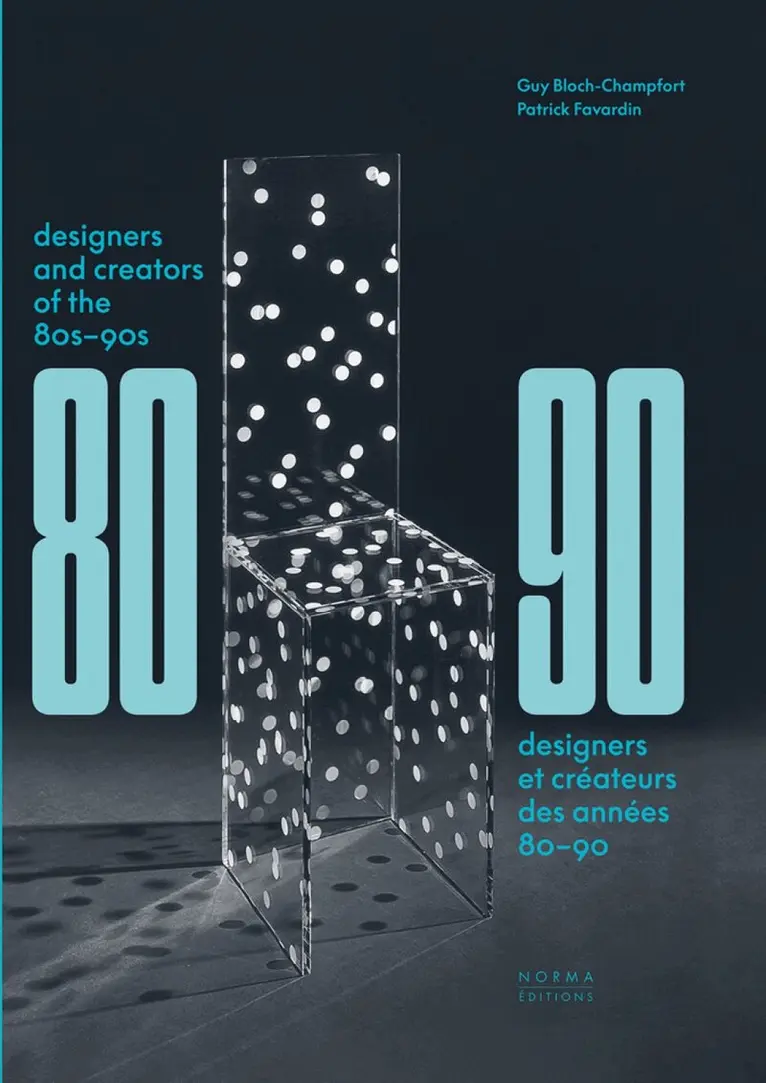
In line with the works on decorators of the 1940s, '50s, '60s, and '70s, this book plunges us into the world of '80s and '90s. These have witnessed unprecedented experiments in the world of design and architecture. Composed of a rich introduction which gives a synoptic vision and 38 monographs that describe its many faces, this book makes and exceptionally creative period intelligible, and reveals through an abundant iconography, often unpublished, its formidable aesthetic richness.A new generation of designers stands out; among them Shiro Kuramata, Philippe Starck, Ron Arad, Bob Wilson, Elizabeth Garouste and Mattia Bonetti. All regenerate creation by refusing the elitism of their predecessors and by favouring the use of new materials. Some turn to recovery, such as the Creative Salvage group, and offer inventive and provocative furniture thanks to welding and assembly. Others, gathered in Italy around Ettore Sottsass and Memphis, combine unexpected colours and patterns to the playful use of plastic laminate. Sliding until the end of the '90s, the achievements presented in this book mark the desire for a dialogue between artistic references with a new relationship to the industrial aspect, at the dawn of the 21st century and its technological innovations.Text in English and French.
Inbunden, Franska, 2025
656 kr
Skickas
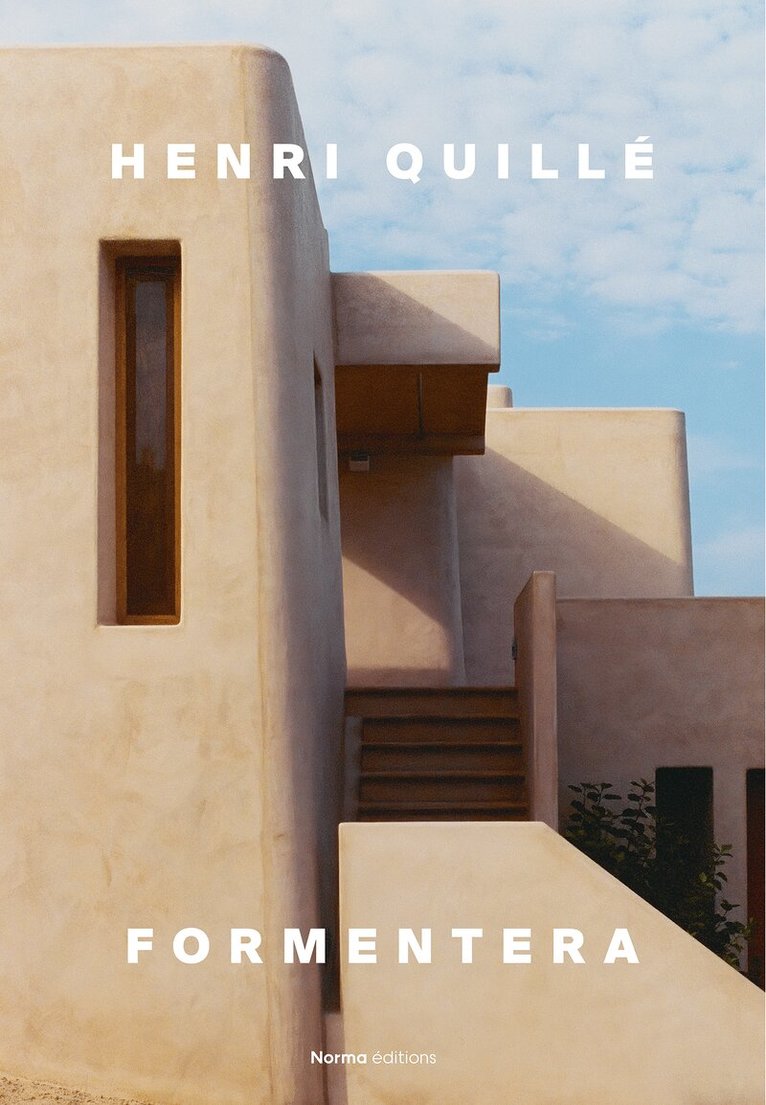
Graduated from Ecole Boulle and ENSAD, Henri Quillé (1928-2020), settled on the island of Formentera (Balearic Islands) in 1972. There, he built for a mainly international clientele 30 houses of great consistency and is part of both principles derived from vernacular know-how and in those of the great masters of modernity. He says to "pursue" the local architecture, in particular by making extensive use of the Catalan vault, reducing openings to protect against the heat, covering the exterior walls with a lime plaster and sand. A pioneer of ecological housing, he will build a dozen self-sufficient houses.With the architects Felix Julbe and Raimon Torres, he collaborated on the regulatory plan and planning work on the island of Formentera from 1973 to 1976. Combining plans, period photographs and contemporary shots, this book allows this architect and his houses to be given their rightful place in the history of 20th century architecture.Text in French and Spanish.
Inbunden, Engelska, 2015
604 kr
Tillfälligt slut
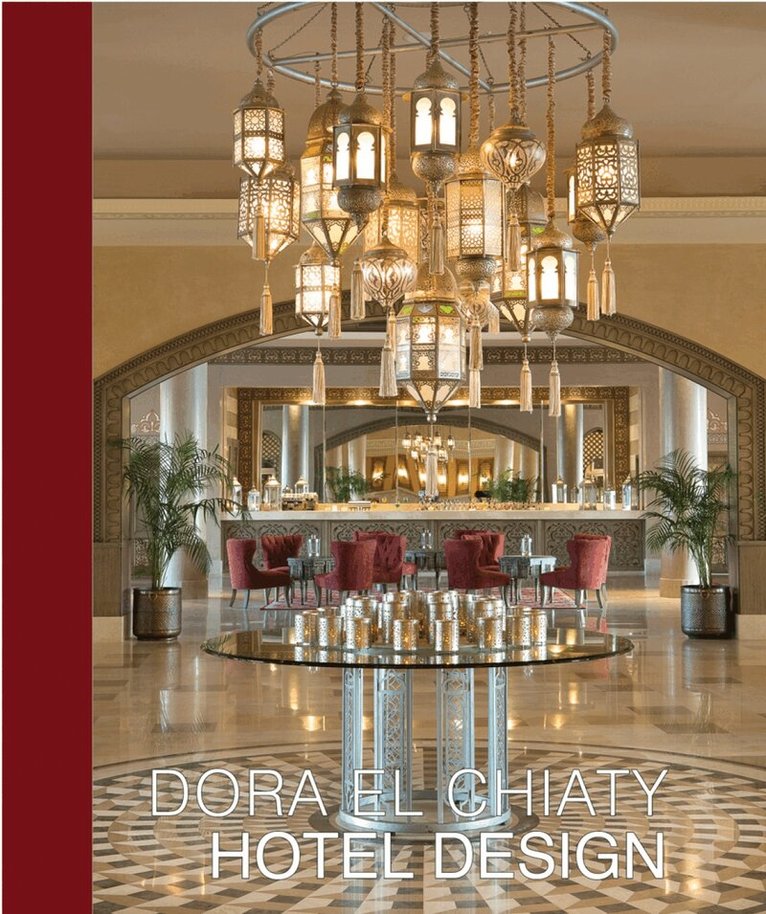
Decoration and design as Dora El Chiaty might exclaim: "What else?". It was in Egypt, the country of her birth, that this passion developed and found its full expression, as evidenced by numerous creations showcasing not just a talent, but a genuine gift. Born in Ismaïla, to a Greek family, she arrived in France at the age of eleven as a boarder at Sacré-Coeur de Chantilly, then returned to Cairo to study at the Centre Culturel Français where she passed her baccalaureate. After a short stay in Spain, she studied journalism, advertising and anthropology at the American University in Cairo, where she got a Bachelor of Arts degree. It was there that she got to know her future husband, Hamed El Chiaty, a defining encounter in more ways than one. Indeed, Hamed would soon become an entrepreneur in tourism and would ask the woman who had become his wife to decorate two of the boats he owned on the Nile. Dora, who had always loved art in all its forms, found her curiosity piqued and successfully completed her first two projects with ease, taste and character. This would mark the start of a genuine fascination for the many different sides of this profession - decoration and design - and the starting point for many other commissions which would accompany Hamed's rise through the tourism world, first and foremost in Egypt. Very quickly, it would become a regular occurrence: Dora took charge of the decoration of several sites with extremely tight deadlines (nine to twelve months!) and limited budgets. Between her beginnings and her most recent work there is evidence of development, of neoclassicism tempered with a conscious modernity, never forgetting an enduring reference to Islamic decorative arts. Everything inspires her: from the wrought iron railings in her Parisian pied-à-terre, to the pattern on a scarf or the print on a dress, which we find - modified, adapted, varied - on the velvet of a couch, the arabesques of a carpet or wallpaper, made to measure by remarkable teams of Egyptian artisans. Indeed, in the footsteps of the famous French interior designers of the twentieth century - Ruhlmann, Arbus, Leleu, Quinet, Old and Raphaël - Dora El Chiaty, assisted by a team of more than fifty, creates a large part of the furniture, seats, lights, carpets and textiles of the decors herself.How to describe her style? In the beginning Dora preferred furnishing that drew its inspiration from the forties, with references to the Louis XVI and Directoire styles - their straight and slender lines, and materials typical of the time, like mahogany and bronze. She now leans towards a greater contemporaneity, with which she blends a joyful fantasy, like her nods towards the baroque. An excellent colourist, her favourite shades include all varieties of beige and grey, embellished with a few bright touches, such as the deep reds and bordeaux she particularly favours. What is her dream as a designer and decorator? To have greater resources for her decoration and three years to decorate a hotel! All the decor would not only be created, as always, by Dora El Chiaty, but she would also design every piece of furniture, light and accessory. Knowing her taste and talent, we look forward to her dream becoming a reality.Text in English and French.
Inbunden, Engelska, 2016
782 kr
Tillfälligt slut
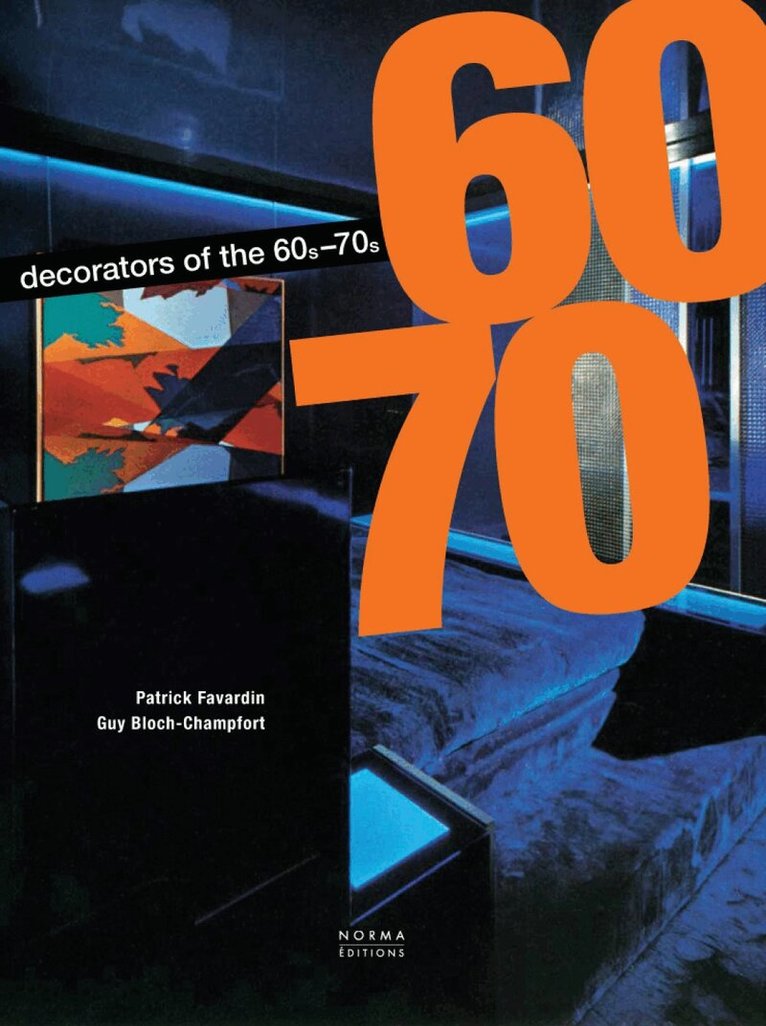
The 1960s and 1970s marked a sharp turning point in the history of decoration and furniture. Until that point, the world was confined to national and elitist forms of expression. At the beginning of the 1960s, the sector took its inspiration from Anglo-Saxon, Scandinavian, Italian and French decoration. Genres were combined in a frenzied desire to live in symbiosis with one's time. The progress of technology strengthened the conviction that the individual had unlimited freedom and aroused the desire to inhabit in a new manner. Forms became rounder, furniture was in sync with a warm, playful, and anticonformist universe. Colours and decorative motifs took on the brilliance and fantasies of Pop Art and psychedelia. The living environment was transformed into a waking dream in which luxurious furniture in original materials and surprising objects were mixed, associated, for the first time, with early furniture. The end of the 1970s marked the advent of a period in which beauty and classic elegance gave way to a host of expressions that were unclassifiable and rejected any hierarchy. The postmodern period had arrived. Composed of a long introduction that provides a synoptic view and 32 monographs that describe its many faces, this book invites the reader to discover an exceptionally creative period and revels in an abundant iconography.The Designers: Alessandro Albrizzi, François Arnal and the Atelier A, Gae Aulenti, Billy Baldwin, Michel Boyer, Pierre Cardin, François Catroux, Max Clendinning, Joe Colombo, Gabriella Crespi, Alain Demachy, John Dickinson, Tony Duquette, Paul Evans, Galerie Germain, Galerie Lacloche, Galerie Maison et Jardin, Jacques Grange, Marc Held, David Hicks, Jansen, Yonel Lebovici, Serge Manzon, Renzo Mongiardino, Verner Panton, Pierre Paulin, Maria Pergay, Alberto Pinto, Henri Samuel, Charles Sévigny, John Stefanidis, Michael Taylor, Carla Venosta.