Patrick Favardin – författare
Visar alla böcker från författaren Patrick Favardin. Handla med fri frakt och snabb leverans.
3 produkter
3 produkter
Inbunden, Engelska, 2022
841 kr
Skickas inom 5-8 vardagar
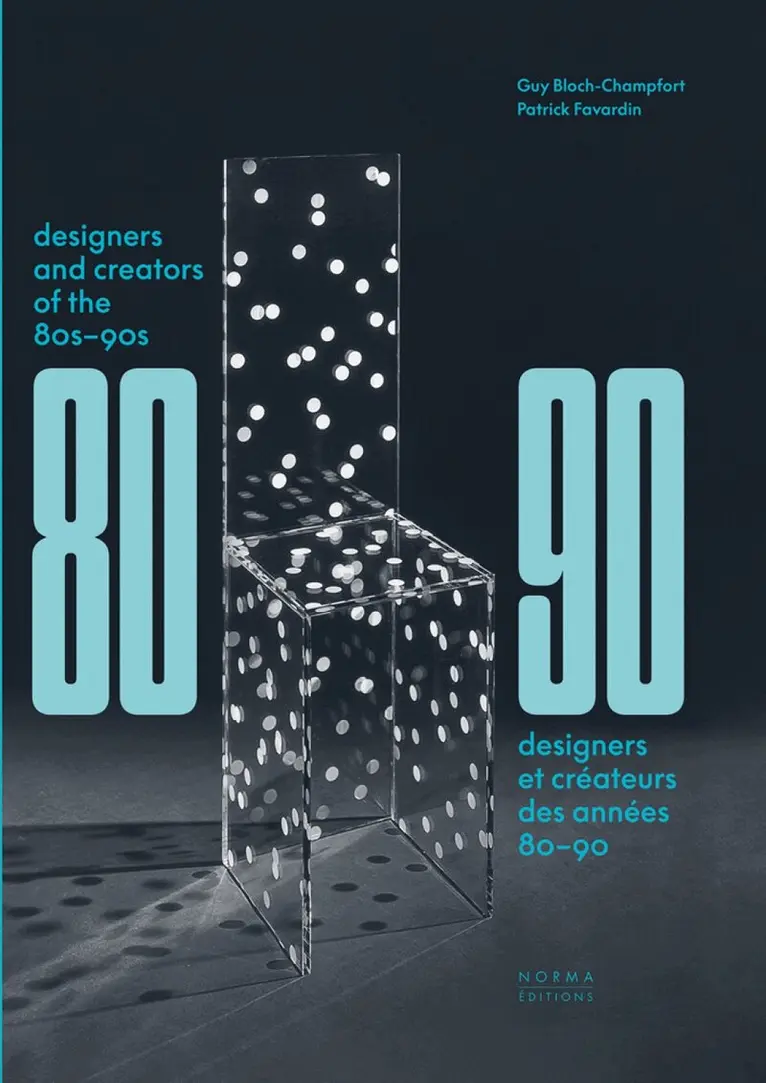
In line with the works on decorators of the 1940s, '50s, '60s, and '70s, this book plunges us into the world of '80s and '90s. These have witnessed unprecedented experiments in the world of design and architecture. Composed of a rich introduction which gives a synoptic vision and 38 monographs that describe its many faces, this book makes and exceptionally creative period intelligible, and reveals through an abundant iconography, often unpublished, its formidable aesthetic richness.A new generation of designers stands out; among them Shiro Kuramata, Philippe Starck, Ron Arad, Bob Wilson, Elizabeth Garouste and Mattia Bonetti. All regenerate creation by refusing the elitism of their predecessors and by favouring the use of new materials. Some turn to recovery, such as the Creative Salvage group, and offer inventive and provocative furniture thanks to welding and assembly. Others, gathered in Italy around Ettore Sottsass and Memphis, combine unexpected colours and patterns to the playful use of plastic laminate. Sliding until the end of the '90s, the achievements presented in this book mark the desire for a dialogue between artistic references with a new relationship to the industrial aspect, at the dawn of the 21st century and its technological innovations.Text in English and French.
Inbunden, Engelska, 2017
487 kr
Skickas inom 5-8 vardagar
"It is a rare species, but it exists," as '60s art critic Pascal Renous pointed out on the subject of artistic couples. This designer-decorator duo of Janine Abraham and Dirk-Jan Rol met at Jacques Dumond's studio in 1955. The couple shares the same love of precision, line and plain colours. Their earliest joint creations were first exhibited at the Salon des artistes décorateurs, in Paris. Their furniture, made of wicker, wood and aluminium, twice won prizes at the Salon des artistes décorateurs (a sideboard in 1956 and an armchair in 1958), garnering notice from the public and professionals alike. Jean Royère did not hesitate to use their emblematic Soleil armchair (gold medal at the 1958 Brussels World's Fair) in the decoration of the palace of the Shah of Iran, in Teheran. Their light and functional designs are available today, re-edited by Yota Design.Abraham & Rol were also interior designers and intervened in this capacity for both individual clients and large corporate clients, such as Yves Rocher and Saint-Gobain, with the same precision and sense of composition that define their furniture pieces.Finally, the couple also expressed their creativity through architecture, their mastery of this discipline enabling them to design some twenty houses from the 1960s through the 2000s in the Île-de-France region. Their homes are genuine inhabited sculptures, of which certain have become truly emblematic. Text in English and French
Inbunden, Engelska, 2016
782 kr
Tillfälligt slut
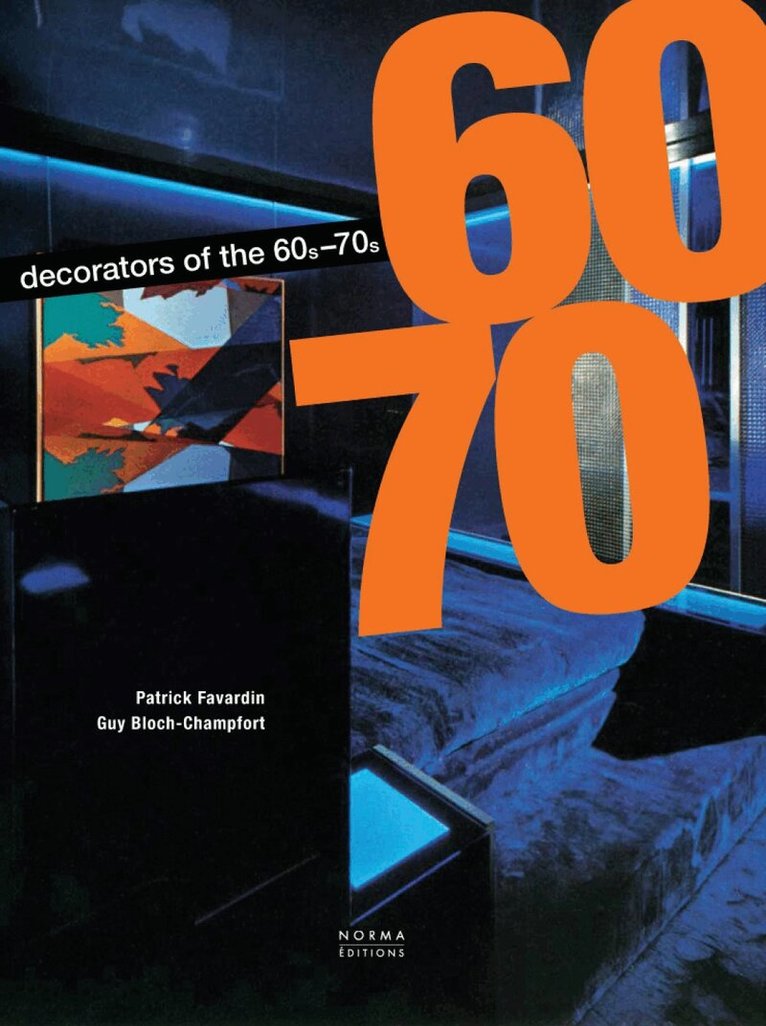
The 1960s and 1970s marked a sharp turning point in the history of decoration and furniture. Until that point, the world was confined to national and elitist forms of expression. At the beginning of the 1960s, the sector took its inspiration from Anglo-Saxon, Scandinavian, Italian and French decoration. Genres were combined in a frenzied desire to live in symbiosis with one's time. The progress of technology strengthened the conviction that the individual had unlimited freedom and aroused the desire to inhabit in a new manner. Forms became rounder, furniture was in sync with a warm, playful, and anticonformist universe. Colours and decorative motifs took on the brilliance and fantasies of Pop Art and psychedelia. The living environment was transformed into a waking dream in which luxurious furniture in original materials and surprising objects were mixed, associated, for the first time, with early furniture. The end of the 1970s marked the advent of a period in which beauty and classic elegance gave way to a host of expressions that were unclassifiable and rejected any hierarchy. The postmodern period had arrived. Composed of a long introduction that provides a synoptic view and 32 monographs that describe its many faces, this book invites the reader to discover an exceptionally creative period and revels in an abundant iconography.The Designers: Alessandro Albrizzi, François Arnal and the Atelier A, Gae Aulenti, Billy Baldwin, Michel Boyer, Pierre Cardin, François Catroux, Max Clendinning, Joe Colombo, Gabriella Crespi, Alain Demachy, John Dickinson, Tony Duquette, Paul Evans, Galerie Germain, Galerie Lacloche, Galerie Maison et Jardin, Jacques Grange, Marc Held, David Hicks, Jansen, Yonel Lebovici, Serge Manzon, Renzo Mongiardino, Verner Panton, Pierre Paulin, Maria Pergay, Alberto Pinto, Henri Samuel, Charles Sévigny, John Stefanidis, Michael Taylor, Carla Venosta.