Gyanendra Pratap Singh – författare
1 558 kr
Skickas inom 10-15 vardagar
Wheat and Barley Grain Biofortification addresses topics associated with the alleviation of malnutrition in globally diverse populations via wheat and barley biofortification. The book synthesizes the current trends of malnutrition across the globe, the need for wheat and barley nutritional enhancement and how agronomic, microbial and molecular understanding of biofortification can help in devising significant approaches and strategies. In addition, it includes discussions on potential genetic variability available and their efficient utilization in wheat and barley for molecular breeding for nutrients, challenges and opportunities for bioavailability, and technical advancement for analysis of bioavailability.
Addresses the need for wheat and barley biofortification to address global nutrition demands Places emphasis on the current agronomic and molecular understanding of biofortification Discusses the potential utilization of genetic variability Highlights the economics of biofortification over fortification technology2 164 kr
Läs direkt efter köp
1 871 kr
Skickas inom 10-15 vardagar
2 662 kr
Läs direkt efter köp
1 390 kr
Skickas inom 10-15 vardagar
QTL Mapping in Crop Improvement: Present Progress and Future Perspectives presents advancements in QTL breeding for biotic and abiotic stresses and nutritional improvement in a range of crop plants. The book presents a roadmap for future breeding for resilience to various stresses and improvement in nutritional quality. Crops such as rice, wheat, maize, soybeans, common bean, and pigeon pea are the major staple crops consumed globally, hence fulfilling the nutritional requirements of global populations, particularly in the under-developed world, is extremely important. Sections cover the challenges facing maximized production of these crops, including diseases, insect damage, drought, heat, salinity and mineral toxicity.
Covering globally important crops including maize, wheat, rice, barley, soybean, common bean and pigeon pea, this book will be an important reference for those working in agriculture and crop improvement.
Uses the latest molecular markers to identify QTLs/genes responsible for biotic and abiotic stress tolerance in plants Includes multiple core crops for efficient comparison and translational learning Provides a ready reference for improving quality traits through the use of the latest technologies1 975 kr
Läs direkt efter köp
909 kr
Läs direkt efter köp
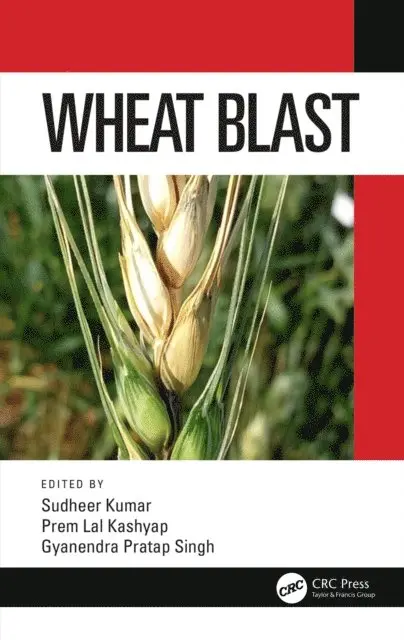
Wheat Blast provides systematic and practical information on wheat blast pathology, summarises research progress and discusses future perspectives based on current understanding of the existing issues. The book explores advance technologies that may help in deciding the path for future research and development for better strategies and techniques to manage the wheat blast disease. It equips readers with basic and applied understanding on the identification of disease, its distribution and chances of further spread in new areas, its potential to cause yield losses to wheat, the conditions that favour disease development, disease prediction modelling, resistance breeding methods and management strategies against wheat blast.
Features:
Provides comprehensive information on wheat blast pathogen and its management under a single umbrella
Covers disease identification and diagnostics which will be helpful to check introduction in new areas
Discusses methods and protocol to study the different aspects of the disease such as diagnostics, variability, resistance screening, epiphytotic creation etc.
Gives deep insight on the past, present and future outlook of wheat blast research progress
This book’s chapters are contributed by experts and pioneers in their respective fields and it provides comprehensive insight with updated findings on wheat blast research. It serves as a valuable reference for researchers, policy makers, students, teachers, farmers, seed growers, traders, and other stakeholders dealing with wheat.
909 kr
Läs direkt efter köp
Wheat Blast provides systematic and practical information on wheat blast pathology, summarises research progress and discusses future perspectives based on current understanding of the existing issues. The book explores advance technologies that may help in deciding the path for future research and development for better strategies and techniques to manage the wheat blast disease. It equips readers with basic and applied understanding on the identification of disease, its distribution and chances of further spread in new areas, its potential to cause yield losses to wheat, the conditions that favour disease development, disease prediction modelling, resistance breeding methods and management strategies against wheat blast.
Features:
Provides comprehensive information on wheat blast pathogen and its management under a single umbrella
Covers disease identification and diagnostics which will be helpful to check introduction in new areas
Discusses methods and protocol to study the different aspects of the disease such as diagnostics, variability, resistance screening, epiphytotic creation etc.
Gives deep insight on the past, present and future outlook of wheat blast research progress
This book’s chapters are contributed by experts and pioneers in their respective fields and it provides comprehensive insight with updated findings on wheat blast research. It serves as a valuable reference for researchers, policy makers, students, teachers, farmers, seed growers, traders, and other stakeholders dealing with wheat.
1 184 kr
Läs direkt efter köp
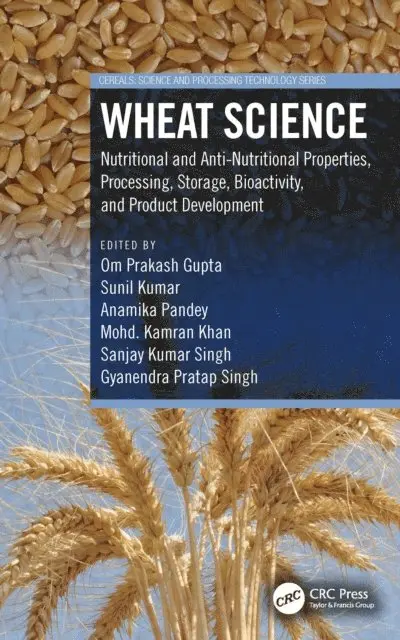
Globally, significant work has been done to enhance our current understanding of the nutritional and anti-nutritional properties, processing, storage, bioactivity, and product development of wheat, opening new frontiers for further improvement. Wheat Science: Nutritional and Anti-Nutritional Properties, Processing, Storage, Bioactivity, and Product Development addresses the topics associated with the advances in understanding the wheat biochemical, nutritional, and rheological quality. Improving crop varieties by either conventional breeding or transgenic methods to obtain nutritionally enhanced crops has the advantage of making a one-time investment in research and development to have sustainable products.
Features:
Includes topics associated with the nutritional composition and anti-nutritional properties Addresses the effects of different processing technologies on flour yield and end products Reviews the effects of storage on nutritional, baking and rheological quality, organoleptic quality, etc.Processing and storage technologies have impacted the nutritional quality and the bioavailability of nutrients in wheat. Due to its peculiar grain protein composition, especially gluten protein, wheat has extensive usage in making numerous end products, eaten round the clock. Researchers have demonstrated a significant effect of alteration of flour-processing technologies on the rheological quality of end products. This book provides a holistic understanding and covers recent developments of wheat science under one umbrella. Emphasis is placed on current trends and advances in nutritional and anti-nutritional properties, processing, storage, bioactivity, and product development. Additionally, efforts have been made to compile the available information on the application of different ingredients of wheat in the industry and pharma sectors.
1 184 kr
Läs direkt efter köp
Globally, significant work has been done to enhance our current understanding of the nutritional and anti-nutritional properties, processing, storage, bioactivity, and product development of wheat, opening new frontiers for further improvement. Wheat Science: Nutritional and Anti-Nutritional Properties, Processing, Storage, Bioactivity, and Product Development addresses the topics associated with the advances in understanding the wheat biochemical, nutritional, and rheological quality. Improving crop varieties by either conventional breeding or transgenic methods to obtain nutritionally enhanced crops has the advantage of making a one-time investment in research and development to have sustainable products.
Features:
Includes topics associated with the nutritional composition and anti-nutritional properties Addresses the effects of different processing technologies on flour yield and end products Reviews the effects of storage on nutritional, baking and rheological quality, organoleptic quality, etc.Processing and storage technologies have impacted the nutritional quality and the bioavailability of nutrients in wheat. Due to its peculiar grain protein composition, especially gluten protein, wheat has extensive usage in making numerous end products, eaten round the clock. Researchers have demonstrated a significant effect of alteration of flour-processing technologies on the rheological quality of end products. This book provides a holistic understanding and covers recent developments of wheat science under one umbrella. Emphasis is placed on current trends and advances in nutritional and anti-nutritional properties, processing, storage, bioactivity, and product development. Additionally, efforts have been made to compile the available information on the application of different ingredients of wheat in the industry and pharma sectors.
2 566 kr
Skickas inom 10-15 vardagar
1 017 kr
Skickas inom 10-15 vardagar
1 877 kr
Kommande
2 151 kr
Skickas inom 10-15 vardagar
2 479 kr
Skickas inom 10-15 vardagar
3 137 kr
Läs direkt efter köp
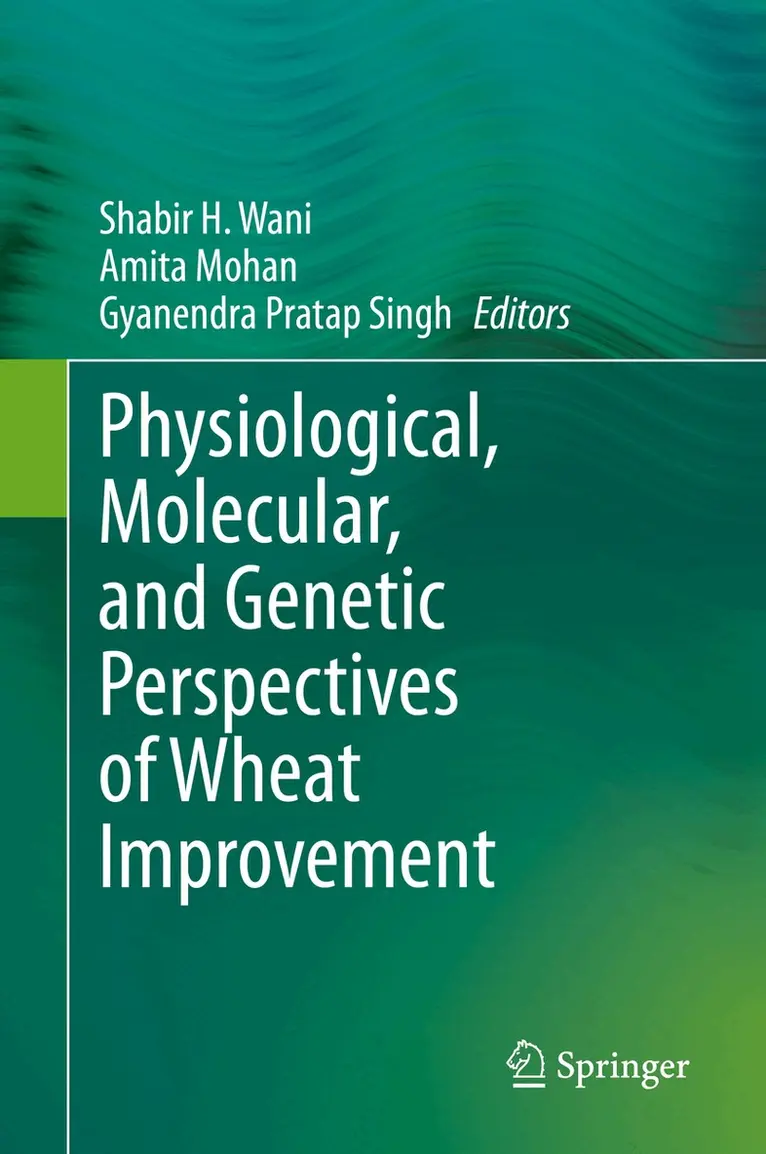
World population is growing at an alarming rate and may exceed 9.7 billion by 2050, whereas agricultural productivity has been negatively affected due to yield limiting factors such as biotic and abiotic stresses as a result of global climate change. Wheat is a staple crop for ~20% of the world population and its yield needs be augmented correspondingly in order to satisfy the demands of our increasing world population. “Green revolution”, the introduction of semi-dwarf, high yielding wheat varieties along with improved agronomic management practices, gave rise to a substantial increase in wheat production and self-sufficiency in developing countries that include Mexico, India and other south Asian countries. Since the late 1980’s, however, wheat yield is at a standoff with little fluctuation. The current trend is thus insufficient to meet the demands of an increasing world population. Therefore, while conventional breeding has had a great impact on wheat yield, with climatechange becoming a reality, newer molecular breeding and management tools are needed to meet the goal of improving wheat yield for the future. With the advance in our understanding of the wheat genome and more importantly, the role of environmental interactions on productivity, the idea of genomic selection has been proposed to select for multi-genic quantitative traits early in the breeding cycle. Accordingly genomic selection may remodel wheat breeding with gain that is predicted to be 3 to 5 times that of crossbreeding. Phenomics (high-throughput phenotyping) is another fairly recent advancement using contemporary sensors for wheat germplasm screening and as a selection tool. Lastly, CRISPR/Cas9 ribonucleoprotein mediated genome editing technology has been successfully utilized for efficient and specific genome editing of hexaploid bread wheat. In summary, there has been exciting progresses in the development of non-GM wheat plants resistant to biotic and abiotic stress and/or wheatwith improved nutritional quality. We believe it is important to highlight these novel research accomplishments for a broader audience, with the hope that our readers will ultimately adopt these powerful technologies for crops improvement in order to meet the demands of an expanding world population.
2 479 kr
Skickas inom 10-15 vardagar
1 619 kr
Skickas inom 10-15 vardagar
1 977 kr
Läs direkt efter köp
1 619 kr
Skickas inom 10-15 vardagar
1 941 kr
Skickas inom 10-15 vardagar
2 443 kr
Läs direkt efter köp
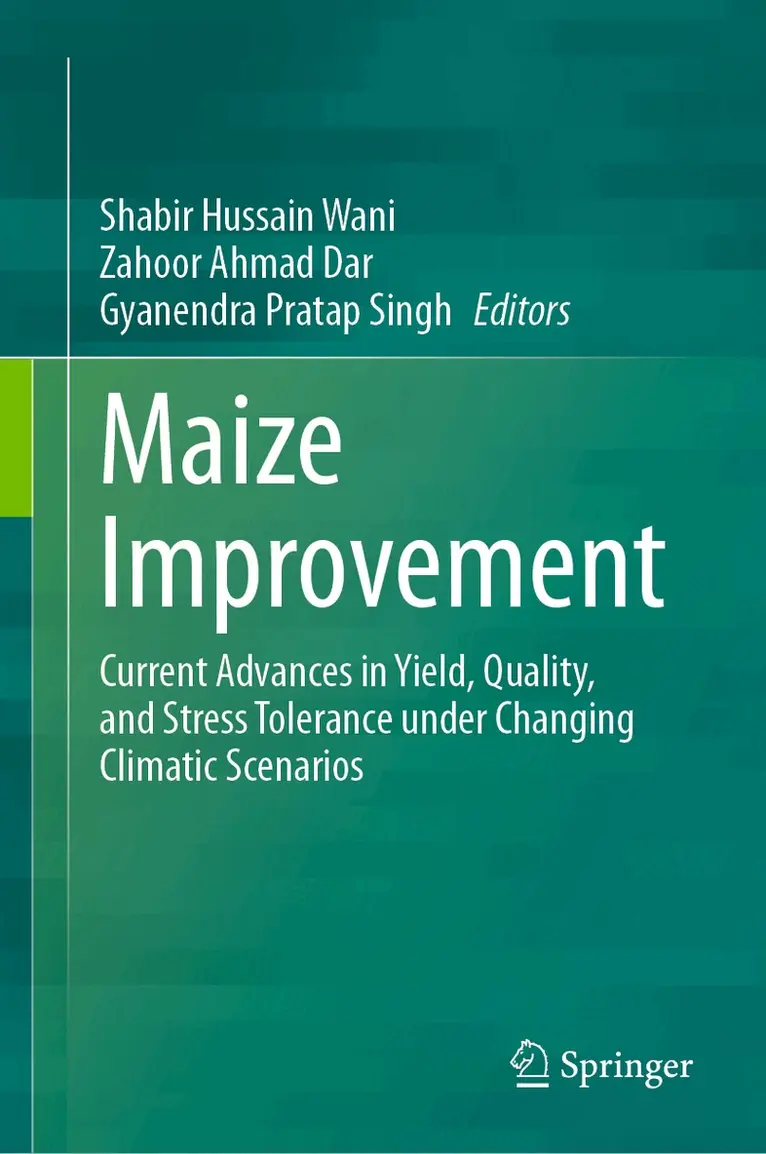
Maize is one of the most generally grown cereal crops at global level, followed by wheat and rice. Maize is the major crop in China both in terms of yield and acreage. In 2012, worldwide maize production was about 840 million tons. Maize has long been a staple food of most of the global population (particularly in South America and Africa) and a key nutrient resource for animal feed and for food industrial materials. Maize belts vary from the latitude 58° north to the latitude 40° south, and maize ripens every month of the year. Abiotic and biotic stresses are common in maize belts worldwide. Abiotic stresses (chiefly drought, salinity, and extreme temperatures), together with biotic stresses (primarily fungi, viruses, and pests), negatively affect maize growth, development, production and productivity. In the recent past, intense droughts, waterlogging, and extreme temperatures have relentlessly affected maize growth and yield. In China, 60% of the maize planting area is prone to drought, and the resultant yield loss is 20%–30% per year; in India, 25%–30% of the maize yield is lost as a result of waterlogging each year. The biotic stresses on maize are chiefly pathogens (fungal, bacterial, and viral), and the consequential syndromes, like ear/stalk rot, rough dwarf disease, and northern leaf blight, are widespread and result in grave damage. Roughly 10% of the global maize yield is lost each year as a result of biotic stresses. For example, the European corn borer [ECB, Ostrinianubilalis (Hübner)] causes yield losses of up to 2000 million dollars annually in the USA alone in the northern regions of China, the maize yield loss reaches 50% during years when maize badly affected by northern leaf blight. In addition, abiotic and biotic stresses time and again are present at the same time and rigorously influence maize production. To fulfill requirements of each maize-growing situation and to tackle the above mentions stresses in an effective way sensibly designed multidisciplinary strategy for developing suitable varieties for each of these stresses has been attempted during the last decade. Genomics is a field of supreme significance for elucidating the genetic architecture of complex quantitative traits and characterizing germplasm collections to achieve precise and specific manipulation of desirable alleles/genes. Advances in genotyping technologies and high throughput phenomics approaches have resulted in accelerated crop improvement like genomic selection, speed breeding, particularly in maize. Molecular breeding tools like collaborating all omics, has led to the development of maize genotypes having higher yields, improved quality and resilience to biotic and abiotic stresses. Through this book, we bring into one volume the various important aspects of maize improvement and the recent technological advances in development of maize genotypes with high yield, high quality and resilience to biotic and abiotic stresses
1 941 kr
Skickas inom 10-15 vardagar
2 458 kr
Skickas inom 10-15 vardagar
3 046 kr
Läs direkt efter köp
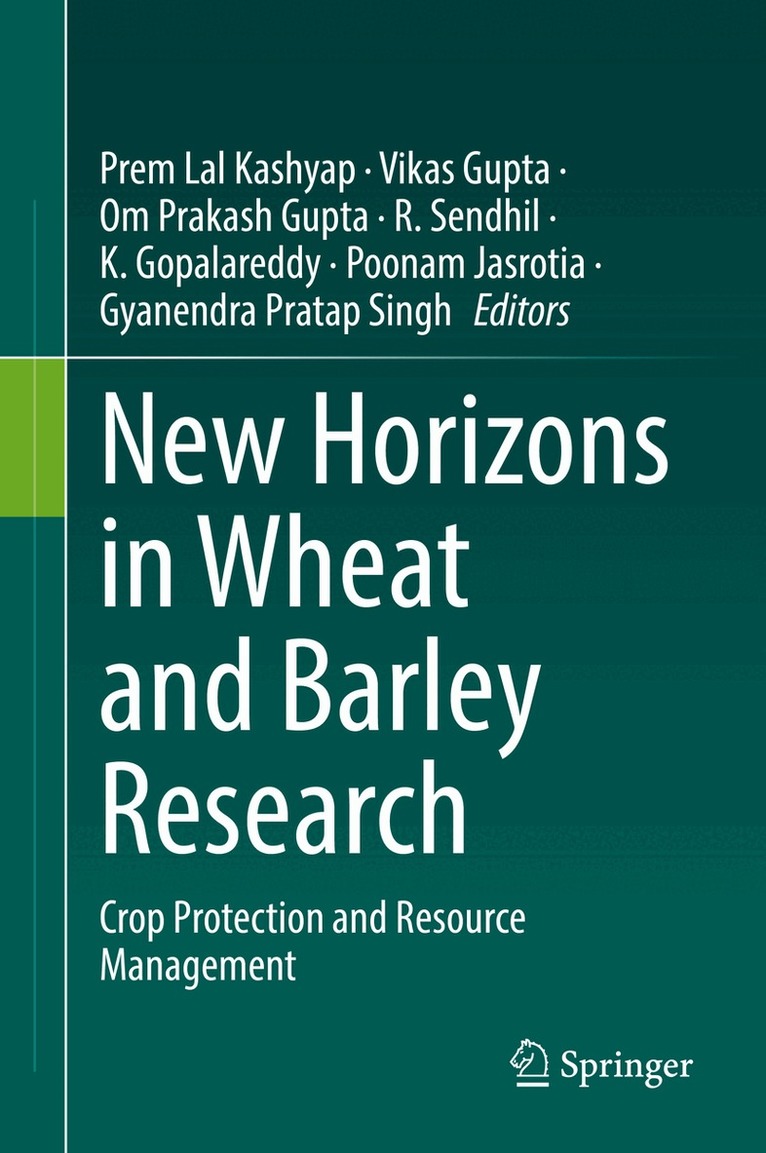
This book discusses the research progress on pathology, entomology, nematology, and resource management of wheat and barley crops. The volume summarizes the research progress and discusses the future perspectives based on current understanding of the existing issues and advancing cutting-edge technologies in the field. The book aims to help in deciding future research and development agenda by devising better strategies and techniques to cultivate these crops under clean and sustainable environment. Through this book an international group of leading wheat and barley researchers unveil the emerging concepts and issues related to biotic stresses and resource management and offers latest glimpses of technological needs and resource optimization in wheat and barley production system. Also, key topics such as frontier mechanization technologies, improved precision farming techniques, pluralistic extension and policy interventions for enhancing the resource efficiency and livelihood security of the farmers are explored here.
This book is of interest to teachers, researchers, molecular breeders, cereal biochemists and biotechnologists, policymakers and professionals working in the area of wheat and barley research, food and cereal industry. Also, the book serves as an additional reading material for undergraduate and graduate students of agriculture and food sciences. National and international agricultural scientists, policy makers will also find this book to be a useful read.
Volume 1 of New Horizons in Wheat and Barley Research covers global trends, breeding and quality enhancement.
2 458 kr
Skickas inom 10-15 vardagar
2 671 kr
Skickas inom 10-15 vardagar
3 351 kr
Läs direkt efter köp
This book outlines comprehensive information on the global trends, policies, research priorities and frontier innovations made in the research domain of breeding, biotechnology, biofortification and quality enhancement of wheat and barley. With contributions by international group of leading wheat and barley researchers, this book offers data-based insights along with a holistic view of the subject and serve as a vital resource of information for scientists engaged in breeding future high-yielding biofortified varieties. It catalogs both conventional as well as modern tools for gene identification and genome editing interventions for enhancing the yield, grain quality, disease and pest resistance, nutrient-use efficiency and abiotic stress tolerance. The prospects of processing high quality wheat end-products with long term storage and high nutritional quality are also discussed.
This book is of interest to teachers, researchers, molecular breeders, cereal biochemists and biotechnologist, policymakers and professionals working in the area of wheat and barley research, food and cereal industry. Also, the book serves as an additional reading material for the undergraduate and graduate students of agriculture and food sciences. National and international agricultural scientists, policy makers will also find this book to be a useful read.
Volume 2 of New Horizons in Wheat and Barley Research covers topics in crop protection and resource management.
2 671 kr
Skickas inom 10-15 vardagar
2 138 kr
Skickas inom 10-15 vardagar