Om Prakash Gupta – författare
1 614 kr
Skickas inom 10-15 vardagar
Wheat and Barley Grain Biofortification addresses topics associated with the alleviation of malnutrition in globally diverse populations via wheat and barley biofortification. The book synthesizes the current trends of malnutrition across the globe, the need for wheat and barley nutritional enhancement and how agronomic, microbial and molecular understanding of biofortification can help in devising significant approaches and strategies. In addition, it includes discussions on potential genetic variability available and their efficient utilization in wheat and barley for molecular breeding for nutrients, challenges and opportunities for bioavailability, and technical advancement for analysis of bioavailability.
Addresses the need for wheat and barley biofortification to address global nutrition demands Places emphasis on the current agronomic and molecular understanding of biofortification Discusses the potential utilization of genetic variability Highlights the economics of biofortification over fortification technology2 243 kr
Läs direkt efter köp
1 387 kr
Skickas
2 759 kr
Läs direkt efter köp
2 058 kr
Skickas inom 10-15 vardagar
1 866 kr
Läs direkt efter köp
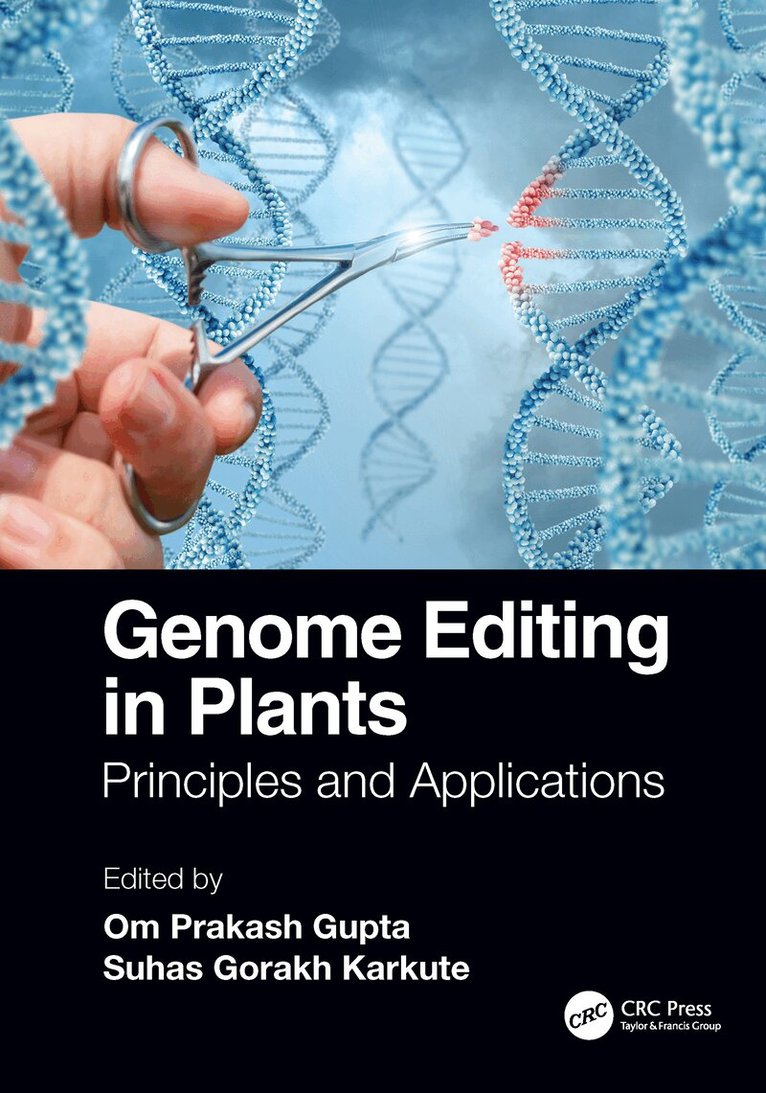
Genome Editing in Plants: Principles and Applications addresses the information of genome editing starting from principles and historical aspects to the latest advancements in the field. As genome-editing technology has emerged as promising and cutting edge, researchers around the world have started producing original research outputs, which have significantly improved our current understanding and potential of this technology. The initial chapters of this book describe different genome-editing tools as well as their principles and applications. Other chapters are dedicated to the present status and future applications of genome-editing techniques in various crop improvement programmes. Some of the advanced applications of CRISPR/Cas tools, such as base editing and RNA detection, along with regulatory aspects of genome-edited crops are described in detail.
This book serves as a valuable resource to researchers in the field of crop improvement; graduate and postgraduate students engaged in plant molecular biology and biotechnology; academicians; and policy makers.
Key Features:
Addresses topics associated with historical development and principles of genome-editing technology
Addresses basic mechanisms operating under each genome-editing technology
Addresses its application in plants to design crops as per the current and future demands
Addresses the regulatory mechanisms of genome-edited crops
1 779 kr
Läs direkt efter köp
Genome Editing in Plants: Principles and Applications addresses the information of genome editing starting from principles and historical aspects to the latest advancements in the field. As genome-editing technology has emerged as promising and cutting edge, researchers around the world have started producing original research outputs, which have significantly improved our current understanding and potential of this technology. The initial chapters of this book describe different genome-editing tools as well as their principles and applications. Other chapters are dedicated to the present status and future applications of genome-editing techniques in various crop improvement programmes. Some of the advanced applications of CRISPR/Cas tools, such as base editing and RNA detection, along with regulatory aspects of genome-edited crops are described in detail.
This book serves as a valuable resource to researchers in the field of crop improvement; graduate and postgraduate students engaged in plant molecular biology and biotechnology; academicians; and policy makers.
Key Features:
Addresses topics associated with historical development and principles of genome-editing technology
Addresses basic mechanisms operating under each genome-editing technology
Addresses its application in plants to design crops as per the current and future demands
Addresses the regulatory mechanisms of genome-edited crops
1 227 kr
Läs direkt efter köp
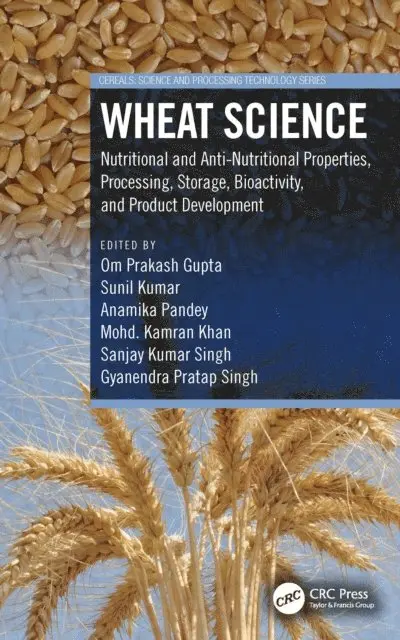
Globally, significant work has been done to enhance our current understanding of the nutritional and anti-nutritional properties, processing, storage, bioactivity, and product development of wheat, opening new frontiers for further improvement. Wheat Science: Nutritional and Anti-Nutritional Properties, Processing, Storage, Bioactivity, and Product Development addresses the topics associated with the advances in understanding the wheat biochemical, nutritional, and rheological quality. Improving crop varieties by either conventional breeding or transgenic methods to obtain nutritionally enhanced crops has the advantage of making a one-time investment in research and development to have sustainable products.
Features:
Includes topics associated with the nutritional composition and anti-nutritional properties Addresses the effects of different processing technologies on flour yield and end products Reviews the effects of storage on nutritional, baking and rheological quality, organoleptic quality, etc.Processing and storage technologies have impacted the nutritional quality and the bioavailability of nutrients in wheat. Due to its peculiar grain protein composition, especially gluten protein, wheat has extensive usage in making numerous end products, eaten round the clock. Researchers have demonstrated a significant effect of alteration of flour-processing technologies on the rheological quality of end products. This book provides a holistic understanding and covers recent developments of wheat science under one umbrella. Emphasis is placed on current trends and advances in nutritional and anti-nutritional properties, processing, storage, bioactivity, and product development. Additionally, efforts have been made to compile the available information on the application of different ingredients of wheat in the industry and pharma sectors.
1 227 kr
Läs direkt efter köp
Globally, significant work has been done to enhance our current understanding of the nutritional and anti-nutritional properties, processing, storage, bioactivity, and product development of wheat, opening new frontiers for further improvement. Wheat Science: Nutritional and Anti-Nutritional Properties, Processing, Storage, Bioactivity, and Product Development addresses the topics associated with the advances in understanding the wheat biochemical, nutritional, and rheological quality. Improving crop varieties by either conventional breeding or transgenic methods to obtain nutritionally enhanced crops has the advantage of making a one-time investment in research and development to have sustainable products.
Features:
Includes topics associated with the nutritional composition and anti-nutritional properties Addresses the effects of different processing technologies on flour yield and end products Reviews the effects of storage on nutritional, baking and rheological quality, organoleptic quality, etc.Processing and storage technologies have impacted the nutritional quality and the bioavailability of nutrients in wheat. Due to its peculiar grain protein composition, especially gluten protein, wheat has extensive usage in making numerous end products, eaten round the clock. Researchers have demonstrated a significant effect of alteration of flour-processing technologies on the rheological quality of end products. This book provides a holistic understanding and covers recent developments of wheat science under one umbrella. Emphasis is placed on current trends and advances in nutritional and anti-nutritional properties, processing, storage, bioactivity, and product development. Additionally, efforts have been made to compile the available information on the application of different ingredients of wheat in the industry and pharma sectors.
2 616 kr
Skickas inom 10-15 vardagar
1 037 kr
Skickas inom 10-15 vardagar
204 kr
Skickas inom 3-6 vardagar
2 480 kr
Skickas inom 10-15 vardagar
3 046 kr
Läs direkt efter köp
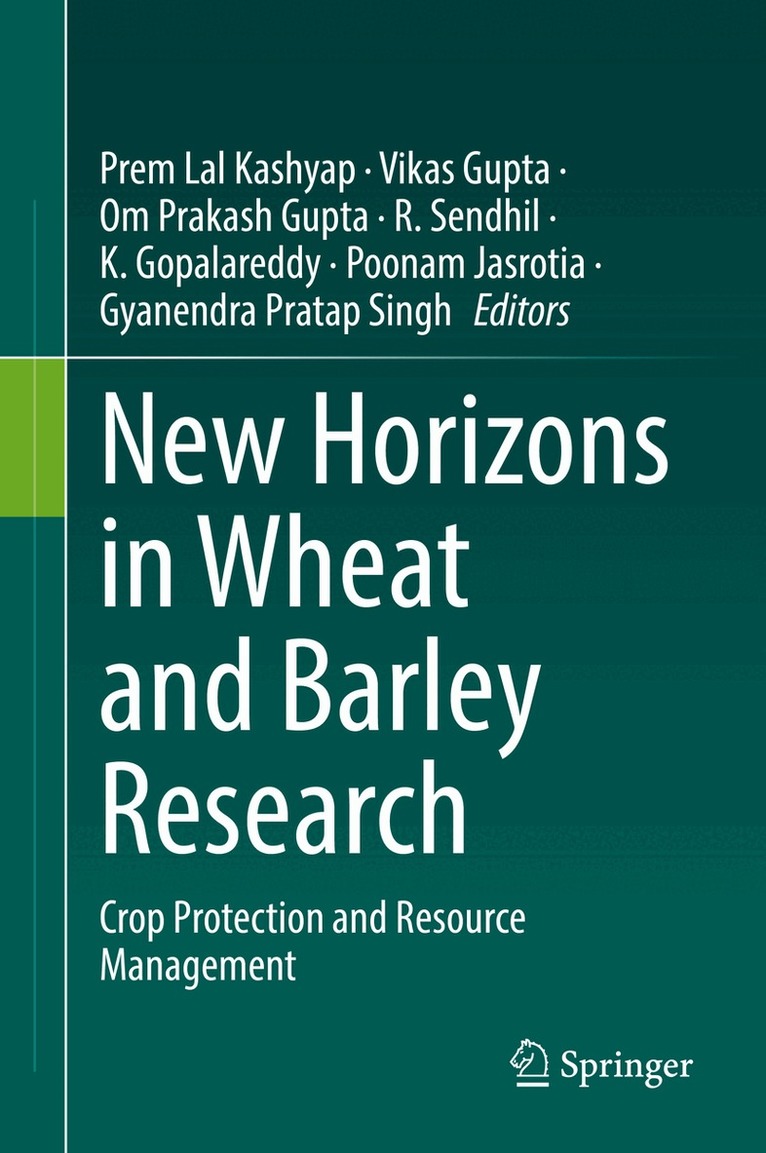
This book discusses the research progress on pathology, entomology, nematology, and resource management of wheat and barley crops. The volume summarizes the research progress and discusses the future perspectives based on current understanding of the existing issues and advancing cutting-edge technologies in the field. The book aims to help in deciding future research and development agenda by devising better strategies and techniques to cultivate these crops under clean and sustainable environment. Through this book an international group of leading wheat and barley researchers unveil the emerging concepts and issues related to biotic stresses and resource management and offers latest glimpses of technological needs and resource optimization in wheat and barley production system. Also, key topics such as frontier mechanization technologies, improved precision farming techniques, pluralistic extension and policy interventions for enhancing the resource efficiency and livelihood security of the farmers are explored here.
This book is of interest to teachers, researchers, molecular breeders, cereal biochemists and biotechnologists, policymakers and professionals working in the area of wheat and barley research, food and cereal industry. Also, the book serves as an additional reading material for undergraduate and graduate students of agriculture and food sciences. National and international agricultural scientists, policy makers will also find this book to be a useful read.
Volume 1 of New Horizons in Wheat and Barley Research covers global trends, breeding and quality enhancement.
2 480 kr
Skickas inom 10-15 vardagar
2 695 kr
Skickas inom 10-15 vardagar
3 473 kr
Läs direkt efter köp
This book outlines comprehensive information on the global trends, policies, research priorities and frontier innovations made in the research domain of breeding, biotechnology, biofortification and quality enhancement of wheat and barley. With contributions by international group of leading wheat and barley researchers, this book offers data-based insights along with a holistic view of the subject and serve as a vital resource of information for scientists engaged in breeding future high-yielding biofortified varieties. It catalogs both conventional as well as modern tools for gene identification and genome editing interventions for enhancing the yield, grain quality, disease and pest resistance, nutrient-use efficiency and abiotic stress tolerance. The prospects of processing high quality wheat end-products with long term storage and high nutritional quality are also discussed.
This book is of interest to teachers, researchers, molecular breeders, cereal biochemists and biotechnologist, policymakers and professionals working in the area of wheat and barley research, food and cereal industry. Also, the book serves as an additional reading material for the undergraduate and graduate students of agriculture and food sciences. National and international agricultural scientists, policy makers will also find this book to be a useful read.
Volume 2 of New Horizons in Wheat and Barley Research covers topics in crop protection and resource management.
2 695 kr
Skickas inom 10-15 vardagar