H. W. Kaufmann – författare
Visar alla böcker från författaren H. W. Kaufmann. Handla med fri frakt och snabb leverans.
17 produkter
Fortress France
The Maginot Line and French Defenses in World War II
Av J. E. Kaufmann, H. W. Kaufmann
Häftad, 2007
233 kr
Lägg i varukorg
Shocked by the carnage of World War I--much of which was waged on its own soil--France constructed a vast network of forts in the years before World War II. Among these was the Maginot Line, the last of the great gun-bearing fortifications, but France also built defenses along its coasts and in …
American Gi in Europe in World War II
D-Day: Storming Ashore
Av J. E. Kaufmann, H. W. Kaufmann
Inbunden, 2009
341 kr
Lägg i varukorg
In the spirit of Stephen Ambrose's Band of Brothers and Cornelius Ryan's The Longest Day and A Bridge Too Far, J. E. Kaufmann and H. W. Kaufmann weave together firsthand accounts of American soldiers to capture the complete experience of the individual GI in World War II, from stateside training to …
American GI in Europe in World War II: The March to D-Day
Av H. W. Kaufmann, J. E. Kaufmann
E-bok, 2009
293 kr
Lägg i varukorg
Firsthand accounts and contextual narrative chronicling the U.S. war effort before D-Day. Sidebars on patrols, service troops, the replacement system, Rangers, and more. Based on interviews with more than 200 veterans.
American GI in Europe in World War II The Battle in France
Av H. W. Kaufmann, J. E. Kaufmann
E-bok, 2010
299 kr
Lägg i varukorg
Firsthand accounts and contextual narrative chronicling the war in Europe after D-Day. Sidebars on glider operations, rear-area activities, hedgerow country, and more. Based on interviews with more than 200 veterans.
American GI in Europe in World War II: D-Day: Storming Ashore
Av H. W. Kaufmann, J. E. Kaufmann
E-bok, 2009
299 kr
Lägg i varukorg
Covers the D-Day airborne drops and amphibious landings at Omaha Beach and Utah Beach. Includes sidebars on landing craft, the naval bombardment, engineers, medics, the Germans'' defenses, and more.
Fortress Europe
From Stone to Steel Fortifications,1850 1945
Inbunden, 2022
443 kr
Lägg i varukorg
A few of the fortifications and fortified lines of the world wars are well known and have often been written about, illustrated and studied. But they tend to distract attention from the wide range of fixed defences constructed across Europe on an enormous scale after the Franco-Prussian War of …
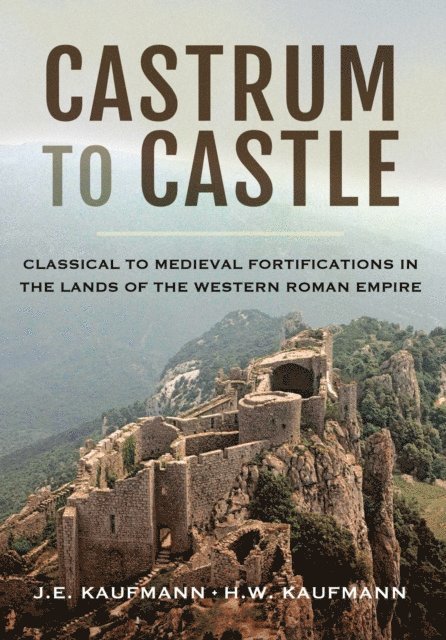
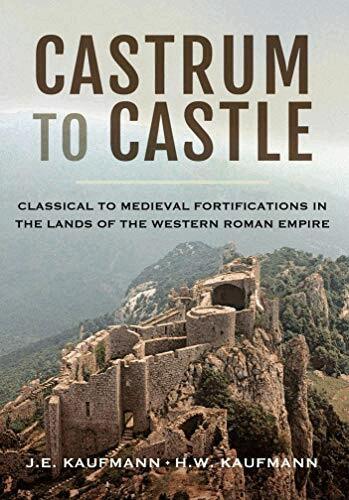
Castrum to Castle
Classical to Medieval Fortifications in the Lands of the Western Roman Empire
Av H. W. Kaufmann, J. E. Kaufmann
E-bok, 2018
88 kr
Lägg i varukorg
A richly illustrated history of military fortifications in ancient and medieval times. For over a thousand years, from the time of the Roman Empire to the classic period of castle-building in the twelfth and thirteenth centuries, fortified sites played a key role in European warfare. This highly …
Castrum to Castle
Classical to Medieval Fortifications in the Lands of the Western Roman Empire
Av H. W. Kaufmann, J. E. Kaufmann
E-bok, 2018
88 kr
Lägg i varukorg
A richly illustrated history of military fortifications in ancient and medieval times. For over a thousand years, from the time of the Roman Empire to the classic period of castle-building in the twelfth and thirteenth centuries, fortified sites played a key role in European warfare. This highly …
Castle to Fortress
Medieval to Renaissance Fortifications in the Lands of the Former Western Roman Empire
Av J E, Kaufmann, H W, Kaufmann
Inbunden, 2019
280 kr
Lägg i varukorg
Across western Europe the long tradition of castle-building took on its most sophisticated form in the later medieval period and then, in response to the development of gunpowder weapons, it underwent a fundamental change - from castle to fortress. This, the second volume of a highly illustrated …
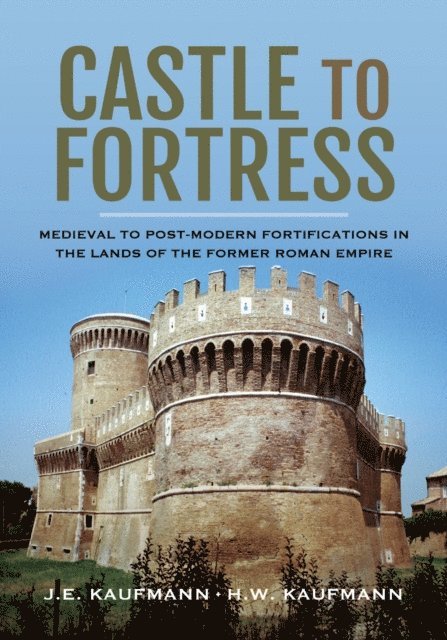
Castle to Fortress
Medieval to Post-Modern Fortifications in the Lands of the Former Roman Empire
Av H. W. Kaufmann, J. E. Kaufmann
E-bok, 2019
88 kr
Lägg i varukorg
The authors of Castrum to Castle trace the "evolution of defensive architecture at the turn of the late Middle Ages and the beginning of the Renaissance." —Old Barbed Wire Blog Across western Europe, the long tradition of castle-building took on its most sophisticated form in the later Medieval …
Castle to Fortress
Medieval to Post-Modern Fortifications in the Lands of the Former Roman Empire
Av H. W. Kaufmann, J. E. Kaufmann
E-bok, 2019
88 kr
Lägg i varukorg
The authors of Castrum to Castle trace the "evolution of defensive architecture at the turn of the late Middle Ages and the beginning of the Renaissance." —Old Barbed Wire Blog Across western Europe, the long tradition of castle-building took on its most sophisticated form in the later Medieval …
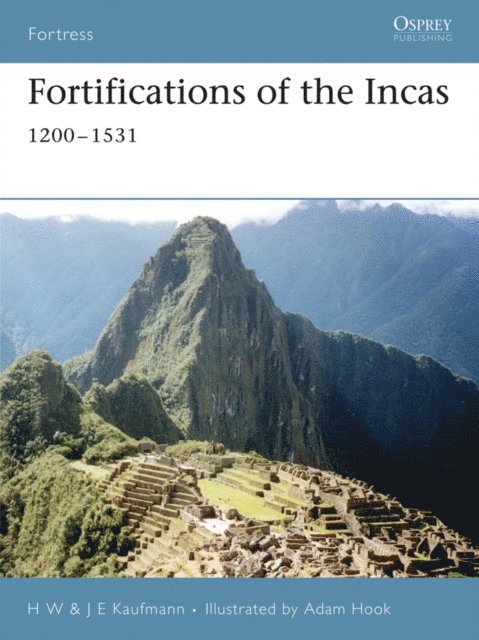
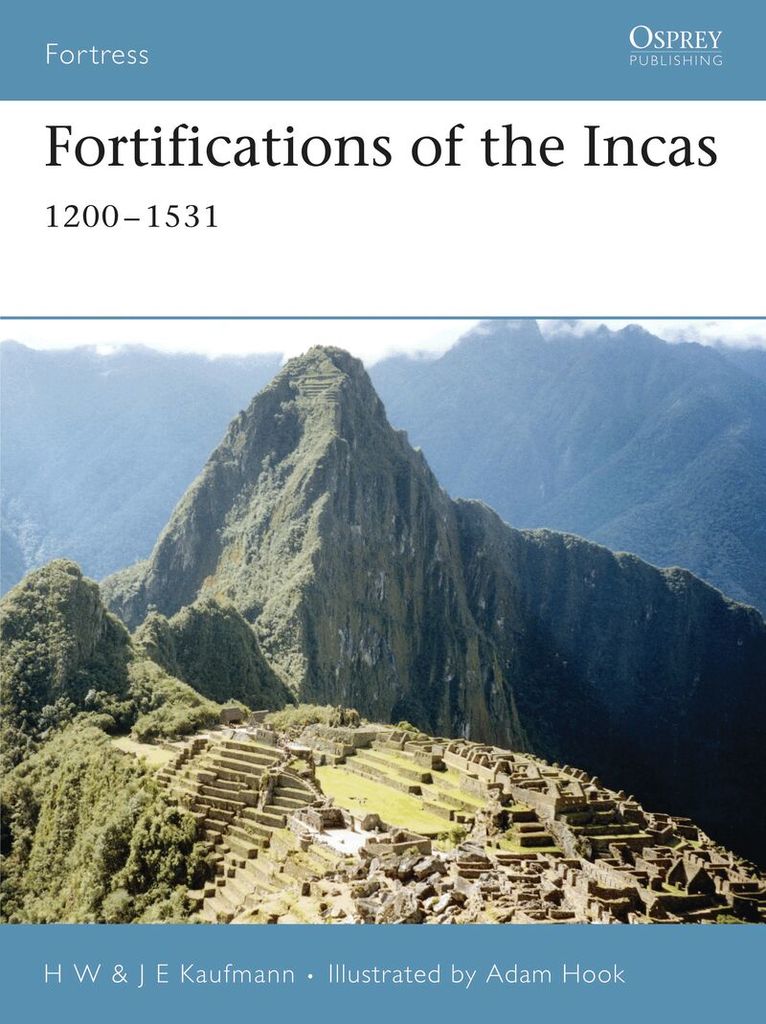
Fortifications of the Incas
1200–1531
Av H. W. Kaufmann, J.E. Kaufmann
E-bok, 2012
210 kr
Lägg i varukorg
The greatest period of Inca expansion occurred during the reigns of Pachacuti (1438–71), Tupa Inca (1471–93), and Huayna Capac (1493–1527). From the mountain stronghold of Cuzco, they subjugated the surrounding kingdoms and territories, absorbing their civilizations and their peoples. By 1525, they …
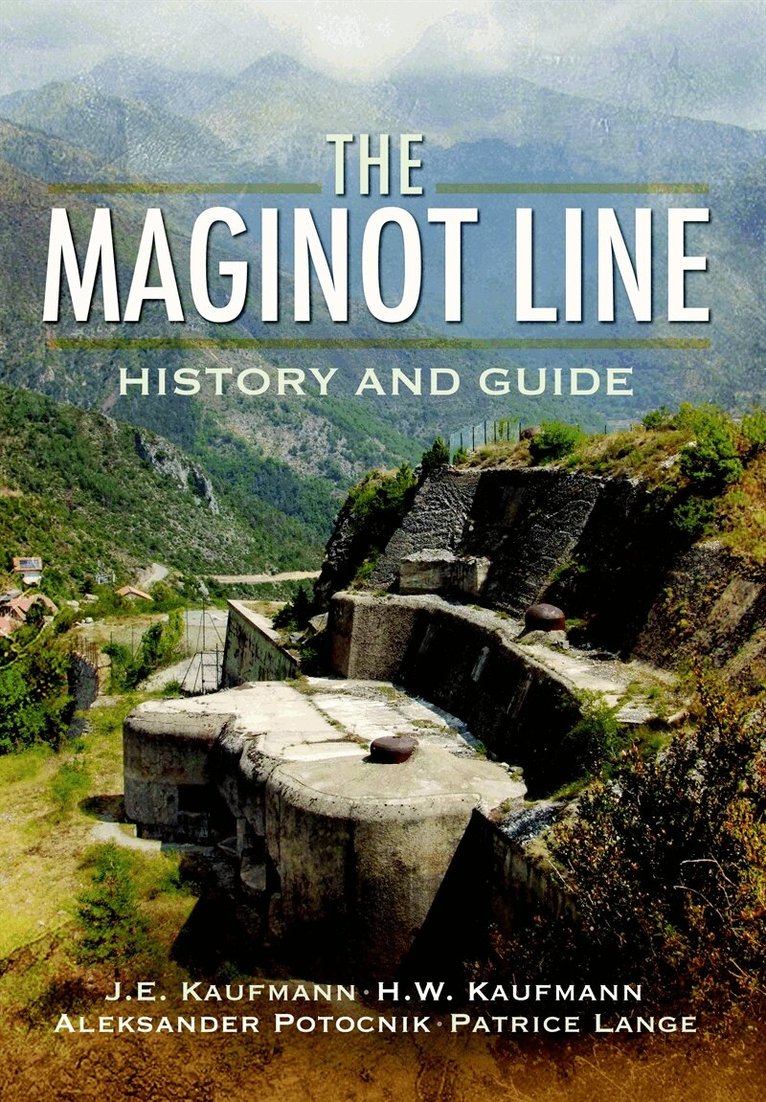
Maginot Line
History and Guide
Av Patrice Lange, Aleksander Potocnik m. fl.
E-bok, 2011
88 kr
Lägg i varukorg
The Maginot Line, the complex system of strongpoints constructed between the world wars by the French to protect against attack from Germany, is one of the most famous, extensive and controversial defensive schemes in all military history. It stretched from Belgium to Switzerland, and from …
The Maginot Line
History and Guide
Av A. Jankovic-Potocnik, J E Kaufmann m. fl.
E-bok, 2021
95 kr
Lägg i varukorg
The Maginot Line, the complex system of strongpoints constructed between the world wars by the French to protect against attack from Germany, is one of the most famous, extensive and controversial defensive schemes in all military history. It stretched from Belgium to Switzerland, and from …
Fortifications of the Incas
1200–1531
Av H. W. Kaufmann, J.E. Kaufmann
Häftad, 2006
185 kr
Lägg i varukorg
The greatest period of Inca expansion occurred during the reigns of Pachacuti (1438–71), Tupa Inca (1471–93), and Huayna Capac (1493–1527).From the mountain stronghold of Cuzco, they subjugated the surrounding kingdoms and territories, absorbing their civilizations and their peoples. By 1525, they …
Fortifications of the Incas
1200–1531
Av H. W. Kaufmann, J.E. Kaufmann
E-bok, 2012
214 kr
Lägg i varukorg
The greatest period of Inca expansion occurred during the reigns of Pachacuti (1438–71), Tupa Inca (1471–93), and Huayna Capac (1493–1527). From the mountain stronghold of Cuzco, they subjugated the surrounding kingdoms and territories, absorbing their civilizations and their peoples. By 1525, they …
Castrum to Castle
Classical to Medieval Fortifications in the Lands of the Western Roman Empire
Av J. E. Kaufmann, H. W. Kaufmann
Inbunden, 2018
274 kr
Tillfälligt slut
For over a thousand years, from the time of the Roman Empire to the classic period of castle-building in the twelfth and thirteenth centuries, fortified sites played a key role in European warfare. This highly illustrated history gives a fascinating insight into their design and development and …