J.E Kaufmann – författare
Visar alla böcker från författaren J.E Kaufmann. Handla med fri frakt och snabb leverans.
14 produkter
14 produkter
Inbunden, Engelska, 1997
1 071 kr
Skickas inom 10-15 vardagar
Tracing the development of the fortifications in Europe from the end of the Franco-Prussian War of 1870 to the twentieth century, this is the first comprehensive book in English on the forts of the Maginot Line, German espionage, and the German sieges during the 1940 campaign. It analyzes the reasons why the French opted for this type of defensive system, and explains how the Maginot Line presented the French Army with opportunities (mostly wasted) to regroup and mount an effective defense. Shrouded in media myth for 40 years, this study demonstrates both how the media created the myth and the truth behind the myth of the Maginot Line. At the time reporters wildly speculated about these fortifications, German intelligence agents were busy collecting data. Finally, this book relates the heroic battles waged by the forts, large and small: the tragic fall of La Ferte, the surrender of other ^Ipetits ouvrages^R after prolonged and fierce fighting, the triumphant resistance of the larger forts even in the face of the most savage artillery pounding, and the unqualified victory of the Little Maginot Line over invading Italian forces.
Inbunden, Engelska, 2005
1 425 kr
Skickas inom 10-15 vardagar
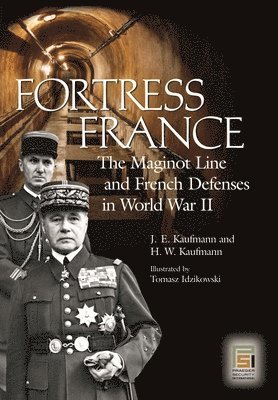
The Maginot Line was the last great gun-bearing line of subterranean forts built before World War II. Although it acquired an unjustified reputation as a white elephant, the Maginot Line fulfilled the role for which it was built, allowing the French High Command the opportunity to mass its forces and counter the German invasion. Unfortunately, the French leadership failed to make the most of its assets, with the resulting disastrous outcome.During the 1920s, the French High Command formulated a number of offensive plans to strike at Germany, but by the end of the decade, it switched to defensive plans because of a lack of manpower. Work thus began on the Maginot Line and on other fortifications such as the French Mareth Line in North Africa and the heavy naval coastal defense batteries in Bizerte (Tunisia) and Toulon (France). The authors conclude that the Maginot Line offered the French High Command many opportunities from September 1939 until May 1940. They blame a failed French military doctrine for taking the initiative away from subordinates, laying the groundwork for the disastrous events of 1940 that left the French High Command paralyzed while German forces broke through the weakly held Ardennes.
Inbunden, Engelska, 2008
696 kr
Skickas inom 10-15 vardagar
This book chronicles the experience of the World War II paratroopers from their earliest days in training to final days of the war spent at Berchtesgaden. Relying heavily on memoirs, letters, and personal interviews with soldiers, this work highlights the rigors of training, the spectacle of combat, and the relief of survival and victory. From D-Day to Bastogne, Kaufmann follows the American advance across France, shedding light on the emotional strain and shock of combat that was, until recently, often overlooked by generations of Americans, but freely admitted to by the Vets themselves. Along the way, the book details the struggle faced by American G.I.s as they made their way through France. Indeed, it becomes clear the Nazis were not the only obstacle to Mutt and Joe during the campaign. The common problems of supply and relief often exacerbated difficult conditions in the field, while incompetent line officers often raised doubt and suspicion among men in the ranks. Ultimately, this is a very personal story about struggle and triumph, told by those who endured the hardship of combat.
E-bok
PDF, Engelska, 20051 504 kr
Läs direkt efter köp
The Maginot Line was the last great gun-bearing line of subterranean forts built before World War II. Although it acquired an unjustified reputation as a white elephant, the Maginot Line fulfilled the role for which it was built, allowing the French High Command the opportunity to mass its forces and counter the German invasion. Unfortunately, the French leadership failed to make the most of its assets, with the resulting disastrous outcome.During the 1920s, the French High Command formulated a number of offensive plans to strike at Germany, but by the end of the decade, it switched to defensive plans because of a lack of manpower. Work thus began on the Maginot Line and on other fortifications such as the French Mareth Line in North Africa and the heavy naval coastal defense batteries in Bizerte (Tunisia) and Toulon (France). The authors conclude that the Maginot Line offered the French High Command many opportunities from September 1939 until May 1940. They blame a failed French military doctrine for taking the initiative away from subordinates, laying the groundwork for the disastrous events of 1940 that left the French High Command paralyzed while German forces broke through the weakly held Ardennes.
E-bok
PDF, Engelska, 20041 080 kr
Läs direkt efter köp
This selected bibliography on modern European fortifications, from 1850 to 1950, provides a selection of the most important books and articles written on this topic. The work covers regions and countries and includes many sources on such popular topics such as the Maginot Line along with lesser known fortifications such as the Salpa Line and the Swiss National Redoubt. References for the fortifications that appear cover everything from the Iberian Peninsula to the Soviet Union and from Scandinavia to the Mediterranean countries.This work includes not only American and English, but also non-English publications. This source features books and articles done in the nineteenth and twentieth century ending in December 2000. Each contributor is a member of SITE O, an international fortifications research group. In addition to helpful annotations, each chapter includes summaries on the fortifications. Also features a multi-lingual glossary and reference maps.
E-bok
PDF, Engelska, 2008752 kr
Läs direkt efter köp
This book chronicles the experience of the World War II paratroopers from their earliest days in training to final days of the war spent at Berchtesgaden. Relying heavily on memoirs, letters, and personal interviews with soldiers, this work highlights the rigors of training, the spectacle of combat, and the relief of survival and victory. From D-Day to Bastogne, Kaufmann follows the American advance across France, shedding light on the emotional strain and shock of combat that was, until recently, often overlooked by generations of Americans, but freely admitted to by the Vets themselves. Along the way, the book details the struggle faced by American G.I.s as they made their way through France. Indeed, it becomes clear the Nazis were not the only obstacle to Mutt and Joe during the campaign. The common problems of supply and relief often exacerbated difficult conditions in the field, while incompetent line officers often raised doubt and suspicion among men in the ranks. Ultimately, this is a very personal story about struggle and triumph, told by those who endured the hardship of combat.
Inbunden, Engelska, 2004
1 043 kr
Skickas inom 10-15 vardagar
This selected bibliography on modern European fortifications, from 1850 to 1950, provides a selection of the most important books and articles written on this topic. The work covers regions and countries and includes many sources on such popular topics such as the Maginot Line along with lesser known fortifications such as the Salpa Line and the Swiss National Redoubt. References for the fortifications that appear cover everything from the Iberian Peninsula to the Soviet Union and from Scandinavia to the Mediterranean countries.This work includes not only American and English, but also non-English publications. This source features books and articles done in the nineteenth and twentieth century ending in December 2000. Each contributor is a member of SITE O, an international fortifications research group. In addition to helpful annotations, each chapter includes summaries on the fortifications. Also features a multi-lingual glossary and reference maps.
E-bok
Engelska, 2021123 kr
Läs direkt efter köp
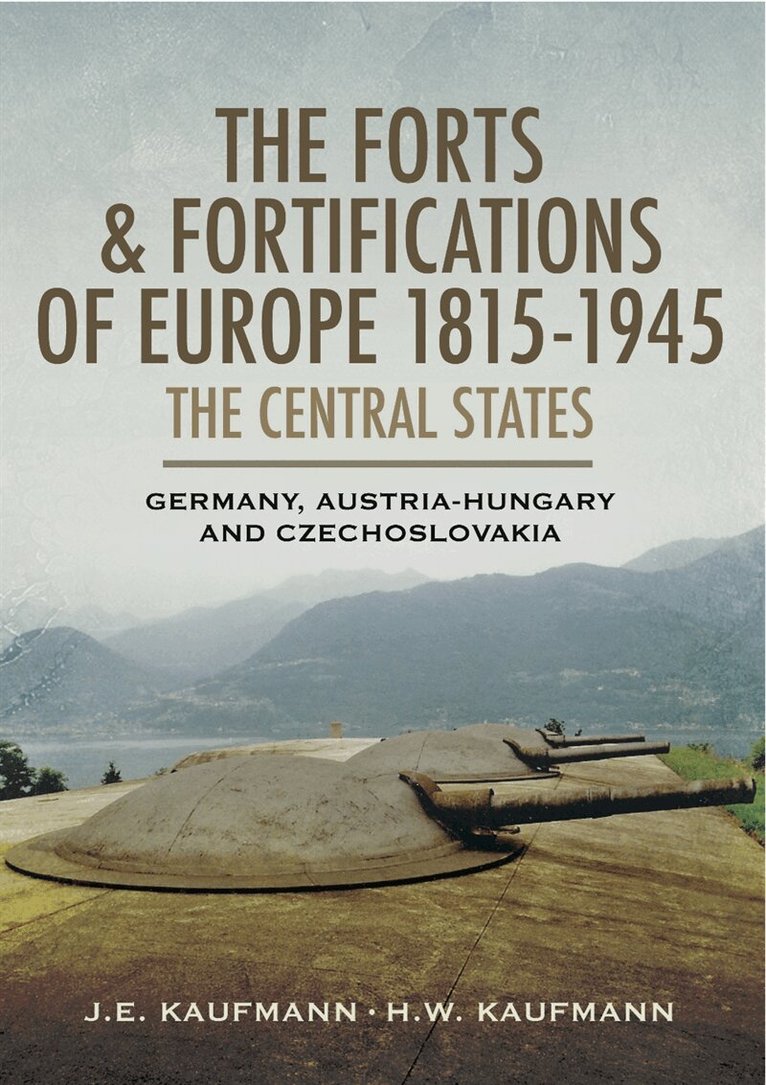
After the Napoleonic Wars the borders of Central Europe were redrawn and relative peace endured across the region, but the volatile politics of the late nineteenth century generated an atmosphere of fear and distrust, and it gave rise to a new era of fortress building, and this is the subject of this highly illustrated new study. The authors describe how defensive lines and structures on a massive scale were constructed along national frontiers to deter aggression. The Germans, Austro-Hungarians and Czechs all embarked on ambitious building programmes. Artillery positions, barbed-wire networks, casemates, concrete bunkers, trench lines, observation posts all sprang up in a vain attempt to keep the peace and to delay the invader. The strategic thinking that gave rise to these defensive schemes is described in detail in this study, as is the planning, design and construction of the lines themselves. Their operational history in wartime, in particular during the Second World War, is a key element of the account.
E-bok
Engelska, 2021123 kr
Läs direkt efter köp
After the Napoleonic Wars the borders of Europe were redrawn and relative peace endured across the region, but the volatile politics of the late nineteenth century generated an atmosphere of fear and distrust, and it gave rise to a new era of fortress building. In the neutral states situated between France and Germany - The Netherlands, Belgium and Switzerland - the need for extensive fixed defences was particularly urgent, and this is the subject of this highly illustrated new study. The strategic thinking that gave rise to these defensive schemes is described in detail, as is the planning, design and construction of the lines themselves. Their operational history in wartime, in particular during the Second World War, is a key element of this expert account.
E-bok
Engelska, 2021123 kr
Läs direkt efter köp
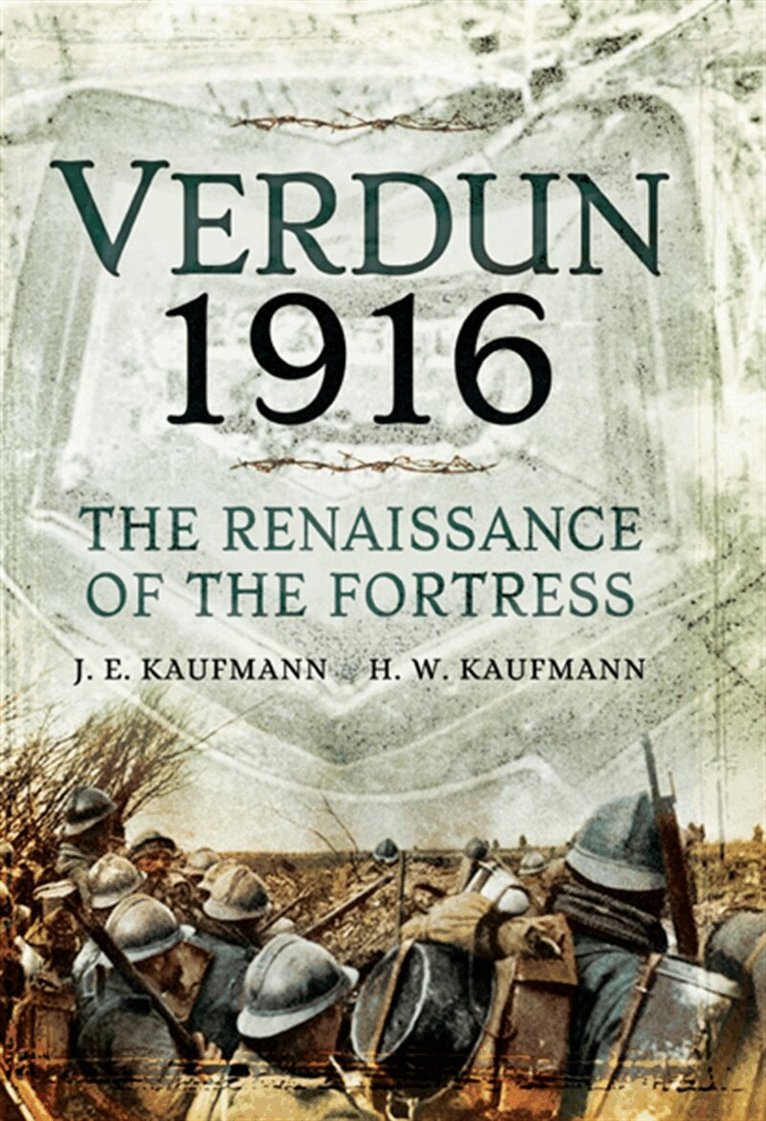
Wrapped in myth and distortion, the Battle of Verdun is one of the most enigmatic battles of the Great War, and the controversy continues a century later. Before the battle the Germans believed they had selected one of the strongest points in the French defences in the hope that, if they smashed through it, the French would collapse. But Verdun was actually a hollow shell since its forts were largely disarmed and the trench lines were incomplete. So why did the Germans fail to take Verdun?rnAs well as seeking to answer this fundamental question, the authors of this perceptive new study reconsider other key aspects of the battle – the German deployment of stormtroopers, the use of artillery and aircraft, how the French developed the idea of methodical battle which came to dominate their military thought after the war. They look too at how Verdun brought about a renaissance of fortress engineering that resulted in the creation of the Maginot Line and the other fortifications constructed in Europe before the Second World War.
Del 47 - Fortress
Fortifications of the Incas
1200–1531
E-bok
Engelska, 2012201 kr
Läs direkt efter köp
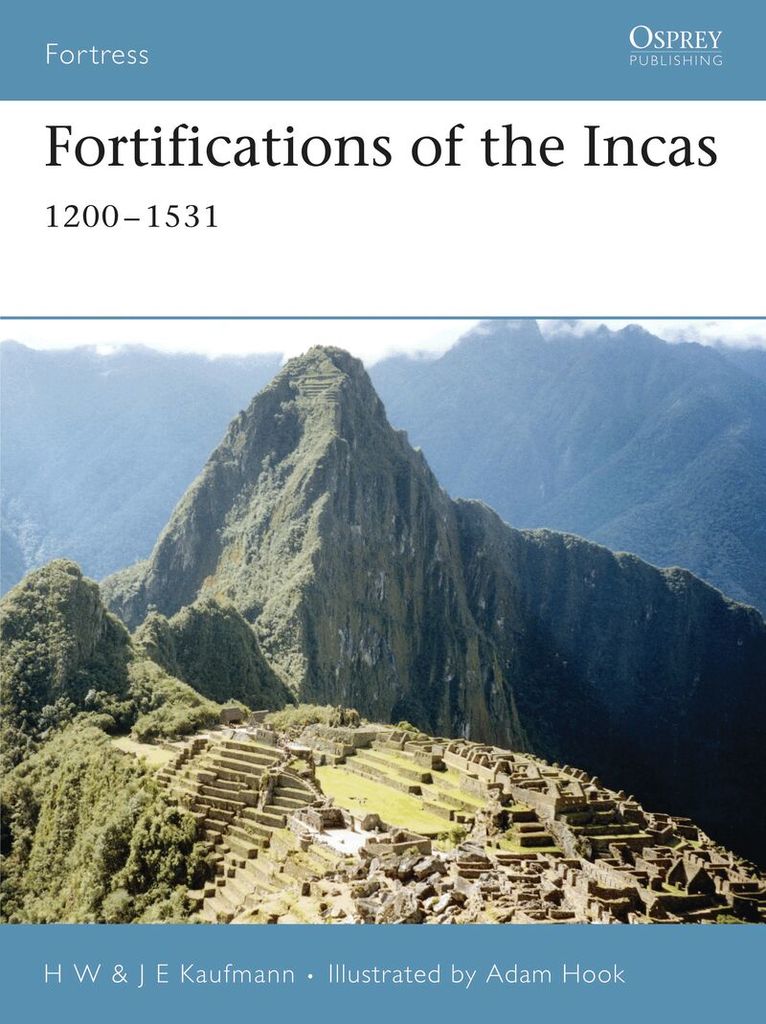
The greatest period of Inca expansion occurred during the reigns of Pachacuti (1438–71), Tupa Inca (1471–93), and Huayna Capac (1493–1527).From the mountain stronghold of Cuzco, they subjugated the surrounding kingdoms and territories, absorbing their civilizations and their peoples. By 1525, they dominated much of the west of the continent, relying on fortified strongholds, an extensive system of roads and bridges, and obligatory military service to control local populations.This illustrated volume takes a detailed look at the development of Incan fortification techniques, and examines how they came to be overrun by the Spanish conquistadors.
E-bok
Engelska, 2021123 kr
Läs direkt efter köp
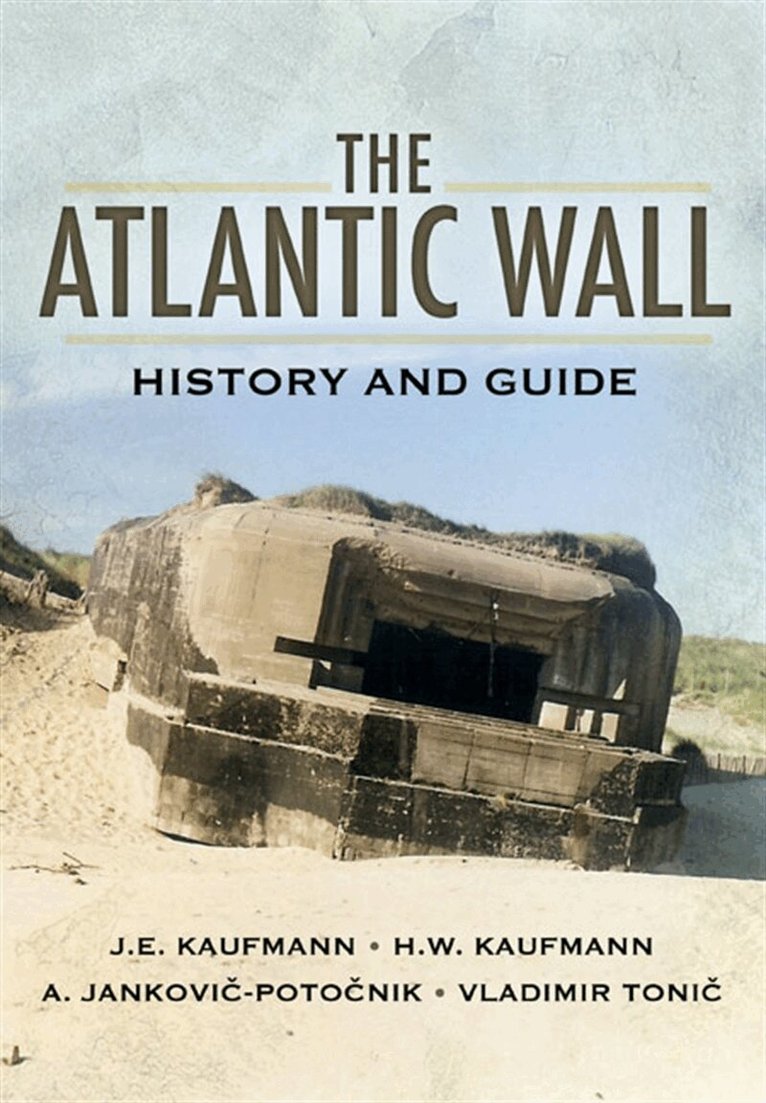
Hitler's Atlantic Wall, the complex system of coastal fortifications that stretched from Norway to the Spanish border during the Second World War, was built to defend occupied Europe from Allied invasion. Many of its principal structures survive and can be visited today, and this book is an authoritative guide to them. The wall, which was constructed on a massive scale between 1942 and 1944 by German engineers, forced laborers and troops, consisted of strong points, artillery casemates, bunkers, troop shelters, minefields, anti-tank and anti-boat obstacles. It also included the concrete U-boat and E-boat pens in the key ports and, behind the Channel coast, the V-weapon sites. This huge scheme of fortifications was one of the longest defensive lines in military history.This history and guide takes the reader - and visitor - through the entire story of the fortifications from the fall of France to the Allied breakthrough and the defeat of the German armies in Normandy. This narrative puts the extensive remains that can be seen today in a fascinating historical context. As a guide to some of the most impressive relics of the Second World War, this book will be essential reading and reference for any one who is interested in the history of fortifications, D-Day and the liberation of occupied Europe.
Del 47 - Fortress
Fortifications of the Incas
1200–1531
Häftad, Engelska, 2006
181 kr
Skickas inom 10-15 vardagar
The greatest period of Inca expansion occurred during the reigns of Pachacuti (1438–71), Tupa Inca (1471–93), and Huayna Capac (1493–1527).From the mountain stronghold of Cuzco, they subjugated the surrounding kingdoms and territories, absorbing their civilizations and their peoples. By 1525, they dominated much of the west of the continent, relying on fortified strongholds, an extensive system of roads and bridges, and obligatory military service to control local populations.This illustrated volume takes a detailed look at the development of Incan fortification techniques, and examines how they came to be overrun by the Spanish conquistadors.
Del 47 - Fortress
Fortifications of the Incas
1200–1531
E-bok
PDF, Engelska, 2012201 kr
Läs direkt efter köp
The greatest period of Inca expansion occurred during the reigns of Pachacuti (1438–71), Tupa Inca (1471–93), and Huayna Capac (1493–1527).From the mountain stronghold of Cuzco, they subjugated the surrounding kingdoms and territories, absorbing their civilizations and their peoples. By 1525, they dominated much of the west of the continent, relying on fortified strongholds, an extensive system of roads and bridges, and obligatory military service to control local populations.This illustrated volume takes a detailed look at the development of Incan fortification techniques, and examines how they came to be overrun by the Spanish conquistadors.