H. Wenzel – författare
Visar alla böcker från författaren H. Wenzel. Handla med fri frakt och snabb leverans.
4 produkter
4 produkter
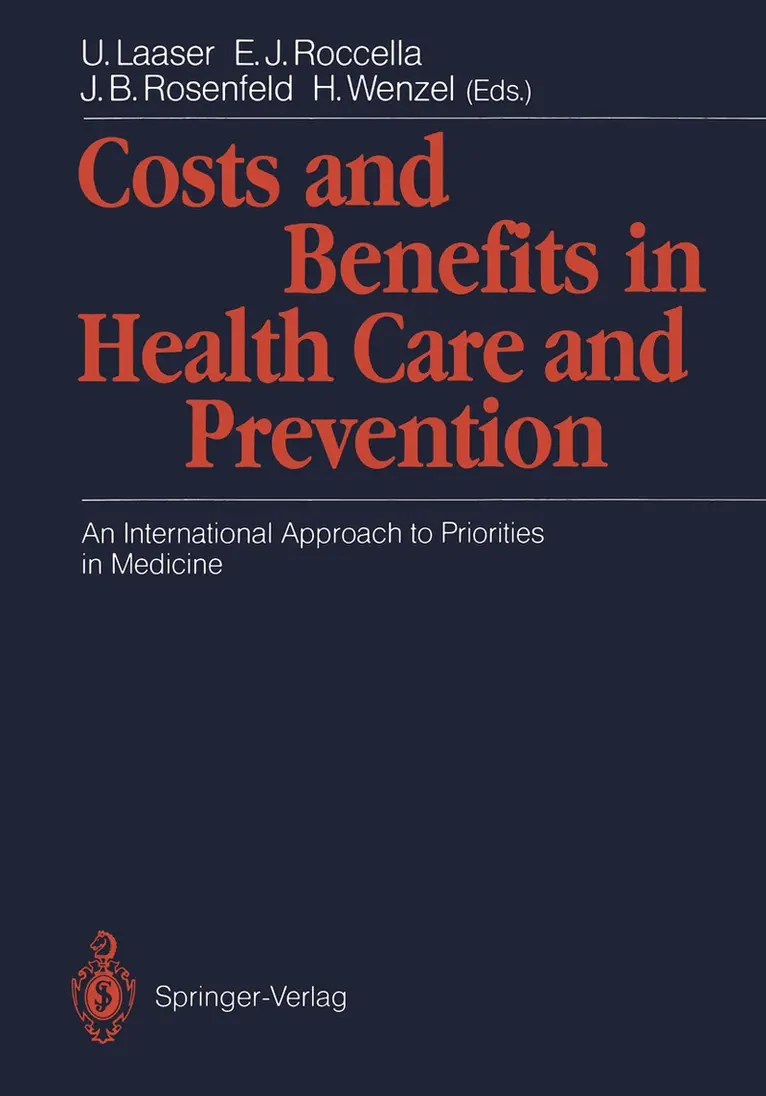
Costs and Benefits in Health Care and Prevention
An International Approach to Priorities in Medicine
Häftad, Engelska, 1990
1 098 kr
Skickas inom 10-15 vardagar
One of the main purposes of medical cost-benefit analysis is to define the rational priorities in health care. This book undertakes a cost benefit analysis of three countries: the United States, Germany and Israel. Cardiovascular disease is examined in order to provide a model case study, but other areas also provide examples. The contributors consider in particular two recent developments: the increase in comprehensive epidemiological data, especially with regard to risk factors; and improved methodology for measuring the quality of life.
Picturesque Pala:The Story of the Mission Chapel of San Antonio de Padua Connected with Mission San Luis Rey (Edition1)
Engelska, 2023
206 kr
Skickas inom 5-8 vardagar
Del 31 - Geotechnical, Geological and Earthquake Engineering
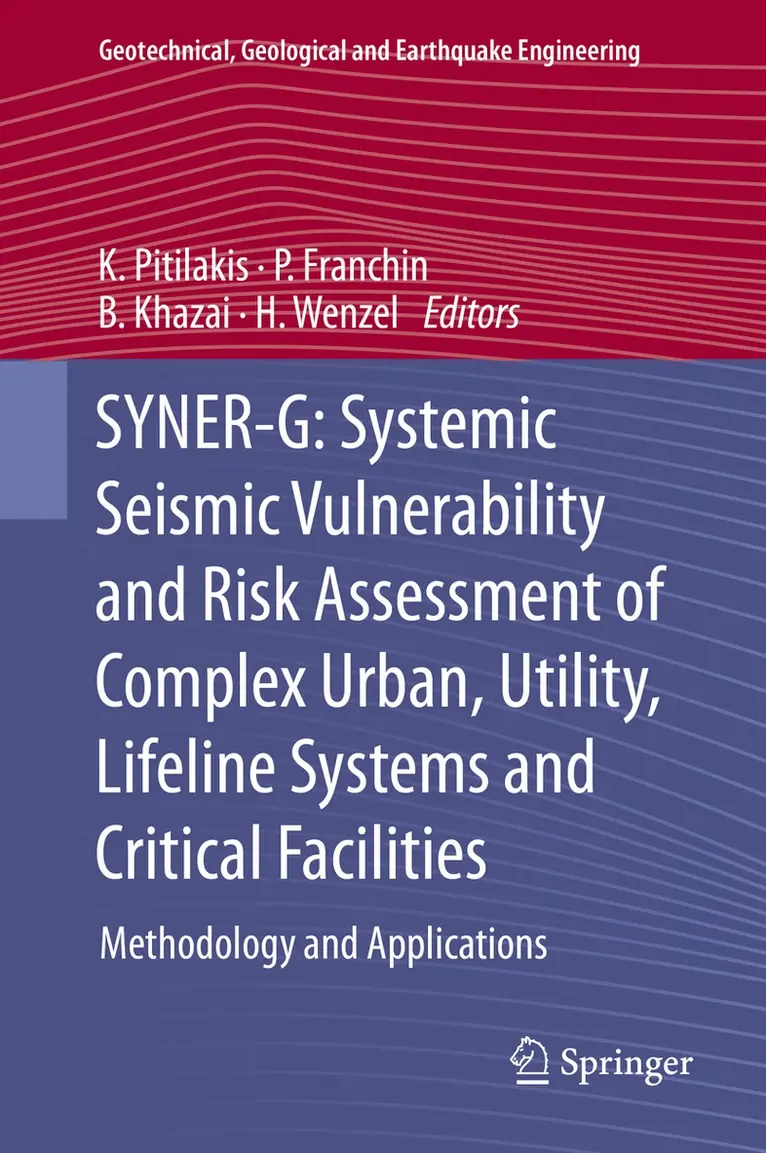
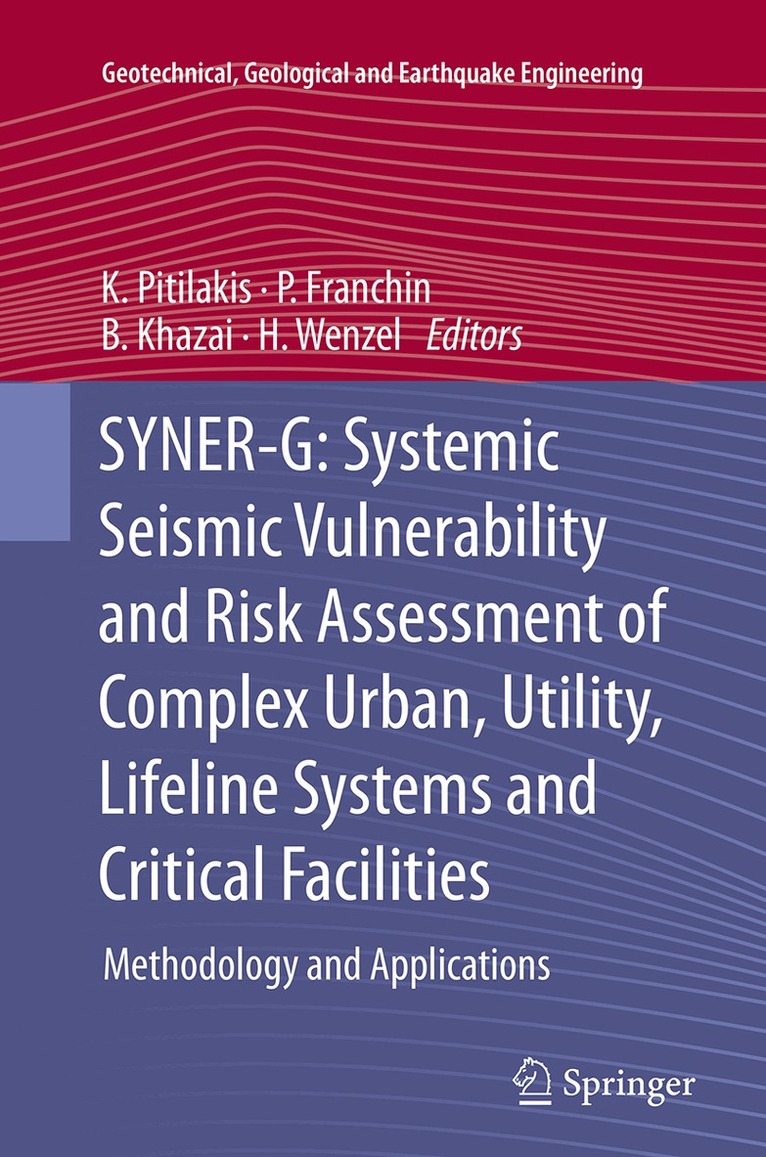
SYNER-G: Systemic Seismic Vulnerability and Risk Assessment of Complex Urban, Utility, Lifeline Systems and Critical Facilities
Methodology and Applications
Inbunden, Engelska, 2014
1 066 kr
Skickas inom 10-15 vardagar
SYNER-G, a multidisciplinary effort funded by the European Union, allowed the development of an innovative methodological framework for the assessment of physical as well as socio-economic seismic vulnerability and risk at urban and regional level. The results of SYNER-G are presented in two books both published by Springer, the present and a second one, entitled “SYNER-G: Typology Definition and Fragility Functions for Physical Elements at Seismic Risk: Buildings, Lifelines, Transportation Networks and Critical Facilities”(*), which provides a comprehensive state-of-the-art of the fragility curves, an alternative way to express physical vulnerability of elements at risk.In this second volume of SYNER-G, the focus has been on presenting a unified holistic methodology for assessing vulnerability at systems level considering interactions between elements at risk (physical and non-physical) and between different systems. The proposed methodology and tool encompasses in an integrated fashion all aspects in the chain, from hazard to the vulnerability assessment of components and systems and to the socio-economic impacts of an earthquake, accounting for most relevant uncertainties within an efficient quantitative simulation scheme. It systematically integrates the most advanced fragility functions to assess the vulnerability of physical assets for buildings, utility systems, transportation networks and complex infrastructures such as harbours and hospitals. The increasing impact due to interactions between different components and systems is treated in a comprehensive way, providing specifications for each network and infrastructure. The proposed socio-economic model integrates social vulnerability into the physical systems modelling approaches providing to decision makers with a dynamic platform to capture post disaster emergency issues like shelter demand and health impact decisions. Application examples at city and regional scale have provided thenecessary validation of the methodology and are also included in the book.The present volume, with its companion volume on fragility functions, represent a significant step forward in the seismic vulnerability and risk assessment of complex interacting urban and regional systems and infrastructures. These volumes are not only of interest to scientists and engineers but also to the insurance industry, decision makers and practitioners in the sector of civil protection and seismic risk management.(*) Pitilakis K, Crowley E, Kaynia A (eds) (2014) SYNER-G: Typology definition and fragility functions for physical elements at seismic risk, Series: Geotechnical, Geological and Earthquake Engineering 27, ISBN 978-94-007-7872-6, Springer Science+Business Media, Dordrecht.
Del 31 - Geotechnical, Geological and Earthquake Engineering
SYNER-G: Systemic Seismic Vulnerability and Risk Assessment of Complex Urban, Utility, Lifeline Systems and Critical Facilities
Methodology and Applications
Häftad, Engelska, 2016
1 066 kr
Skickas inom 10-15 vardagar
SYNER-G, a multidisciplinary effort funded by the European Union, allowed the development of an innovative methodological framework for the assessment of physical as well as socio-economic seismic vulnerability and risk at urban and regional level. The results of SYNER-G are presented in two books both published by Springer, the present and a second one, entitled “SYNER-G: Typology Definition and Fragility Functions for Physical Elements at Seismic Risk: Buildings, Lifelines, Transportation Networks and Critical Facilities”(*), which provides a comprehensive state-of-the-art of the fragility curves, an alternative way to express physical vulnerability of elements at risk.In this second volume of SYNER-G, the focus has been on presenting a unified holistic methodology for assessing vulnerability at systems level considering interactions between elements at risk (physical and non-physical) and between different systems. The proposed methodology and tool encompasses in an integrated fashion all aspects in the chain, from hazard to the vulnerability assessment of components and systems and to the socio-economic impacts of an earthquake, accounting for most relevant uncertainties within an efficient quantitative simulation scheme. It systematically integrates the most advanced fragility functions to assess the vulnerability of physical assets for buildings, utility systems, transportation networks and complex infrastructures such as harbours and hospitals. The increasing impact due to interactions between different components and systems is treated in a comprehensive way, providing specifications for each network and infrastructure. The proposed socio-economic model integrates social vulnerability into the physical systems modelling approaches providing to decision makers with a dynamic platform to capture post disaster emergency issues like shelter demand and health impact decisions. Application examples at city and regional scale have provided thenecessary validation of the methodology and are also included in the book.The present volume, with its companion volume on fragility functions, represent a significant step forward in the seismic vulnerability and risk assessment of complex interacting urban and regional systems and infrastructures. These volumes are not only of interest to scientists and engineers but also to the insurance industry, decision makers and practitioners in the sector of civil protection and seismic risk management.(*) Pitilakis K, Crowley E, Kaynia A (eds) (2014) SYNER-G: Typology definition and fragility functions for physical elements at seismic risk, Series: Geotechnical, Geological and Earthquake Engineering 27, ISBN 978-94-007-7872-6, Springer Science+Business Media, Dordrecht.