Haarmann Harald Haarmann – författare
Visar alla böcker från författaren Haarmann Harald Haarmann. Handla med fri frakt och snabb leverans.
9 produkter
Roots of Ancient Greek Civilization
The Influence of Old Europe
E-bok, 2014
382 kr
Lägg i varukorg
Contrary to a prevalent belief of the Western world, that democracy, agriculture, theater and the arts were the attainments of Classical Greek civilization, these were actually a Bronze Age fusion of earlier European concepts and Hellenic ingenuity. This work considers both the multicultural …
Modern Finland
E-bok, 2016
371 kr
Lägg i varukorg
Providing a multifaceted view of modern Finland, this book describes its history, culture, language, geography, natural history and the mythology of early peoples. Topics include Fenno-Scandia inhabitants and their environment, traditional naturalism and modern environmentalism, and the salient …
Advancement in Ancient Civilizations
Life, Culture, Science and Thought
E-bok, 2020
441 kr
Lägg i varukorg
Traditional scholarship on how ancient civilizations emerged is outmoded and new insights call for revision. According to the well-established paradigm, Mesopotamia is considered the cradle of civilization. Following the cliche of ex oriente lux ("light from the East") all major achievements of …
Plato's ideal of the Common Good
Anatomy of a concept of timeless significance
E-bok, 2017
547 kr
Lägg i varukorg
Plato's ideal of the Common Good
Anatomy of a concept of timeless significance
E-bok, 2017
547 kr
Lägg i varukorg
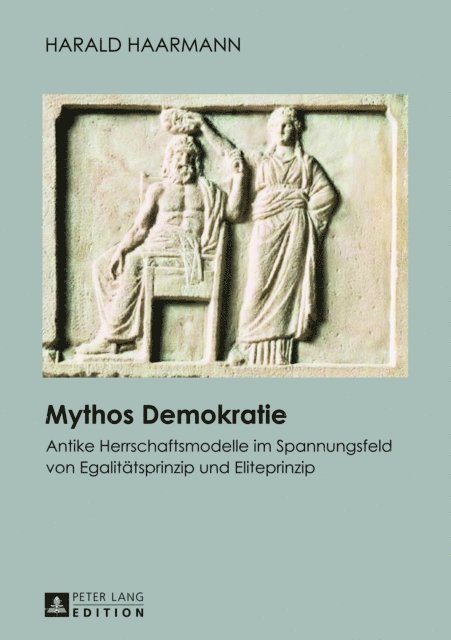
Mythos Demokratie
Antike Herrschaftsmodelle im Spannungsfeld von Egalitaetsprinzip und Eliteprinzip
E-bok, 2013
604 kr
Lägg i varukorg
In Memoriam Friedrich Diez: Akten des Kolloquiums zum Wissenschaftsgeschichte der Romanistik/Actes du Colloque sur l'Histoire des Etudes Romanes/ Proc
Av Haarmann Harald Haarmann, Niederehe Hans-Josef Niederehe
E-bok, 1976
1981 kr
Lägg i varukorg
The first ''Kolloquium zur Wissenschaftsgeschichte der Romanistik'' (Trier 1975) was held to commemorate the hundredth anniversary of the death of Friedrich Diez, the founder of Romance philology. The colloquium offered Romanists and historians of linguistics the opportunity for intense discussion, …