Hafiz Md. Hasan Babu – författare
1 913 kr
Skickas inom 5-8 vardagar
397 kr
Skickas inom 5-8 vardagar
1 913 kr
Skickas inom 5-8 vardagar
410 kr
Skickas inom 5-8 vardagar
908 kr
Läs direkt efter köp
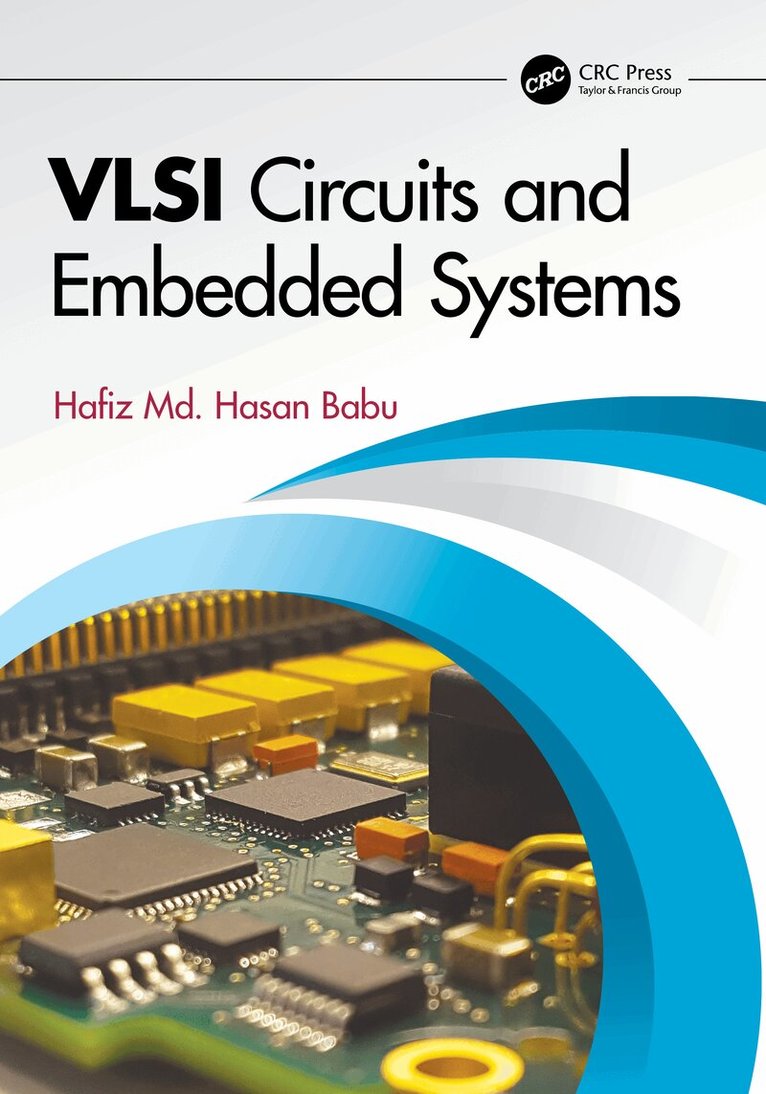
Very Large-Scale Integration (VLSI) creates an integrated circuit (IC) by combining thousands of transistors into a single chip. While designing a circuit, reduction of power consumption is a great challenge. VLSI designs reduce the size of circuits which eventually reduces the power consumption of the devices. However, it increases the complexity of the digital system. Therefore, computer-aided design tools are introduced into hardware design processes.
Unlike the general-purpose computer, an embedded system is engineered to manage a wide range of processing tasks. Single or multiple processing cores manage embedded systems in the form of microcontrollers, digital signal processors, field-programmable gate arrays, and application-specific integrated circuits. Security threats have become a significant issue since most embedded systems lack security even more than personal computers. Many embedded systems hacking tools are readily available on the internet. Hacking in the PDAs and modems is a pervasive example of embedded systems hacking.
This book explores the designs of VLSI circuits and embedded systems. These two vast topics are divided into four parts. In the book''s first part, the Decision Diagrams (DD) have been covered. DDs have extensively used Computer-Aided Design (CAD) software to synthesize circuits and formal verification. The book''s second part mainly covers the design architectures of Multiple-Valued Logic (MVL) Circuits. MVL circuits offer several potential opportunities to improve present VLSI circuit designs. The book''s third part deals with Programmable Logic Devices (PLD). PLDs can be programmed to incorporate a complex logic function within a single IC for VLSI circuits and Embedded Systems. The fourth part of the book concentrates on the design architectures of Complex Digital Circuits of Embedded Systems. As a whole, from this book, core researchers, academicians, and students will get the complete picture of VLSI Circuits and Embedded Systems and their applications.
908 kr
Läs direkt efter köp
Very Large-Scale Integration (VLSI) creates an integrated circuit (IC) by combining thousands of transistors into a single chip. While designing a circuit, reduction of power consumption is a great challenge. VLSI designs reduce the size of circuits which eventually reduces the power consumption of the devices. However, it increases the complexity of the digital system. Therefore, computer-aided design tools are introduced into hardware design processes.
Unlike the general-purpose computer, an embedded system is engineered to manage a wide range of processing tasks. Single or multiple processing cores manage embedded systems in the form of microcontrollers, digital signal processors, field-programmable gate arrays, and application-specific integrated circuits. Security threats have become a significant issue since most embedded systems lack security even more than personal computers. Many embedded systems hacking tools are readily available on the internet. Hacking in the PDAs and modems is a pervasive example of embedded systems hacking.
This book explores the designs of VLSI circuits and embedded systems. These two vast topics are divided into four parts. In the book''s first part, the Decision Diagrams (DD) have been covered. DDs have extensively used Computer-Aided Design (CAD) software to synthesize circuits and formal verification. The book''s second part mainly covers the design architectures of Multiple-Valued Logic (MVL) Circuits. MVL circuits offer several potential opportunities to improve present VLSI circuit designs. The book''s third part deals with Programmable Logic Devices (PLD). PLDs can be programmed to incorporate a complex logic function within a single IC for VLSI circuits and Embedded Systems. The fourth part of the book concentrates on the design architectures of Complex Digital Circuits of Embedded Systems. As a whole, from this book, core researchers, academicians, and students will get the complete picture of VLSI Circuits and Embedded Systems and their applications.
874 kr
Läs direkt efter köp
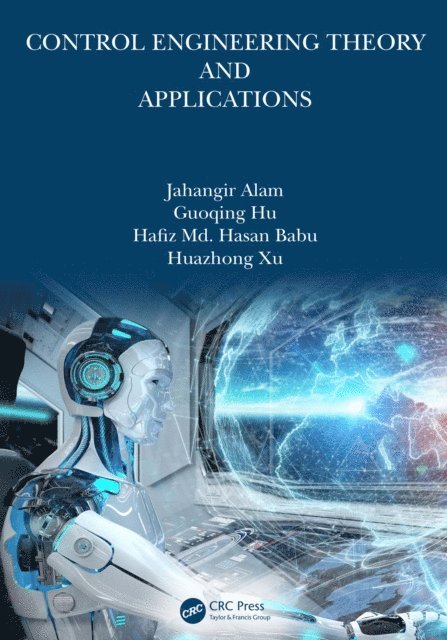
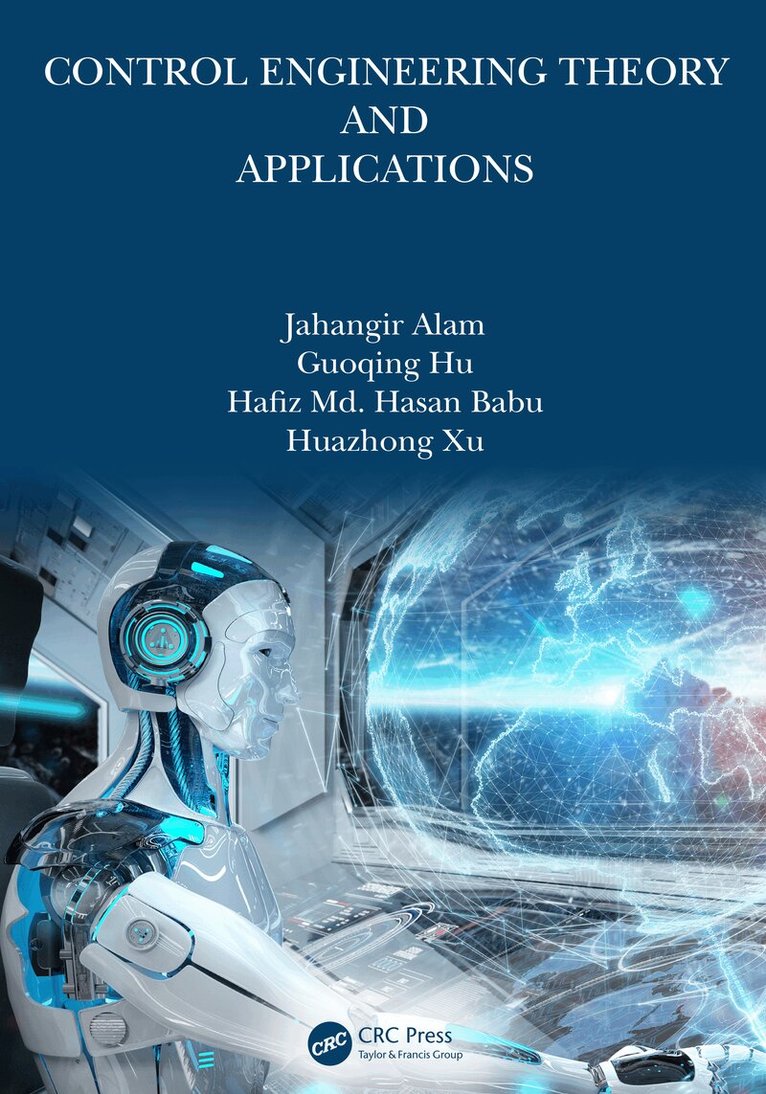
The book provides general knowledge of automatic control engineering and its applications.
Providing an overview of control theory and systems, the chapters introduce transfer functions, modeling of control systems, automatic control systems, block diagrams, and signal flow graphs. While control system analysis and design are accompanied by root-locus methods and frequency response analyses, distributed control systems, nonlinarity in control systems including Z-transformation are also presented.
With straightforward demonstrations, examples, and multiple-choice questions, this book can be used as a reference textbook for electrical and electronics engineering, computer control engineering, automation engineering, mechatronics engineering, mechanics, robotics, AI control systems, hydraulics, process engineering, safety control engineering, aeronautical and aerospace engineering, auto-pilot system, decision-making system, and stock exchange, and will be suitable for majors, non-majors, and experts in the field of science and technology.
874 kr
Läs direkt efter köp
The book provides general knowledge of automatic control engineering and its applications.
Providing an overview of control theory and systems, the chapters introduce transfer functions, modeling of control systems, automatic control systems, block diagrams, and signal flow graphs. While control system analysis and design are accompanied by root-locus methods and frequency response analyses, distributed control systems, nonlinarity in control systems including Z-transformation are also presented.
With straightforward demonstrations, examples, and multiple-choice questions, this book can be used as a reference textbook for electrical and electronics engineering, computer control engineering, automation engineering, mechatronics engineering, mechanics, robotics, AI control systems, hydraulics, process engineering, safety control engineering, aeronautical and aerospace engineering, auto-pilot system, decision-making system, and stock exchange, and will be suitable for majors, non-majors, and experts in the field of science and technology.
807 kr
Läs direkt efter köp
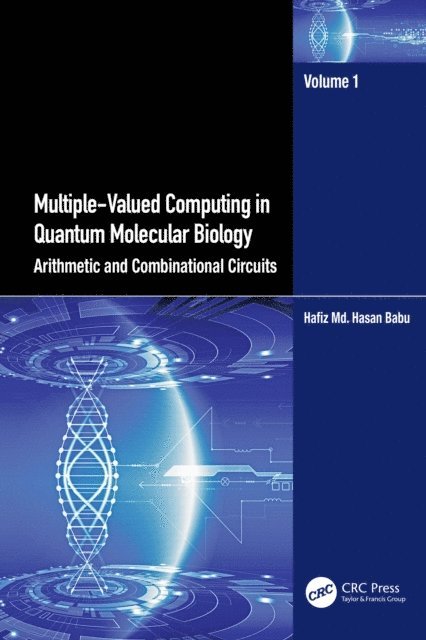
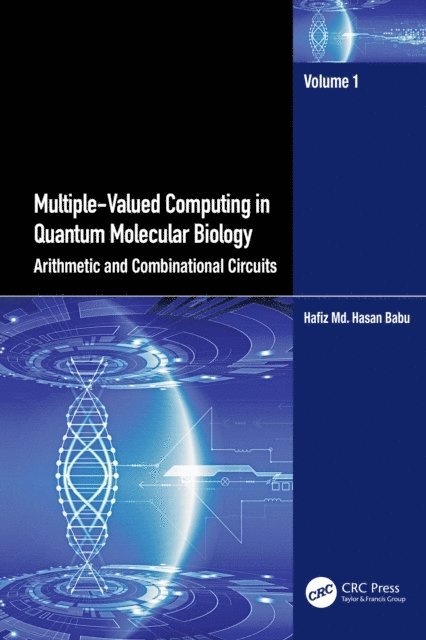
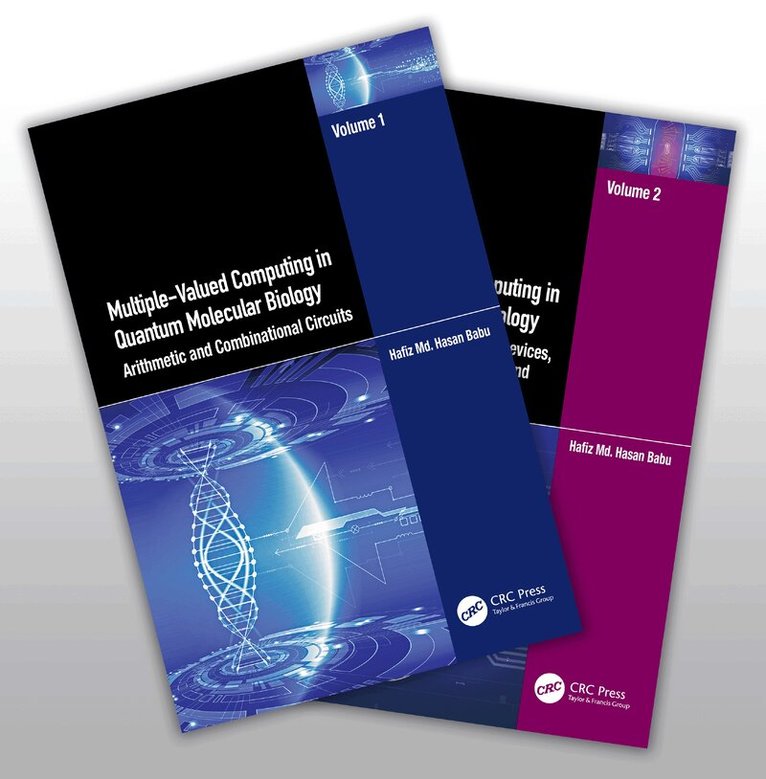
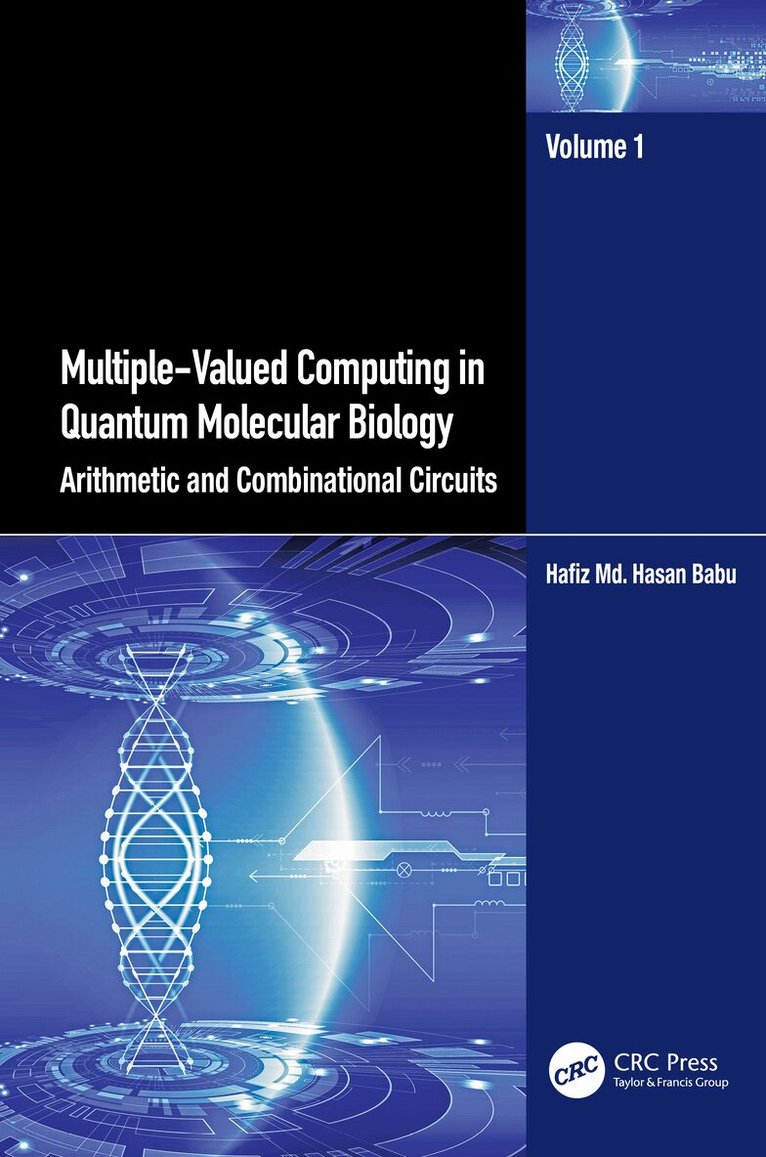
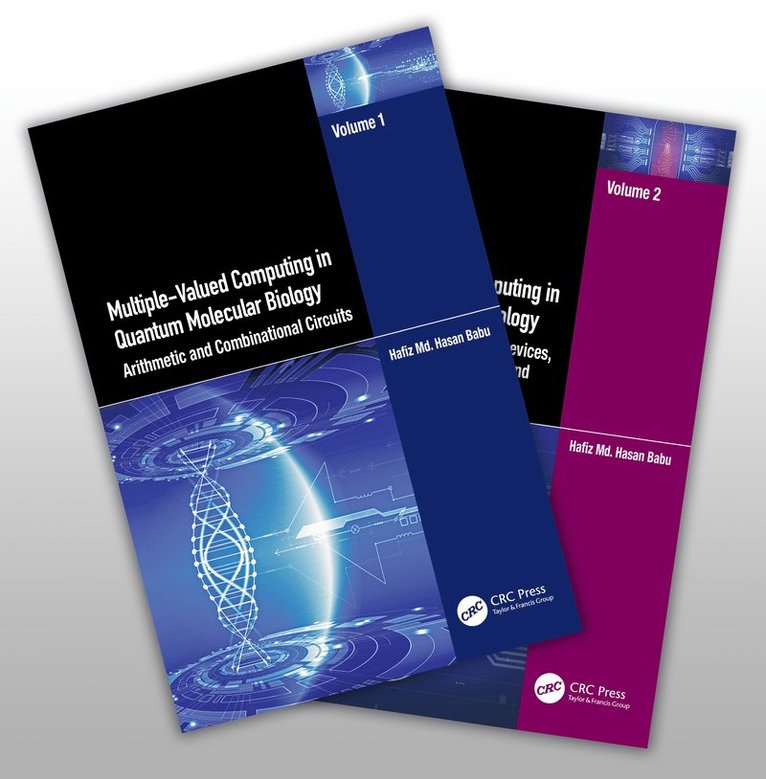
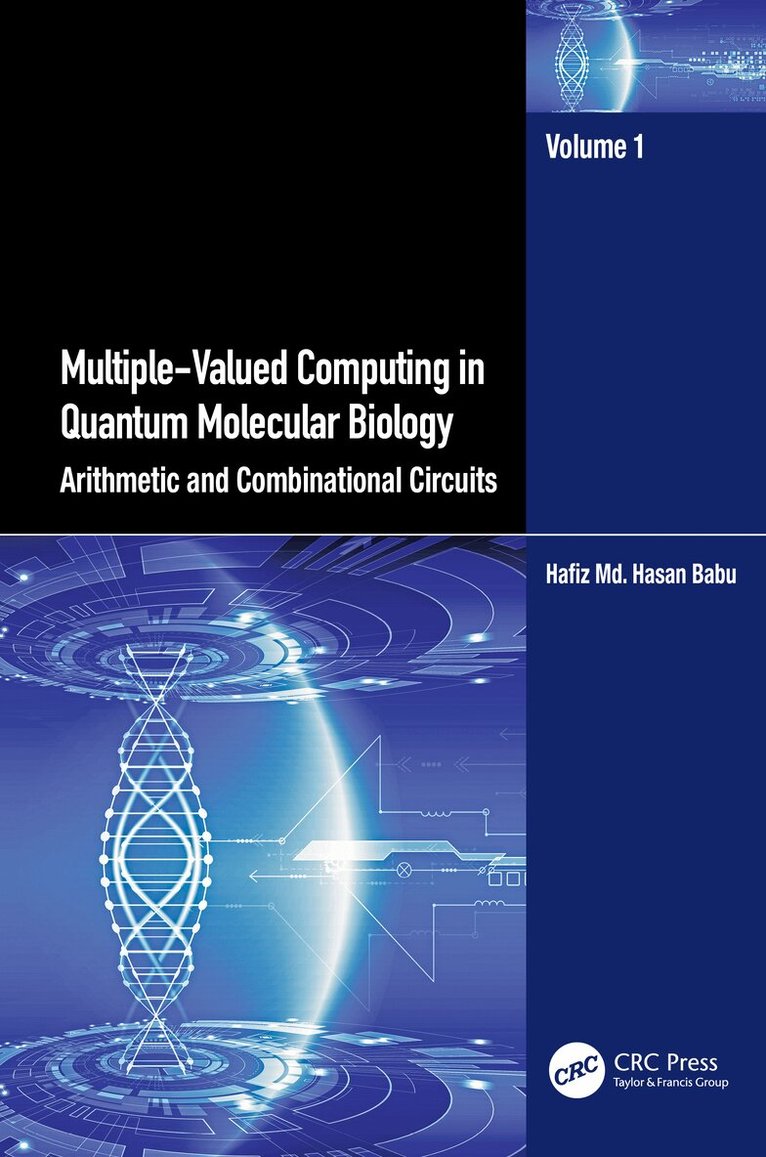
This book focuses on the design methodologies of various quantum circuits, DNA circuits, DNA-quantum circuits and quantum-DNA circuits. It considers the merits and challenges of multivalued logic circuits in quantum, DNA, quantum-DNA and DNA-quantum computing. Multiple-Valued Computing in Quantum Molecular Biology: Arithmetic and Combinational Circuits is Volume 1 of a two-volume set.
From fundamentals to advanced levels, this book discusses different multiple-valued logic DNA-quantum and quantum-DNA circuits. The text consists of four parts. Part I introduces multiple-valued quantum computing and DNA computing. It contains the basic understanding of multiple-valued quantum computing, multiple-valued DNA computing, multiple-valued quantum-DNA computing and multiple-valued DNA-quantum computing. Part II examines heat calculation, speed calculation, heat transfer, data conversion and data management in multi-valued quantum, DNA, quantum-DNA and DNA-quantum computing. Part III discusses multiple-valued logic operations in quantum and DNA computing such as ternary AND, NAND, OR, NOR, XOR, XNOR and multiple-valued arithmetic operations such as adder, multiplier, divider and more. Quantum-DNA and DNA-quantum multiple-valued arithmetic operations are also explained in this section. Part IV explains multiple-valued quantum and DNA combinational circuits such as multiple-valued DNA-quantum and quantum-DNA multiplexer, demultiplexer, encoder and decoder.
This book will be of great help to researchers and students in quantum computing, DNA computing, quantum-DNA computing and DNA-quantum computing researchers.
807 kr
Läs direkt efter köp
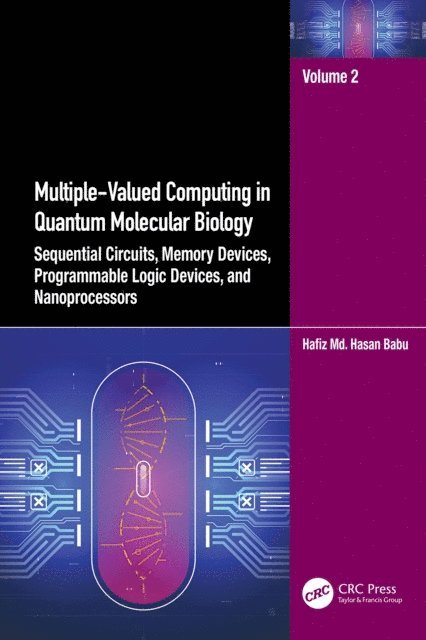
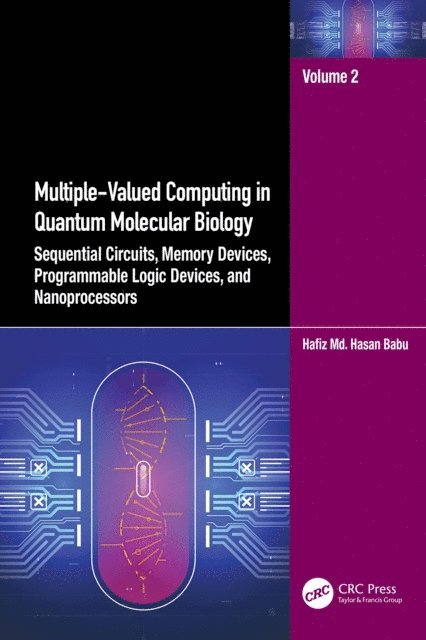
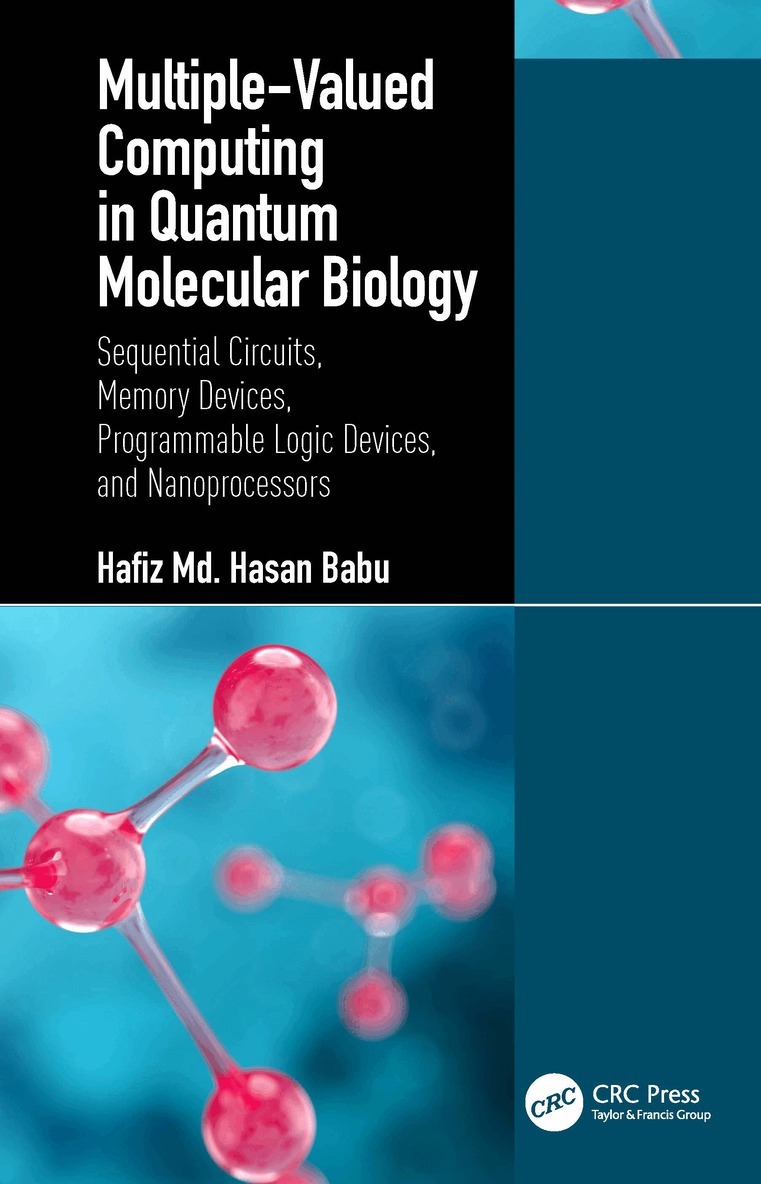
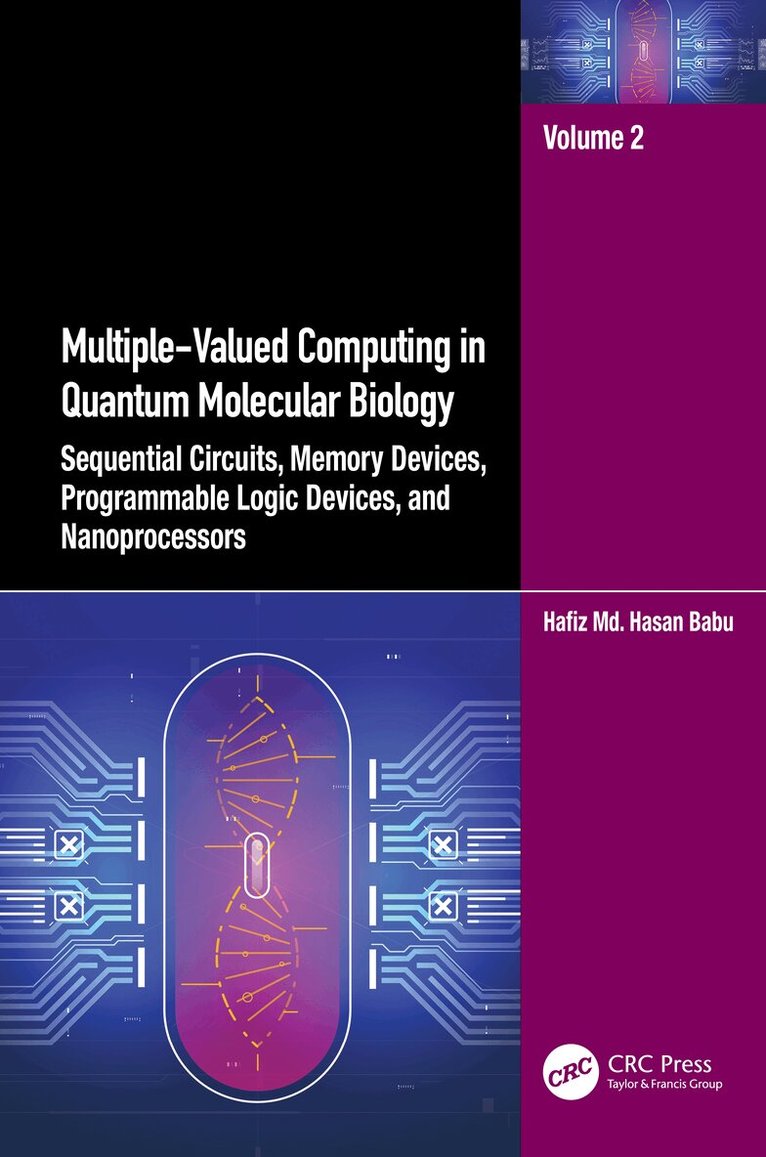
This book mainly focuses on the design methodologies of various quantum circuits, DNA circuits, DNA-quantum circuits, and quantum-DNA circuits. In this text, the author has compiled various design aspects of multiple-valued logic DNA-quantum and quantum-DNA sequential circuits, memory devices, programmable logic devices, and nanoprocessors. Multiple-Valued Computing in Quantum Molecular Biology: Sequential Circuits, Memory Devices, Programmable Logic Devices, and Nanoprocessors is Volume 2 of a two-volume set, and consists of four parts.
This book presents various design aspects of multiple-valued logic DNA-quantum and quantum-DNA sequential circuits, memory devices, programmable logic devices, and nanoprocessors. Part I discusses multiple-valued quantum and DNA sequential circuits such as D flip-flop, SR latch, SR flip-flop, JK flip-flop, T flip-flop, shift register, ripple counter, and synchronous counter, which are described, respectively, with the applications and working procedures. After that, multiple-valued quantum-DNA and DNA-quantum sequential circuits such as D flip-flop, SR flip-flop, JK flip-flop, T flip-flop, shift register, ripple counter and synchronous counter circuits are explained with working procedures and architecture. Part II discusses the architecture and design procedure of memory devices such as random access memory (RAM), read-only memory (ROM), programmable read-only memory (PROM), and cache memory, which are sequentially described in multiple-valued quantum, DNA, quantum-DNA, and DNA-quantum computing. In Part III, the author examines the architectures and working principles of programmable logic devices such as programmable logic array (PLA), programmable array logic (PAL), field programmable gate array (FPGA), and complex programmable logic device (CPLD) in multiple-valued quantum, DNA, quantum-DNA, and DNA-quantum computing. Multiple-valued quantum, DNA, quantum-DNA, and DNA-quantum nanoprocessors are designed with algorithms in Part IV. Furthermore, the basic components of ternary nanoprocessors such as T-RAM, ternary instruction register, ternary incrementor circuit, ternary decoder, ternary multiplexer, ternary accumulator in quantum, DNA, quantum-DNA, and DNA-quantum computing are also explained in detail.
This book will be of great help to researchers and students in quantum computing, DNA computing, quantum-DNA computing, and DNA-quantum computing.

807 kr
Läs direkt efter köp
This book focuses on the design methodologies of various quantum circuits, DNA circuits, DNA-quantum circuits and quantum-DNA circuits. It considers the merits and challenges of multivalued logic circuits in quantum, DNA, quantum-DNA and DNA-quantum computing. Multiple-Valued Computing in Quantum Molecular Biology: Arithmetic and Combinational Circuits is Volume 1 of a two-volume set.
From fundamentals to advanced levels, this book discusses different multiple-valued logic DNA-quantum and quantum-DNA circuits. The text consists of four parts. Part I introduces multiple-valued quantum computing and DNA computing. It contains the basic understanding of multiple-valued quantum computing, multiple-valued DNA computing, multiple-valued quantum-DNA computing and multiple-valued DNA-quantum computing. Part II examines heat calculation, speed calculation, heat transfer, data conversion and data management in multi-valued quantum, DNA, quantum-DNA and DNA-quantum computing. Part III discusses multiple-valued logic operations in quantum and DNA computing such as ternary AND, NAND, OR, NOR, XOR, XNOR and multiple-valued arithmetic operations such as adder, multiplier, divider and more. Quantum-DNA and DNA-quantum multiple-valued arithmetic operations are also explained in this section. Part IV explains multiple-valued quantum and DNA combinational circuits such as multiple-valued DNA-quantum and quantum-DNA multiplexer, demultiplexer, encoder and decoder.
This book will be of great help to researchers and students in quantum computing, DNA computing, quantum-DNA computing and DNA-quantum computing researchers.
779 kr
Läs direkt efter köp
This book mainly focuses on the design methodologies of various quantum circuits, DNA circuits, DNA-quantum circuits, and quantum-DNA circuits. In this text, the author has compiled various design aspects of multiple-valued logic DNA-quantum and quantum-DNA sequential circuits, memory devices, programmable logic devices, and nanoprocessors. Multiple-Valued Computing in Quantum Molecular Biology: Sequential Circuits, Memory Devices, Programmable Logic Devices, and Nanoprocessors is Volume 2 of a two-volume set, and consists of four parts.
This book presents various design aspects of multiple-valued logic DNA-quantum and quantum-DNA sequential circuits, memory devices, programmable logic devices, and nanoprocessors. Part I discusses multiple-valued quantum and DNA sequential circuits such as D flip-flop, SR latch, SR flip-flop, JK flip-flop, T flip-flop, shift register, ripple counter, and synchronous counter, which are described, respectively, with the applications and working procedures. After that, multiple-valued quantum-DNA and DNA-quantum sequential circuits such as D flip-flop, SR flip-flop, JK flip-flop, T flip-flop, shift register, ripple counter and synchronous counter circuits are explained with working procedures and architecture. Part II discusses the architecture and design procedure of memory devices such as random access memory (RAM), read-only memory (ROM), programmable read-only memory (PROM), and cache memory, which are sequentially described in multiple-valued quantum, DNA, quantum-DNA, and DNA-quantum computing. In Part III, the author examines the architectures and working principles of programmable logic devices such as programmable logic array (PLA), programmable array logic (PAL), field programmable gate array (FPGA), and complex programmable logic device (CPLD) in multiple-valued quantum, DNA, quantum-DNA, and DNA-quantum computing. Multiple-valued quantum, DNA, quantum-DNA, and DNA-quantum nanoprocessors are designed with algorithms in Part IV. Furthermore, the basic components of ternary nanoprocessors such as T-RAM, ternary instruction register, ternary incrementor circuit, ternary decoder, ternary multiplexer, ternary accumulator in quantum, DNA, quantum-DNA, and DNA-quantum computing are also explained in detail.
This book will be of great help to researchers and students in quantum computing, DNA computing, quantum-DNA computing, and DNA-quantum computing.
1 771 kr
Skickas inom 10-15 vardagar
812 kr
Skickas inom 10-15 vardagar
1 771 kr
Skickas inom 10-15 vardagar
783 kr
Skickas inom 10-15 vardagar
6 001 kr
Skickas inom 10-15 vardagar
2 661 kr
Skickas inom 10-15 vardagar
2 661 kr
Skickas inom 10-15 vardagar
1 606 kr
Skickas inom 10-15 vardagar
713 kr
Skickas inom 10-15 vardagar
713 kr
Skickas inom 10-15 vardagar
1 400 kr
Skickas inom 3-6 vardagar
1 067 kr
Kommande
1 427 kr
Kommande
1 191 kr
Skickas inom 5-8 vardagar
1 582 kr
Läs direkt efter köp
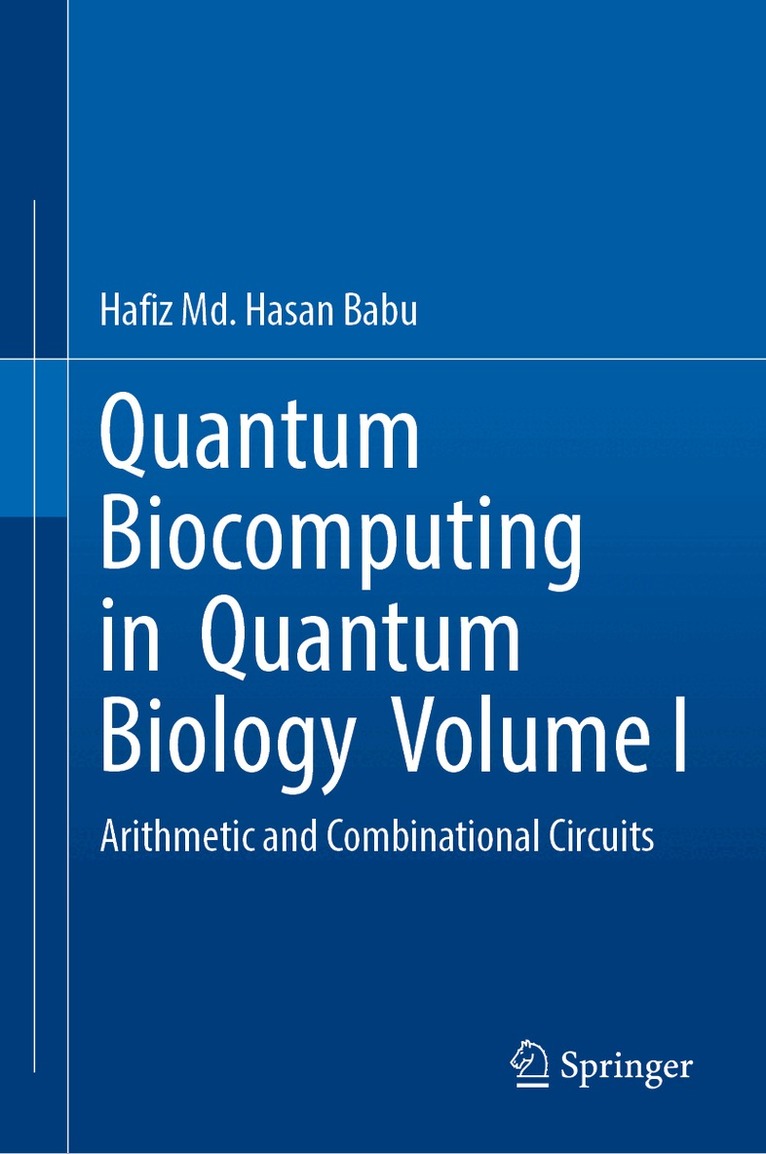
The book starts with the basics of Quantum Computing, Biocomputing, Quantum Biology, Quantum-DNA Computing, and DNA-Quantum Computing. It also discusses the fundamental operations in quantum computing and Biocomputing. Different types of quantum arithmetic circuits, quantum-DNA arithmetic circuits and DNA-quantum arithmetic circuits such as basic and universal gate operations, half-adder, full-adder, half subtractor, full subtractor, N-qubit adders, multipliers, dividers, etc., are explained clearly. Nuclear Magnetic Resonance (NMR), NMR relaxation, quantum cache memory, heat conduction circuit, and trap ion are also discussed. The readers can get a clear idea about different types of quantum, quantum-DNA and DNA-quantum circuits such as arithmetic, combinational, sequential, memory devices, programmable logic devices, nano-processors and will be able to design their own circuits. Then, it discusses Heat Measurement, Speed Calculation, Heat Transfer, Data Conversion, and Data Management in Quantum Computing and Quantum Biocomputing (Quantum-DNA Computing and DNA-Quantum Computing). As a whole, this book is a great resource for quantum, quantum-DNA and DNA-Quantum Computing, it is the book where computing in quantum biology is introduced for the quantum biology researchers, students, and academicians. This is a novel approach to writing a book in this field. This book quenches the thirst of beginners to advanced-level readers.
761 kr
Skickas inom 5-8 vardagar
930 kr
Läs direkt efter köp
The book starts with the basics of Quantum Computing, Biocomputing, Quantum Biology, Quantum-DNA Computing, and DNA-Quantum Computing. It also discusses the fundamental operations in quantum computing and Biocomputing. Different types of quantum arithmetic circuits, quantum-DNA arithmetic circuits and DNA-quantum arithmetic circuits such as basic and universal gate operations, half-adder, full-adder, half subtractor, full subtractor, N-qubit adders, multipliers, dividers, etc., are explained clearly. Nuclear Magnetic Resonance (NMR), NMR relaxation, quantum cache memory, heat conduction circuit, and trap ion are also discussed. The readers can get a clear idea about different types of quantum, quantum-DNA and DNA-quantum circuits such as arithmetic, combinational, sequential, memory devices, programmable logic devices, nano-processors and will be able to design their own circuits. Then, it discusses Heat Measurement, Speed Calculation, Heat Transfer, Data Conversion, and Data Management in Quantum Computing and Quantum Biocomputing (Quantum-DNA Computing and DNA-Quantum Computing). As a whole, this book is a great resource for quantum, quantum-DNA and DNA-Quantum Computing, it is the book where computing in quantum biology is introduced for the quantum biology researchers, students, and academicians. This is a novel approach to writing a book in this field. This book quenches the thirst of beginners to advanced-level readers.