Hamed Mirzaei – författare
Visar alla böcker från författaren Hamed Mirzaei. Handla med fri frakt och snabb leverans.
4 produkter
4 produkter
Häftad, Engelska, 2023
1 468 kr
Skickas inom 10-15 vardagar
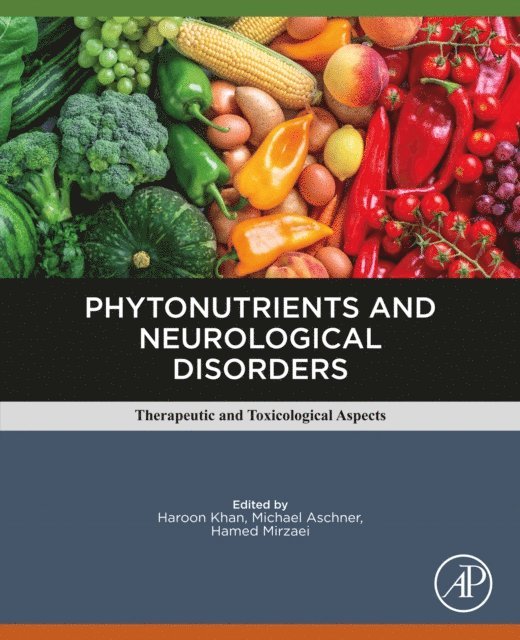
Phytonutrients and Neurological Disorders: Therapeutic and Toxicological Aspects provides and assesses the latest research and developments surrounding the use of phytonutrients for the treatment of neurological disorders. The volume analyzes advances in phytonutrient isolation, characterization and therapeutic applications, giving particular emphasis to mechanisms and safety profiles. The book takes toxicological considerations into account, including adverse drug reactions, toxicokinetics and toxicodynamics. Sections cover bioactive compound classes and biosynthesis pathways, general considerations, including quality control, standardization, and technology, and toxicology. This title is a comprehensive work on the latest research in phytonutrients and neurological disorders that will be useful to researchers and medical practitioners. Presents a comprehensive resource on phytonutrients and their relationship to neurological disorders Analyzes the isolation, characterization and mechanisms of phytonutrients in neurology Focuses on various signaling pathways followed by phytonutrients in neuroprotection Gives the latest thinking on quality control parameters and specifications for phytonutrient study Considers the toxicology of phytonutrients, including adverse drug reactions, toxicokinetics and toxicodynamics
2 087 kr
Läs direkt efter köp
Phytonutrients and Neurological Disorders: Therapeutic and Toxicological Aspects provides and assesses the latest research and developments surrounding the use of phytonutrients for the treatment of neurological disorders. The volume analyzes advances in phytonutrient isolation, characterization and therapeutic applications, giving particular emphasis to mechanisms and safety profiles. The book takes toxicological considerations into account, including adverse drug reactions, toxicokinetics and toxicodynamics. Sections cover bioactive compound classes and biosynthesis pathways, general considerations, including quality control, standardization, and technology, and toxicology. This title is a comprehensive work on the latest research in phytonutrients and neurological disorders that will be useful to researchers and medical practitioners.- Presents a comprehensive resource on phytonutrients and their relationship to neurological disorders- Analyzes the isolation, characterization and mechanisms of phytonutrients in neurology- Focuses on various signaling pathways followed by phytonutrients in neuroprotection- Gives the latest thinking on quality control parameters and specifications for phytonutrient study- Considers the toxicology of phytonutrients, including adverse drug reactions, toxicokinetics and toxicodynamics
Häftad, Engelska, 2022
734 kr
Skickas inom 10-15 vardagar
MicroRNAs (miRNAs) are a member of the family of non-coding RNA molecules, and consist of small conserved sequences between 19–25 nucleotides in length that are responsible for regulating many cellular functions by affecting a wide range of messenger RNAs in a sequence specific manner. Fundamental biological processes like cell proliferation and growth, stress resistance, tumorigenesis, fat metabolism, and neural development have all been shown to be governed by miRNAs. miRNAs carry out the post-transcriptional silencing of gene expression via targeting the 30-untranslated region (UTR) of the complementary mRNA sequence. The dysregulation of the expression levels of various miRNAs is typical of tumor cells, and has been associated with tumor progression and poor prognosis. Many miRNAs are up-regulated in cancer, where they can silence tumor suppressor genes such as apoptosis and immune response associated genes. Therefore, it is possible to profile the expression levels of miRNAs as biomarkers, in order to diagnose cancer and noncancerous diseases. Moreover, cancer detection in the early stages is crucial in clinical situations. Characterization of miRNAs in serum, plasma, and other bodily fluids, and understanding their stability against RNase degradation, is important to assess their suitability as biomarkers and diagnostic tools. Exosomes play an important role in inter-cellular communications, and these nanosized particles have various functions in diverse physiological pathways, in normal as well as abnormal cells. Exosomes can carry diverse cargos such as mRNAs, miRNAs, and proteins that transfer information between donor and recipient cells. Furthermore, uptake of exosomes and their cargos may promote or suppress various molecular and cellular pathways, which alter the cellular behavior. Many reports have discussed the role of exosomes released from cancer cells on the progression of cancer at various stages. Exosomes and their cargos may affect the growth ofthe tumor, metastasis, drug resistance, immune system function, as well as angiogenesis. Therefore, exosomes have been explored as diagnostic biomarkers in many cancers. Moreover, exosomes can be used as biological vehicles to deliver different drugs and agents like doxorubicin (DOX), miRNAs, and siRNAs. The present book covers the role of exosomes and micro-RNAs in the pathogenesis and treatment of various diseases.
E-bok
PDF, Engelska, 2022865 kr
Läs direkt efter köp
MicroRNAs (miRNAs) are a member of the family of non-coding RNA molecules, and consist of small conserved sequences between 19–25 nucleotides in length that are responsible for regulating many cellular functions by affecting a wide range of messenger RNAs in a sequence specific manner. Fundamental biological processes like cell proliferation and growth, stress resistance, tumorigenesis, fat metabolism, and neural development have all been shown to be governed by miRNAs. miRNAs carry out the post-transcriptional silencing of gene expression via targeting the 30-untranslated region (UTR) of the complementary mRNA sequence. The dysregulation of the expression levels of various miRNAs is typical of tumor cells, and has been associated with tumor progression and poor prognosis. Many miRNAs are up-regulated in cancer, where they can silence tumor suppressor genes such as apoptosis and immune response associated genes. Therefore, it is possible to profile the expression levels of miRNAs as biomarkers, in order to diagnose cancer and noncancerous diseases. Moreover, cancer detection in the early stages is crucial in clinical situations. Characterization of miRNAs in serum, plasma, and other bodily fluids, and understanding their stability against RNase degradation, is important to assess their suitability as biomarkers and diagnostic tools. Exosomes play an important role in inter-cellular communications, and these nanosized particles have various functions in diverse physiological pathways, in normal as well as abnormal cells. Exosomes can carry diverse cargos such as mRNAs, miRNAs, and proteins that transfer information between donor and recipient cells. Furthermore, uptake of exosomes and their cargos may promote or suppress various molecular and cellular pathways, which alter the cellular behavior. Many reports have discussed the role of exosomes released from cancer cells on the progression of cancer at various stages. Exosomes and their cargos may affect the growth ofthe tumor, metastasis, drug resistance, immune system function, as well as angiogenesis. Therefore, exosomes have been explored as diagnostic biomarkers in many cancers. Moreover, exosomes can be used as biological vehicles to deliver different drugs and agents like doxorubicin (DOX), miRNAs, and siRNAs. The present book covers the role of exosomes and micro-RNAs in the pathogenesis and treatment of various diseases.