Hamid Bolouri – författare
Visar alla böcker från författaren Hamid Bolouri. Handla med fri frakt och snabb leverans.
8 produkter
8 produkter
Häftad, Engelska, 2008
501 kr
Skickas
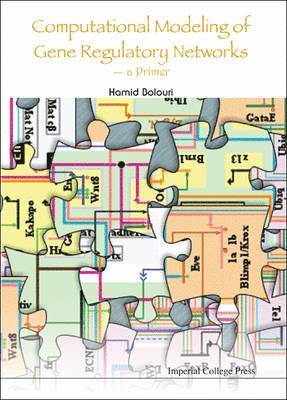
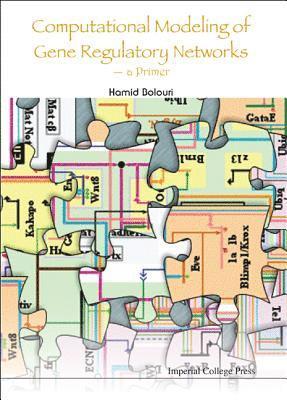
This book serves as an introduction to the myriad computational approaches to gene regulatory modeling and analysis, and is written specifically with experimental biologists in mind. Mathematical jargon is avoided and explanations are given in intuitive terms. In cases where equations are unavoidable, they are derived from first principles or, at the very least, an intuitive description is provided. Extensive examples and a large number of model descriptions are provided for use in both classroom exercises as well as self-guided exploration and learning. As such, the book is ideal for self-learning and also as the basis of a semester-long course for undergraduate and graduate students in molecular biology, bioengineering, genome sciences, or systems biology.
Inbunden, Engelska, 2009
755 kr
Skickas inom 11-20 vardagar
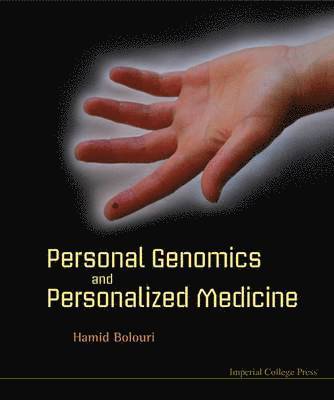
Current research in genomics and pharmacogenomics is increasingly highlighting the need to move towards stratified disease descriptions and individualized treatment plans. This book explains how a confluence of recent biological, technological and methodological developments is making it possible to provide personalized diagnoses and treatments.By virtue of treating each person's condition as unique, personal genomics and personalized medicine require health professionals to understand the nature of the data, its health implications, and its limitations.This book provides a detailed scientific treatment of the emerging disciplines of personal genomics and personalized medicine. It also includes a comprehensive treatment of both the promises and challenges of personal genomics and medicine from technological, societal and medical perspectives. It offers a wide-ranging review of the state of the art across all aspects of a highly multi-disciplinary subject. This book will be immensely useful for practicing health professionals and researchers, as well as senior undergraduates and graduate students in biomedical sciences.
Inbunden, Engelska, 2004
1 092 kr
Skickas inom 10-15 vardagar
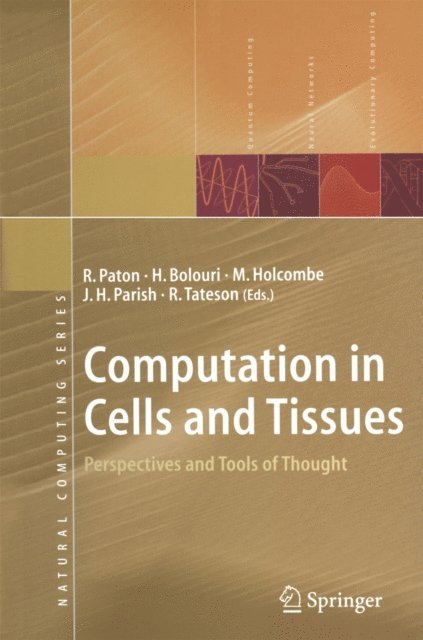
The field of biologically inspired computation has coexisted with mainstream computing since the 1930s, and the pioneers in this area include Warren McCulloch, Walter Pitts, Robert Rosen, Otto Schmitt, Alan Turing, John von Neumann and Norbert Wiener. Ideas arising out of studies of biology have permeated algorithmics, automata theory, artificial intelligence, graphics, information systems and software design. Within this context, the biomolecular, cellular and tissue levels of biological organisation have had a considerable inspirational impact on the development of computational ideas. Such innovations include neural computing, systolic arrays, genetic and immune algorithms, cellular automata, artificial tissues, DNA computing and protein memories. With the rapid growth in biological knowledge there remains a vast source of ideas yet to be tapped. This includes developments associated with biomolecular, genomic, enzymic, metabolic, signalling and developmental systems and the various impacts on distributed, adaptive, hybrid and emergent computation. This multidisciplinary book brings together a collection of chapters by biologists, computer scientists, engineers and mathematicians who were drawn together to examine the ways in which the interdisciplinary displacement of concepts and ideas could develop new insights into emerging computing paradigms. Funded by the UK Engineering and Physical Sciences Research Council (EPSRC), the CytoCom Network formally met on five occasions to examine and discuss common issues in biology and computing that could be exploited to develop emerging models of computation.
Häftad, Engelska, 2011
1 092 kr
Skickas inom 10-15 vardagar
The field of biologically inspired computation has coexisted with mainstream computing since the 1930s, and the pioneers in this area include Warren McCulloch, Walter Pitts, Robert Rosen, Otto Schmitt, Alan Turing, John von Neumann and Norbert Wiener. Ideas arising out of studies of biology have permeated algorithmics, automata theory, artificial intelligence, graphics, information systems and software design. Within this context, the biomolecular, cellular and tissue levels of biological organisation have had a considerable inspirational impact on the development of computational ideas. Such innovations include neural computing, systolic arrays, genetic and immune algorithms, cellular automata, artificial tissues, DNA computing and protein memories. With the rapid growth in biological knowledge there remains a vast source of ideas yet to be tapped. This includes developments associated with biomolecular, genomic, enzymic, metabolic, signalling and developmental systems and the various impacts on distributed, adaptive, hybrid and emergent computation. This multidisciplinary book brings together a collection of chapters by biologists, computer scientists, engineers and mathematicians who were drawn together to examine the ways in which the interdisciplinary displacement of concepts and ideas could develop new insights into emerging computing paradigms. Funded by the UK Engineering and Physical Sciences Research Council (EPSRC), the CytoCom Network formally met on five occasions to examine and discuss common issues in biology and computing that could be exploited to develop emerging models of computation.
E-bok
PDF, Engelska, 20131 367 kr
Läs direkt efter köp
The field of biologically inspired computation has coexisted with mainstream computing since the 1930s, and the pioneers in this area include Warren McCulloch, Walter Pitts, Robert Rosen, Otto Schmitt, Alan Turing, John von Neumann and Norbert Wiener. Ideas arising out of studies of biology have permeated algorithmics, automata theory, artificial intelligence, graphics, information systems and software design. Within this context, the biomolecular, cellular and tissue levels of biological organisation have had a considerable inspirational impact on the development of computational ideas. Such innovations include neural computing, systolic arrays, genetic and immune algorithms, cellular automata, artificial tissues, DNA computing and protein memories. With the rapid growth in biological knowledge there remains a vast source of ideas yet to be tapped. This includes developments associated with biomolecular, genomic, enzymic, metabolic, signalling and developmental systems and the various impacts on distributed, adaptive, hybrid and emergent computation. This multidisciplinary book brings together a collection of chapters by biologists, computer scientists, engineers and mathematicians who were drawn together to examine the ways in which the interdisciplinary displacement of concepts and ideas could develop new insights into emerging computing paradigms. Funded by the UK Engineering and Physical Sciences Research Council (EPSRC), the CytoCom Network formally met on five occasions to examine and discuss common issues in biology and computing that could be exploited to develop emerging models of computation.
Häftad, Engelska, 2004
572 kr
Tillfälligt slut
Inbunden, Engelska, 2008
727 kr
Tillfälligt slut
This book serves as an introduction to the myriad computational approaches to gene regulatory modeling and analysis, and is written specifically with experimental biologists in mind. Mathematical jargon is avoided and explanations are given in intuitive terms. In cases where equations are unavoidable, they are derived from first principles or, at the very least, an intuitive description is provided. Extensive examples and a large number of model descriptions are provided for use in both classroom exercises as well as self-guided exploration and learning. As such, the book is ideal for self-learning and also as the basis of a semester-long course for undergraduate and graduate students in molecular biology, bioengineering, genome sciences, or systems biology.
Häftad, Engelska, 2009
483 kr
Tillfälligt slut
Current research in genomics and pharmacogenomics is increasingly highlighting the need to move towards stratified disease descriptions and individualized treatment plans. This book explains how a confluence of recent biological, technological and methodological developments is making it possible to provide personalized diagnoses and treatments.By virtue of treating each person's condition as unique, personal genomics and personalized medicine require health professionals to understand the nature of the data, its health implications, and its limitations.This book provides a detailed scientific treatment of the emerging disciplines of personal genomics and personalized medicine. It also includes a comprehensive treatment of both the promises and challenges of personal genomics and medicine from technological, societal and medical perspectives. It offers a wide-ranging review of the state of the art across all aspects of a highly multi-disciplinary subject. This book will be immensely useful for practicing health professionals and researchers, as well as senior undergraduates and graduate students in biomedical sciences.