R. Paton – författare
Visar alla böcker från författaren R. Paton. Handla med fri frakt och snabb leverans.
6 produkter
6 produkter
Inbunden, Engelska, 1998
2 154 kr
Skickas inom 10-15 vardagar
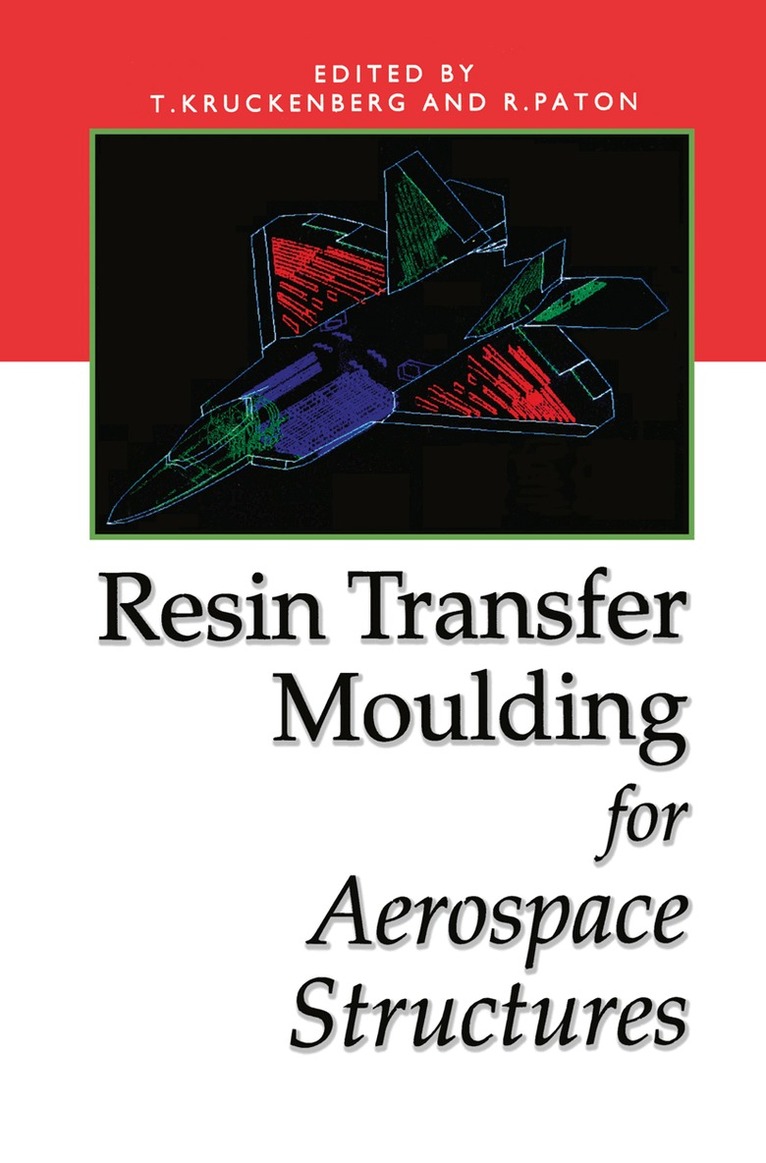
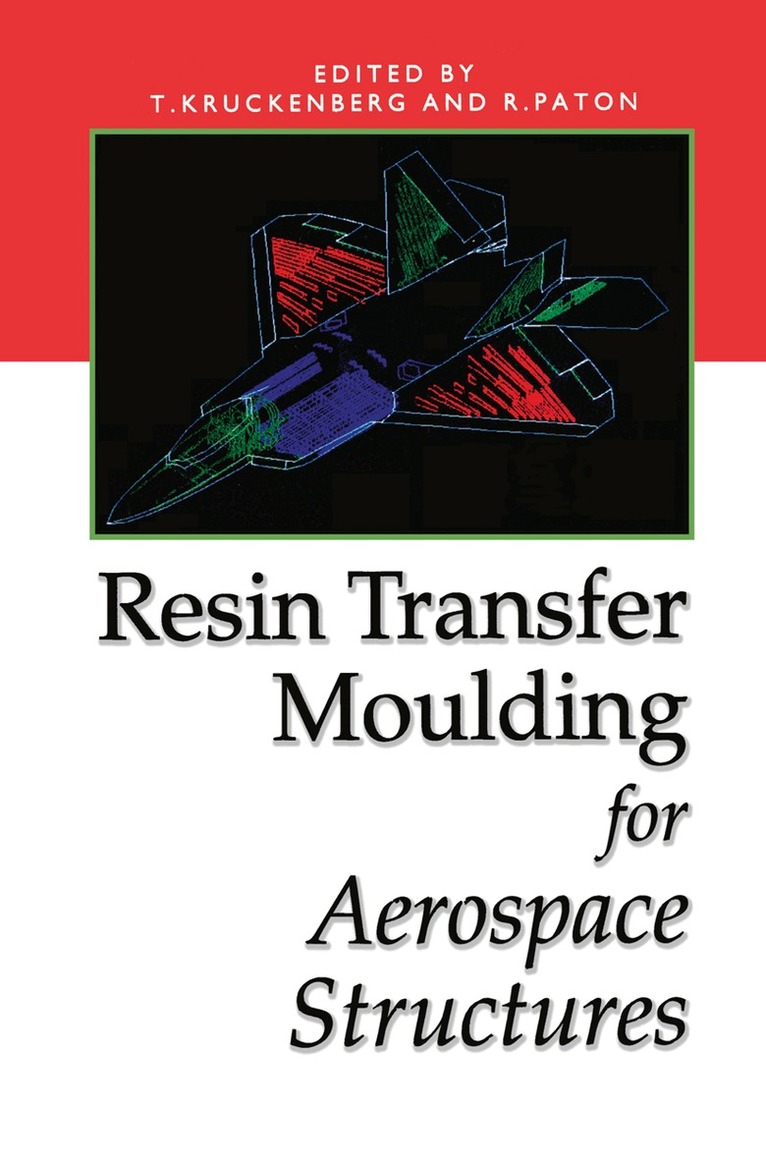
Resin Transfer Moulding and other similar 'liquid moulding' manufacturing methods have been used to make non-structural composites for the last 35 years. However, in the last eight years these methods have become the subject of enormous interest by aerospace manufacturing companies. Resin Transfer Moulding for Aerospace Structures describes all aspects of Resin Transfer Moulding (RTM) for aerospace structures. Written by an international team of experts, from both industry and academia, it is a comprehensive work providing complete and detailed information on the process of RTM from theoretical modelling to practical experience. With subjects including manufacturing, tooling, fabric design and flow modelling all covered, this book is an invaluable up-to-the-minute reference source which provides the reader with a good understanding of RTM and its possible uses, especially for high performance applications. Resin Transfer Moulding for Aerospace Structures is an ideal guide for those in the aerospace and related industries, who want to understand and utilize RTM, as well as those directly involved in the RTM industry.
Inbunden, Engelska, 2004
1 081 kr
Skickas inom 10-15 vardagar
The field of biologically inspired computation has coexisted with mainstream computing since the 1930s, and the pioneers in this area include Warren McCulloch, Walter Pitts, Robert Rosen, Otto Schmitt, Alan Turing, John von Neumann and Norbert Wiener. Ideas arising out of studies of biology have permeated algorithmics, automata theory, artificial intelligence, graphics, information systems and software design. Within this context, the biomolecular, cellular and tissue levels of biological organisation have had a considerable inspirational impact on the development of computational ideas. Such innovations include neural computing, systolic arrays, genetic and immune algorithms, cellular automata, artificial tissues, DNA computing and protein memories. With the rapid growth in biological knowledge there remains a vast source of ideas yet to be tapped. This includes developments associated with biomolecular, genomic, enzymic, metabolic, signalling and developmental systems and the various impacts on distributed, adaptive, hybrid and emergent computation. This multidisciplinary book brings together a collection of chapters by biologists, computer scientists, engineers and mathematicians who were drawn together to examine the ways in which the interdisciplinary displacement of concepts and ideas could develop new insights into emerging computing paradigms. Funded by the UK Engineering and Physical Sciences Research Council (EPSRC), the CytoCom Network formally met on five occasions to examine and discuss common issues in biology and computing that could be exploited to develop emerging models of computation.
Häftad, Engelska, 2011
1 081 kr
Skickas inom 10-15 vardagar
The field of biologically inspired computation has coexisted with mainstream computing since the 1930s, and the pioneers in this area include Warren McCulloch, Walter Pitts, Robert Rosen, Otto Schmitt, Alan Turing, John von Neumann and Norbert Wiener. Ideas arising out of studies of biology have permeated algorithmics, automata theory, artificial intelligence, graphics, information systems and software design. Within this context, the biomolecular, cellular and tissue levels of biological organisation have had a considerable inspirational impact on the development of computational ideas. Such innovations include neural computing, systolic arrays, genetic and immune algorithms, cellular automata, artificial tissues, DNA computing and protein memories. With the rapid growth in biological knowledge there remains a vast source of ideas yet to be tapped. This includes developments associated with biomolecular, genomic, enzymic, metabolic, signalling and developmental systems and the various impacts on distributed, adaptive, hybrid and emergent computation. This multidisciplinary book brings together a collection of chapters by biologists, computer scientists, engineers and mathematicians who were drawn together to examine the ways in which the interdisciplinary displacement of concepts and ideas could develop new insights into emerging computing paradigms. Funded by the UK Engineering and Physical Sciences Research Council (EPSRC), the CytoCom Network formally met on five occasions to examine and discuss common issues in biology and computing that could be exploited to develop emerging models of computation.
E-bok
PDF, Engelska, 20131 416 kr
Läs direkt efter köp
The field of biologically inspired computation has coexisted with mainstream computing since the 1930s, and the pioneers in this area include Warren McCulloch, Walter Pitts, Robert Rosen, Otto Schmitt, Alan Turing, John von Neumann and Norbert Wiener. Ideas arising out of studies of biology have permeated algorithmics, automata theory, artificial intelligence, graphics, information systems and software design. Within this context, the biomolecular, cellular and tissue levels of biological organisation have had a considerable inspirational impact on the development of computational ideas. Such innovations include neural computing, systolic arrays, genetic and immune algorithms, cellular automata, artificial tissues, DNA computing and protein memories. With the rapid growth in biological knowledge there remains a vast source of ideas yet to be tapped. This includes developments associated with biomolecular, genomic, enzymic, metabolic, signalling and developmental systems and the various impacts on distributed, adaptive, hybrid and emergent computation. This multidisciplinary book brings together a collection of chapters by biologists, computer scientists, engineers and mathematicians who were drawn together to examine the ways in which the interdisciplinary displacement of concepts and ideas could develop new insights into emerging computing paradigms. Funded by the UK Engineering and Physical Sciences Research Council (EPSRC), the CytoCom Network formally met on five occasions to examine and discuss common issues in biology and computing that could be exploited to develop emerging models of computation.
Häftad, Engelska, 2012
2 476 kr
Skickas inom 10-15 vardagar
Resin Transfer Moulding and other similar 'liquid moulding' manufacturing methods have been used to make non-structural composites for the last 35 years. However, in the last eight years these methods have become the subject of enormous interest by aerospace manufacturing companies. Resin Transfer Moulding for Aerospace Structures describes all aspects of Resin Transfer Moulding (RTM) for aerospace structures. Written by an international team of experts, from both industry and academia, it is a comprehensive work providing complete and detailed information on the process of RTM from theoretical modelling to practical experience. With subjects including manufacturing, tooling, fabric design and flow modelling all covered, this book is an invaluable up-to-the-minute reference source which provides the reader with a good understanding of RTM and its possible uses, especially for high performance applications. Resin Transfer Moulding for Aerospace Structures is an ideal guide for those in the aerospace and related industries, who want to understand and utilize RTM, as well as those directly involved in the RTM industry.
E-bok
PDF, Engelska, 20122 680 kr
Läs direkt efter köp
Resin Transfer Moulding and other similar ''liquid moulding'' manufacturing methods have been used to make non-structural composites for the last 35 years. However, in the last eight years these methods have become the subject of enormous interest by aerospace manufacturing companies. Resin Transfer Moulding for Aerospace Structures describes all aspects of Resin Transfer Moulding (RTM) for aerospace structures. Written by an international team of experts, from both industry and academia, it is a comprehensive work providing complete and detailed information on the process of RTM from theoretical modelling to practical experience. With subjects including manufacturing, tooling, fabric design and flow modelling all covered, this book is an invaluable up-to-the-minute reference source which provides the reader with a good understanding of RTM and its possible uses, especially for high performance applications. Resin Transfer Moulding for Aerospace Structures is an ideal guide for those in the aerospace and related industries, who want to understand and utilize RTM, as well as those directly involved in the RTM industry.