Hannah Schmidt – författare
Visar alla böcker från författaren . Handla med fri frakt och snabb leverans.
13 produkter
13 produkter
Häftad, Engelska, 2026
405 kr
Skickas
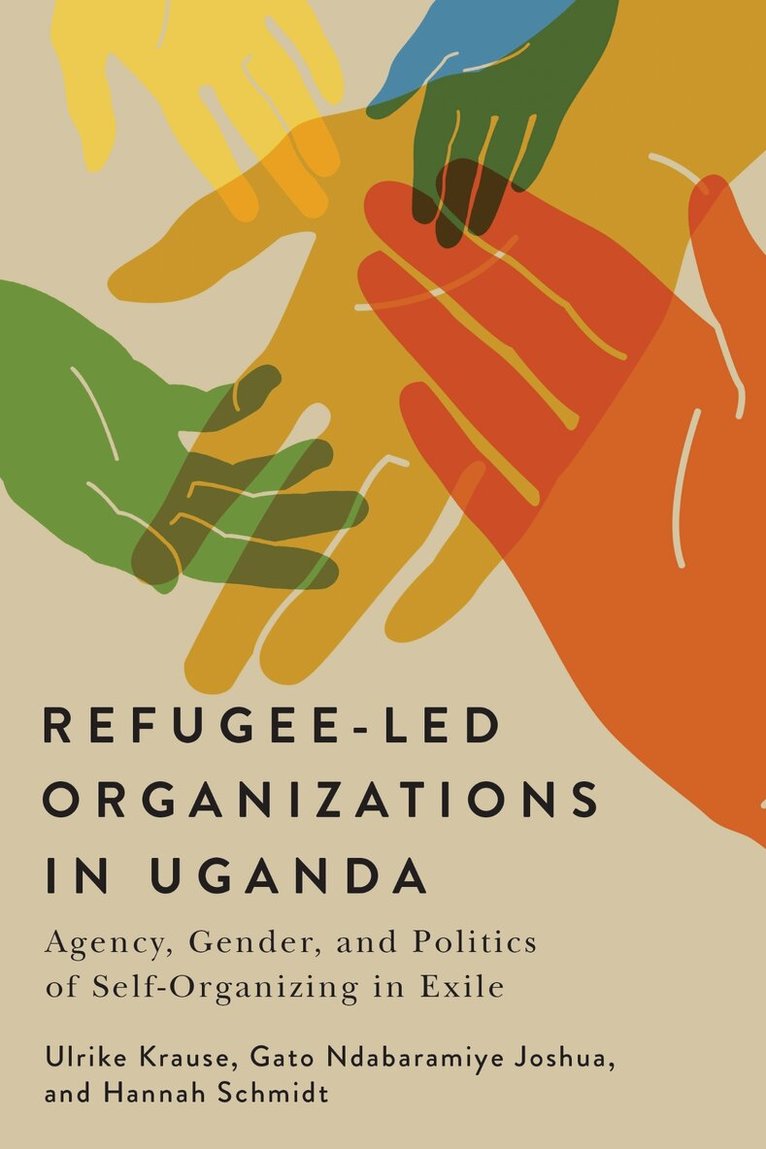
Self-organization plays an essential yet often overlooked role in the everyday lives of refugees in exile. By self-organizing, they challenge restrictions, claim political representation, foster social relations and belonging, and create ongoing economic opportunities.While government authorities and aid organizations are supposed to provide protection and assistance, refugees often continue to face adversities, restrictions, and risks, prompting them to establish and maintain their own support systems. Refugee-Led Organizations in Uganda offers nuanced insight into the problems arising from the aid system and especially the significance of the spectrum of informal and formalized self-organizations. Ulrike Krause, Gato Ndabaramiye Joshua, and Hannah Schmidt draw on a gender-sensitive understanding of relational agency and situated knowledge and use empirical research in Uganda’s camp Kyaka II and the capital, Kampala, to reveal how individuals collectively contribute to their own support in times of emergency and in everyday life.Interwoven with reflections written by refugees in Uganda – Bengekya Mugay Gédéon, Noella Kabale, Paul, Janvier Hafasha, and Isreal Katembo, as well as the director of an LGBTQ refugee-led organization – the book centres on individuals’ lived experiences of self-organization in exile.
E-bok
PDF, Engelska, 2026401 kr
Läs direkt efter köp
Self-organization plays an essential yet often overlooked role in the everyday lives of refugees in exile. By self-organizing, they challenge restrictions, claim political representation, foster social relations and belonging, and create ongoing economic opportunities.While government authorities and aid organizations are supposed to provide protection and assistance, refugees often continue to face adversities, restrictions, and risks, prompting them to establish and maintain their own support systems. Refugee-Led Organizations in Uganda offers nuanced insight into the problems arising from the aid system and especially the significance of the spectrum of informal and formalized self-organizations. Ulrike Krause, Gato Ndabaramiye Joshua, and Hannah Schmidt draw on a gender-sensitive understanding of relational agency and situated knowledge and use empirical research in Uganda's camp Kyaka II and the capital, Kampala, to reveal how individuals collectively contribute to their own support in times of emergency and in everyday life.Interwoven with reflections written by refugees in Uganda Bengekya Mugay Gedeon, Noella Kabale, Paul, Janvier Hafasha, and Isreal Katembo, as well as the director of an LGBTQ+ refugee-led organization the book centres on individuals' lived experiences of self-organization in exile.
E-bok
Engelska, 2026402 kr
Läs direkt efter köp
Self-organization plays an essential yet often overlooked role in the everyday lives of refugees in exile. By self-organizing, they challenge restrictions, claim political representation, foster social relations and belonging, and create ongoing economic opportunities.While government authorities and aid organizations are supposed to provide protection and assistance, refugees often continue to face adversities, restrictions, and risks, prompting them to establish and maintain their own support systems. Refugee-Led Organizations in Uganda offers nuanced insight into the problems arising from the aid system and especially the significance of the spectrum of informal and formalized self-organizations. Ulrike Krause, Gato Ndabaramiye Joshua, and Hannah Schmidt draw on a gender-sensitive understanding of relational agency and situated knowledge and use empirical research in Uganda's camp Kyaka II and the capital, Kampala, to reveal how individuals collectively contribute to their own support in times of emergency and in everyday life.Interwoven with reflections written by refugees in Uganda Bengekya Mugay Gedeon, Noella Kabale, Paul, Janvier Hafasha, and Isreal Katembo, as well as the director of an LGBTQ+ refugee-led organization the book centres on individuals' lived experiences of self-organization in exile.
E-bok
Tyska, 202655 kr
Läs direkt efter köp
In einer Zeit, in der unsere Supermarktregale voll von ultra-verarbeiteten Lebensmitteln und künstlichen Konservierungsstoffen sind, sehnen sich immer mehr Menschen nach echter, unverfälschter Nahrung. Die Antwort auf diese Sehnsucht ist tausende Jahre alt und feiert gerade ein fulminantes Comeback: die Fermentation. Das Einlegen von Gemüse in Salzlake ist weit mehr als nur eine Methode zur Haltbarmachung. Es ist pure Alchemie in der Küche, die einfache Zutaten in probiotische Superfoods verwandelt, die unser Mikrobiom stärken, das Immunsystem boosten und sensationell schmecken.Dieses liebevoll gestaltete Praxisbuch nimmt Ihnen die Angst vor dem Blubbern im Glas und führt Sie sicher in die faszinierende Welt der wilden Fermentation ein. Die Autorin erklärt die mikrobiologischen Grundlagen so einfach, dass absolute Anfänger sofort loslegen können. Sie erfahren alles über das richtige Equipment, die perfekte Salzkonzentration und die magische Rolle der Milchsäurebakterien. Mit detaillierten, idiotensicheren Schritt-für-Schritt-Anleitungen lernen Sie, wie Sie knackiges Kimchi, klassisches Sauerkraut, prickelnden Kombucha und aromatischen Wasserkefir ganz leicht selbst herstellen.Neben den gesundheitlichen Vorteilen für den Darm bietet dieses Buch eine Fülle an kreativen Rezepten, um die fermentierten Köstlichkeiten in Ihren modernen Kochalltag zu integrieren. Holen Sie sich die Kontrolle über Ihr Essen zurück. Entdecken Sie ein zutiefst befriedigendes Handwerk, das Ihre Küche bereichert, Lebensmittelverschwendung stoppt und Ihre Gesundheit revolutioniert.
Häftad, Engelska, 2023
968 kr
Skickas inom 10-15 vardagar
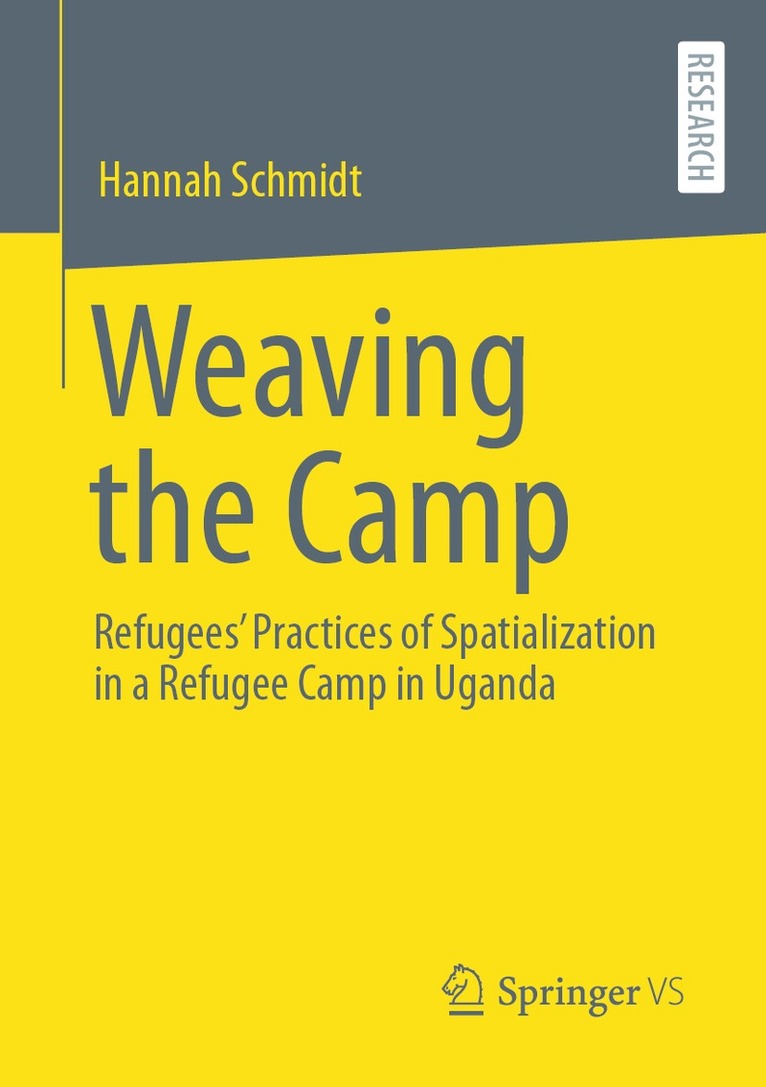
This book offers a socio-spatial analysis of a refugee camp in southwestern Uganda. Based on qualitative research with a multi-method approach the author shows how refugees are central actors in the operation and becoming of a camp. Not only do they crucially contribute to its social, micro-economic, and material realization but they also incrementally rearrange the camp space by acts of constant adaptation in order to make it work for its inhabitants. By means of social interaction, infrastructuring, translation, movement and material improvisation they navigate daily life in the semi-constricted and highly precarious space of the refugee protection regime and carve out its social and material landscape. Thus, this study challenges static understandings of camps and restricted conditions and puts forward theoretical implications for the rethinking and reassessment of agency in such contexts by calling for closer attention to ordinary practices.
E-bok
Engelska, 20231 255 kr
Läs direkt efter köp
This book offers a socio-spatial analysis of a refugee camp in southwestern Uganda. Based on qualitative research with a multi-method approach the author shows how refugees are central actors in the operation and becoming of a camp. Not only do they crucially contribute to its social, micro-economic, and material realization but they also incrementally rearrange the camp space by acts of constant adaptation in order to make it work for its inhabitants. By means of social interaction, infrastructuring, translation, movement and material improvisation they navigate daily life in the semi-constricted and highly precarious space of the refugee protection regime and carve out its social and material landscape. Thus, this study challenges static understandings of camps and restricted conditions and puts forward theoretical implications for the rethinking and reassessment of agency in such contexts by calling for closer attention to ordinary practices.
625 kr
Skickas inom 5-8 vardagar
Häftad, Tyska, 2017
377 kr
Skickas inom 3-6 vardagar
Häftad, Tyska, 2016
367 kr
Skickas inom 3-6 vardagar
751 kr
Skickas inom 3-6 vardagar
Häftad, Tyska, 2013
735 kr
Skickas inom 3-6 vardagar
Häftad, Arabiska, 2021
137 kr
Skickas inom 11-20 vardagar
Text in Arabic. Available for the first time in Arabic, Scientific American sets out to debunk urban lore and cultural mythology. In this two-part best-selling series, scientists cast their analytical eye on long-standing claims to determine if they are fact of fiction. Based on the Strange But True columns, here youll find some of the most surprising, fascinating, useful and just plain wacky topics confronted by SA writers over the years.