• Fri frakt över 249 kr
  • •
  • Snabba leveranser
  • •
  • Billiga böcker
Kundservice

Du är på sajten för privatpersoner.

Företag, bibliotek eller offentlig verksamhet?

Du handlar på classic.bokus.com, där alla dina funktioner finns intakta.
Till classic.bokus.com
Bokus logotyp. Gå till startsidan.
  • Erbjudanden
  • Nyheter
  • Student
  • Topplistor
  • Barn & ungdom
  • Bokus Play
  • E-böcker
  • Pocketböcker
  • Spel & pussel

10% rabatt på allt med kod: NYSTART10 →

Sidfot

Mina sidor

    Hjälp

    • Kundservice
    • Vanliga frågor och svar
    • Frakt och leverans
    • Retur vid ångerrätt
    • Reklamera vara
    • Betalning
    • Köpvillkor
    • Allmänna villkor
    • Information om webbplatsens tillgänglighet

    Om Bokus

    • Om oss
    • Pressrum
    • För studenter
    • För företag
    • För bibliotek och offentlig verksamhet
    • För leverantörer
    • Hållbarhet

    Populärt

    • Aktuella erbjudanden
    • Presentkort
    • Studentlitteratur
    • Nya böcker
    • Topplistor
    • Signerade böcker
    • Engelska böcker

    Inspiration

    • Boktips
    • BookTok
    • Populära bokserier
    • Barnbokskaraktärer
    • Populära författare
    Logotyp för Bokus
    Följ oss på Facebook (extern länk)Följ oss på Instagram (extern länk)Följ oss på YouTube (extern länk)Följ oss på TikTok (extern länk)
    bokus @ CookiesAnpassa cookiesIntegritetspolicyKöpvillkor
    Till Citymail hemsida (extern länk)Till Budbee hemsida (extern länk)Till Postnord hemsida (extern länk)Till Schenker hemsida (extern länk)Till Early Bird hemsida (extern länk)Till Walleys hemsida (extern länk)
    1. Samhälle och politik
    2. Samhälle och kultur
    3. Sociala och etiska frågor
    4. Migration

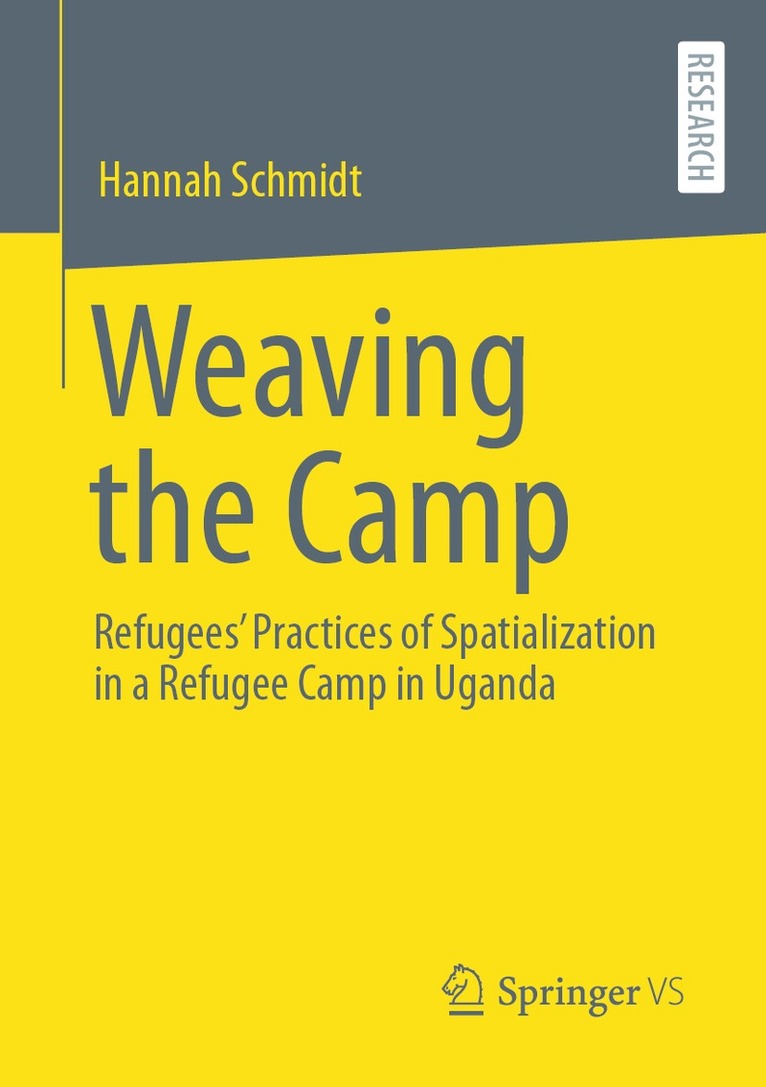
    Weaving the Camp

    Refugees' Practices of Spatialization in a Refugee Camp in Uganda

    AvHannah Schmidt

    Häftad, Engelska, 2023

    978 kr

    Beställningsvara. Skickas inom 10-15 vardagar. Fri frakt över 249 kr.

    Fler format och utgåvor

    E-bok

    1 255 kr

    Beskrivning

    This book offers a socio-spatial analysis of a refugee camp in southwestern Uganda. Based on qualitative research with a multi-method approach the author shows how refugees are central actors in the operation and becoming of a camp. Not only do they crucially contribute to its social, micro-economic, and material realization but they also incrementally rearrange the camp space by acts of constant adaptation in order to make it work for its inhabitants. By means of social interaction, infrastructuring, translation, movement and material improvisation they navigate daily life in the semi-constricted and highly precarious space of the refugee protection regime and carve out its social and material landscape. Thus, this study challenges static understandings of camps and restricted conditions and puts forward theoretical implications for the rethinking and reassessment of agency in such contexts by calling for closer attention to ordinary practices.

    Produktinformation

    • Utgivningsdatum:2023-07-14
    • Mått:148 x 210 x 17 mm
    • Vikt:391 g
    • Format:Häftad
    • Språk:Engelska
    • Antal sidor:278
    • Förlag:Springer Fachmedien Wiesbaden
    • ISBN:9783658416492

    Utforska kategorier

    • Migration inom Samhälle och politik
    • Sociologi inom Samhälle och politik
    • Politik och statsskick inom Samhälle och politik

    Mer om författaren

    About the author Hannah Schmidt is a member of the Institute for Migration Research and Intercultural Studies (IMIS) at the University Osnabrück. Her research is on encampment and refugee regimes in the Global South, as well as social practices, agency and spatial production in the context of humanitarianism.

    Innehållsförteckning

    • Introduction.- Theorizing Socio-Spatial Practices.- Research Design.- Humanitarian Patterns of the Camp: Order, Spacing and Protraction in Kyaka II.- Social Fabric: Refugees’ Social Practices of Spatialization in Kyaka II.- Material Fabric: Refugees’ Material Practices of Spatialization in Kyaka II.- Pulling the Strings: Refugees’ Rearranging Practices in Kyaka II.- Conclusion.