Hannu Nurmi – författare
2 643 kr
Skickas inom 10-15 vardagar
923 kr
Skickas inom 10-15 vardagar
1 763 kr
Skickas inom 5-8 vardagar
545 kr
Skickas inom 10-15 vardagar
687 kr
Läs direkt efter köp
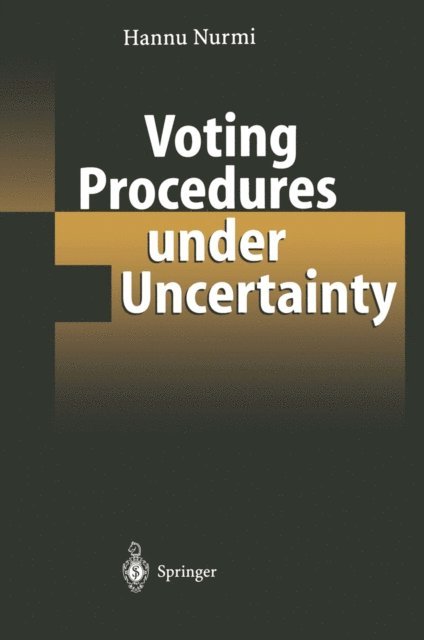
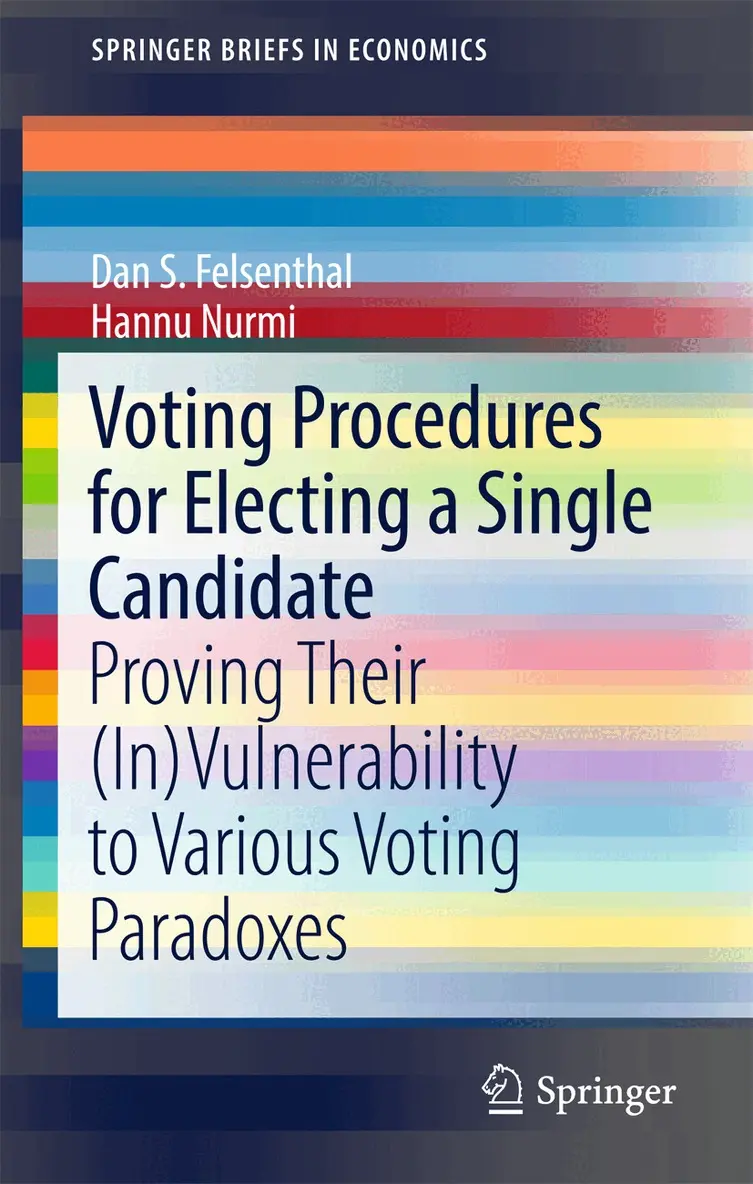
This book deals with 20 voting procedures used or proposed for use in elections resulting in the choice of a single winner. These procedures are evaluated in terms of their ability to avoid five important paradoxes in a restricted domain, viz., when a Condorcet winner exists and is elected in the initial profile. Together with the two companion volumes by the same authors, published by Springer in 2017 and 2018, this book aims at giving a comprehensive overview of the most important advantages and disadvantages of voting procedures thereby assisting decision makers in the choice of a voting procedure that would best suit their purposes.
625 kr
Skickas inom 5-8 vardagar
840 kr
Läs direkt efter köp
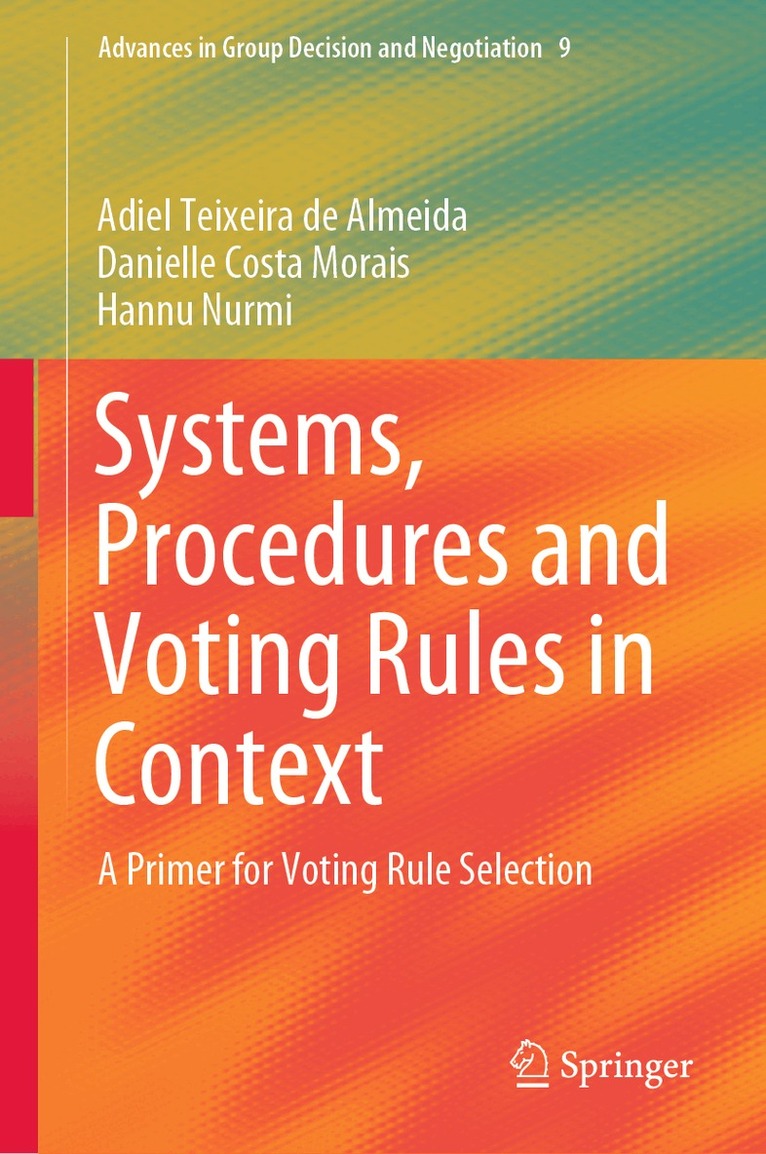
This book deals with the choice of methods to be applied in the decision processes within organizations. It discusses the use of voting procedures for group decision in business organizations, focusing on decision-making contexts. Within this book the reader explores the relevant part of the decision-making process consisting of choosing the voting procedures and recognizing the drawbacks of that procedure. This book includes a unique feature of providing a framework for choosing the voting procedure that is the most appropriate for a particular business decision process. The book is useful for a broad researcher audience dealing with the group decision making processes within business organizations and for practitioners and students working in the group decision and negotiation field.
457 kr
Skickas inom 5-8 vardagar
598 kr
Skickas inom 10-15 vardagar
764 kr
Läs direkt efter köp
544 kr
Skickas inom 10-15 vardagar
687 kr
Läs direkt efter köp
1 367 kr
Läs direkt efter köp
1 082 kr
Skickas inom 10-15 vardagar
1 727 kr
Skickas inom 10-15 vardagar
1 727 kr
Skickas inom 10-15 vardagar
1 667 kr
Skickas inom 10-15 vardagar
2 054 kr
Läs direkt efter köp
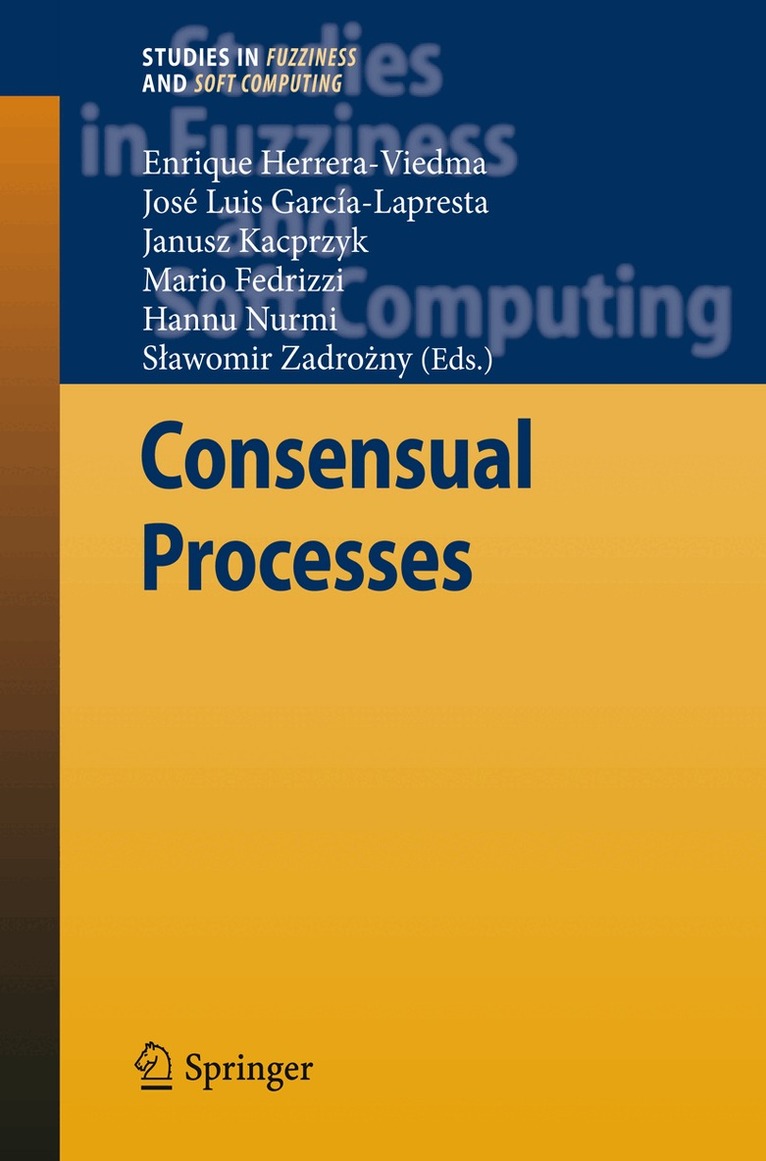
The word consensus has been frequently used for centuries, perhaps millenia. People have always deemed it important that decisions having a long lasting impact on groups, countries or even civilizations be arrived at in a consensual manner. Undoubtedly the complexity of modern world in all its social, technological, economic and cultural dimensions has created new environments where consensus is regarded desirable. Consensus typically denotes a state of agreement prevailing in a group of agents, human or software. In the strict sense of the term, consensus means that the agreement be unanimous. Since such a state is often unreachable or even unnecessary, other less demanding consensus-related notions have been introduced. These typically involve some graded, partial or imprecise concepts. The contributions to this volume define and utilize such less demanding - and thus at the same time more general - notions of consensus. However, consensus can also refer to a process whereby the state of agreement is reached. Again this state can be something less stringent than a complete unanimity of all agents regarding all options. The process may involve modifications, resolutions and /or mitigations of the views or inputs of individuals or software agents in order to achieve the state of consensus understood in the more general sense. The consensus reaching processes call for some soft computational approaches, methods and techniques, notably fuzzy and possibilistic ones. These are needed to accommodate the imprecision in the very meaning of some basic concepts utilized in the definition of consensus as a state of agreement and as a process whereby this state is to be reached. The overall aim of this volume is to provide a comprehensive overview and analysis of the issuesrelated to consensus states and consensual processes.
Consensual Processes
1 667 kr
Skickas inom 10-15 vardagar
1 619 kr
Skickas inom 10-15 vardagar
1 977 kr
Läs direkt efter köp
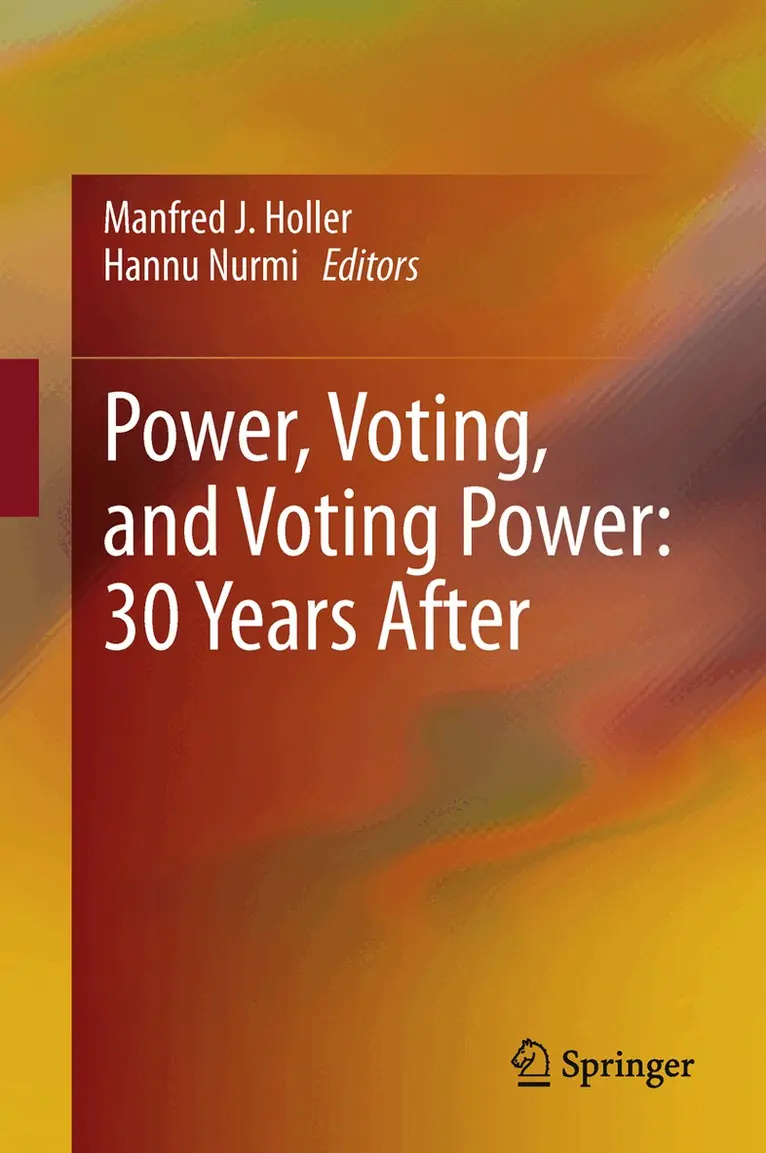
The developments over a thirty-year time span in the study of power, especially voting power, are traced in this book, which provides an up-to-date overview of applications of n-person game theory to the study of power in multimember bodies. Other theories that shed light on power distribution (e.g. aggregation theory) are treated as well. The book revisits the themes discussed in the well-known 1982 publication "Power, Voting and Voting Power" (edited by Manfred J. Holler). Thirty years later this essential topic has been taken up again and many of the authors from its predecessor participate here again in discussing the state-of-the-art, demonstrating the achievements of three decades of intensive research, and pointing the way to key issues for future work.
1 619 kr
Skickas inom 10-15 vardagar
1 082 kr
Skickas inom 10-15 vardagar
2 130 kr
Läs direkt efter köp
1 082 kr
Skickas inom 10-15 vardagar
1 367 kr
Läs direkt efter köp
1 073 kr
Skickas inom 10-15 vardagar