Hans F. Linskens - Böcker
Visar alla böcker från författaren Hans F. Linskens. Handla med fri frakt och snabb leverans.
16 produkter
16 produkter
2 111 kr
Skickas inom 10-15 vardagar
Whilst genetic transformation of plants is commonly viewed as a means of bringing about plant improvement, it has not so readily been recognised as a tool for analysing the function of plant genes. This book is unusual in that it focuses on the genetic transformation of a range of plants using a number of different methods. Many plants have been found to be quite difficult to transform, and so various techniques were developed. These techniques include: Agrobacterium suspension drops, electroporation, PEG, "whiskers", and various biolistic methods. A chapter on intellectual and property rights is included.
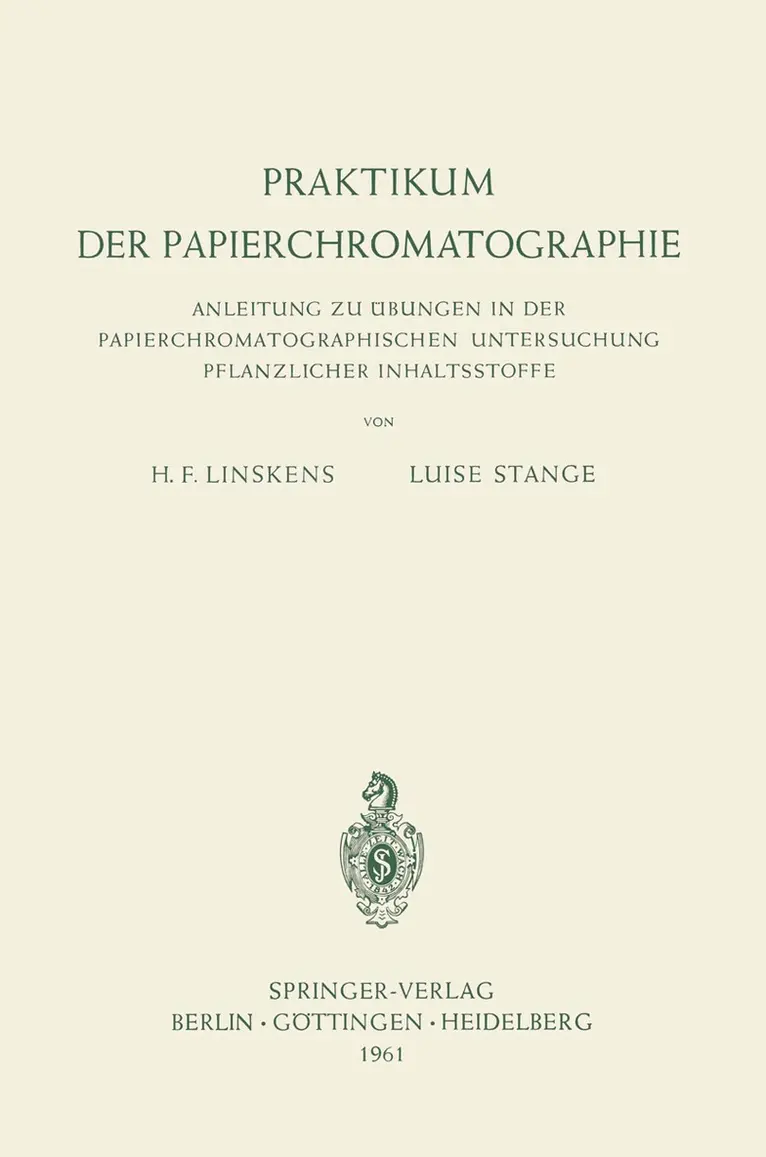
Praktikum der Papierchromatographie
Anleitung zu Übungen in der Papierchromatographischen Untersuchung Pflanzlicher Inhaltsstoffe
Häftad, Tyska, 1961
646 kr
Skickas inom 10-15 vardagar
2 111 kr
Skickas inom 10-15 vardagar
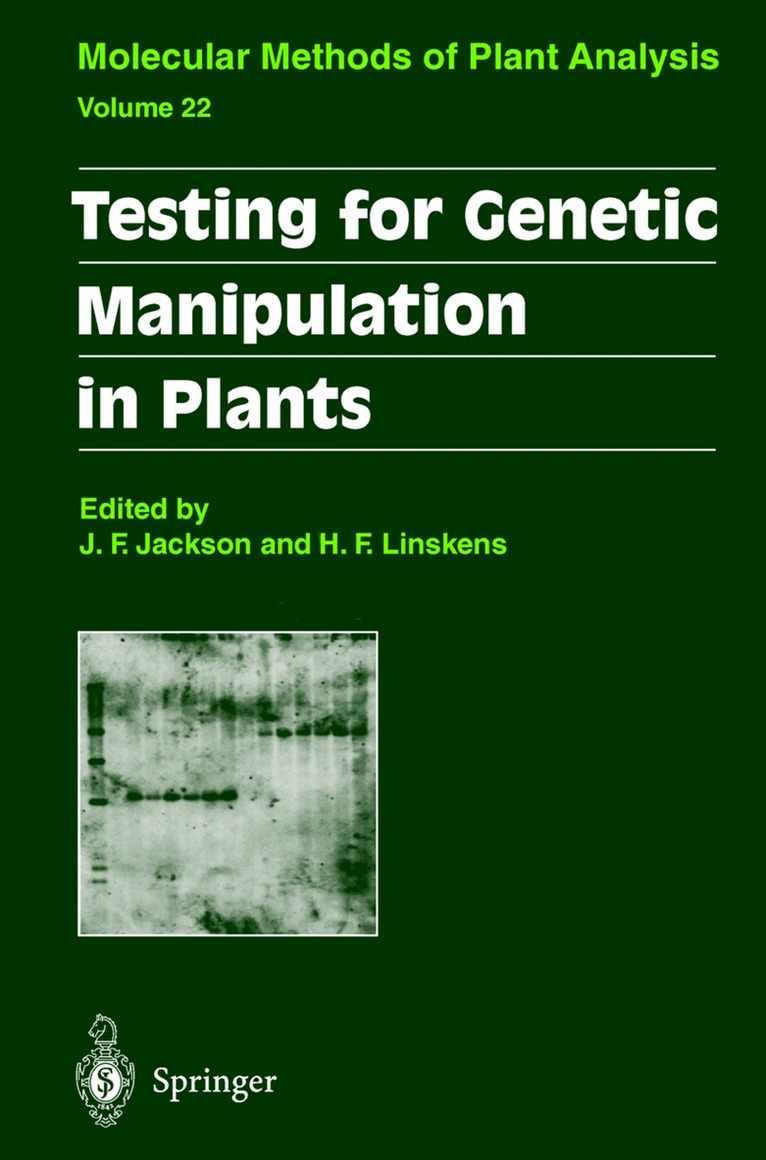
The debate over genetic manipulation and its use in plant improvement and protection has led to an increased demand for developing methods for detecting and characterizing genetic manipulation in plants and plant products such as seeds and foods. This book is unique in presenting all relevant methods together in one volume: those for using and determining markers retained in genetically manipulated products as well as methods for eliminating marker genes and procedures for characterizing chromosomal aberrations in genetically manipulated plants.
2 111 kr
Skickas inom 10-15 vardagar
Chemical defence by means of toxins poisonous to otherorganisms, be they animals or plants, is widespread amongstthe plant kingdom - including microorganisms as well. Thisbook embraces the analysis of a wide range of plant toxinsand this fills a gap in the plant pathology and ecologicalbiochemistry fields. The topics covered include toxicextracellular enzymes, host selective toxins, elicitors,phototoxins, aflatoxins, mycotoxins, and ecotoxic substancetests by pollen germination and growth. The analyticalprocedures, which are used to evaluate the toxins, arecovered in such a way that the reader is able to carry themout mostly solely by following the detailed descriptions.
1 585 kr
Skickas inom 10-15 vardagar
The book covers a vast array of methods for the analysis of volatile compounds exuded by plants. Some of these volatiles are of great commercial importance, including the aromas of wines and teas, and volatiles in fruits. Other volatiles such as essential oils can be useful for chemotaxonomic purposes, and a chapter on an emerging method, that of chemometric analysis of such data, is included. Isoprene and ammonia rarely find a place in analytical methods presented for plant materials, but methods for these volatiles are described in this book. The volatiles given off by flowers are also included, and in situ headspace analysis of these volatiles is described, a method of potential use for the study of insect-plant interactions.
1 585 kr
Skickas inom 10-15 vardagar
This book deals with the analysis of plant wastes, for example, by-products from the industrial production of consumer goods (beer, paper, fruit juice), organic carbon dissolved in soils, streams, etc., or the decomposition of natural wastes such as leaf litter. A vast array of chemical and physical methods are included for each topic.
2 111 kr
Skickas inom 10-15 vardagar
Whilst genetic transformation of plants is commonly viewed as a means of bringing about plant improvement, it has not so readily been recognised as a tool for analysing the function of plant genes. This book is unusual in that it focuses on the genetic transformation of a range of plants using a number of different methods. Many plants have been found to be quite difficult to transform, and so various techniques were developed. These techniques include: Agrobacterium suspension drops, electroporation, PEG, "whiskers", and various biolistic methods. A chapter on intellectual and property rights is included.
2 111 kr
Skickas inom 10-15 vardagar
The debate over genetic manipulation and its use in plant improvement and protection has led to an increased demand for developing methods for detecting and characterizing genetic manipulation in plants and plant products such as seeds and foods. This book is unique in presenting all relevant methods together in one volume: those for using and determining markers retained in genetically manipulated products as well as methods for eliminating marker genes and procedures for characterizing chromosomal aberrations in genetically manipulated plants.
2 538 kr
Skickas inom 10-15 vardagar
Chemical defence by means of toxins poisonous to otherorganisms, be they animals or plants, is widespread amongstthe plant kingdom - including microorganisms as well. Thisbook embraces the analysis of a wide range of plant toxinsand this fills a gap in the plant pathology and ecologicalbiochemistry fields. The topics covered include toxicextracellular enzymes, host selective toxins, elicitors,phototoxins, aflatoxins, mycotoxins, and ecotoxic substancetests by pollen germination and growth. The analyticalprocedures, which are used to evaluate the toxins, arecovered in such a way that the reader is able to carry themout mostly solely by following the detailed descriptions.
1 164 kr
Skickas inom 10-15 vardagar
The book covers a vast array of methods for the analysis of volatile compounds exuded by plants. Some of these volatiles are of great commercial importance, including the aromas of wines and teas, and volatiles in fruits. Other volatiles such as essential oils can be useful for chemotaxonomic purposes, and a chapter on an emerging method, that of chemometric analysis of such data, is included. Isoprene and ammonia rarely find a place in analytical methods presented for plant materials, but methods for these volatiles are described in this book. The volatiles given off by flowers are also included, and in situ headspace analysis of these volatiles is described, a method of potential use for the study of insect-plant interactions.
1 164 kr
Skickas inom 10-15 vardagar
This book deals with the analysis of plant wastes, for example, by-products from the industrial production of consumer goods (beer, paper, fruit juice), organic carbon dissolved in soils, streams, etc., or the decomposition of natural wastes such as leaf litter. A vast array of chemical and physical methods are included for each topic.
1 059 kr
Skickas inom 10-15 vardagar
Modern Methods of Plant Analysis When the handbook Modern Methods of Plant Analysis, was first introduced in 1954, the considerations were: 1. the dependence of scientific progress in biology on the improvement of existing and the introduction of new methods; 2. the difficulty in finding many new analytical methods in specialized journals which are normally not accessible to experimental plant biologists; 3. the fact that in the methods sections of papers the description of methods is frequently so compact, or even sometimes to incomplete, that it is difficult to reproduce experiments. These considerations still stand today. The series was highly successful, seven volumes appearing between 1956 and 1964. Since there is still today a demand for the old series, the publisher has decided to resume publication of Modern Methods of Plant Analysis. It is hoped that the New Series will be just as acceptable to those working in plant sciences and related fields as the early volumes undoubtedly were. It is difficult to single out the major reasons for the success of any publication, but we believe that the methods published in the first series were up-to-date at the time and presented in a way that made description, as applied to plant material, complete in itself with little need to consult other publications. Contribution authors have attempted to follow these guidelines in this New Series of volumes. Editorial The earlier series of Modern Methods of Plant Analysis was initiated by Michel V.
1 059 kr
Skickas inom 10-15 vardagar
Modern Methods of Plant Analysis When the handbook Modern Methods of Plant Analysis, was first introduced in 1954, the considerations were: 1. the dependence of scientific progress in biology on the improvement of existing and the introduction of new methods; - 2. the difficulty in finding many new analytical methods in specialized journals which are normally not accessible to experimental plant biologists; 3. the fact that in the methods sections of papers the description of methods is frequently so compact, or even sometimes to incomplete, that it is difficult to reproduce experiments. These considerations still stand today. The series was highly successful, seven volumes appearing between 1956 and 1964. Since there is still today a demand for the old series, the publisher has decided to resume publication of Modern Methods of Plant Analysis. It is hoped that the New Series will be just as acceptable to those working in plant sciences and related fields as the early volumes undoubtedly were. It is difficult to single out the major reasons for the success of any publication, but we believe that the methods published in the first series were up-to-date at the time and presented in a way that made description, as applied to plant material, complete in itself with little need to consult other publications. Contribution authors have attempted to follow these guidelines in this New Series of volumes. Editorial The earlier series of Modern Methods of Plant Analysis was initiated by Michel v.
1 480 kr
Skickas inom 10-15 vardagar
Given the growing importance of essential oils and waxes, this volume deals with the analysis of a broad spectrum of these compounds from many plant origins. Commercial oils such as olive oil are analysed as are trees such as eucalyptus, mentha, cedar and juniper. In addition, analysis of spices, seasoning, seaweeds, perfumes, liquors and atmospheric monoterpene hydrocarbons are to be found in this book. The volatiles of flower and pollen may be of importance in attraction of bees and other insects to certain plants for pollination purposes; this topic is also discussed. Waxes, both in the soil and as leaf components are analysed and presented in such a way making this book valuable to scientists with varying interests worldwide.
1 059 kr
Skickas inom 10-15 vardagar
The analysis of vegetables and vegetable products is now an important part of everyday life. Also, there are chapters covering the analysis of leaf protein and the oxalic acid content of vegetables, and the analysis of vegetables consumed in tropical Africa.
Moderne Methoden der Pflanzenanalyse / Modern Methods of Plant Analysis
Erster Band / Volume I
Häftad, Tyska, 1956
548 kr
Skickas inom 10-15 vardagar
Viele bedeutende Errungenschaften der modernen Biologie sind erst nach Erfindung und Anwendung von leistungsfähigen Methoden möglich geworden. Man kann zwar nicht sagen, daß wir in einem "Zeitalter der Methoden" leben, aber jeder Schritt zur Lösung eines wichtigen biologischen Problems mußte und muß durch die Entwicklung einer geeigneten Methode vorbereitet werden. Es gibt nicht viele "klassische" Verfahren, die sich in der physiologisch-chemischen Forschung erhalten haben. Physik und Chemie entdecken immer wieder spezi fische, genauere und bequemere analytische Möglichkeiten, die von Biochemikern übernommen und für die Anwendung auf Pflanzenmaterial abgewandelt werden. Wenn solche neuen Methoden in rein analytischen Zeitschriften veröffentlicht werden, so sind sie zwischen analytischen Verfahren für alle möglichen Gebiete der Chemie, vom Petroleum bis zu Schwermetallegierungen, verborgen. Erschei· nen sie aber als methodischer Teil in den Arbeiten über spezielle biochemische Probleme, so gibt oft weder der Titel der Arbeit noch die Zusammenfassung einen Hinweis auf die wertvolle Methode und ihre Anwendungsmöglichkeiten. Neue leistungsfähige Methoden erreichen deshalb oft nicht unmittelbar alle die Forscher, die bei ihren Arbeiten größten Nutzen daraus ziehen könnten. Das waren die entscheidenden Überlegungen, die zur Planung dieses Handbuchs führten. Nach unseren Erfahrungen besteht ein Bedürfnis für eine moderne Sammlung zuverlässiger Methoden der Pflanzenanalyse vor allem auch in weiten Kreisen der angewandten Botanik, von landwirtschaftlichen und Gartenbau-Insti tuten bis zu pharmazeutischen und technischen Untersuchungsanstalten, die mit pflanzlichem Material zu tun haben.