Hans-Georg Joost - Böcker
Visar alla böcker från författaren Hans-Georg Joost. Handla med fri frakt och snabb leverans.
8 produkter
8 produkter
1 571 kr
Skickas inom 10-15 vardagar
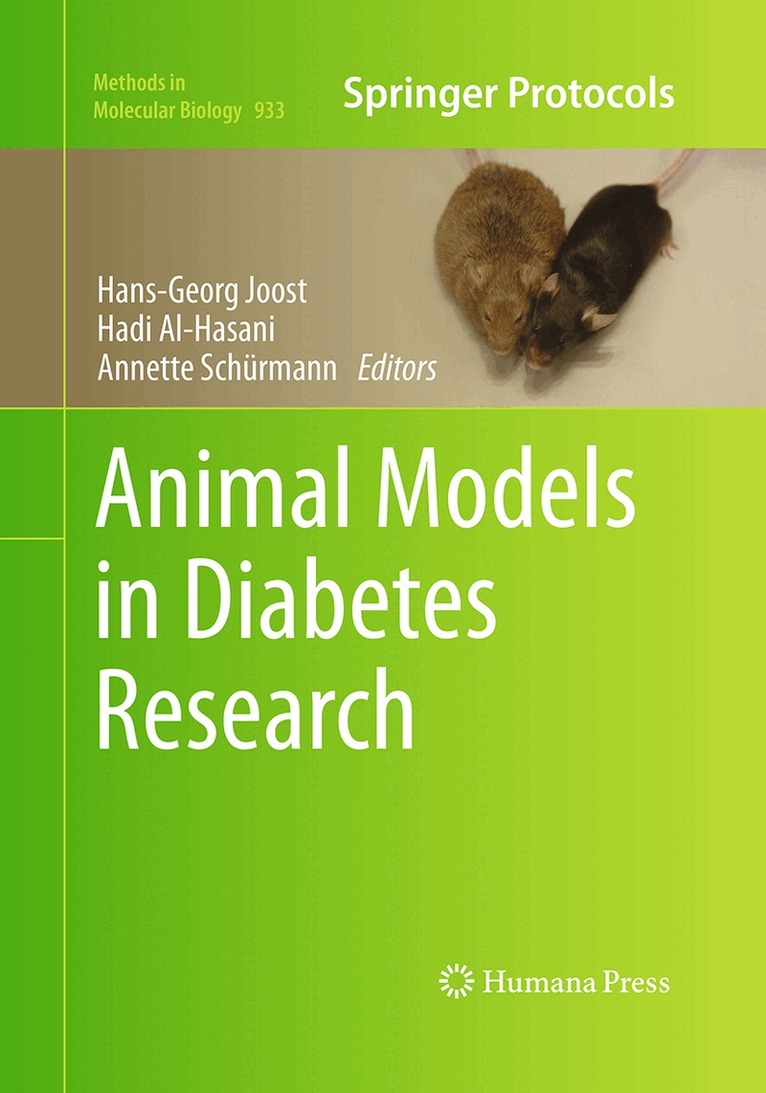
In recent years, human studies have made enormous contributions towards an understanding of the genetic basis of diabetes mellitus; however, most of the experimentation needed for the invention and testing of novel therapeutic approaches cannot be performed in humans. Thus, there is no alternative to appropriate animal models. In Animal Models in Diabetes Research, expert researchers explore the current status of the most important models and procedures in order to provide a timely resource in experimental diabetology. The first half of the volume serves as a comprehensive overview on our current knowledge of the pathogenesis and pathophysiology of diabetes in animal models through a series of reviews in model strains. The book then continues with vital, established protocols that are employed in the characterization and study of animal models of diabetes. As a volume in the highly successful Methods in Molecular Biology™ series, this work contains the type of detailed description and key implementation advice necessary to achieve successful results. Authoritative and cutting-edge, Animal Models in Diabetes Research delivers essential content that will be an important resource to advance diabetes research in the years to come.
1 096 kr
Skickas inom 10-15 vardagar
In recent years, human studies have made enormous contributions towards an understanding of the genetic basis of diabetes mellitus; however, most of the experimentation needed for the invention and testing of novel therapeutic approaches cannot be performed in humans. Thus, there is no alternative to appropriate animal models. In Animal Models in Diabetes Research, expert researchers explore the current status of the most important models and procedures in order to provide a timely resource in experimental diabetology. The first half of the volume serves as a comprehensive overview on our current knowledge of the pathogenesis and pathophysiology of diabetes in animal models through a series of reviews in model strains. The book then continues with vital, established protocols that are employed in the characterization and study of animal models of diabetes. As a volume in the highly successful Methods in Molecular Biology™ series, this work contains the type of detailed description and key implementation advice necessary to achieve successful results. Authoritative and cutting-edge, Animal Models in Diabetes Research delivers essential content that will be an important resource to advance diabetes research in the years to come.
1 371 kr
Tillfälligt slut
Nutritional genomics paves the way for novel applications in medicine and human nutrition, and this volume presents the latest data on how genetic variation is associated with dietary response and how nutrients influence gene expression. In so doing, it brings together the various disciplines involved in this field of research, making this essential reading for nutritionists, biochemists and molecular biologists.
Ernährungsforschung in Deutschland - Situation und Perspektiven / Nutritional Research in Germany
Standpunkte / Positions
Häftad, Engelska, 2006
320 kr
Skickas inom 11-20 vardagar
With growing awareness of nutrition as the key factor for maintaining health, nutrition research has become a task of international importance. This new text provides important, forward-looking information for all scientists active in nutrition research as well as for funding organisations, universities, and research administration. The authors describe the international development of nutrition research, its current and future goals, as well as the methods used in the field. Includes recommendations for improving research.
Del 52 - Results and Problems in Cell Differentiation
Sensory and Metabolic Control of Energy Balance
Inbunden, Engelska, 2010
1 578 kr
Skickas inom 10-15 vardagar
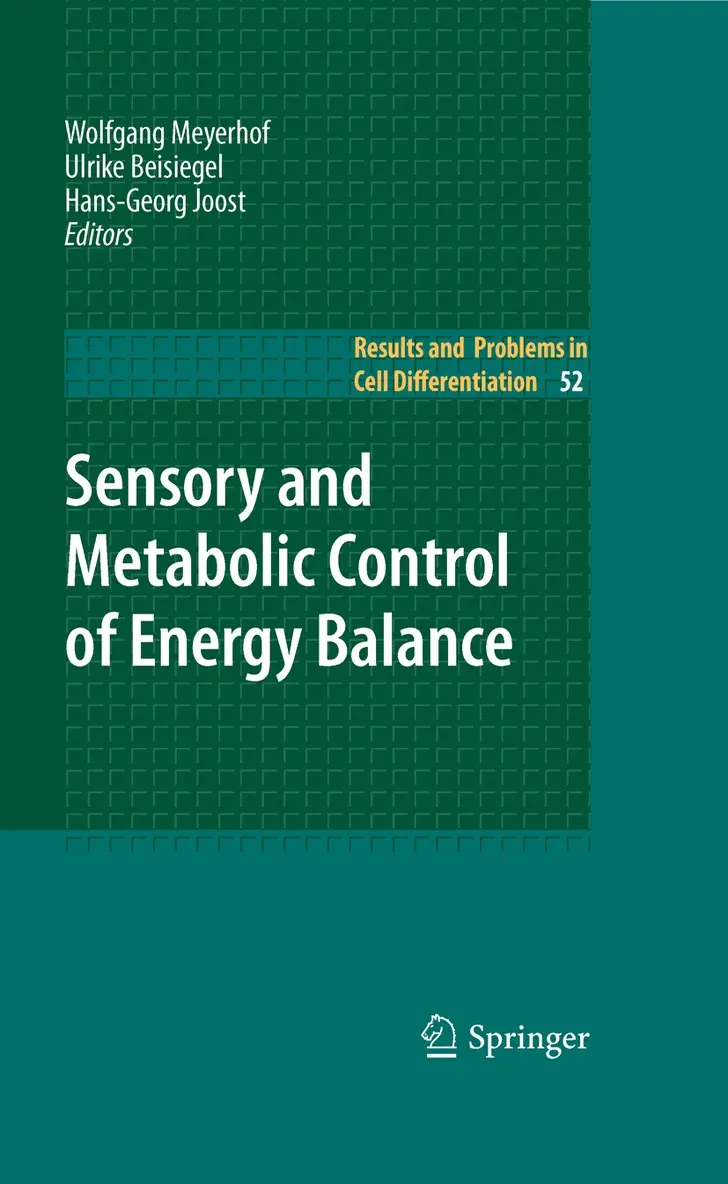
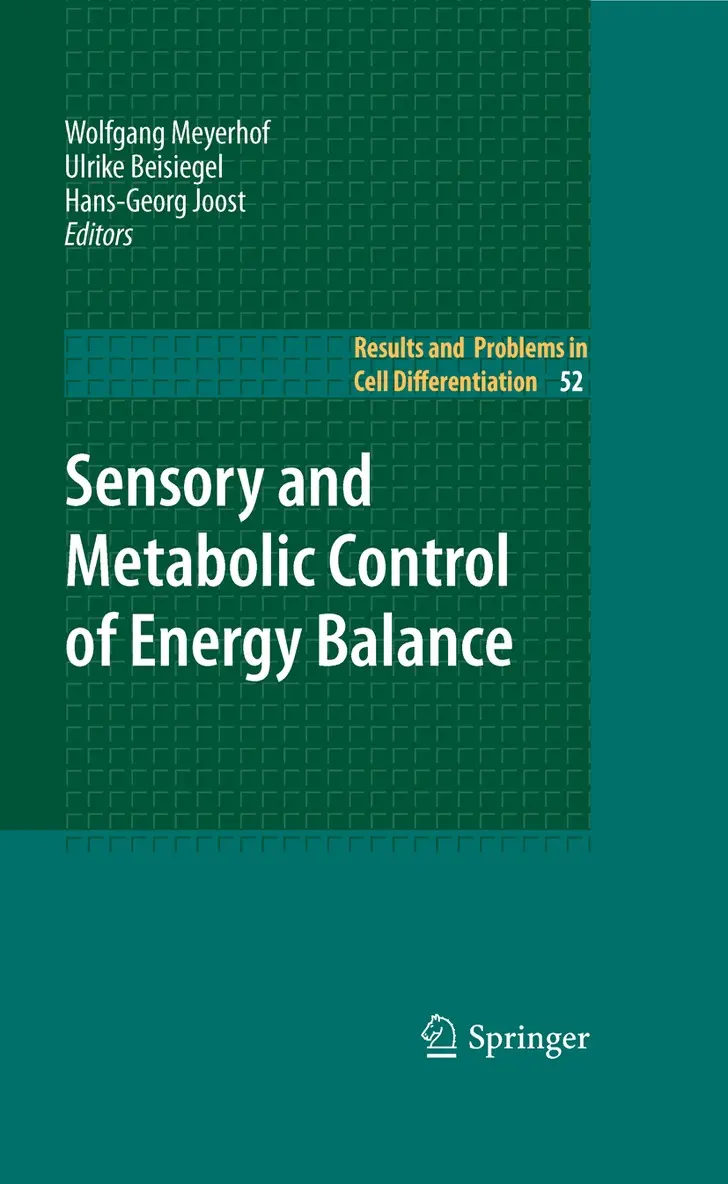
During the last two decades, the prevalence of obesity has dramatically increased in western and westernized societies. Its devastating health consequences include hypertension, cardiovascular diseases, or diabetes and make obesity the second leading cause of unnecessary deaths in the USA. As a consequence, obesity has a strong negative impact on the public health care systems. Recently emerging scienti?c insight has helped understanding obesity as a complex chronic disease with multiple causes. A multileveled gene–environment interaction appears to involve a substantial number of susceptibility genes, as well as associations with low physical activity levels and intake of high-calorie, low-cost, foods. Unfor- nately, therapeutic options to prevent or cure this disease are extremely limited, posing an extraordinary challenge for today’s biomedical research community. Obesity results from imbalanced energy metabolism leading to lipid storage. Only detailed understanding of the multiple molecular underpinnings of energy metabolism can provide the basis for future therapeutic options. Numerous aspects of obesity are currently studied, including the essential role of neural and endocrine control circuits, adaptive responses of catabolic and anabolic pathways, metabolic fuel sensors, regulation of appetite and satiation, sensory information processing, transcriptional control of metabolic processes, and the endocrine role of adipose tissue. These studies are predominantly fuelled by basic research on mammalian models or clinical studies, but these ?ndings were paralleled by important insights, which have emerged from studying invertebrate models.
3 243 kr
Skickas inom 10-15 vardagar
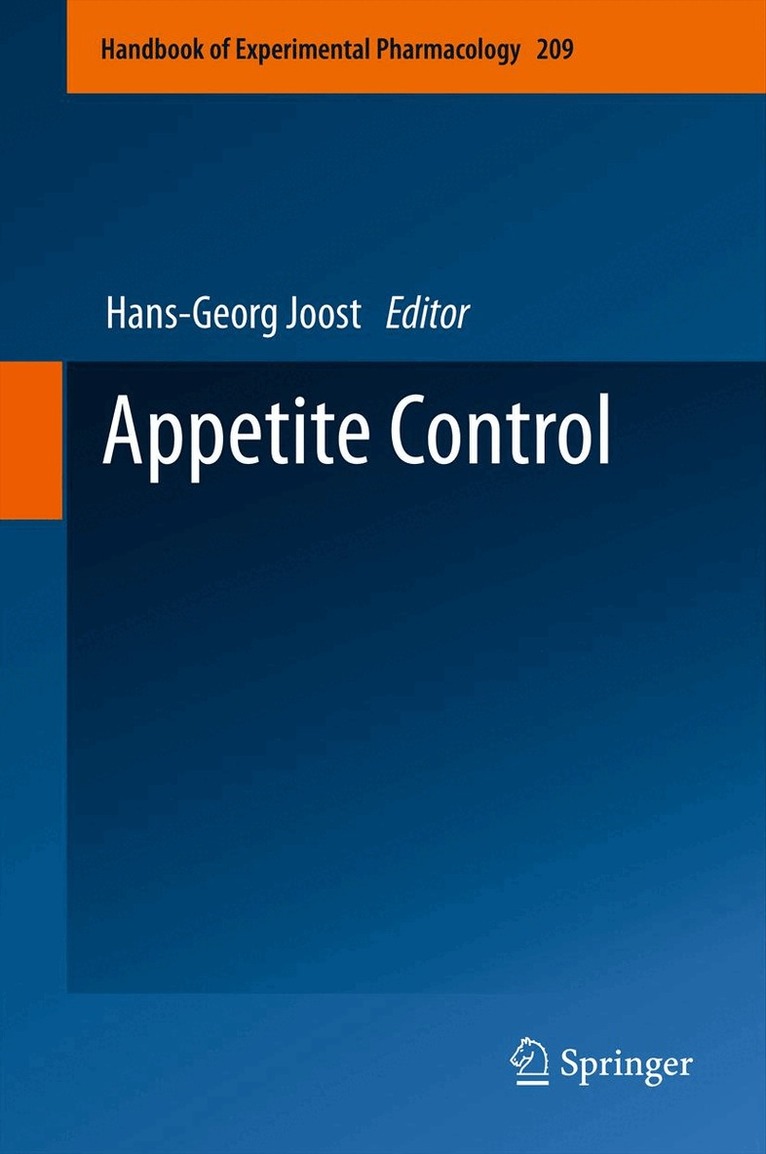
The volume ‘Appetite Control’ provides a comprehensive description of the mechanisms controlling food intake, and thereby energy balance, in the mammalian organism. During the last decade, research in this area has produced a remarkable wealth of information and has characterized the function of numerous peptides, transmitters, and receptors in appetite control. Dysfunction of these circuits leads to obesity, a growing health concern. However, the plethora of mechanistic information is in marked contrasts to an almost complete lack of anti-obesity drugs that meet the safety standards required for the chronic therapy of morbid obesity. Consequently, ongoing research aims to identify additional targets and agents for a pharmacological intervention. Thus, the mechanisms of appetite control as well as all agents interfering with its control are of considerable practical interest.The authors of the volume are distinguished scientists who are leading experts in the field, and who have contributed important, original data to our understanding of the mechanisms of appetite control. They have quite different scientific backgrounds and, together, they represent all relevant disciplines. Thereby, the topics are presented from different points of view, not exclusively from that of pharmacology and neuroendocrinology. Thus, the volume addresses all scientists who are interested in the field of obesity research and the pathophysiology of appetite control.
1 578 kr
Skickas inom 10-15 vardagar
During the last two decades, the prevalence of obesity has dramatically increased in western and westernized societies. Its devastating health consequences include hypertension, cardiovascular diseases, or diabetes and make obesity the second leading cause of unnecessary deaths in the USA. As a consequence, obesity has a strong negative impact on the public health care systems. Recently emerging scienti?c insight has helped understanding obesity as a complex chronic disease with multiple causes. A multileveled gene–environment interaction appears to involve a substantial number of susceptibility genes, as well as associations with low physical activity levels and intake of high-calorie, low-cost, foods. Unfor- nately, therapeutic options to prevent or cure this disease are extremely limited, posing an extraordinary challenge for today’s biomedical research community. Obesity results from imbalanced energy metabolism leading to lipid storage. Only detailed understanding of the multiple molecular underpinnings of energy metabolism can provide the basis for future therapeutic options. Numerous aspects of obesity are currently studied, including the essential role of neural and endocrine control circuits, adaptive responses of catabolic and anabolic pathways, metabolic fuel sensors, regulation of appetite and satiation, sensory information processing, transcriptional control of metabolic processes, and the endocrine role of adipose tissue. These studies are predominantly fuelled by basic research on mammalian models or clinical studies, but these ?ndings were paralleled by important insights, which have emerged from studying invertebrate models.
3 243 kr
Skickas inom 10-15 vardagar
The volume ‘Appetite Control’ provides a comprehensive description of the mechanisms controlling food intake, and thereby energy balance, in the mammalian organism. During the last decade, research in this area has produced a remarkable wealth of information and has characterized the function of numerous peptides, transmitters, and receptors in appetite control. Dysfunction of these circuits leads to obesity, a growing health concern. However, the plethora of mechanistic information is in marked contrasts to an almost complete lack of anti-obesity drugs that meet the safety standards required for the chronic therapy of morbid obesity. Consequently, ongoing research aims to identify additional targets and agents for a pharmacological intervention. Thus, the mechanisms of appetite control as well as all agents interfering with its control are of considerable practical interest.The authors of the volume are distinguished scientists who are leading experts in the field, and who have contributed important, original data to our understanding of the mechanisms of appetite control. They have quite different scientific backgrounds and, together, they represent all relevant disciplines. Thereby, the topics are presented from different points of view, not exclusively from that of pharmacology and neuroendocrinology. Thus, the volume addresses all scientists who are interested in the field of obesity research and the pathophysiology of appetite control.