Hans-Jörg Trenz - Böcker
Visar alla böcker från författaren Hans-Jörg Trenz. Handla med fri frakt och snabb leverans.
13 produkter
13 produkter
2 289 kr
Skickas inom 10-15 vardagar
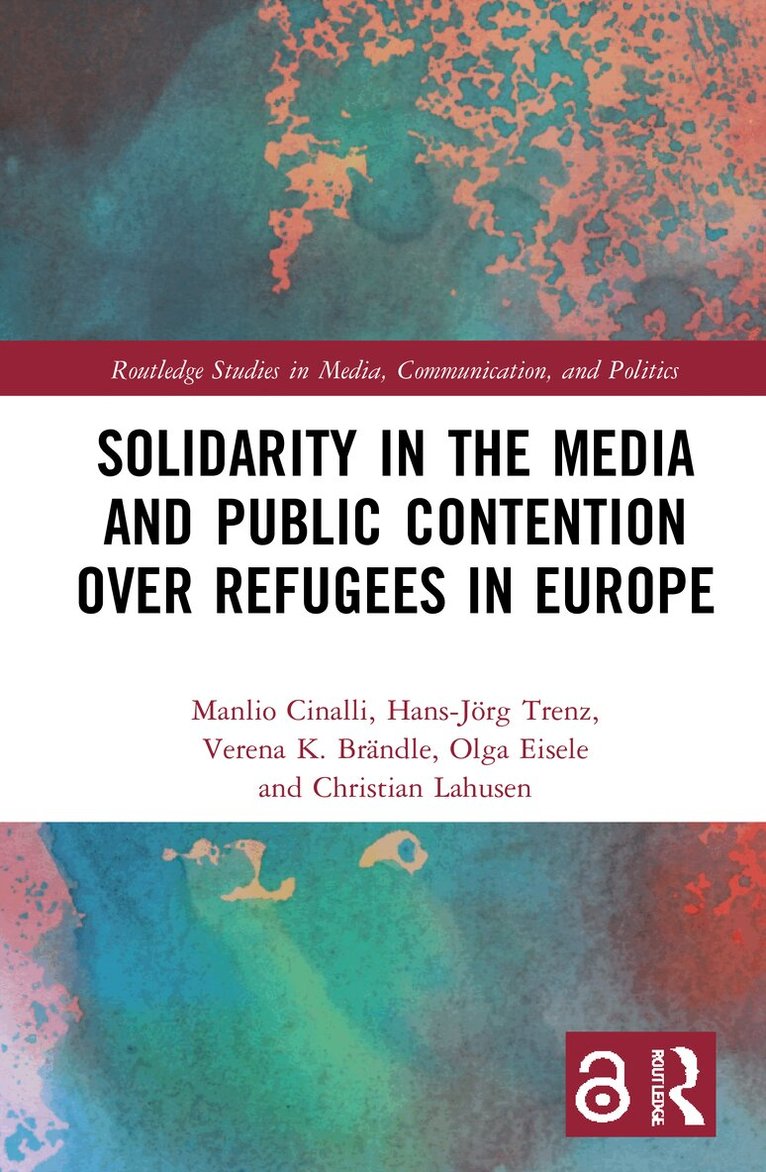
This book examines the ‘European refugee crisis’, offering an in-depth comparative analysis of how public attitudes towards refugees and humanitarian dispositions are shaped by political news coverage. An international team of authors address the role of the media in contesting solidarity towards refugees from a variety of disciplinary perspectives. Focusing on the public sphere, the book follows the assumption that solidarity is a social value, political concept and legal principle that is discursively constructed in public contentions. The analysis refers systematically and comparatively to eight European countries, namely, Denmark, France, Germany, Greece, Italy, Poland, Switzerland and the United Kingdom. Treatment of data is also original in the way it deals with variations of public spheres by combining a news media claims-making analysis with a social media reception analysis. In particular, the book highlights the prominent role of the mass media in shaping national and transnational solidarity, while exploring the readiness of the mass media to extend thick conceptions of solidarity to non-members. It proposes a research design for the comparative analysis of online news reception and considers the innovative potential of this method in relation to established public opinion research.The book is of particular interest for scholars who are interested in the fields of European solidarity, migration and refugees, contentious politics, while providing an approach that talks to scholars of journalism and political communication studies, as well as digital journalism and online news reception.The Open Access version of this book, available at http://www.tandfebooks.com, has been made available under a Creative Commons Attribution-Non Commercial-No Derivatives 4.0 license.
563 kr
Skickas inom 10-15 vardagar
This book examines the ‘European refugee crisis’, offering an in-depth comparative analysis of how public attitudes towards refugees and humanitarian dispositions are shaped by political news coverage. An international team of authors address the role of the media in contesting solidarity towards refugees from a variety of disciplinary perspectives. Focusing on the public sphere, the book follows the assumption that solidarity is a social value, political concept and legal principle that is discursively constructed in public contentions. The analysis refers systematically and comparatively to eight European countries, namely, Denmark, France, Germany, Greece, Italy, Poland, Switzerland and the United Kingdom. Treatment of data is also original in the way it deals with variations of public spheres by combining a news media claims-making analysis with a social media reception analysis. In particular, the book highlights the prominent role of the mass media in shaping national and transnational solidarity, while exploring the readiness of the mass media to extend thick conceptions of solidarity to non-members. It proposes a research design for the comparative analysis of online news reception and considers the innovative potential of this method in relation to established public opinion research.The book is of particular interest for scholars who are interested in the fields of European solidarity, migration and refugees, contentious politics, while providing an approach that talks to scholars of journalism and political communication studies, as well as digital journalism and online news reception.The Open Access version of this book, available at http://www.tandfebooks.com, has been made available under a Creative Commons Attribution-Non Commercial-No Derivatives 4.0 license.
2 155 kr
Skickas inom 10-15 vardagar
Over the past two decades, civil society has played a pivotal role in Europe, from the demise of Communist rule to the reunification of Europe, followed by the expansion of the single market to the reconstitution of democracy in the enlarged European Union. European civil society has emerged as a social space between EU governance and the citizens of the member states, populated by non-state agents claiming to represent, speak for or participate on behalf of the most varied social constituencies in EU decision making. This book consolidates European civil society research by re-viewing its conceptual, normative and empirical-analytical foundations. With contributors from political science to sociology to law, it captures the evolving practices of European civil society that stretch across the national (local), the European and the global realm. Developing an analytical framework that highlights the interplay between civil society building and polity building from above as well as from below, within the legal and institutional framework of the EU, they examine whether and how civil society can contribute to making democracy work in normative democratic theoretical perspectives. This book will be of interest to students and scholars of civil society, European politics, political science and sociology.
2 088 kr
Skickas inom 10-15 vardagar
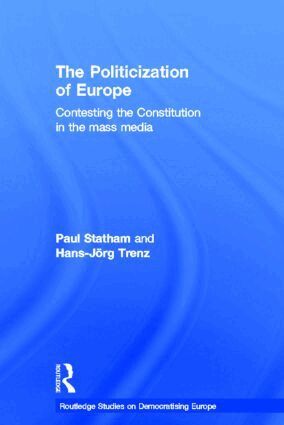
This book examines how mass media debates have contributed to the politicization of the European Union. The public controversies over the EU’s attempted Constitution-making (and its failure) sowed the seeds for a process of politicization that has advanced ever since: an increasing visibility for the EU in mass-mediated public debates that is combined with a growing public contestation over Europe within national politics. The book presents an original systematic study of the emerging field of political discourse carried by the mass media in France, Germany and Britain to examine the performance of Europe’s public sphere. Whilst the EU’s increasing politicization can be seen as beneficial to European democracy, potentially ‘normalizing’ the EU-level within national politics, the same developments can also be a threat to democracy, leading to populist and xenophobic responses and a decline in political trust. Such discussions are key to understanding the EU’s legitimacy and how its democratic politics can work in an era of mediated politics.The Politicization of Europe will be of interest to students and scholars of comparative politics, media studies, communication, sociology and European studies.
671 kr
Skickas inom 10-15 vardagar
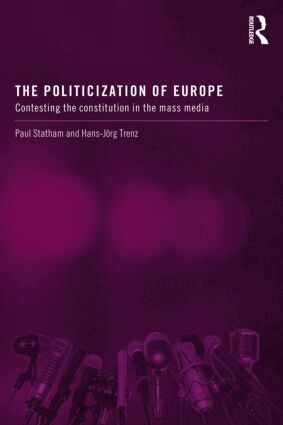
This book examines how mass media debates have contributed to the politicization of the European Union. The public controversies over the EU’s attempted Constitution-making (and its failure) sowed the seeds for a process of politicization that has advanced ever since: an increasing visibility for the EU in mass-mediated public debates that is combined with a growing public contestation over Europe within national politics. The book presents an original systematic study of the emerging field of political discourse carried by the mass media in France, Germany and Britain to examine the performance of Europe’s public sphere. Whilst the EU’s increasing politicization can be seen as beneficial to European democracy, potentially ‘normalizing’ the EU-level within national politics, the same developments can also be a threat to democracy, leading to populist and xenophobic responses and a decline in political trust. Such discussions are key to understanding the EU’s legitimacy and how its democratic politics can work in an era of mediated politics.The Politicization of Europe will be of interest to students and scholars of comparative politics, media studies, communication, sociology and European studies.
536 kr
Skickas inom 10-15 vardagar
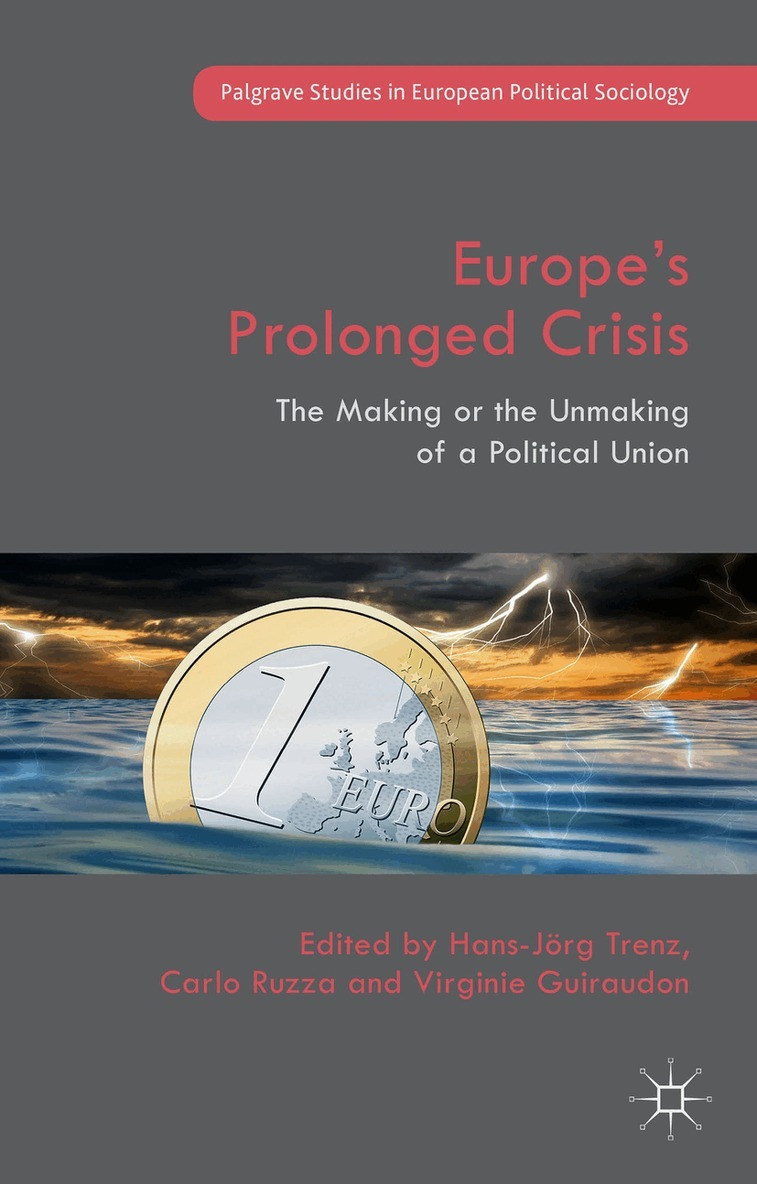
This collection presents a political sociology of crisis in Europe. Focusing on state and society transformations in the context of the 2008 financial crisis and its aftermath in Europe, it observes a return of redistributive conflicts that correlates with a 'new politics of identity', nationalism, regionalism and expressions of Euroscepticism.
671 kr
Skickas inom 10-15 vardagar
Over the past two decades, civil society has played a pivotal role in Europe, from the demise of Communist rule to the reunification of Europe, followed by the expansion of the single market to the reconstitution of democracy in the enlarged European Union. European civil society has emerged as a social space between EU governance and the citizens of the member states, populated by non-state agents claiming to represent, speak for or participate on behalf of the most varied social constituencies in EU decision making. This book consolidates European civil society research by re-viewing its conceptual, normative and empirical-analytical foundations. With contributors from political science to sociology to law, it captures the evolving practices of European civil society that stretch across the national (local), the European and the global realm. Developing an analytical framework that highlights the interplay between civil society building and polity building from above as well as from below, within the legal and institutional framework of the EU, they examine whether and how civil society can contribute to making democracy work in normative democratic theoretical perspectives. This book will be of interest to students and scholars of civil society, European politics, political science and sociology.
581 kr
Skickas inom 10-15 vardagar
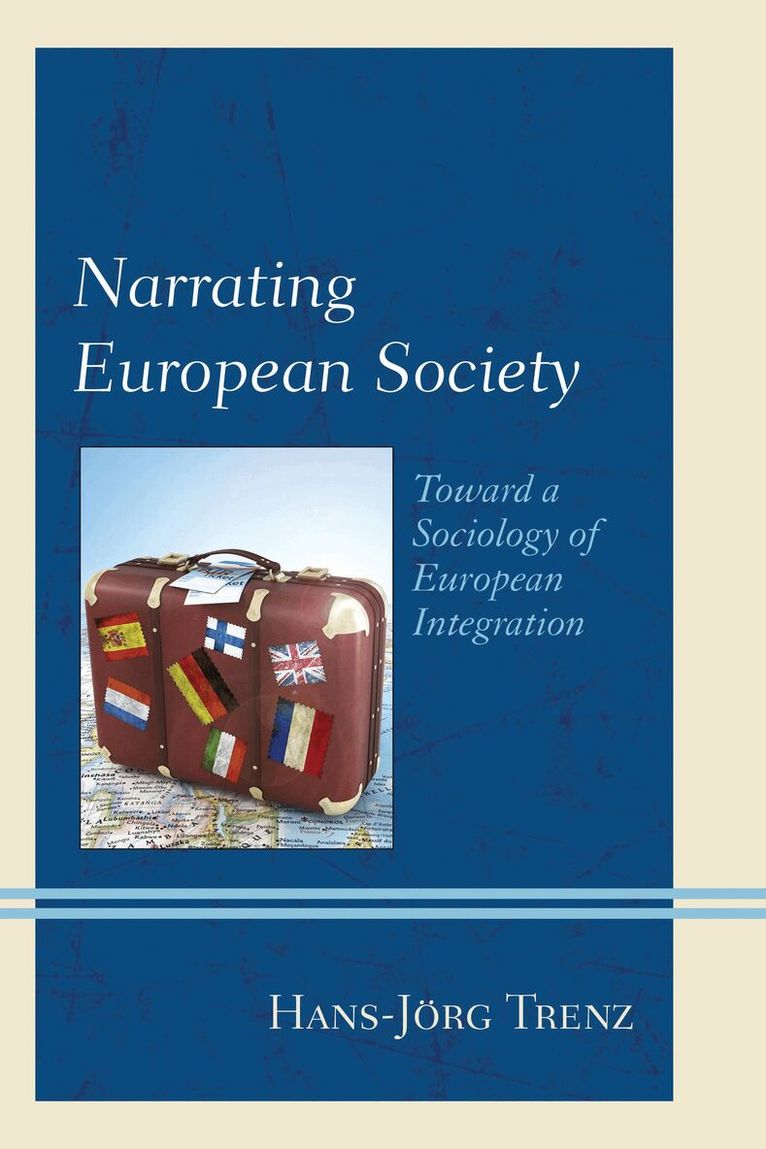
Trenz introduces a sociological perspective on European integration by looking at different accounts of Europeanization as society building. He observes how Europeanization unfolds in ongoing practices and discourses through which social relations among the Europeans are redefined and re-embedded. The chapters describe how the project of European integration has been powerfully launched in postwar Europe as a normative venture that comprises polity and society building, how this project became ingrained in every-day life histories and experiences of the Europeans, how this project became contested and confronted resistances and, ultimately, how it went through its most severe crisis. A sociology of European integration is thus outlined along four main themes or narratives: first, the elite processes of identity construction and the framework of norms and ideas that carries such a construction (together with notions of European identity, EU citizenship, etc.); second, the socialization of European citizens, processes of banal Europeanism, and social transnationalism through everyday cross-border exchanges; third, the mobilization of resistance and Euroskepticism as a fundamental and collectively mobilized opposition to processes of Europeanization; and fourth, the political sociology of crisis, linked not only to financial turmoil but also, more fundamentally, to a legitimation crisis that affects Europe and the democratic nation-state.
1 190 kr
Skickas inom 7-10 vardagar
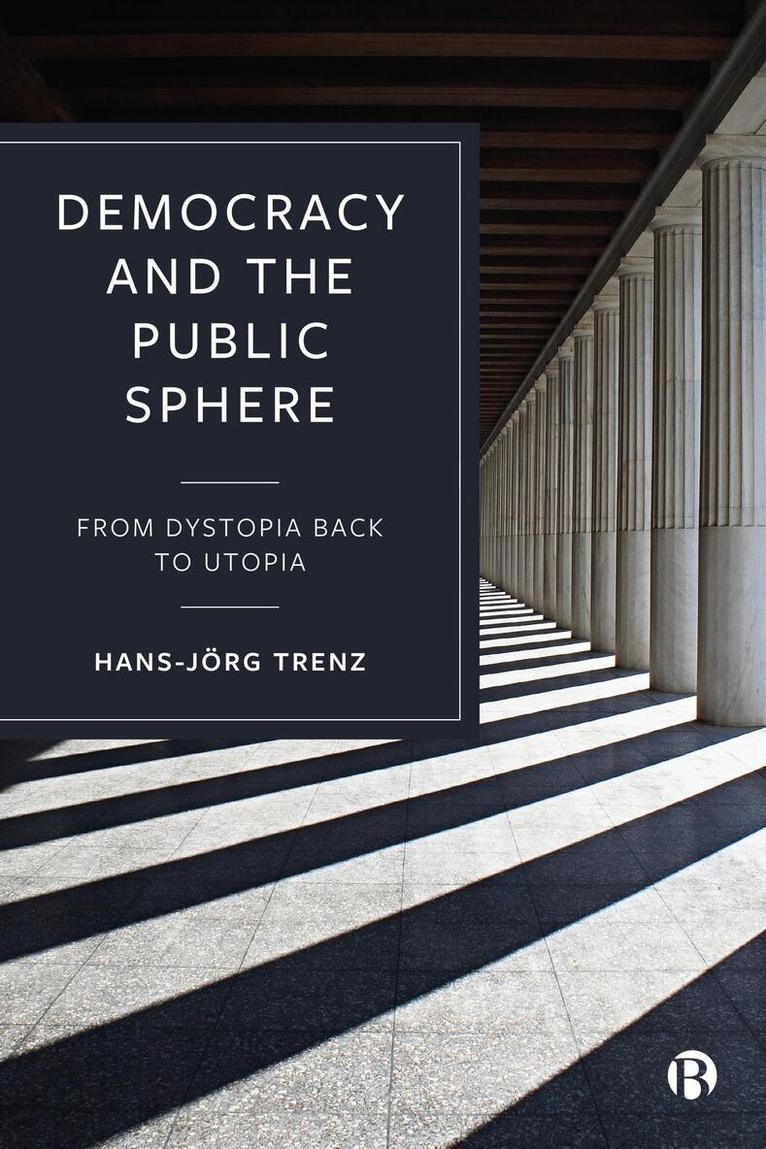
From fake news to infringement of privacy in digital spheres, the changing landscapes of media and public communication have completely transformed contemporary democracies in recent decades. Disruptions of media functioning can be seen as evidence for a transition from democracy to post-democracy, but how plausible is this scenario? Using empirical evidence, the author asks how imminent the threat of the end of democracy is, and how it can be restored.Exploring the creative and destructive ways individuals and groups make use of new digital and social media in democratic societies across the world, the book presents a much-needed critical theory of the public sphere as we enter the new digital age.
2 317 kr
Kommande
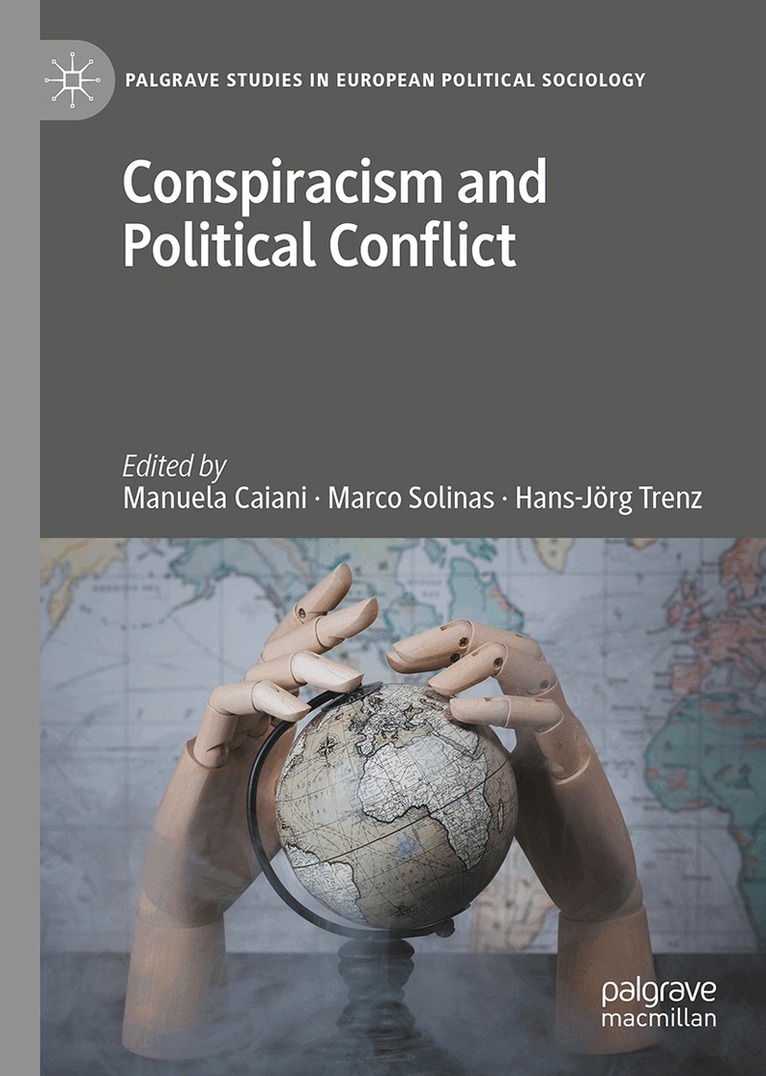
This volume takes an innovative interdisciplinary approach to the different forms and uses of conspiracy theories in political conflict. Four main areas of research are explored: The first section presents an analysis of conspiracy theories from a political theory perspective, focusing on the logic and mechanisms of political conspiracy theories. The second section focuses on the ways in which conspiracy theories undermine the functioning of democratic systems and on strategies to counter these effects in the public debate. The third section is dedicated to empirical case studies that analyse the use of conspiracy theories in political conflict, particularly during elections and campaigns on social media. The fourth section focuses on the role of political entrepreneurs, parties and movements of the far-right as producers and promoters of conspiracy theories. This interdisciplinary approach draws on methods and perspectives from different disciplines, which are presented here along common theoretical lines. This book will be of interest to scholars and students in political sociology, comparative politics and cultural studies.
461 kr
Kommande
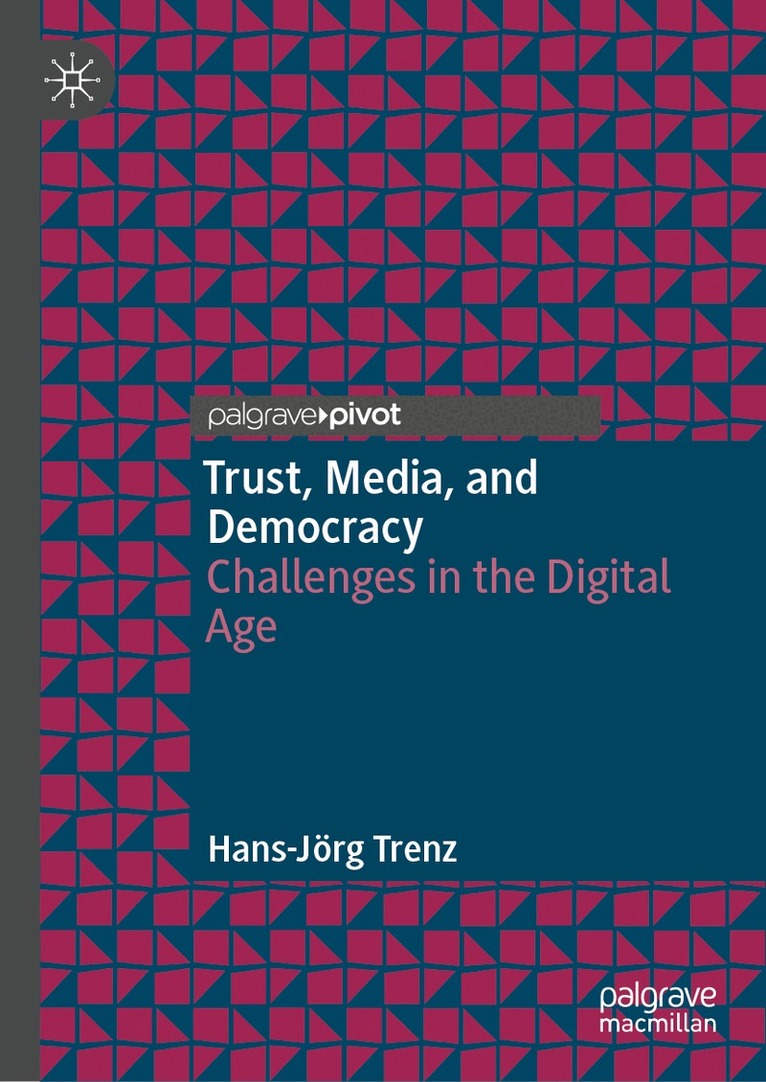
This book explores how trust, media, and democracy are deeply connected in times of digital change and political uncertainty. It shows how trust in democratic institutions and government is built, challenged, and contested through old and new media. The early chapters introduce key ideas about social and political trust and explain why trust and distrust both matter for democracy. It then examines the role of news media and journalism as mediators of trust, before turning to major contemporary challenges such as digitalisation, political polarisation, populism, and the spread of misinformation. Drawing on comparative research from across Europe, including the Covid-19 pandemic, later chapters analyse how citizens judge governments, experts, and media institutions. The book concludes by proposing a model of “enlightened trust” that highlights the importance of critical publics, media responsibility, and democratic debate. It will be of interest to readers searching for insights on trust, media, democracy, and the future of journalism and the public sphere.
600 kr
Skickas inom 10-15 vardagar
Internet and European Integration
Pro- and Anti-EU Debates in Online News Media
Inbunden, Engelska, 2014
472 kr
Tillfälligt slut
This book offers a wealth of original empirical data on how online media shape EU contestation. Taking a public sphere perspective, the authors highlight the myths and truths about the nature of audience-driven online media content and show how public demands for legitimacy are at the heart of the much-analyzed politicization of European integration. What EU citizens most intensely debate online are the fundamental questions of what the European institutions stand for and how they can be held accountable. Drawing on innovative and rigorous analysis of online media ownership, journalistic content and online readers’ inputs, the authors piece together the components of the dynamic nature of EU contestation and the degree of convergence towards Euroscepticism across EU member states in the first years of the Eurocrisis. There is no doubt that EU citizens have strong opinions about the EU and interactive online media allow these opinions to come to the fore, to be challenged and amplified both within and beyond national public spheres. Yet, for all its potential to unite European publics, online EU contestation remains firmly anchored in offline news media frames, while citizens and journalists alike struggle to put forward a clear vision of the future EU polity.