Hans-Jurgen Puhle – författare
Visar alla böcker från författaren . Handla med fri frakt och snabb leverans.
12 produkter
12 produkter
E-bok
PDF, Engelska, 2007238 kr
Läs direkt efter köp
This book presents the results of systematic comparative analyses of electoral behavior and support for democracy in 13 countries on four continents. It is based on national election surveys held in "old" and "new" democracies in Europe (Germany, Britain, Spain, Greece, Italy, Portugal, Bulgaria), North and South America (the United States, Chile and Uruguay), and Asia (Hong Kong) between 1990 and 2004. It is methodologically innovative, notwithstanding the factthat its core concern with "political intermediation" (i.e., the flow of political information from parties and candidates to voters through the mass-communications media, membership in secondary associations, and direct, face-to-face contacts within interpersonal networks) was first introduced to thestudy of electoral behavior by Paul Lazarsfeld and his collaborators in the 1940s. In addition to reviving that long-neglected analytical framework, this book breaks new ground by systematically exploring the impact of socio-political values on electoral behavior. It also analyzes the role of political intermediation in forming basic attitudes towards democracy (which are crucial for the consolidation of new democracies), and, in turn, channeling those orientations into various forms ofpolitical behavior. Some of the findings presented in this volume are dramatic, and clearly reveal that these channels of information are among the most powerful factors influencing the development of political attitudes and partisan electoral behavior. So, too, are socio-political values in somecountries (particularly the United States). This volume is the first book-length product of the now 18-country Comparative National Elections Project.
Inbunden, Engelska, 2007
2 141 kr
Skickas inom 3-6 vardagar
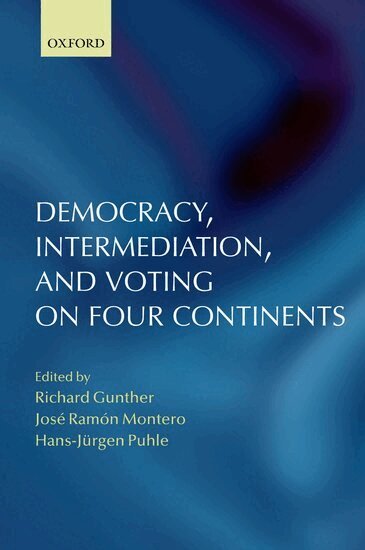
This book presents the results of systematic comparative analyses of electoral behavior and support for democracy in 13 countries on four continents. It is based on national election surveys held in "old" and "new" democracies in Europe (Germany, Britain, Spain, Greece, Italy, Portugal, Bulgaria), North and South America (the United States, Chile and Uruguay), and Asia (Hong Kong) between 1990 and 2004. It is methodologically innovative, notwithstanding the fact that its core concern with "political intermediation" (i.e., the flow of political information from parties and candidates to voters through the mass-communications media, membership in secondary associations, and direct, face-to-face contacts within interpersonal networks) was first introduced to the study of electoral behavior by Paul Lazarsfeld and his collaborators in the 1940s. In addition to reviving that long-neglected analytical framework, this book breaks new ground by systematically exploring the impact of socio-political values on electoral behavior. It also analyzes the role of political intermediation in forming basic attitudes towards democracy (which are crucial for the consolidation of new democracies), and, in turn, channeling those orientations into various forms of political behavior. Some of the findings presented in this volume are dramatic, and clearly reveal that these channels of information are among the most powerful factors influencing the development of political attitudes and partisan electoral behavior. So, too, are socio-political values in some countries (particularly the United States). This volume is the first book-length product of the now 18-country Comparative National Elections Project.
Häftad, Engelska, 2007
408 kr
Skickas inom 7-10 vardagar
This book presents the results of systematic comparative analyses of electoral behavior and support for democracy in 13 countries on four continents. It is based on national election surveys held in "old" and "new" democracies in Europe (Germany, Britain, Spain, Greece, Italy, Portugal, Bulgaria), North and South America (the United States, Chile and Uruguay), and Asia (Hong Kong) between 1990 and 2004. It is methodologically innovative, notwithstanding the fact that its core concern with "political intermediation" (i.e., the flow of political information from parties and candidates to voters through the mass-communications media, membership in secondary associations, and direct, face-to-face contacts within interpersonal networks) was first introduced to the study of electoral behavior by Paul Lazarsfeld and his collaborators in the 1940s. In addition to reviving that long-neglected analytical framework, this book breaks new ground by systematically exploring the impact of socio-political values on electoral behavior. It also analyzes the role of political intermediation in forming basic attitudes towards democracy (which are crucial for the consolidation of new democracies), and, in turn, channeling those orientations into various forms of political behavior. Some of the findings presented in this volume are dramatic, and clearly reveal that these channels of information are among the most powerful factors influencing the development of political attitudes and partisan electoral behavior. So, too, are socio-political values in some countries (particularly the United States). This volume is the first book-length product of the now 18-country Comparative National Elections Project.
Inbunden, Engelska, 2013
1 419 kr
Skickas inom 10-15 vardagar
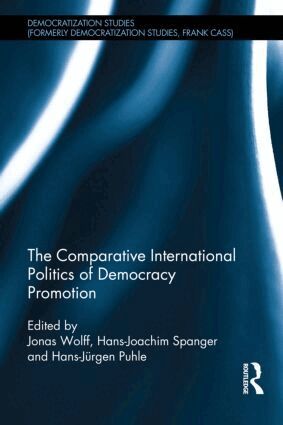
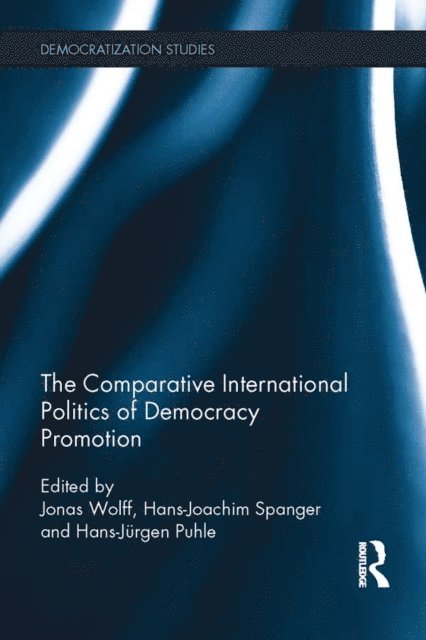
Though scholarly attention to democracy promotion is increasing, there is still little comparative and theoretically-based work on the protagonists of democracy promotion. This book investigates the motives that drive democracy promotion in a comparative and theoretically oriented manner, exploring how democracy promoters deal with conflicting objectives and the factors that shape their behaviour. It also addresses the more policy-oriented debate on the contemporary challenges to democracy promotion, focusing on US and German policies towards three kinds of challenges: the emergence of ‘radical’ leftist governments in Bolivia and Ecuador, the political rise of Islamist movements in Turkey and Pakistan, and the consolidation of (semi-)authoritarian rule in Belarus and Russia. In each case, North-Western democracy promoters have been confronted with serious conflicts of objectives between security, economic interests and democracy promotion. The analysis and comparison of such situations in which democracy promoters have to deal with competing objectives and make tough decisions provides powerful evidence as to the factors that shape democracy promotion.The Comparative International Politics of Democracy Promotion will be of interest to students and scholars of international relations, comparative politics, democratization studies and foreign policy.
Häftad, Engelska, 2015
429 kr
Skickas inom 10-15 vardagar
Though scholarly attention to democracy promotion is increasing, there is still little comparative and theoretically-based work on the protagonists of democracy promotion. This book investigates the motives that drive democracy promotion in a comparative and theoretically oriented manner, exploring how democracy promoters deal with conflicting objectives and the factors that shape their behaviour. It also addresses the more policy-oriented debate on the contemporary challenges to democracy promotion, focusing on US and German policies towards three kinds of challenges: the emergence of ‘radical’ leftist governments in Bolivia and Ecuador, the political rise of Islamist movements in Turkey and Pakistan, and the consolidation of (semi-)authoritarian rule in Belarus and Russia. In each case, North-Western democracy promoters have been confronted with serious conflicts of objectives between security, economic interests and democracy promotion. The analysis and comparison of such situations in which democracy promoters have to deal with competing objectives and make tough decisions provides powerful evidence as to the factors that shape democracy promotion.The Comparative International Politics of Democracy Promotion will be of interest to students and scholars of international relations, comparative politics, democratization studies and foreign policy.
E-bok
PDF, Tyska, 2013449 kr
Läs direkt efter köp
Häftad, Tyska, 1999
459 kr
Skickas inom 10-15 vardagar
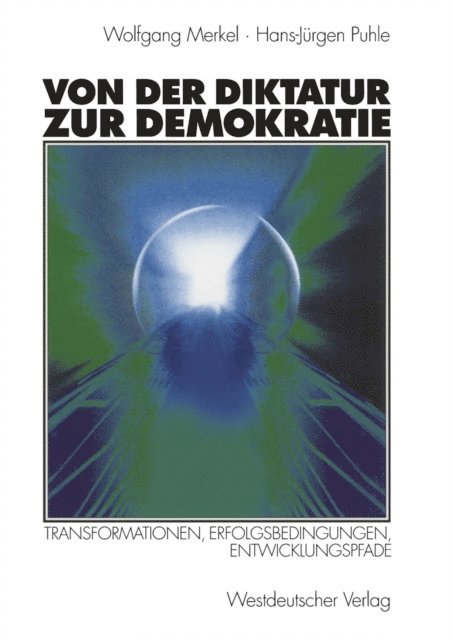
Das Buch faßt wesentliche Erkenntnisse der Transformationsforschung der vergangenen 40 Jahre zusammen. Es präsentiert, kommentiert und diskutiert die wichtigsten politikwissenschaftlichen Ansätze, die den Übergang autokratischer in demokratische Herrschaftsordnungen zu erklären suchen. Auf dem Hintergrund dieser theoretischen Überlegungen werden die besonderen Hindernisse, Probleme und Chancen herausgearbeitet, die sich innerhalb der drei großen Transformationsetappen - der Ablösung des alten Regimes, der Institutionalisierung sowie der Konsolidierung der Demokratie - ergeben. Abschließend wird anhand von drei Beispielen Osteuropas gezeigt, warum Transformationsprozesse hin zur Demokratie erfolgreich verlaufen (Ungarn), verzögert werden (Rußland) oder scheitern (Weißrußland). Das Buch eignet sich besonders für Studenten und Interessierte, die sich einen Überblick über die Ansätze, Probleme und Ergebnisse der Transformations- und Demokratisierungsforschung verschaffen wollen.
E-bok
PDF, Tyska, 20151 057 kr
Läs direkt efter köp
Hans-Jürgen Puhle hat seit langem als Historiker und Politikwissenschaftler vor allem zwei große Themenkomplexe im Vergleich bearbeitet: die unterschiedlichen Entwicklungswege einzelner Gesellschaften und Staaten in die Moderne seit dem ausgehenden 18. Jahrhundert, und Entwicklung und Wandel organisierter Politik und politischer Öffentlichkeit in den Prozessen der Durchsetzung von Interventionsstaatlichkeit und Massendemokratie, insbesondere zwischen dem qualitativen ›Sprung‹ der Modernisierung und Ausweitung politischer Organisation am Ende des 19. Jahrhunderts und einer ähnlich einschneidenden Zäsur hundert Jahre später im Zeichen von Informationstechnologie, vermehrter Fragmentierung und transnationaler und globaler Vernetzung und Entgrenzung. Die in diesem Band versammelten Aufsätze aus vier Jahrzehnten über gesellschaftliche und politische Entwicklungen in Deutschland, West- und Südeuropa, Nordamerika und Lateinamerika beleuchten exemplarisch u.a. Entwicklung und Wandel politischer Akteure (Protestbewegungen, Parteien, Verbände), Prozesse und Systeme, Probleme von Regimewechsel, Demokratisierung und Demokratiedefekten, die Stufen entwicklungs- und reformpolitischer Strategien, Mechanismen von Nationalismus und Populismus, Transformationstendenzen repräsentativer Demokratien sowie zentrale Charakteristika der unterschiedlichen Entwicklungswege der behandelten Gesellschaften.
E-bok
PDF, Tyska, 2013934 kr
Läs direkt efter köp
Häftad, Tyska, 2003
912 kr
Skickas inom 10-15 vardagar
Das Buch beschäftigt sich mit der Frage, wie Demokratie als eine moderne Ordnung politischer Herrschaft theoretisch definiert werden kann und defekte Demokratien von liberal-rechtsstaatlichen Demokratien unterschieden werden können. Es wird ein dreidimensionales Demokratiekonzept präsentiert und eine Typologie defekter Demokratien entwickelt.
Häftad, Tyska, 2006
711 kr
Skickas inom 10-15 vardagar
Das Buch analysiert aus empirischer Perspektive die Chancen, Wege und Ergebnisse demokratischer Entwicklung in jungen Transformationsländern. An ausgewählten Ländern in Lateinamerika, Osteuropa und Ostasien wird gezeigt, wie "Defekte" in jungen Demokratien entstehen, welche Formen sie annehmen, wann und wie sie sich verfestigen, verändern oder auflösen lassen.
Häftad, Engelska, 1995
333 kr
Tillfälligt slut
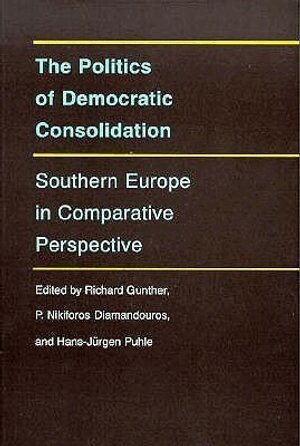
In The Politics of Democratic Consolidation, a distinguished group of internationally recognized scholars focus on four nations of Southern Europe-Spain, Portugal, Italy, and Greece-which have successfully consolidated their democratic regimes. Contributors are P. Nikiforos Diamandouros, Richard Gunther, Hans-Jurgen Puhle, Edward Malefakis, Juan J. Linz, Alfred Stepan, Felipe Aguero, Geoffrey Pridham, Sidney Tarrow, Leonardo Morlino, Jose R. Montero, Gianfranco Pasquino, and Philippe C. Schmitter.