Harald Gall – författare
Visar alla böcker från författaren Harald Gall. Handla med fri frakt och snabb leverans.
7 produkter
7 produkter
Häftad, Engelska, 2004
561 kr
Skickas inom 10-15 vardagar
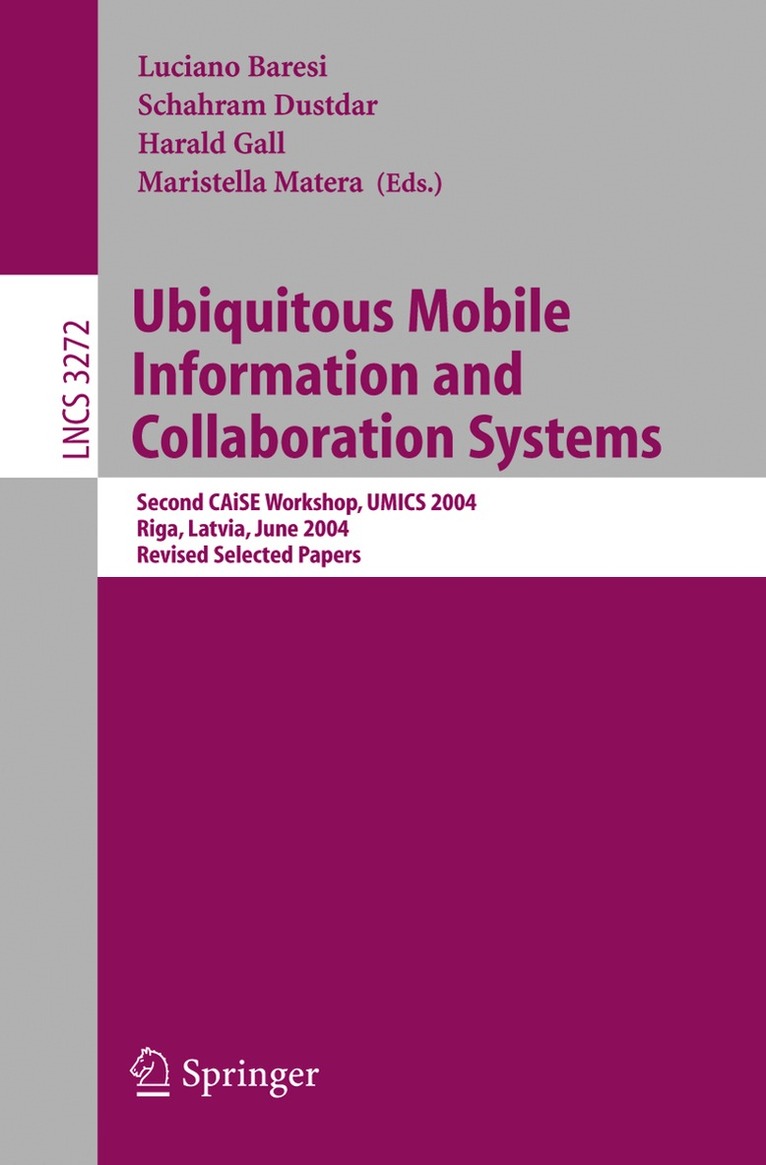
This book constitutes the thoroughly refereed post-proceedings of the Second International Workshop on Ubiquitous Mobile Information and Collaboration Systems, UMICS 2004, held in Riga, Latvia in June 2004 as a CAiSE satellite workshop.The 13 revised full papers presented together with an invited paper were carefully selected during two rounds of reviewing and improvement. The papers presented are related to fields such as workflow systems, groupware and CSCW, event-based systems, software architecture, distributed database systems, mobile computing, ubiquitous information systems, peer-to-peer systems, etc. The papers are organized in topical sections on data and context management, coordination and control process modeling, and application frameworks.
E-bok
PDF, Engelska, 2005708 kr
Läs direkt efter köp
Over recent years most business processes have changed in various dimensions (e. g. , ?exibility, interconnectivity, coordination style, autonomy) due to market conditions, organizational models, and usage scenarios of information systems. Frequently, inf- mationisrelocatedwithinageographicallydistributedsystemaccordingtorulesthatare only seldom de?ned as a well-codi?ed business process. This creates the need for a so- ware infrastructure that enables ubiquitous mobile and collaboration systems (UMICS). The anywhere/anytime/any means paradigm is becoming the major challenge in conceiving, designing, and releasing next-generation information systems. New te- nologies, like wi-? networks and 3rd-generation mobile phones, are offering the infr- tructure to conceive of information systems as ubiquitous information systems, that is, systems that are accessible from anywhere, at any time, and with any device. Ubiquity is not yet another buzzword pushed by emerging technologies, but is mainly a means to support new business models and encourage new ways of working. This new wave of UMICS will exploit the knowledge developed and deployed for conventional infor- tion systems, but will also need new concepts, models, methodologies, and supporting technologies to fully exploit the potentials of the enabling infrastructure and to be ready for the challenge. Moreover, people need to move across organizational boundaries and collaborate with others within an organization as well as between organizations. The ability to query the company’s distributed knowledge base and to cooperate with co-workers is still a requirement, but mobility brings new access scenarios and higher complexity.
Inbunden, Tyska, 2003
700 kr
Skickas inom 10-15 vardagar
Häftad, Tyska, 1995
576 kr
Skickas inom 10-15 vardagar
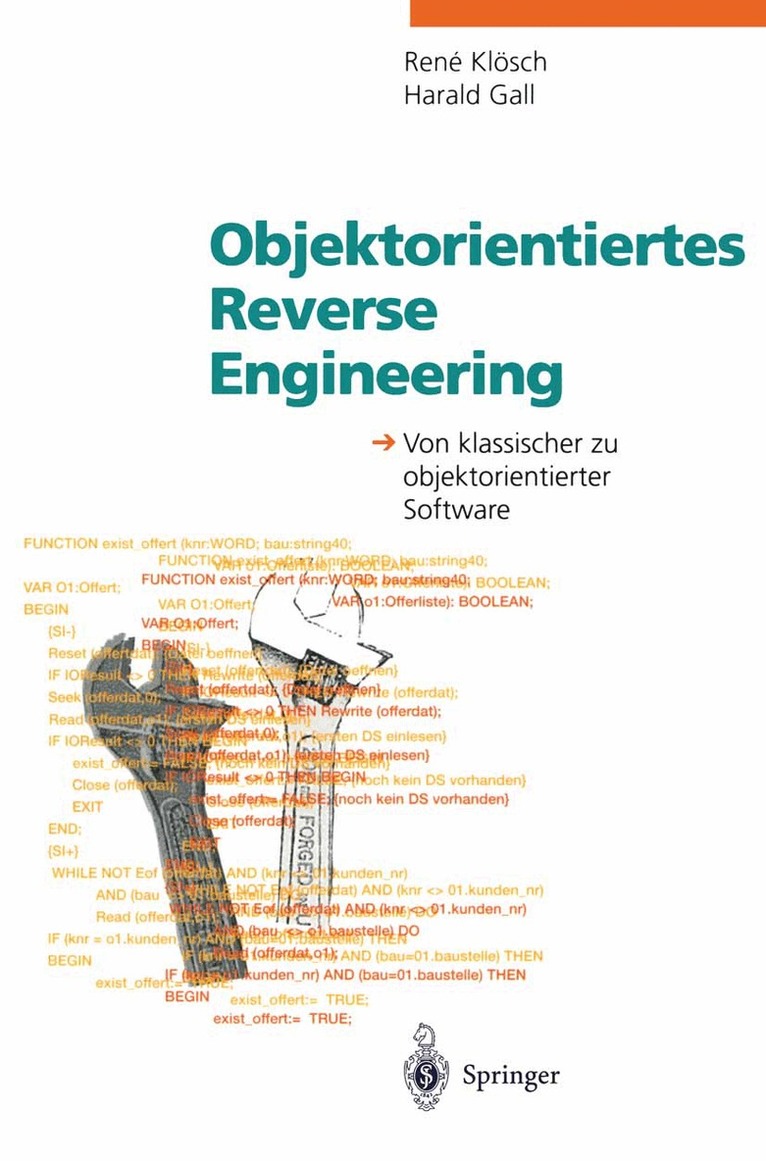
Die Wartung großer gewachsener Systeme ist ein wichtiger Bereich der Software-Industrie geworden. Heute geht es für Unternehmen meist nicht darum, neue Software-Systeme zu entwickeln, sondern die Lebensdauer existierender Anwendungen zu erhöhen und deren Wartbarkeit zu verbessern. Objektorientiertes Reverse Engineering ermöglicht die Umwandlung alter, in prozeduralen Programmiersprachen implementierter Systeme in eine moderne objektorientierte Architektur. Das Buch bietet eine detaillierte Einführung in das Reverse Engineering und zeigt die Verwendung objektorientierter Methoden für die Systemtransformation. Eine praxisbezogene Fallstudie stellt die einzelnen Schritte der Umwandlung eines prozeduralen in ein objektorientiertes System ausführlich dar.
E-bok
PDF, Tyska, 2013498 kr
Läs direkt efter köp
Häftad, Tyska, 2012
596 kr
Skickas inom 10-15 vardagar
E-bok
PDF, Tyska, 2013582 kr
Läs direkt efter köp
Die Wartung großer gewachsener Systeme ist ein wichtiger Bereich der Software-Industrie geworden. Heute geht es für Unternehmen meist nicht darum, neue Software-Systeme zu entwickeln, sondern die Lebensdauer existierender Anwendungen zu erhöhen und deren Wartbarkeit zu verbessern. Objektorientiertes Reverse Engineering ermöglicht die Umwandlung alter, in prozeduralen Programmiersprachen implementierter Systeme in eine moderne objektorientierte Architektur. Das Buch bietet eine detaillierte Einführung in das Reverse Engineering und zeigt die Verwendung objektorientierter Methoden für die Systemtransformation. Eine praxisbezogene Fallstudie stellt die einzelnen Schritte der Umwandlung eines prozeduralen in ein objektorientiertes System ausführlich dar.