Harinder P.S. Makkar - Böcker
Visar alla böcker från författaren Harinder P.S. Makkar. Handla med fri frakt och snabb leverans.
14 produkter
14 produkter
1 577 kr
Skickas inom 10-15 vardagar
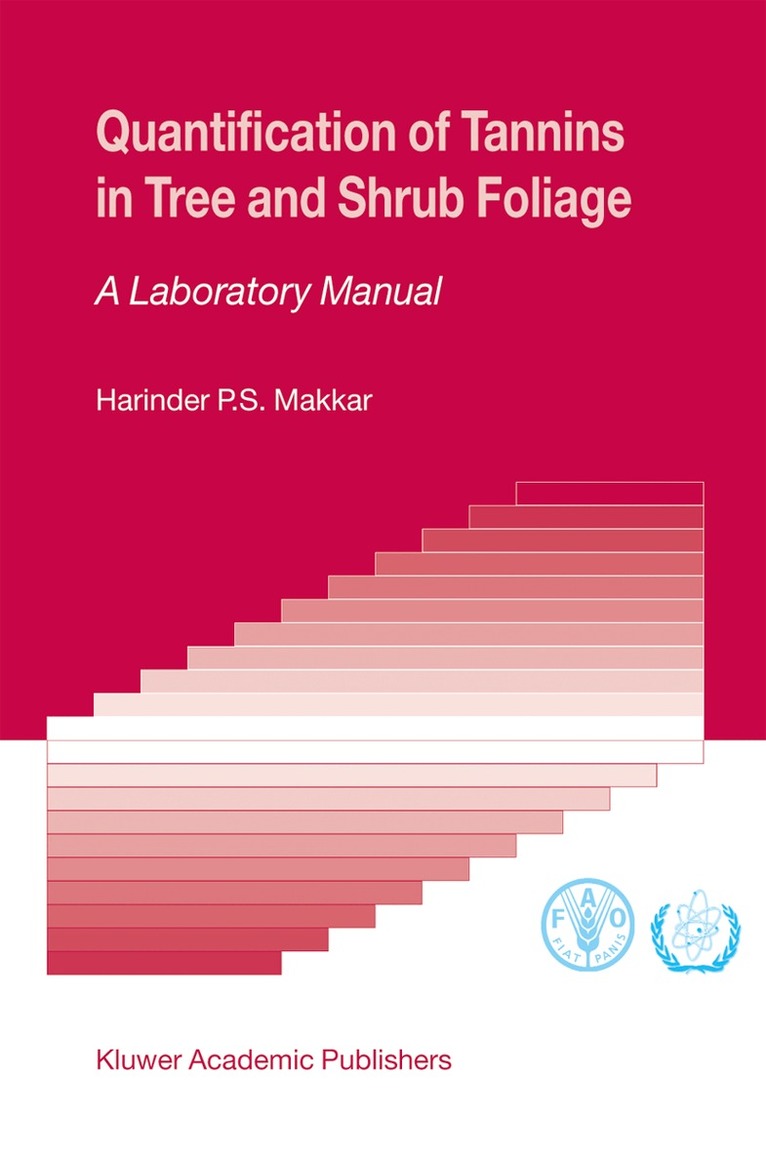
A complete guide to the analysis of tannins. A battery of tannin methodologies is presented in a simple, clear and easy-to-understand manner. This guide covers chemical, biological and radio isotopic tannin assays. Comprehensive step-by-step protocols are presented for each method. The protocols enable non-specialists and specialists alike to implement the methods easily in the laboratory. It is a laboratory manual for research scientists, graduate students, and laboratory personnel working in the fields of animal nutrition, soil nutrient management, wild life-plant interactions, and plant breeding.
1 254 kr
Skickas inom 10-15 vardagar
The contribution of microbial protein in meeting the overall requirement for protein in ruminants is significant, but understanding the contribution of microbial protein to the nutrition of ruminant livestock has been hampered by the lack of simple and accurate methods for measuring microbial protein production in vivo.
Applications of Gene-Based Technologies for Improving Animal Production and Health in Developing Countries
Inbunden, Engelska, 2005
3 147 kr
Skickas inom 10-15 vardagar
Modern Biotechnology has potential for solving many problems associated with animal productivity and health and offers exciting opportunities for enhancing agricultural productivity. At present the focus is, however, on the issues and problems of significance for livestock producers in the developed world. In order to fully realize the benefits of this technology in developing countries, there is a need to identify, characterize and apply appropriate gene-based technologies for these regions. These proceedings present peer reviewed state-of-the-art papers describing the achievements in the areas of animal breeding and genetics, animal nutrition, animal health, and environment, ethics, safety, and regulatory aspects of gene-based technologies; achievements which could be realized using these modern scientific tools to maximise the benefits from the 'livestock revolution' that is taking place; and the constraints in the use of gene-based technologies and their specific research needs. This book will help in bridging the wide gap between developed and developing countries, in the development and use of gene-based technologies, and to elucidate the current and future roles of such technologies in the developing world. It is a good reference source for researchers, students and policy-makers alike.
2 100 kr
Skickas inom 10-15 vardagar
Asaresultofvarioushumanactivities,suchasincreaseinhumanpopulation,decrease in arable land due to soil degradation, urbanization, industrialization and associated increase in the demand for livestock products, dramatic changes are occurring in the global ruminant livestock sector.
1 064 kr
Skickas inom 10-15 vardagar
The world’s livestock sector is amidst a major transformation, fuelled by high demand for meat and milk, which is likely to double over the next two decades in developing countries. The major driving force behind this demand for livestock products is a combination of population growth, urbanization and income growth, especially in developing countries. The challenge is to enhance animal productivity without adversely affecting the environment. A key to this is reducing methane emissions from ruminants. The major limitation to ruminant production in many tropical regions of Africa, Asia and Latin America, where a large proportion of the global ruminant population is located, is poor nutrition. The productivity of animals is restricted by the low nitrogen and high fibre content of the native grasses and crop residues, which form the basis of the diets in these regions. Animals on these types of diets emit more methane than animals fed better quality temperate forages. These methane emissions represent a loss of digestible energy to the animal (up to 15%) as well as a threat to the environment. Reducing methane production by ruminants could improve their productivity, provided the efficiency of ruminal metabolism is not compromised, and reduce their contribution to greenhouse gas emissions. The challenge is to devise nutritional strategies and identify dietary components, particularly from locally available plant resources, that reduce methane emissions.
1 064 kr
Skickas inom 10-15 vardagar
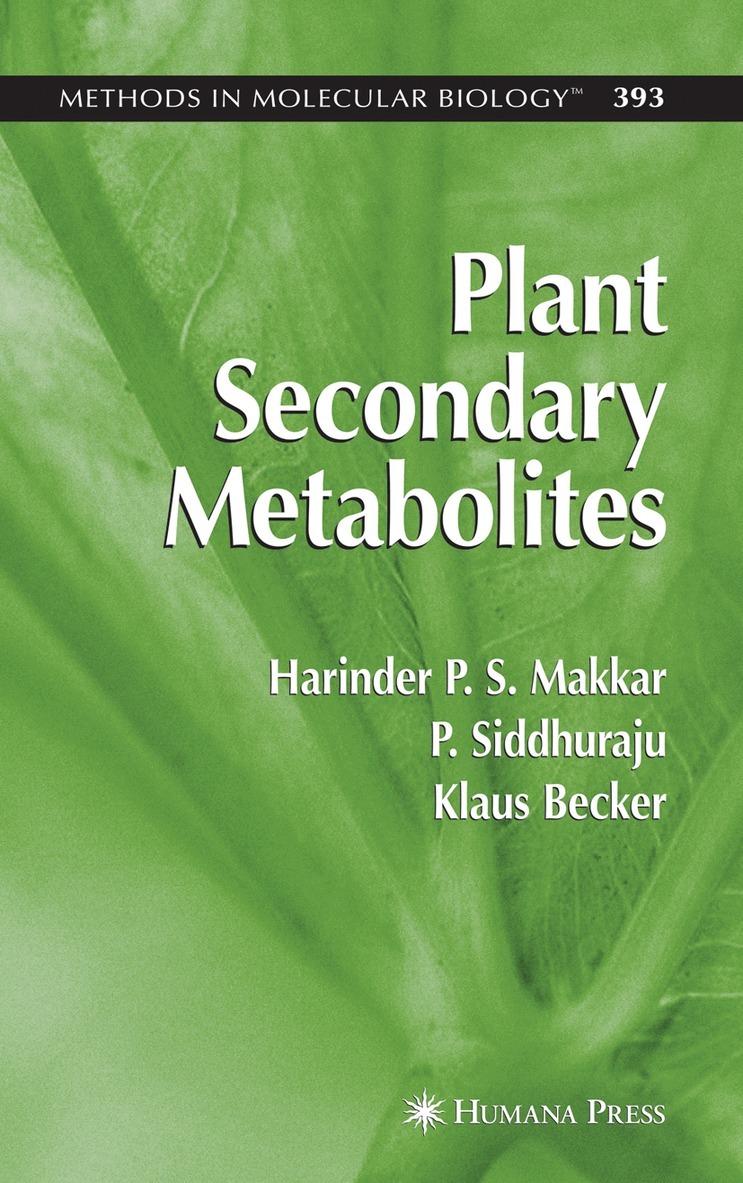
Plant Secondary Metabolites provides reliable assays that will equip researchers to meet the unprecedented challenge of fulfilling the huge demand for feed driven by increasing demand of animal protein in developing countries. Using more than a decade of experience working with the quantification of plant secondary metabolites, the authors have created a manual allowing for the safe and efficient use of locally available feed resources. This comprehensive new volume also offers readers a better understanding of plant-animal interactions. The methodologies provided in this volume may also be used to determine plant secondary metabolites in human food and in studying the implications of their consumption on human health and welfare.This volume contains methods for analysis of some important plant secondary metabolites, which may be conducted in laboratories equipped with basic facilities. The chemical nature of plant secondary metabolites and their known physiological effects and mechanisms of action are also briefly presented. The methods have been written in a recipe-like format designed for direct practical use in the laboratory. Authoritative and extensive, Plant Secondary Metabolites will become an essential reference for plant biologists, biochemists, and molecular and cell biologists.
1 064 kr
Skickas inom 10-15 vardagar
Plant Secondary Metabolites provides reliable assays that will equip researchers to meet the unprecedented challenge of fulfilling the huge demand for feed driven by increasing demand of animal protein in developing countries. Using more than a decade of experience working with the quantification of plant secondary metabolites, the authors have created a manual allowing for the safe and efficient use of locally available feed resources. This comprehensive new volume also offers readers a better understanding of plant-animal interactions. The methodologies provided in this volume may also be used to determine plant secondary metabolites in human food and in studying the implications of their consumption on human health and welfare.This volume contains methods for analysis of some important plant secondary metabolites, which may be conducted in laboratories equipped with basic facilities. The chemical nature of plant secondary metabolites and their known physiological effects and mechanisms of action are also briefly presented. The methods have been written in a recipe-like format designed for direct practical use in the laboratory. Authoritative and extensive, Plant Secondary Metabolites will become an essential reference for plant biologists, biochemists, and molecular and cell biologists.
In vitro screening of plant resources for extra-nutritional attributes in ruminants: nuclear and related methodologies
Inbunden, Engelska, 2009
1 577 kr
Skickas inom 10-15 vardagar
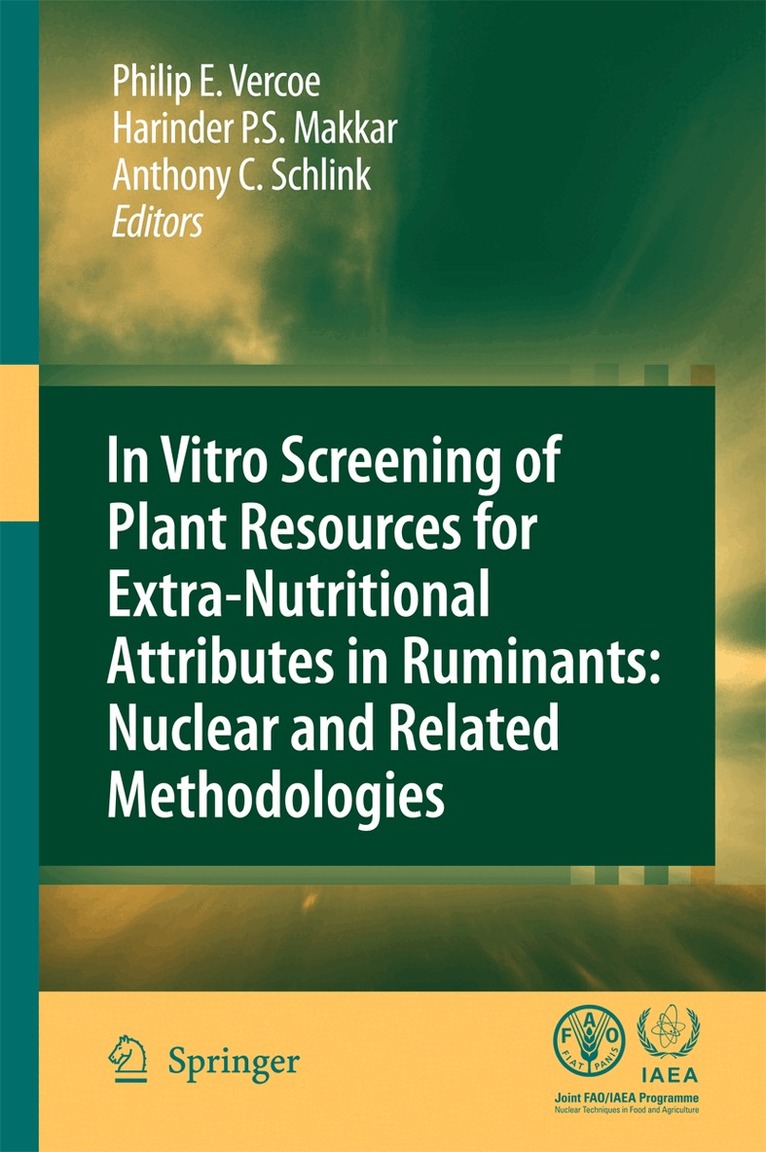
The aim of this manual is to provide a comprehensive guide to the methods involved in collecting, preparing and screening plants for bioactive properties for manipulating key ruminal fermentation pathways and against gastrointestinal pathogens. The manual will better equip the reader with methodological approaches to initiate screening programmes to test for bioactivity in native plants and find ‘natural’ alternatives to chemicals for manipulating ruminal fermentation and gut health. The manual provides isotopic and non-isotopic techniques to efficiently screen plants or plant parts for a range of potential bioactives for livestock production. Each chapter has been contributed by experts in the field and methods have been presented in a format that is easily reproducible in the laboratory. It is hoped that this manual will be of great value to students, researchers and those involved in developing efficient and environmentally friendly livestock production systems.
1 577 kr
Skickas inom 10-15 vardagar
Here is the most complete guide available for the analysis of tannins. It is an ideal laboratory manual for research scientists, graduate students, and laboratory personnel working in the fields of animal nutrition, soil nutrient management, wild life-plant interactions, and plant breeding.
2 100 kr
Skickas inom 10-15 vardagar
This book presents a comprehensive up-to-date account of the methodologies and protocols for conventional and modern molecular techniques that are currently in use for studying the gut microbial ecology of ruminants. Each chapter has been contributed by experts in the field and methods have been presented in a recipe-like format designed for direct practical use in the laboratory and also to provide insight into the most appropriate techniques, their applications and the type of information that could be expected. The techniques and procedures described are also relevant and adaptable to other gastrointestinal ecosystems and the microbiology of anaerobic environments in general. This manual will 'demystify' the methods in molecular microbial ecology for readers who are novice in the field but are excited by the prospects of the technology. It would also be invaluable for the experienced workers striving for giving new dimension to their research -- expanding the work in other fields and initiating cross-cutting activities.
1 064 kr
Skickas inom 10-15 vardagar
The world’s livestock sector is amidst a major transformation, fuelled by high demand for meat and milk, which is likely to double over the next two decades in developing countries. The major driving force behind this demand for livestock products is a combination of population growth, urbanization and income growth, especially in developing countries. The challenge is to enhance animal productivity without adversely affecting the environment. A key to this is reducing methane emissions from ruminants. The major limitation to ruminant production in many tropical regions of Africa, Asia and Latin America, where a large proportion of the global ruminant population is located, is poor nutrition. The productivity of animals is restricted by the low nitrogen and high fibre content of the native grasses and crop residues, which form the basis of the diets in these regions. Animals on these types of diets emit more methane than animals fed better quality temperate forages. These methane emissions represent a loss of digestible energy to the animal (up to 15%) as well as a threat to the environment. Reducing methane production by ruminants could improve their productivity, provided the efficiency of ruminal metabolism is not compromised, and reduce their contribution to greenhouse gas emissions. The challenge is to devise nutritional strategies and identify dietary components, particularly from locally available plant resources, that reduce methane emissions.
Applications of Gene-Based Technologies for Improving Animal Production and Health in Developing Countries
Häftad, Engelska, 2014
3 147 kr
Skickas inom 10-15 vardagar
Modern Biotechnology has potential for solving many problems associated with animal productivity and health and offers exciting opportunities for enhancing agricultural productivity. At present the focus is, however, on the issues and problems of significance for livestock producers in the developed world. In order to fully realize the benefits of this technology in developing countries, there is a need to identify, characterize and apply appropriate gene-based technologies for these regions. These proceedings present peer reviewed state-of-the-art papers describing the achievements in the areas of animal breeding and genetics, animal nutrition, animal health, and environment, ethics, safety, and regulatory aspects of gene-based technologies; achievements which could be realized using these modern scientific tools to maximise the benefits from the 'livestock revolution' that is taking place; and the constraints in the use of gene-based technologies and their specific research needs. This book will help in bridging the wide gap between developed and developing countries, in the development and use of gene-based technologies, and to elucidate the current and future roles of such technologies in the developing world. It is a good reference source for researchers, students and policy-makers alike.
In vitro screening of plant resources for extra-nutritional attributes in ruminants: nuclear and related methodologies
Häftad, Engelska, 2014
1 577 kr
Skickas inom 10-15 vardagar
The aim of this manual is to provide a comprehensive guide to the methods involved in collecting, preparing and screening plants for bioactive properties for manipulating key ruminal fermentation pathways and against gastrointestinal pathogens.
Estimation of Microbial Protein Supply in Ruminants Using Urinary Purine Derivatives
Häftad, Engelska, 2013
1 064 kr
Skickas inom 10-15 vardagar
The Joint FAO/IAEA Division of Nuclear Techniques in Food and Agriculture has a long history of coordinating isotope aided research projects for improving animal productivity in developing countries. These projects have focused on enhancing the efficiency of animal production through better use of locally available feed resources and those that do not compete with human food. As a part of these efforts, the Joint Division has been actively involved in developing and simplifying approaches for measuring microbial protein supply to ruminant livestock. The contribution of microbial protein in meeting the overall requirement for protein in ruminants is significant, but understanding the contribution of microbial protein to the nutrition of ruminant livestock has been hampered by the lack of simple and accurate methods for measuring microbial protein production in vivo. A Consultants’ Meeting was held in 1995 in Vienna to explore the feasibility of using nuclear and related techniques to develop and validate new approaches for measuring microbial protein supply in ruminant animals. Based on the available information, the consultants considered that the purine derivative excretion method, which is non-invasive and both simple to use and inexpensive compared with other available methods, had the potential for use in developing countries. However, development of models for various animal species and breeds and their validation were required before this technique could be advocated for use.