Harold Carter – författare
Visar alla böcker från författaren Harold Carter. Handla med fri frakt och snabb leverans.
6 produkter
Geography at Aberystwyth
Av E. G. Bowen, Harold Carter m. fl.
Häftad, 1968, 6-9 år
134 kr
Tillfälligt slut
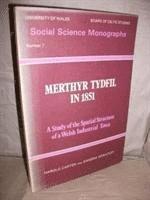
Merthyr Tydfil in 1851
A Study of the Spatial Structure of a Welsh Industrial Town
Av Harold Carter, Sandra Wheatley
Häftad, 1982
200 kr
Tillfälligt slut
Welsh Language, 1961-81
An Interpretative Atlas
Av Harold Carter, John Aitchison
Häftad, 1985
103 kr
Tillfälligt slut
Geography of the Welsh Language, 1961-1991
Av Harold Carter, John Aitchison
Häftad, 1994
254 kr
Tillfälligt slut
Language serves as both a symbol and a definer of culture. The well-being and integrity of a culture depend heavily on the strength and vitality of its associated language. It is for this reason that the process of language change within particular cultures needs to be monitored and scrutinized. …
Language, Economy and Society
The Changing Fortunes of the Welsh Language in the Twentieth Century
Av Harold Carter, John Aitchison
Häftad, 2000
267 kr
Tillfälligt slut
This is an updated and extended version of the book previously published under the title "A Geography of the Welsh Language 1961-1991". The publication expands on the main themes addressed within the original text, makes reference to research, and presents sets of language data both for individuals …