Harold F. O'Neil – författare
631 kr
Läs direkt efter köp
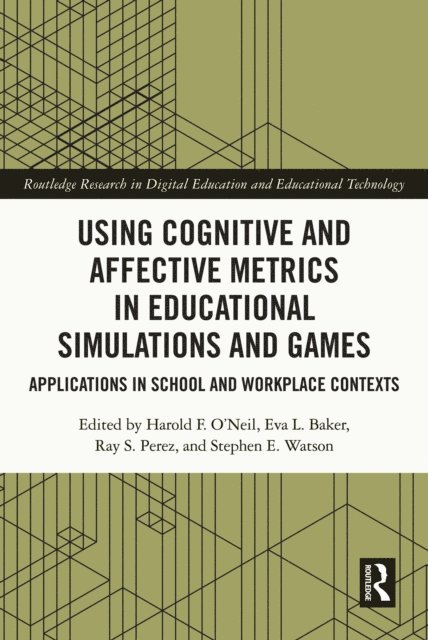
Presenting original studies and rich conceptual analyses, this volume explores how cognitive and affective metrics can be used to effectively assess, modify, and enhance learning and assessment outcomes of simulations and games used in education and training.
The volume responds to the increasing use of computer-based simulations and games across academic and professional sectors by bringing together contributions from different research communities, including K-12 and postsecondary education, medical, and military contexts. Drawing on empirical results, the chapter authors focus on the design and assessment of educational simulations and games. They describe how quantitative and qualitative metrics can be used effectively to evaluate and tailor instructional resources to the cognitive and affective needs of the individual learner. In doing so, the volume enhances understanding of how games and simulations can intersect with the science of learning to improve educational outcomes.
Given its rigorous and multidisciplinary approach, this book will prove an indispensable resource for researchers and scholars in the fields of educational assessment and evaluation, educational technology, military psychology, and educational psychology.
636 kr
Läs direkt efter köp
Presenting original studies and rich conceptual analyses, this volume explores how cognitive and affective metrics can be used to effectively assess, modify, and enhance learning and assessment outcomes of simulations and games used in education and training.
The volume responds to the increasing use of computer-based simulations and games across academic and professional sectors by bringing together contributions from different research communities, including K-12 and postsecondary education, medical, and military contexts. Drawing on empirical results, the chapter authors focus on the design and assessment of educational simulations and games. They describe how quantitative and qualitative metrics can be used effectively to evaluate and tailor instructional resources to the cognitive and affective needs of the individual learner. In doing so, the volume enhances understanding of how games and simulations can intersect with the science of learning to improve educational outcomes.
Given its rigorous and multidisciplinary approach, this book will prove an indispensable resource for researchers and scholars in the fields of educational assessment and evaluation, educational technology, military psychology, and educational psychology.
662 kr
Läs direkt efter köp
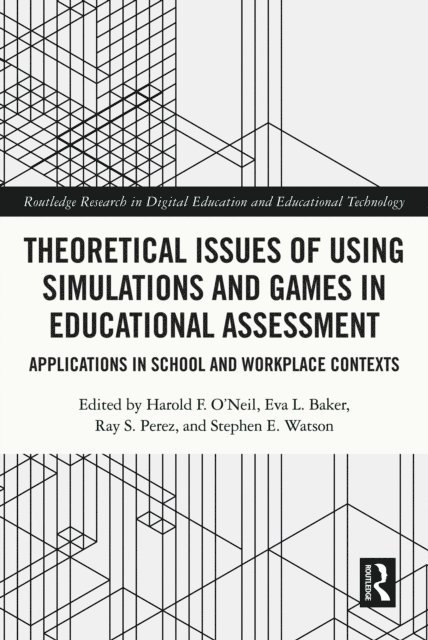
Presenting original studies and rich conceptual analyses, this volume reports on theoretical issues involved in the use of simulations and games in educational assessment. Chapters consider how technologies can be used to effectively assess, modify, and enhance learning and assessment in education and training.
By highlighting theoretical issues arising from the use of games and simulations as assessment tools for selection and classification, training, and evaluation across educational and workplace contexts, the volume offers both broad conceptual views on assessment, as well as rich descriptions of various, context-specific applications. Through a focus that includes both quantitative and qualitative approaches, policy implications, meta-analysis, and constructs, the volume highlights commonalities and divergence in theoretical research being conducted in relation to K-12, post-secondary, and military education and assessment. In doing so, the collection enhances understanding of how games and simulations can intersect with the science of learning to improve educational outcomes.
Given its rigorous and multidisciplinary approach, this book will prove an indispensable resource for researchers and scholars in the fields of educational assessment and evaluation, educational technology, military psychology, and educational psychology.
662 kr
Läs direkt efter köp
Presenting original studies and rich conceptual analyses, this volume reports on theoretical issues involved in the use of simulations and games in educational assessment. Chapters consider how technologies can be used to effectively assess, modify, and enhance learning and assessment in education and training.
By highlighting theoretical issues arising from the use of games and simulations as assessment tools for selection and classification, training, and evaluation across educational and workplace contexts, the volume offers both broad conceptual views on assessment, as well as rich descriptions of various, context-specific applications. Through a focus that includes both quantitative and qualitative approaches, policy implications, meta-analysis, and constructs, the volume highlights commonalities and divergence in theoretical research being conducted in relation to K-12, post-secondary, and military education and assessment. In doing so, the collection enhances understanding of how games and simulations can intersect with the science of learning to improve educational outcomes.
Given its rigorous and multidisciplinary approach, this book will prove an indispensable resource for researchers and scholars in the fields of educational assessment and evaluation, educational technology, military psychology, and educational psychology.
568 kr
Läs direkt efter köp
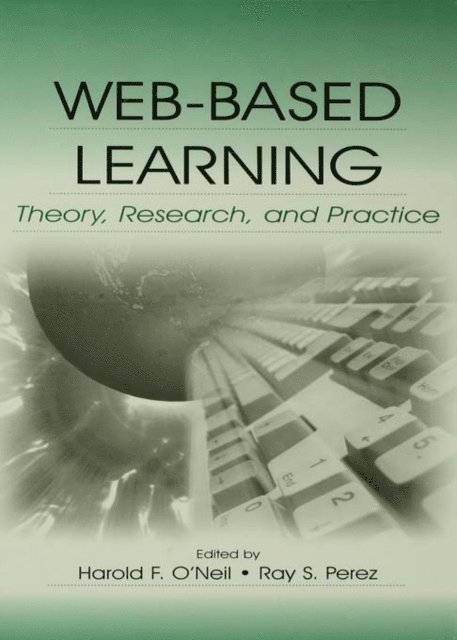
Web-Based Learning: Theory, Research, and Practice explores the state of the art in the research and use of technology in education and training from a learning perspective. This edited book is divided into three major sections:*Policy, Practice, and Implementation Issues -- an overview of policy issues, as well as tools and designs to facilitate implementation of Web-based learning;*Theory and Research Issues -- a look at theoretical foundations of current and future Web-based learning; the section also includes empirical studies of Web-based learning; and*Summary and Conclusions -- highlights key issues in each chapter and outlines a research and development agenda.Within this framework the book addresses several important issues, including: the primacy of learning as a focus for technology; the need to integrate technology with high standards and content expectations; the paucity of and need to support the development of technology-based curriculum and tools; the need to integrate assessment in technology and improve assessment through the use of technology; and the need for theory-driven research and evaluation studies to increase our knowledge and efficacy.Web-Based Learning is designed for professionals and graduate students in the educational technology, human performance, assessment and evaluation, vocational/technical, and educational psychology communities.
568 kr
Läs direkt efter köp
Web-Based Learning: Theory, Research, and Practice explores the state of the art in the research and use of technology in education and training from a learning perspective. This edited book is divided into three major sections:*Policy, Practice, and Implementation Issues -- an overview of policy issues, as well as tools and designs to facilitate implementation of Web-based learning;*Theory and Research Issues -- a look at theoretical foundations of current and future Web-based learning; the section also includes empirical studies of Web-based learning; and*Summary and Conclusions -- highlights key issues in each chapter and outlines a research and development agenda.Within this framework the book addresses several important issues, including: the primacy of learning as a focus for technology; the need to integrate technology with high standards and content expectations; the paucity of and need to support the development of technology-based curriculum and tools; the need to integrate assessment in technology and improve assessment through the use of technology; and the need for theory-driven research and evaluation studies to increase our knowledge and efficacy.Web-Based Learning is designed for professionals and graduate students in the educational technology, human performance, assessment and evaluation, vocational/technical, and educational psychology communities.
631 kr
Läs direkt efter köp
This volume offers an expansion of ideas presented at a recent conference convened to identify the major strategies and more promising practices for assessing technology. The authors -- representing government, business, and university sectors -- helped to set the boundaries of present technology assessment by offering perspectives from computer science, cognitive and military psychology, and education. Their work explores both the use of techniques to assess technology and the use of technology to facilitate the assessment process. The book''s main purpose is to portray the state of the art in technology assessment and to provide conceptual options to help readers understand the power of technology. Technological innovation will continue to develop its own standards of practice and effectiveness. To the extent that these practices are empirically based, designers, supporters, and consumers will be given better information for their decisions.
631 kr
Läs direkt efter köp
This volume offers an expansion of ideas presented at a recent conference convened to identify the major strategies and more promising practices for assessing technology. The authors -- representing government, business, and university sectors -- helped to set the boundaries of present technology assessment by offering perspectives from computer science, cognitive and military psychology, and education. Their work explores both the use of techniques to assess technology and the use of technology to facilitate the assessment process. The book''s main purpose is to portray the state of the art in technology assessment and to provide conceptual options to help readers understand the power of technology. Technological innovation will continue to develop its own standards of practice and effectiveness. To the extent that these practices are empirically based, designers, supporters, and consumers will be given better information for their decisions.
820 kr
Läs direkt efter köp
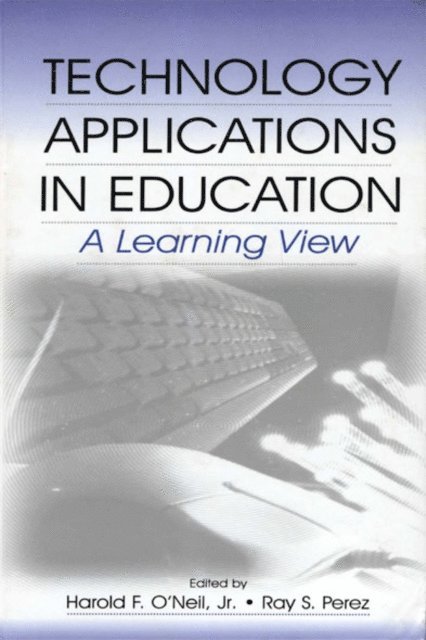
This volume identifies promising learning, teaching, and assessment strategies for the use and assessment of technology in educational settings, specifically: *educational context (e.g., organizational and structural factors that contribute to the effective use of technology in school settings); *promising learning and teaching strategies; *promising technology-based assessment procedures and methods; *policy implementation issues; and *a summary of current research on the effective use of technology in education. Chapter authors represent a variety of perspectives and disciplines, from computer science, cognitive and educational psychology, and educational administration. Authors represent government, business, and university communities from within and outside the U.S. These multiple perspectives contribute to the overall understanding of current technology use in education and help in identifying future research needs. Technology Applications in Education: A Learning View explores the state of the art of technology in K-16 education from a learning perspective rather than a hardware/software view. It is designed for professionals and graduate students in the educational technology, training, assessment/evaluation, school administration, military psychology, and educational psychology communities. This book is characterized in the following montage of factors: *the primacy of learning as a focus for technology implementation; *a focus on technology uses in K-16 education; *a focus on the assessment of both individuals and teams; *a broad variety of methodological approaches from qualitative to instructional design to quantitative (e.g., structural equation modeling); *a need to support the development of technology-based curriculum and tools; and *a need for theory-driven and evaluation studies to increase our knowledge.
820 kr
Läs direkt efter köp
This volume identifies promising learning, teaching, and assessment strategies for the use and assessment of technology in educational settings, specifically: *educational context (e.g., organizational and structural factors that contribute to the effective use of technology in school settings); *promising learning and teaching strategies; *promising technology-based assessment procedures and methods; *policy implementation issues; and *a summary of current research on the effective use of technology in education. Chapter authors represent a variety of perspectives and disciplines, from computer science, cognitive and educational psychology, and educational administration. Authors represent government, business, and university communities from within and outside the U.S. These multiple perspectives contribute to the overall understanding of current technology use in education and help in identifying future research needs. Technology Applications in Education: A Learning View explores the state of the art of technology in K-16 education from a learning perspective rather than a hardware/software view. It is designed for professionals and graduate students in the educational technology, training, assessment/evaluation, school administration, military psychology, and educational psychology communities. This book is characterized in the following montage of factors: *the primacy of learning as a focus for technology implementation; *a focus on technology uses in K-16 education; *a focus on the assessment of both individuals and teams; *a broad variety of methodological approaches from qualitative to instructional design to quantitative (e.g., structural equation modeling); *a need to support the development of technology-based curriculum and tools; and *a need for theory-driven and evaluation studies to increase our knowledge.
552 kr
Läs direkt efter köp
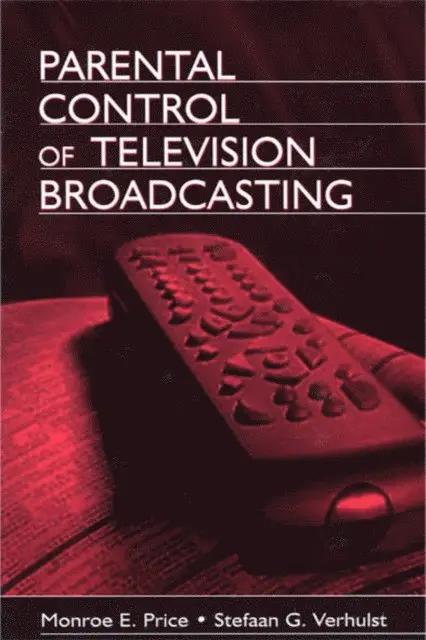
This project, originally developed for the European Community, examines parental roles in controlling television programs watched by children in Europe. The structure of the study includes: *an analysis of the technical devices available to assist in parental control of television broadcasting services, including descriptions of devices, their cost, availability, and the infrastructure needed to introduce them; *a corresponding analysis of potential ratings or labeling systems to work in conjunction with or in the place of technical devices, enabling a comparative analysis of rating systems used in film, video, and online services; and *an overview and assessment of the educational and awareness measures in the field of protection of minors and harmful content, providing the data for the review of available considerations in this field of viewer literacy. In addition to these main strands of analysis, the study provides for background information and analysis in the following areas: *an overview of the main media theories focusing on the effect and impact of specific types of content on children and their behavior; *an assessment of the economic impact and social efficacy of different protective measures; and *a comparison of the regulatory contexts and rating systems for film, video, television, and online services concerning the protection of minors from harmful content. This volume is intended for scholars and students in comparative media studies, media policy, and regulation.
552 kr
Läs direkt efter köp
This project, originally developed for the European Community, examines parental roles in controlling television programs watched by children in Europe. The structure of the study includes: *an analysis of the technical devices available to assist in parental control of television broadcasting services, including descriptions of devices, their cost, availability, and the infrastructure needed to introduce them; *a corresponding analysis of potential ratings or labeling systems to work in conjunction with or in the place of technical devices, enabling a comparative analysis of rating systems used in film, video, and online services; and *an overview and assessment of the educational and awareness measures in the field of protection of minors and harmful content, providing the data for the review of available considerations in this field of viewer literacy. In addition to these main strands of analysis, the study provides for background information and analysis in the following areas: *an overview of the main media theories focusing on the effect and impact of specific types of content on children and their behavior; *an assessment of the economic impact and social efficacy of different protective measures; and *a comparison of the regulatory contexts and rating systems for film, video, television, and online services concerning the protection of minors from harmful content. This volume is intended for scholars and students in comparative media studies, media policy, and regulation.
820 kr
Läs direkt efter köp
Designed for professionals and graduate students in the personality/social, military, and educational psychology, and assessment/evaluation communities, this volume explores the state of the art in motivational research for individuals and teams from multiple theoretical viewpoints as well as their effects in both schools and training environments. The great majority of education and training R&D is focused on the cognitive dimensions of learning, for instance, the acquisition and retention of knowledge and skills. Less attention has been given in the literature and in the design of education and training itself to motivational variables and their influence on performance. As such, this book is unique in the following montage of factors: * a focus on motivation of teams or groups as well as individuals; * an examination of the impact of motivation on performance (and, thus, also on cognition) rather than only on motivation itself; * research in training as well as educational settings. The data reported were collected in various venues including schools, laboratories and field settings. The chapter authors are the researchers that, in many cases, have defined the state of the art in motivation.
820 kr
Läs direkt efter köp
Designed for professionals and graduate students in the personality/social, military, and educational psychology, and assessment/evaluation communities, this volume explores the state of the art in motivational research for individuals and teams from multiple theoretical viewpoints as well as their effects in both schools and training environments. The great majority of education and training R&D is focused on the cognitive dimensions of learning, for instance, the acquisition and retention of knowledge and skills. Less attention has been given in the literature and in the design of education and training itself to motivational variables and their influence on performance. As such, this book is unique in the following montage of factors: * a focus on motivation of teams or groups as well as individuals; * an examination of the impact of motivation on performance (and, thus, also on cognition) rather than only on motivation itself; * research in training as well as educational settings. The data reported were collected in various venues including schools, laboratories and field settings. The chapter authors are the researchers that, in many cases, have defined the state of the art in motivation.
919 kr
Läs direkt efter köp
Current economic difficulties and the challenge of competing in the world market have necessitated a rethinking of American approaches to the utilization of people in organizations. Management now recognizes a need to have workers take on more responsibility at the points of production, of sale, and of service rendered if the United States is to compete in rapidly changing world markets. This development means that much more is expected of even entry-level members of the American workforce. Thus, even more is expected of our high schools and colleges to provide this type of workforce. The need of American management for workers with greater skills and who can take on greater responsibility has spawned many commissions, task forces, and studies. All of them have contributed to the vast evidence documenting the need for a more highly skilled workforce. These studies are summarized and synthesized in this book. However, what remains largely undone is the development of methods to assess the necessary skills that have been identified. A major portion of this book deals with assessment issues.Workforce Readiness: Competencies and Assessment explores the state-of-the-art in the specification of competencies (skills) and their assessment for students entering the world of work from both high school and college. Both individual and team competencies are examined via data that has been reported and collected in various settings--schools, laboratories, and industrial facilities.
919 kr
Läs direkt efter köp
Current economic difficulties and the challenge of competing in the world market have necessitated a rethinking of American approaches to the utilization of people in organizations. Management now recognizes a need to have workers take on more responsibility at the points of production, of sale, and of service rendered if the United States is to compete in rapidly changing world markets. This development means that much more is expected of even entry-level members of the American workforce. Thus, even more is expected of our high schools and colleges to provide this type of workforce. The need of American management for workers with greater skills and who can take on greater responsibility has spawned many commissions, task forces, and studies. All of them have contributed to the vast evidence documenting the need for a more highly skilled workforce. These studies are summarized and synthesized in this book. However, what remains largely undone is the development of methods to assess the necessary skills that have been identified. A major portion of this book deals with assessment issues.Workforce Readiness: Competencies and Assessment explores the state-of-the-art in the specification of competencies (skills) and their assessment for students entering the world of work from both high school and college. Both individual and team competencies are examined via data that has been reported and collected in various settings--schools, laboratories, and industrial facilities.
915 kr
Läs direkt efter köp
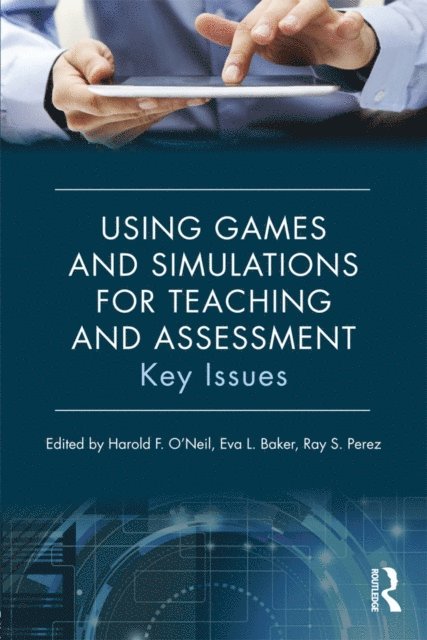
Using Games and Simulations for Teaching and Assessment: Key Issues comprises a multidisciplinary investigation into the issues that arise when using games and simulations for educational purposes. Using both theoretical and empirical analyses, this collection examines cognitive, motivational, and psychometric issues with a focus on STEM content. Unlike other research-based volumes that focus solely on game design or the theoretical basis behind gaming, this book unites previously disparate communities of researchers—from civilian to military contexts as well as multiple disciplines—to critically explore current problems and illustrate how instructionally effective games and simulations should be planned and evaluated.
While computer-based simulations and games have the potential to improve the quality of education and training, Using Games and Simulations for Teaching and Assessment: Key Issues shows how the science of learning should underlie the use of such technologies. Through a wide-ranging yet detailed examination, chapter authors provide suggestions for designing and developing games, simulations, and intelligent tutoring systems that are scientifically-based, outcomes-driven, and cost-conscious.
915 kr
Läs direkt efter köp
Using Games and Simulations for Teaching and Assessment: Key Issues comprises a multidisciplinary investigation into the issues that arise when using games and simulations for educational purposes. Using both theoretical and empirical analyses, this collection examines cognitive, motivational, and psychometric issues with a focus on STEM content. Unlike other research-based volumes that focus solely on game design or the theoretical basis behind gaming, this book unites previously disparate communities of researchers—from civilian to military contexts as well as multiple disciplines—to critically explore current problems and illustrate how instructionally effective games and simulations should be planned and evaluated.
While computer-based simulations and games have the potential to improve the quality of education and training, Using Games and Simulations for Teaching and Assessment: Key Issues shows how the science of learning should underlie the use of such technologies. Through a wide-ranging yet detailed examination, chapter authors provide suggestions for designing and developing games, simulations, and intelligent tutoring systems that are scientifically-based, outcomes-driven, and cost-conscious.
741 kr
Läs direkt efter köp
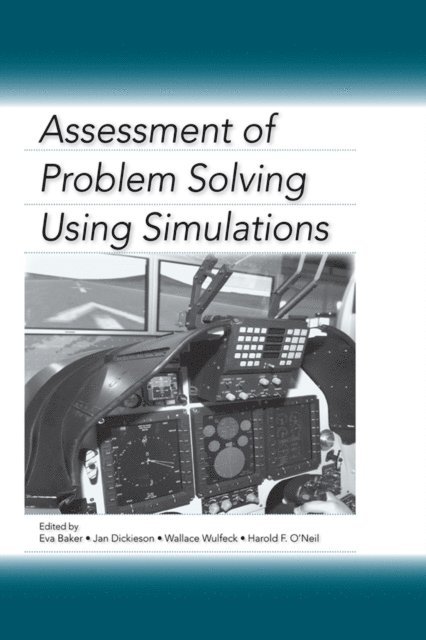
This volume explores the application of computer simulation technology to measurement issues in education -- especially as it pertains to problem based learning. Whereas most assessments related to problem solving are based on expensive and time consuming measures (i.e., think-aloud protocols or performance assessments that require extensive human rater scoring), this book relies on computerization of the major portion of the administration, scoring, and reporting of problem-solving assessments. It is appropriate for researchers, instructors and graduate students in educational assessment, educational technology, and educational psychology.
741 kr
Läs direkt efter köp
This volume explores the application of computer simulation technology to measurement issues in education -- especially as it pertains to problem based learning. Whereas most assessments related to problem solving are based on expensive and time consuming measures (i.e., think-aloud protocols or performance assessments that require extensive human rater scoring), this book relies on computerization of the major portion of the administration, scoring, and reporting of problem-solving assessments. It is appropriate for researchers, instructors and graduate students in educational assessment, educational technology, and educational psychology.
1 328 kr
Läs direkt efter köp
Teaching and Measuring Cognitive Readiness presents theoretical and empirical findings regarding cognitive readiness and assessments of their impact on adult learning. The term readiness is used in assessing student preparation for K-12 schools, while in the military and in industry, "readiness" denotes preparation to be effective in performing a mission or a job. Cognitive Readiness is viewed through a Knowledge, Skills, and Attributes (KSA) lens.Teaching and Measuring Cognitive Readiness deals with (a) the primacy of cognitive readiness as attributes or individual difference variables; (b) the need for cognitive readiness instructional and assessment strategies; (c) the need to integrate assessment into cognitive readiness training; (d) the need for theory-driven evaluation studies to increase knowledge and efficacy in teaching cognitive readiness; and (e) the need for a solid psychometric approach to the use of cognitive readiness assessments.
735 kr
Läs direkt efter köp
2 782 kr
Läs direkt efter köp
Aircrew Training and Assessment is designed for professionals in the aviation psychology, human factors, assessment and evaluation, vocational, technical, educational psychology, and educational technology communities. It explores the state of the art in the training and assessment of aircrews and includes a review and description of the use
375 kr
Läs direkt efter köp
371 kr
Läs direkt efter köp
557 kr
Läs direkt efter köp
557 kr
Läs direkt efter köp