Harris Selod - Böcker
Visar alla böcker från författaren Harris Selod. Handla med fri frakt och snabb leverans.
4 produkter
4 produkter
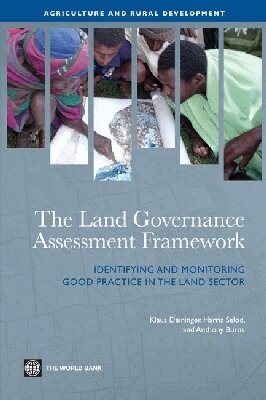
Land Governance Assessment Framework
Identifying and Monitoring Good Practice in the Land Sector
Häftad, Engelska, 2011
275 kr
Skickas inom 10-15 vardagar
Increased global demand for land posits the need for well-designed country-level land policies to protect long-held rights, facilitate land access and address any constraints that land policy may pose for broader growth. While the implementation of land reforms can be a lengthy process, the need to swiftly identify key land policy challenges and devise responses that allow the monitoring of progress, in a way that minimizes conflicts and supports broader development goals, is clear.The Land Governance Assessment Framework (LGAF) makes a substantive contribution to the land sector by providing a quick and innovative tool to monitor land governance at the country level. The LGAF offers a comprehensive diagnostic tool that covers five main areas for policy intervention: Legal and institutional framework; Land use planning, management and taxation; Management of public land; Public provision of land information; and Dispute resolution and conflict management. The LGAF assesses these areas through a set of detailed indicators that are rated on a scale of pre-coded statements (from lack of good governance to good practice). While land governance can be highly technical in nature and tends to be addressed in a partial and sporadic manner, the LGAF posits a tool for a comprehensive assessment, taking into account the broad range of issues that land governance encompasses, while enabling those unfamiliar with land to grasp its full complexity. The LGAF will make it possible for policymakers to make sense of the technical levels of the land sector, benchmark governance, identify areas that require further attention and monitor progress. It is intended to assist countries in prioritizing reforms in the land sector by providing a holistic diagnostic review that can inform policy dialogue in a clear and targeted manner.In addition to presenting the LGAF tool, this book includes detailed case studies on its implementation in five selected countries: Peru, the Kyrgyz Republic, Ethiopia, Indonesia and Tanzania.
282 kr
Skickas inom 10-15 vardagar
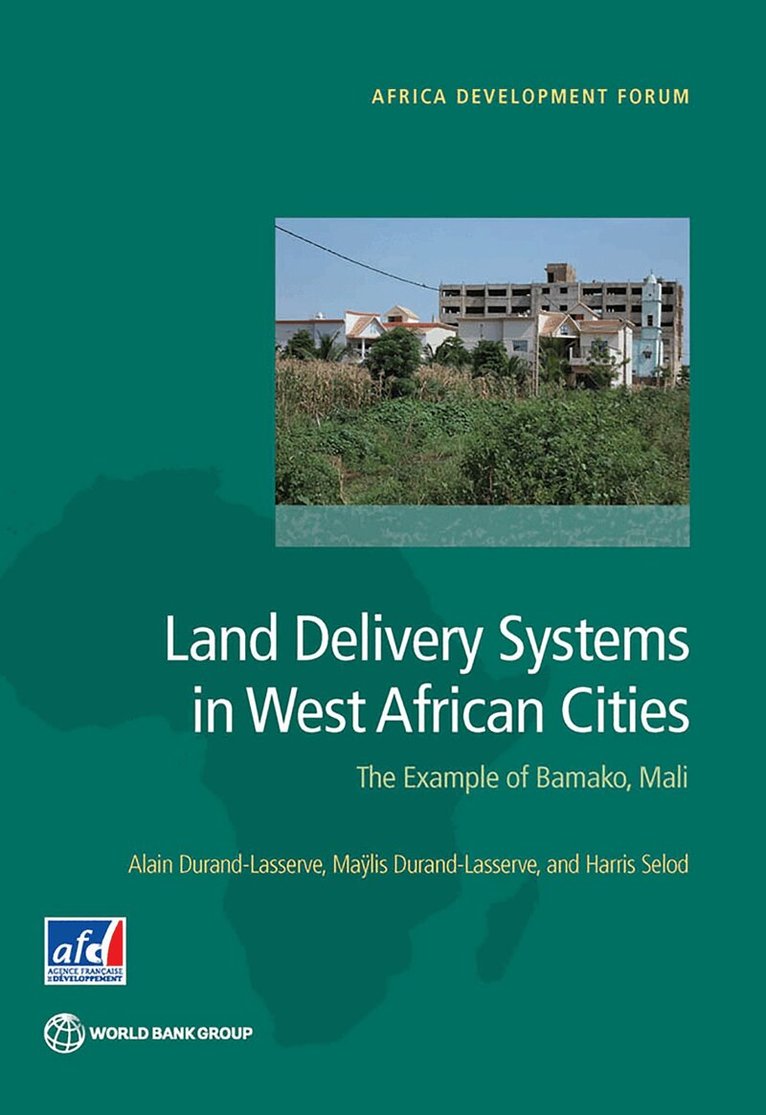
Urban and peri-urban land markets in rapidly expanding West African cities operate within and across different coexisting tenure regimes and involve complex procedures to obtain or make land available for housing. Because a structured framework lacks for the analysis of such systems, this book proposes a systemic approach and applies it to Bamako and its surrounding areas. The framework revolves around the description of land delivery channels: starting from the status of tenure when the land is first placed in circulation for residential use, it identifies the processes whereby tenure can be improved, the types of transactions that take place along the way, and interactions between land delivery channels.The analysis of the system shows that land is initially provided through a customary land delivery channel-which predominates in peri-urban areas where land is being transformed from agricultural to residential use--and through a public and para-public channel, which involves the administrative allocation of residential plots to inhabitants and the transfer of land to developers. These two channels feed into the formal private channel which delivers serviced plots with ownership title at much higher prices. Plots in the various channels may be traded successively, with a degree of informality varying according to tenure, legality and registration of transactions. Whereas the development of the formal market is hindered by structural factors, the informal land market provides little tenure security. Targeted towards low and middle-incomes, it also attracts wealthy and well-connected buyers who have access to information and administrative and political power and can more easily formalize tenure.The sustained increase in land prices, numerous conflicts over land, high transaction costs and time-consuming formalization procedures, together with the involvement of a large number of stakeholders, combine to reduce affordability significantly and make access to secure land very difficult for the urban poor.
428 kr
Skickas inom 7-10 vardagar
Return Imperative
Moving Infrastructure from a Resource-Gap to a Priority-Based Approach
Häftad, Engelska, 2026
467 kr
Kommande
This report introduces the first global, geolocated database of physical infrastructure assets and a framework to guide investment priorities. Comparing social returns with borrowing costs reveals widespread underinvestment across energy, transport, and digital sectors, with especially high returns to transport in developing countries.